Tunisia Tourism Receipts Reach $2.38 Billion as Over Nine Million Visitors Drive 2027 Parliamentary Budget Strategy

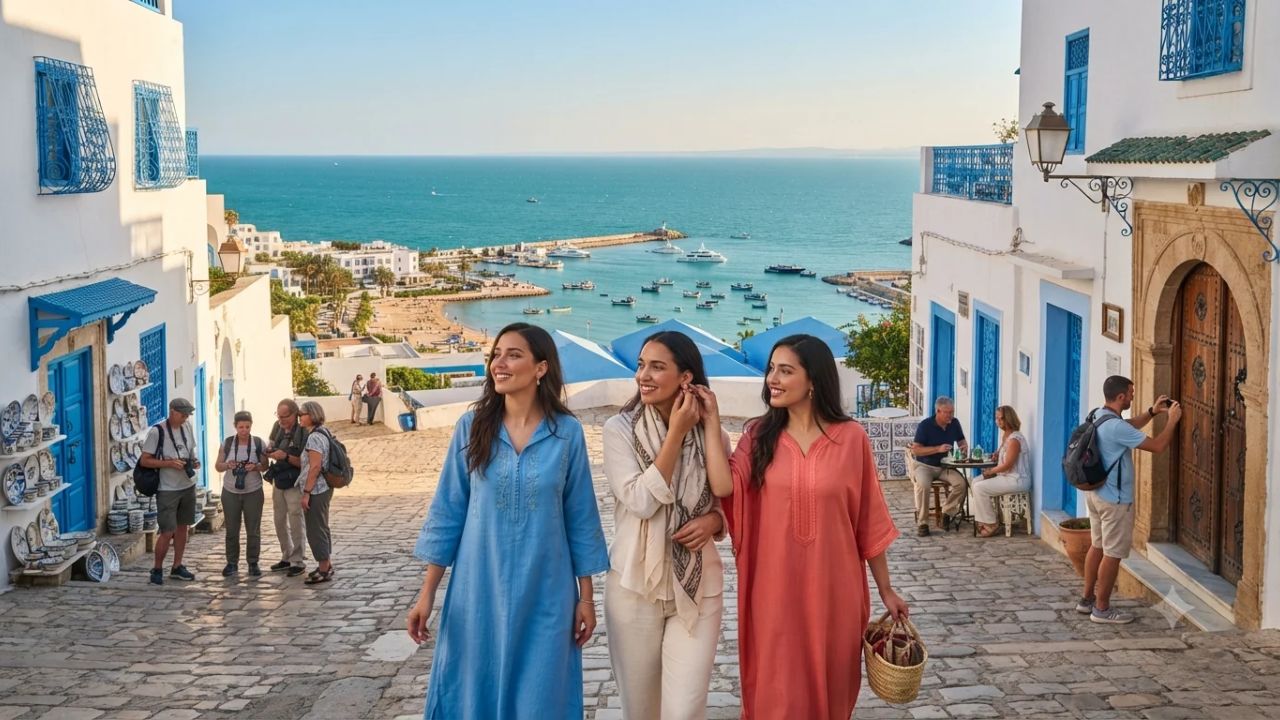
Tunisia’s tourism economy generated 7.152 billion Tunisian dinars (approximately 2.384 billion US dollars) in foreign exchange receipts through the end of October 2026, marking a 3.4 percent year-on-year increase and confirming the arrival of more than nine million international tourists. Delivering the official sector performance review before a joint plenary session of the Assembly of the Representatives of the People and the National Council of Regions and Districts, Minister of Tourism Sofiane Tekaya framed the revenue milestone as a cornerstone of the ministry’s allocation under the 2027 state budget. While established European source markets anchored financial stability by contributing 64.8 percent of total receipts, an extraordinary 83 percent revenue surge from the Russian market highlighted the growing economic impact of source-market diversification as Tunisia prepares to serve as the Capital of Arab Tourism in 2027.
The parliamentary hearings in Tunis provided lawmakers with a comprehensive evaluation of tourism’s role in stabilizing national macroeconomic balances. Addressing the bicameral legislature, Minister Tekaya emphasized that surpassing the nine-million-visitor threshold and generating more than $2.38 billion in hard currency receipts directly supports sovereign foreign exchange reserves, stabilizes the national currency, and sustains hundreds of thousands of livelihoods across hospitality, agriculture, handicrafts, and regional transport networks. As budgetary debates progress, legislative priorities are focusing on elevating service quality standards, restoring closed hotel properties, and distributing visitor capital beyond coastal beach resorts into underdeveloped interior governorates.
========================================================================================
TUNISIA TOURISM PARLIAMENTARY FISCAL SCORECARD: 2026 RESULTS & 2027 PRIORITIES
========================================================================================
Performance Dimension                Official 10-Month 2026 Metric     Strategic Policy Context
----------------------------------------------------------------------------------------
Total National Tourism Receipts      TND 7.152 Billion ($2.384B USD)   Surpasses the $2B threshold; +3.4% YoY
Total International Tourist Arrivals Surpassed 9.0 Million Visitors    On pace for ~12.0M annual target
Key Parliamentary Setting            Joint Plenary Session             Assembly of Representatives &
                                                                       National Council of Regions & Districts
Reporting Executive                  Sofiane Tekaya                    Minister of Tourism
Fiscal Policy Horizon                2027 State Budget Allocation      Direct integration into macro budget
European Market Revenue Contribution 64.8% of Total Tourism Receipts  Anchor foundation of national spend
Russian Market Revenue Trajectory    +83.0% Year-on-Year Growth        Direct flight expansion (6 to 13 weekly)
Broader Supply Chain Multipliers     Accommodation, Transport, Food,   Generates distributed liquidity
                                     Retail, and Traditional Crafts    across 24 governorates
Strategic Horizon Milestone          Capital of Arab Tourism 2027      Regional brand expansion across MENA
========================================================================================
Official Source: Ministry of Tourism Address to Parliament (November 2026).
========================================================================================
The Parliamentary Dimension: Examining the 2027 Budget Allocation in Joint Session
The presentation of the 2026 tourism figures occurred within a significant constitutional setting. The joint plenary session brought together members of the Assembly of the Representatives of the People and the National Council of Regions and Districts—the second parliamentary chamber established under the 2022 Constitution to represent regional economic and development interests.
Convened specifically to debate the Ministry of Tourism’s fiscal allocation under the upcoming 2027 state budget, the session placed tourism at the center of national economic governance. In developing economies facing foreign debt obligations and inflation adjustments, tourism functions not merely as an amenity sector, but as an indispensable pillar of foreign exchange liquidity.
========================================================================================
LEGISLATIVE STRUCTURE & TOURISM FISCAL SCRUTINY IN TUNISIA
========================================================================================
Parliamentary Chamber                Representative Mandate            Key Tourism Oversight Focus
----------------------------------------------------------------------------------------
Assembly of the Representatives      National legislative oversight;   Fiscal allocations, foreign exchange
of the People (First Chamber)        national economic strategy        receipts, taxation, and international treaties
----------------------------------------------------------------------------------------
National Council of Regions          Regional development and local    Decentralization of tourism spending,
and Districts (Second Chamber)       economic equity across provinces  rural employment, and interior infrastructure
----------------------------------------------------------------------------------------
Ministry of Tourism Executive Team   Policy execution and regulatory   Quality audits, hotel regularization,
(Led by Minister Sofiane Tekaya)     enforcement nationwide            artisan protections, and global marketing
========================================================================================
During his address, Minister Sofiane Tekaya emphasized that the sector’s financial performance demonstrates the wisdom of maintaining targeted public-private partnerships. The funds generated through foreign traveler expenditure directly offset trade deficits, support the import of essential raw materials, and provide local municipalities with commercial tax revenues needed to upgrade urban infrastructure, waste management, and coastal public spaces.
Deciphering the Financial Milestone: TND 7.152 Billion ($2.384B) in National Receipts
The financial data presented by Minister Tekaya reveals steady economic momentum. Reaching TND 7.152 billion (equivalent to approximately 2.384 billion US dollars) by the end of October reflects a 3.4 percent expansion over the corresponding ten-month period in 2025.
========================================================================================
HISTORICAL TEN-MONTH TOURISM RECEIPTS COMPARISON (2019–2026)
========================================================================================
Comparative Cycle (Jan–Oct)         Nominal Receipts (TND)            US Dollar Value (Approx.) Growth Trajectory
----------------------------------------------------------------------------------------
Jan–Oct 2019 (Pre-Pandemic Baseline) 5.717 Billion TND                 $1.905 Billion USD       Pre-crisis benchmark
Jan–Oct 2024 (Post-Pandemic Recovery)6.241 Billion TND                 $2.080 Billion USD       Recovery threshold
Jan–Oct 2025 (Prior Year Milestone)  6.917 Billion TND                 $2.305 Billion USD       Previous record high
Jan–Oct 2026 (Current Achievement)   7.152 Billion TND                 $2.384 Billion USD       +3.4% YoY; +25.1% vs 2019
========================================================================================
Financial Milestone: National tourism revenue comfortably surpasses the US$2.0 billion threshold.
========================================================================================
Compared to the pre-pandemic baseline of 2019, when ten-month receipts stood at TND 5.717 billion, the 2026 figure represents an impressive 25.1 percent expansion in nominal dinar receipts. This structural growth confirms that Tunisia has progressed beyond simple post-pandemic rebuilding into sustained commercial expansion.
Importantly, the growth in revenue occurred alongside rising operating costs across global aviation and hospitality sectors. Tunisian hoteliers and tour operators achieved this 3.4 percent revenue gain by adjusting contract pricing, optimizing bed-night yields, and attracting higher-spending independent travelers rather than relying solely on low-margin mass charter volume.
The Nine Million Arrival Threshold: Volume, Capacity, and Seasonal Absorption
Alongside revenue benchmarks, Minister Tekaya announced that international visitor arrivals had officially surpassed nine million tourists by the close of October 2026. This arrival milestone positions Tunisia to achieve its targeted full-year total of approximately 12 million visitors, comfortably exceeding the previous record of eleven million-plus registered in 2025.
========================================================================================
INTERNATIONAL VISITOR ARRIVALS & ANNUAL TARGET TRAJECTORY
========================================================================================
Timeline / Annual Period             Visitor Volume Benchmark          Strategic Status
----------------------------------------------------------------------------------------
Full Year 2019 (Pre-Pandemic Record) 9.43 Million International Guests Pre-pandemic all-time high
Full Year 2023 (Reopening Year)      8.85 Million International Guests Reopening baseline
Full Year 2025 (Historical Peak)     11.0+ Million International GuestsFirst double-digit arrival cycle
Jan–Oct 2026 (Actual Recorded)       Surpassed 9.0 Million Guests      Tracking ahead of 2025 pace
Full Year 2026 (Official Forecast)   Approximately 12.0 Million Guests Targeted new national record
========================================================================================
Processing more than nine million international travelers within ten months requires resilient border and transport infrastructure. Tunisia’s primary international air gateways—Tunis-Carthage International Airport (TUN), Enfidha-Hammamet International Airport (NBE), Monastir Habib Bourguiba International Airport (MIR), and Djerba-Zarzis International Airport (DJE)—handled intense summer traffic peaks with minimal operational disruption.
========================================================================================
TUNISIAN GATEWAY INFRASTRUCTURE: TRANSIT PROFILES & SERVICE REGIONS
========================================================================================
Aviation & Maritime Gateway          Primary Target Region             Traffic Profile
----------------------------------------------------------------------------------------
Tunis-Carthage International (TUN)   Greater Tunis & Northern Heritage Business, scheduled European, and cultural
Enfidha-Hammamet International (NBE) Hammamet, Sousse, & Cap Bon       High-density European charter operations
Monastir Habib Bourguiba (MIR)       Monastir, Mahdia, & Sahel         Charter leisure and regional European carriers
Djerba-Zarzis International (DJE)    Djerba Island & Southern Oases    Island resort and Saharan expedition staging
Port of La Goulette (Tunis)          Tunis Gulf Maritime Gateway       International Mediterranean cruise calls
========================================================================================
At the Port of La Goulette, the return of major Mediterranean cruise lines provided consistent day-visitor traffic into the Medina of Tunis, the historic ruins of Carthage, and the picturesque cliffside village of Sidi Bou Said, demonstrating the value of multimodal arrival channels.
The European Market Backbone: 64.8% Dominance and Strategic Implications
A central finding highlighted in Minister Tekaya’s parliamentary presentation is the decisive role played by European travelers, who generated 64.8 percent of all national tourism receipts through October 2026.
========================================================================================
EUROPEAN SOURCE MARKET PERFORMANCE IN TUNISIA (2026 EVALUATION)
========================================================================================
Source Country       Market Role                       Commercial Contribution Characteristics
----------------------------------------------------------------------------------------
France               #1 Dominant Source Generator      Cultural familiarity, short-haul flights, high retail spend
Germany              Leading Long-Stay Market          Extended stays (10–14 nights), high cultural excursion uptake
Poland               Fastest-Growing Central Europe    Surging charter volume to Enfidha and Monastir resorts
Italy                Resilient Maritime Neighbour      Frequent ferry crossings from Genoa/Palermo, weekend breaks
United Kingdom       Resurgent Low-Cost Carrier Hub    Seat capacity expansion from regional UK airports via easyJet/Jet2
========================================================================================
Aggregate Contribution: European travelers generated nearly two-thirds (64.8%) of total tourism revenue.
========================================================================================
This heavy revenue concentration reflects several durable geographical and commercial advantages:
- Geographic Proximity: Flight times between primary European metropolitan centers (Paris, Frankfurt, Rome, London) and Tunisian airports average between two and three hours, making the country an attractive short-haul Mediterranean option.
- Deep Historical and Linguistic Ties: French travelers, in particular, benefit from widespread fluency in the French language across Tunisian service sectors, encouraging extensive travel beyond all-inclusive resorts into independent bistros, boutiques, and heritage lodgings.
- Competitive Value Proposition: Compared to northern Mediterranean competitors such as Spain, Italy, and Greece, Tunisia offers exceptional value for money in lodging, dining, and recreational activities, appealing strongly to European households navigating domestic inflation.
However, lawmakers during the joint parliamentary session noted that relying on Europe for nearly two-thirds of tourism revenues creates structural vulnerability. Economic downturns, geopolitical adjustments, or shifts in European aviation taxes could impact national receipts, underscoring the necessity of aggressive source-market diversification.
The Russian Market Dynamics: Unpacking the 83% Revenue Spike
One of the most striking developments disclosed by Minister Tekaya was the 83 percent year-on-year increase in tourism revenues generated by the Russian travel market.
========================================================================================
RUSSIAN TOURISM INFLOW DYNAMICS: 2025 VS. 2026 COMPARATIVE SNAPSHOT
========================================================================================
Strategic Indicator                  Observed Trajectory               Commercial Catalyst
----------------------------------------------------------------------------------------
Revenue Expansion Rate               +83.0% Year-on-Year Growth        Substantial increase in per-capita spend
Weekly Commercial Flight Corridor    Expanded from 6 to 13 Frequencies Direct charter authorizations & bilateral pacts
Strategic Annual Inbound Target      600,000 Russian Tourists          National aviation & marketing objective
Complementary Regional Route         Belarus Air Corridor Restored     Direct passenger flights re-established
Primary Destination Beneficiaries    Hammamet, Sousse, Monastir, DjerbaAll-inclusive coastal resorts & thermal spas
========================================================================================
This rapid growth outpaced the overall national revenue increase of 3.4 percent, making Russia the fastest-growing major source market in the country. The dramatic acceleration was enabled directly by proactive air service negotiations. Bilateral civil aviation authorizations allowed weekly direct flights between Russian metropolitan centers and Tunisian airports to more than double, expanding from six to thirteen scheduled frequencies per week.
Tunisia represents an attractive, accessible Mediterranean holiday destination for Russian travelers facing travel restrictions or reduced flight connectivity into the European Union. Tunisian resorts in Sousse, Monastir, and Djerba offer visa-friendly access, warm Mediterranean waters, and comprehensive all-inclusive hospitality packages tailored to Russian family holidaymakers.
Building on this momentum, the Ministry of Tourism established an ambitious objective to attract 600,000 Russian tourists annually. This initiative is supported by the re-establishment of direct charter corridors connecting Belarus with Tunisian coastal gateways, providing alternative holiday options for Eastern European travelers.
Macroeconomic Multipliers Across the Tunisian Economic Fabric
The presentation of the TND 7.152 billion revenue milestone served as an opportunity for legislators to examine how traveler expenditure distributes throughout the national economy. Tourism spending does not remain confined to hotel bank accounts; it cascades across diverse interconnected industrial sectors.
========================================================================================
TOURISM REVENUE ECONOMIC CASCADE: SECTORAL DISTRIBUTION
========================================================================================
Economic Sector                      Operational Beneficiary           Economic Transmission Mechanism
----------------------------------------------------------------------------------------
Hospitality & Lodging                Hotels, guesthouses (*dars*)      Generates room revenues, payroll for 100k+
                                     resorts, and thermal spas         workers, and commercial property investment.
----------------------------------------------------------------------------------------
Agriculture, Food & Fisheries        Local farmers, coastal fisheries, High food and beverage consumption across
                                     olive oil and wine producers      thousands of resort and private dining rooms.
----------------------------------------------------------------------------------------
Ground & Air Transportation          Tunisair, domestic airlines,      Intercity passenger fares, airport service
                                     taxis, *louage* shared vans, rail fees, and vehicle rental revenues.
----------------------------------------------------------------------------------------
Traditional Handicrafts              Artisans, carpet weavers,         Direct cash retail spend on regional ceramics,
                                     potters, leather and metal smiths handwoven rugs, perfumes, and olive wood crafts.
----------------------------------------------------------------------------------------
Municipal & State Finances           Municipalities & Ministry of Fin. Tourist accommodation taxes, airport departure
                                                                       fees, VAT collections, and business levies.
========================================================================================
In coastal governorates like Nabeul, Sousse, Monastir, and Medenine (Djerba), tourism represents the single largest employer outside civil administration. In addition, tourist demand stimulates agricultural output in central and northern agricultural basins, as hotels purchase substantial volumes of fresh produce, poultry, seafood, citrus fruits, and olive oil from local cooperatives.
However, during the parliamentary debates, members of the National Council of Regions and Districts raised vital questions regarding regional economic equity. Historically, coastal resort zones have captured more than 85 percent of all tourism revenues, while interior governorates—such as Kairouan, Tozeur, Kebili, and Tataouine—have served primarily as transient day-trip destinations. Lawmakers urged the ministry to use the 2027 budget to channel greater investment into desert retreats, hiking trails in the Dorsale mountains, and community-based agritourism in rural provinces.
Policy Blueprint for 2027: Capital of Arab Tourism and Institutional Upgrades
Looking forward, Minister Tekaya outlined the strategic priorities guiding the Ministry of Tourism’s 2027 budgetary requests. The centerpiece of the upcoming year is Tunisia’s tenure as the official Capital of Arab Tourism in 2027, a prestigious designation awarded by the Arab Tourism Organization.
========================================================================================
STRATEGIC PRIORITIES FOR THE 2027 TOURISM BUDGET CYCLE
========================================================================================
Policy Pillar                        Strategic Target / Objective      Operational Implementation
----------------------------------------------------------------------------------------
1. Capital of Arab Tourism 2027      Reposition Tunisia across MENA    Marketing roadshows across GCC capitals;
                                     as a premier cultural destination promoting luxury, golf, and Saharan routes.
----------------------------------------------------------------------------------------
2. Asset Revitalization & Reopening  Rehabilitate closed hotel assets  Regularization of 28 distressed properties;
                                                                       successful reopening of 17 shuttered hotels.
----------------------------------------------------------------------------------------
3. Quality & Safety Enforcement      Enforce strict service standards  Conducting 5,400+ unannounced inspections
                                                                       across nearly 3,000 hospitality facilities.
----------------------------------------------------------------------------------------
4. Handicraft Intellectual Property  Protect traditional artisans      Establishing Geographic Indication (GI) shields
                                                                       for 24 iconic regional artisanal crafts.
----------------------------------------------------------------------------------------
5. Regional Economic Dispersion      Decentralize tourist spend        Promoting southern desert festival circuits
                                     into interior governorates        and Berber architectural trails in Tataouine.
========================================================================================
Capital of Arab Tourism: Re-engaging the Gulf and North Africa
The Capital of Arab Tourism designation provides Tunisia with a high-visibility platform to attract affluent travelers from Saudi Arabia, the United Arab Emirates, Qatar, Kuwait, and neighboring North African states. While European tourists gravitate toward summer beach vacations, Arab travelers frequently seek year-round cultural, wellness, culinary, and shopping experiences.
The 2027 campaign will spotlight medical wellness and thalassotherapy centers along the Mediterranean, championship golf courses in Tabarka and Hammamet, international cultural festivals in Carthage and El Jem, and winter desert retreats across Tozeur and Douz.
Enforcing Quality Benchmarks and Revitalizing Distressed Assets
To guarantee that arriving visitors experience high standards of hospitality, the ministry has intensified its regulatory oversight. Inspection teams conducted 5,475 unannounced compliance visits across nearly 3,000 accommodation, dining, and leisure facilities. These rigorous audits ensure compliance with hygiene, food safety, fire protection, and guest service benchmarks, penalizing non-compliant establishments and protecting the destination's global reputation.
Simultaneously, inter-ministerial taskforces have regularized the legal, financial, and tax status of 28 previously closed tourism establishments, enabling 17 shuttered hotels to successfully reopen since 2024. This initiative restored thousands of dormant beds without requiring greenfield coastal land development.
Safeguarding the Cultural Economy: Handicraft Protections
The traditional handicrafts sector contributes roughly 4 percent of national GDP, represents 2 percent of total national exports, and generated TND 160 million in controlled export revenues in 2025.
To protect local artisans against counterfeit foreign imitations, the 2027 budget establishes formal Geographical Indication (GI) legal protections for 24 iconic regional craft products. These include the celebrated hand-thrown pottery of Guellala on Djerba, high-density knotted wool carpets from Kairouan, painted terracotta ceramics from Nabeul, and traditional brassware from the Medina of Tunis. These certified products will be integrated directly into cruise shore excursions and guided heritage itineraries.
Practical Traveler Advisory: Preparing for Travel to Tunisia
For international visitors, travel advisors, and independent travelers planning a trip to Tunisia, understanding local administrative regulations, currency rules, and transit options ensures an enjoyable experience.
========================================================================================
PRACTICAL VISITOR GUIDELINES FOR INTERNATIONAL TRAVELERS TO TUNISIA
========================================================================================
Planning Domain            Official Regulation / Parameter   Operational Traveler Guidance
----------------------------------------------------------------------------------------
Entry Visas & DocumentationVisa-free for 90 days for EU,     Passports must be valid for at least 3 to 6
                           UK, US, Canada, Japan, etc.       months beyond planned departure date.
----------------------------------------------------------------------------------------
Currency & Financial Rules Strict closed-currency laws;      Import/export of TND is strictly illegal;
                           Tunisian Dinar non-convertible    retain bank receipts to reconvert at airport.
----------------------------------------------------------------------------------------
Primary Aviation Gateways  TUN (Tunis), NBE (Enfidha),       Select airport closest to final destination:
                           MIR (Monastir), DJE (Djerba)      TUN for culture/city, NBE/MIR for beaches.
----------------------------------------------------------------------------------------
Local Intercity Transit    Shared *louage* minibuses;        *Louages* offer fast, inexpensive travel;
                           SNCFT passenger rail network      coastal motorways (A1, A3, A4) well-maintained.
----------------------------------------------------------------------------------------
Optimal Travel Seasons     Coastal Resorts: May to October;  Spring and autumn provide optimal weather
                           Desert & Heritage: Oct to April   for exploring Roman ruins and Sahara oases.
========================================================================================
Navigating Passport, Visa, and Currency Regulations
Citizens of the European Union, the United Kingdom, the United States, Canada, Australia, Japan, and several dozen other nations can enter Tunisia visa-free for tourism visits of up to 90 days. Passports must remain valid for a minimum of three to six months beyond the scheduled departure date.
Travelers must pay careful attention to Tunisia's currency regulations. The Tunisian Dinar (TND) is a closed, non-convertible currency that cannot be imported, exported, or purchased outside Tunisian borders. Travelers should bring major international currencies (Euros, US Dollars, British Pounds) or utilize international ATM cards to withdraw dinars upon arrival.
It is vital to retain all bank ATM slips and official exchange receipts throughout the journey. Travelers wishing to reconvert unspent Tunisian Dinars back into foreign currency before flying home must present their original exchange receipts at airport banking counters prior to clearing passport control.
Transportation and Regional Logistics
Tunisia features an established multimodal transportation network:
- Aviation Gateways: Tunis-Carthage International Airport (TUN) serves the northern capital, business travelers, and heritage sites. Enfidha-Hammamet International (NBE) and Monastir Habib Bourguiba International (MIR) handle the vast majority of seasonal European charter traffic for Hammamet and Sousse. Djerba-Zarzis International (DJE) anchors the southern resort and desert exploration corridor.
- Intercity Transit: For independent travelers, the shared minibus system (louage) provides affordable, frequent transportation between major cities and regional towns. The national railway operator (SNCFT) operates comfortable air-conditioned passenger train services connecting Tunis with Sousse, Sfax, Gabès, and Bizerte.
- Road Infrastructure: Tunisia’s modern toll motorway network—including the A1 (Tunis to Sfax and Gabès), the A3 (Tunis to Béja), and the A4 (Tunis to Bizerte)—enables straightforward self-drive exploration.
Why This Matters (Information Gain): Strategic Governance of Mediterranean Tourism
The parliamentary budget presentation delivered by Minister Sofiane Tekaya illustrates the maturing governance of Tunisia’s tourism sector:
========================================================================================
STRATEGIC TAKEAWAYS: LESSONS IN NATIONAL TOURISM GOVERNANCE
========================================================================================
Conventional Tourism Management      Modernized Tunisian Parliamentary Strategy
----------------------------------------------------------------------------------------
Treats tourism as a leisure subset.  Integrates sector receipts directly into national fiscal planning.
Focuses solely on arrival counts.    Measures hard-currency receipts (TND 7.15B) & economic yield.
Relies on unverified private quality.Enforces 5,400+ unannounced inspections across 3,000 facilities.
Ignores distressed property assets.  Regularizes closed hotels (28 properties) to restore capacity.
Passive artisanal promotion.         Enacts legal Geographical Indication shields for 24 crafts.
========================================================================================
First, Tunisia illustrates how national tourism strategy benefits from rigorous parliamentary integration. By presenting arrival numbers alongside detailed foreign exchange receipts and multi-sector supply chain data to both parliamentary chambers, the government treats tourism as an indispensable macroeconomic development engine rather than an incidental leisure industry.
Second, the 83 percent expansion in the Russian market alongside the 64.8 percent European bedrock confirms the power of strategic market diversification. Destinations that actively negotiate new bilateral flight corridors build essential resilience against regional economic downturns.
Finally, by coupling aggressive quality audits and hotel asset regularization with robust legal protections for traditional handicrafts and regional decentralization initiatives, Tunisia is laying the structural foundation for long-term growth. As the nation prepares to welcome the world as the Capital of Arab Tourism in 2027, its $2.384 billion tourism milestone stands as a testament to the resilience, adaptability, and enduring appeal of this historic Mediterranean crossroads.
Related Travel Guides
- Macao Targets 41 Million Visitors in 2026 as European Travel Rebound and Greater Bay Area Gateways Power Global Inbound Revival
- Abu Dhabi Expands Marine Tourism with New Waterfront and Luxury Yacht Charter Guides Across Eight Marinas
- Cyprus Leaders Agree to Open Two New Crossing Points Along the Green Line in Historic UN-Mediated Accord
- France and European Source Markets Drive Tunisia Tourism Receipts to $2.38 Billion as Long-Haul Corridors Expand in 2026
This article is for informational purposes. Flight routes, passenger regulations, visa rules, and transit advisories are subject to change by airlines and aviation authorities. Readers are advised to verify schedules and travel documentation with relevant carriers and border agencies before departure.
Related Stories
France and European Source Markets Drive Tunisia Tourism Receipts to $2.38 Billion as Long-Haul Corridors Expand in 2026
Tunisia Welcomes Nine Million Visitors as Tourism Receipts Reach 7.15 Billion Dinars: Mediterranean Expansion and 2030 Strategic Roadmap