Albania and Southern Europe Face Tourism Strains as Inflation Pressures and Anti-Overtourism Protests Reshape Travel Economics

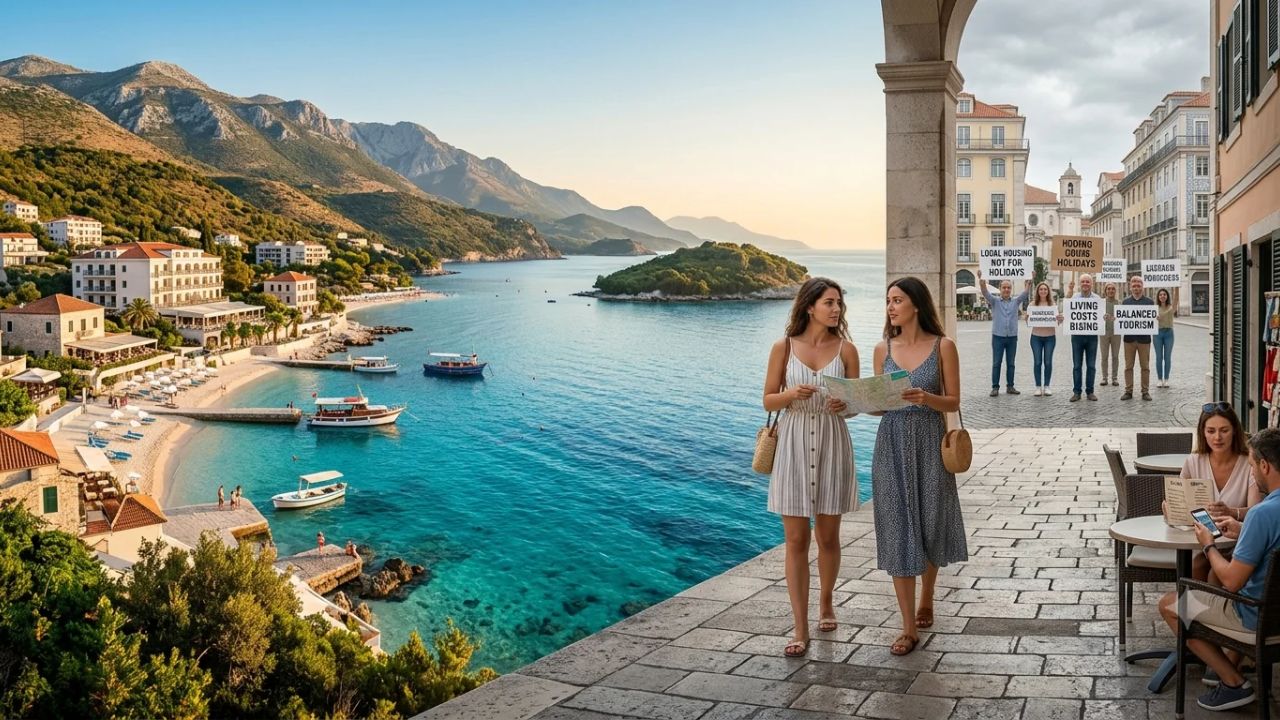
Albania and major European leisure destinations are confronting an intensifying convergence of macroeconomic volatility and domestic social resistance, as rising operating costs, central bank interest rate holds, and widespread citizen demonstrations against overtourism challenge the sustainability of the continent’s post-pandemic travel boom.
Across the Mediterranean and Balkan corridors, the straightforward recovery narrative that characterized European leisure travel over recent seasons is transitioning into an intricate policy dilemma. In Albania, celebrated as one of Europe’s fastest-growing budget coastal destinations, the Bank of Albania’s fourth-quarter Monetary Policy Report warns of shifting economic risks, as upward inflation pressures collide with moderating growth projections and street-level demonstrations over coastal land privatization. Concurrently, premier holiday hubs across Spain, Italy, Portugal, and France are experiencing unprecedented civil mobilization, as local populations protest against escalating housing shortages, hyper-tourism, and diminishing quality of life.
These twin forces—unrelenting cost-of-living inflation and community-led resistance—are fundamentally altering the financial and social architecture of European tourism. For travelers, hoteliers, and municipal policymakers, the evolving landscape requires a recalibration of pricing expectations, regulatory safeguards, and visitor distribution models to avoid lasting structural harm to destination economies.
Albania’s Economic Dilemma: The Bank of Albania Monetary Assessment
Albania’s rapid rise from an off-the-beaten-path Balkan discovery to an international tourism heavyweight has been one of Europe’s most remarkable travel success stories. Between 2022 and 2025, visitor arrivals multiplied dramatically, attracted by pristine Ionian and Adriatic coastlines, dramatic mountain landscapes, and substantial price advantages relative to traditional Mediterranean competitors like Greece, Italy, and Croatia.
However, the Bank of Albania’s fourth-quarter Monetary Policy Report reveals that the country’s macroeconomic risk profile has deteriorated noticeably. The central bank's analysis emphasizes that external macroeconomic shocks, coupled with domestic market frictions, are driving inflation risks upward while exerting downward drag on economic expansion.
========================================================================================
BANK OF ALBANIA MONETARY POLICY & INFLATION BENCHMARKS (Q3/Q4 2026)
========================================================================================
Economic / Monetary Metric           Observed Benchmark Level          Policy Significance
----------------------------------------------------------------------------------------
Base Policy Interest Rate            2.50% (Held Unchanged in Nov)     Accommodative Stance
Average Q3 Headline Inflation        3.2% (Up from 3.0% in Q2)         Cost-Push Pressures
Peak Monthly Inflation (July 2026)   3.4% Year-on-Year                 Energy & Food Spikes
Late-Quarter Inflation (Sept 2026)   2.9% Year-on-Year                 Decelerating Trend
Core Inflation (Excluding Energy/Food)2.8% in Third Quarter             Moderating Service Costs
Domestic Rental Cost Growth          Noticeable Deceleration           Cushions Core Index
National Currency Movement (Lek)     Persistent Nominal Appreciation   Disinflationary Shield
Medium-Term Inflation Target         3.0% Convergence Objective        Central Bank Target
========================================================================================
Source: Bank of Albania Supervisory Council Monetary Policy Report & Economic Bulletin.
========================================================================================
At its November 2026 meeting, the Bank of Albania’s Supervisory Council opted to hold the benchmark policy interest rate steady at 2.50 percent. Maintaining this accommodative interest rate level provides monetary authorities with necessary flexibility to determine whether emerging price spikes represent transitory supply-chain anomalies or deeply entrenched structural imbalances.
The central bank's detailed inflation metrics delineate a complex operating environment for the hospitality and travel sectors:
- Energy and Food Cost Pressures: Average inflation accelerated to 3.2 percent in the third quarter of 2026, up from 3.0 percent in the preceding quarter. This increase was driven primarily by volatile international petroleum prices and sharp increases in unprocessed food commodities, squeezing margins for independent coastal hotels, tour operators, and restaurants.
- The Lek Exchange Rate Shield: Offsetting imported cost pressures, the persistent appreciation of the Albanian Lek (ALL) against both the Euro and the US Dollar served as an effective macroeconomic buffer. By lowering the domestic-currency cost of imported fuel, electrical equipment, and food provisions, the strong Lek shielded the domestic economy from worse imported inflationary spikes.
- Core Inflation Moderation: Headline inflation moderated toward the end of the summer, falling from 3.4 percent in July to 2.9 percent in September. A parallel deceleration in commercial and residential rental inflation helped anchor core inflation at 2.8 percent across the third quarter.
While the Bank of Albania projects that the national economy will continue growing near its theoretical potential and that inflation will converge toward its statutory 3.0 percent target, policymakers emphasize that this favorable baseline depends heavily on resolving domestic social unrest before forward summer booking cycles are compromised.
Domestic Friction: Coastal Protests and Governance Disputes in Albania
The financial pressures outlined by the central bank have coincided with mounting domestic civil demonstrations across Albanian coastal communities and major urban centers, including Tirana, Vlorë, Saranda, and Durrës.
At the center of public discontent is the government’s aggressive promotion of large-scale resort concessions and strategic investment laws along the Albanian Riviera. Local residents, environmental advocacy groups, and small-business associations have organized widespread public demonstrations protesting against:
- Privatization of Public Shorelines: Commercial concessions granted to high-end resort developers have converted extensive stretches of formerly public beaches—particularly around Ksamil, Dhërmi, Himara, and the Vlorë coastline—into privatized beach clubs charging exorbitant sunbed rental fees, often ranging from €30 to over €100 per day.
- Ecological Encroachment in Protected Wetlands: Civil protests have targeted major infrastructure initiatives, including the controversial Vlorë International Airport project situated adjacent to the protected Narta Lagoon, a vital wetland stopover for migratory flamingos and pelicans.
- Utility and Infrastructure Bottlenecks: Explosive tourism arrivals have repeatedly overwhelmed municipal water distribution grids, electrical transformers, and sewage treatment systems in coastal municipalities during peak summer months, sparking local outrage over water outages and utility rate hikes.
========================================================================================
ALBANIA TOURISM SECTOR FRICTION: ECONOMIC DRIVERS VS LOCAL GRIEVANCES
========================================================================================
Economic Growth Driver               Associated Local Friction         Tourism Impact
----------------------------------------------------------------------------------------
Rapid foreign investment in luxury   Exclusion of public access to     Alienation of budget
resorts & private beach clubs        traditional coastal shorelines    travelers; public anger.
----------------------------------------------------------------------------------------
Strong national currency (Lek)       Reduced purchasing power for      Loss of competitive price
appreciation against Euro            budget European holidaymakers     advantage vs Greece/Italy.
----------------------------------------------------------------------------------------
Soaring visitor volumes during       Strain on municipal power, water, Grid failures, localized
concentrated summer peak weeks       and waste-management utilities   protests, & service drops.
----------------------------------------------------------------------------------------
Escalating real estate valuation     Local residents and seasonal      Staffing shortages in
driven by short-term rentals         workers priced out of housing     coastal hospitality sector.
========================================================================================
When street demonstrations, blockades, and political friction linger, consumer confidence declines and international tour operators hesitate to commit non-refundable room allotments. For Albania, whose national economic expansion relies heavily on foreign visitor expenditure, persistent social unrest risks eroding the nation’s core market identity as a peaceful, hospitable, and budget-accessible Mediterranean sanctuary.
The Broader European Landscape: The Anti-Overtourism Revolt
Albania’s emerging social tensions mirror a profound structural rebellion against unsustainable tourism models unfolding across Southern Europe. In premier destinations across Spain, Italy, and Portugal, grassroots community movements are actively resisting high-density visitor volumes that have distorted local property markets and altered historic city life.
========================================================================================
ANTI-OVERTOURISM RESISTANCE ACROSS SOUTHERN EUROPEAN LEISURE HUBS
========================================================================================
Destination          Core Community Grievance                  Municipal Policy Intervention
----------------------------------------------------------------------------------------
Barcelona, Spain     Hyper-tourism, rising residential rents,  Complete phase-out of 10,000+ short-
                     eviction of locals by short-term rentals  term tourist apartment licenses by 2028.
----------------------------------------------------------------------------------------
Mallorca, Spain      Congested beaches, environmental strain,  Strict caps on cruise ship dockings;
                     soaring housing costs for islanders       doubling of sustainable tourism tax.
----------------------------------------------------------------------------------------
Venice, Italy        Depopulation of historic center,          Expansion of mandatory €5-€10 day-
                     overcrowded canals, mass day-trippers     tripper access fees; tour group size caps.
----------------------------------------------------------------------------------------
Lisbon, Portugal     Extreme residential displacement,         Freezes on new local accommodation
                     proliferation of unlicensed holiday lets  (Alojamento Local) registry permits.
----------------------------------------------------------------------------------------
Nice & Paris, France Fiscal demonstrations, transit strikes,   Police cordons, municipal transit curbs,
                     civil protests affecting urban corridors  and heightened diplomatic travel warnings.
========================================================================================
Spain: Radical Housing Interventions and Street Protests
Spain, which welcomed over 85 million foreign tourists in 2025, has become the global epicenter of anti-overtourism activism. In Barcelona, thousands of residents marched through popular tourist avenues, using water pistols to spray dining visitors and unfurling banners declaring "Tourists Go Home, You Are Not Welcome."
The core grievance centers on housing affordability. The rapid expansion of unregulated short-term holiday apartments managed via online platforms caused long-term residential rental rates to surge by more than 68 percent over the past decade, forcing young professionals, working-class families, and senior citizens out of central neighborhoods like the Gothic Quarter and Eixample. In response, Barcelona’s municipal government enacted an unprecedented decree to eliminate all 10,101 licensed tourist apartments by November 2028, returning those properties to the primary residential market.
In the Balearic Islands, massive demonstrations across Palma de Mallorca and Ibiza rallied under the slogan "Menys Turisme, Més Vida" (Less Tourism, More Life), demanding strict moratoria on airport expansion, the doubling of the regional ecotax, and hard limits on rental vehicles entering the islands.
Italy: Day-Tripper Levies and Group Size Restrictions
In Italy, historic cultural capitals are deploying aggressive administrative measures to curb congestion. Venice implemented a world-first pilot program requiring day-tripping tourists to register online and pay a €5 entry fee on peak spring and summer weekends. Following review of the pilot's effectiveness, municipal authorities confirmed plans to double the fee to €10 on high-density dates in 2027 and expand the enforcement calendar to 54 designated peak days.
Concurrently, Venice capped walking tour groups at a maximum of 25 individuals and prohibited the use of loud megaphones by commercial tour guides to restore neighborhood tranquility. Similar friction has surfaced in Naples, Rome, and Florence, where historic artisan workshops are increasingly displaced by souvenir stalls, fast-food franchises, and luggage-storage facilities.
Portugal: The Battle Over Urban Displacement
Portugal's major urban centers of Lisbon and Porto have experienced sustained citizen mobilizations against hyper-gentrification. Under pressure from civic movements like "Movimento Referendo pela Habitação," municipal councils have frozen new registrations for short-term vacation rentals (Alojamento Local) across historic quarters such as Alfama, Bairro Alto, and Mouraria. Residents argue that tax incentives historically granted to foreign digital nomads and luxury real estate buyers have driven housing costs far beyond local earning power, sparking strikes and public rallies.
France: Fiscal Unrest and Urban City-Break Disruptions
In France, urban tourism has been challenged by recurring waves of domestic political and fiscal protests. Demonstrations across Paris, Lyon, Marseille, and Nice protesting government budgetary policies, pension reforms, and public service cutbacks have triggered sporadic clashes with security personnel, localized municipal curfews, and sudden transit strikes that halt commuter rail lines and regional express networks. Foreign embassies have repeatedly issued security advisories urging visitors to steer clear of major public demonstration corridors, dampening spontaneous city-break bookings.
========================================================================================
MUNICIPAL TOURIST TAXES & SHORT-TERM RENTAL RESTRICTIONS ACROSS EUROPE (2026–2027)
========================================================================================
City / Destination   Tourist Tax Rate / Mechanism      Short-Term Rental Regulatory Status
----------------------------------------------------------------------------------------
Barcelona, Spain     Up to €6.75–€7.50 per night       Complete ban on all 10,000+ tourist
                     (combined regional & city tax)    apartment licenses effective Nov 2028.
----------------------------------------------------------------------------------------
Venice, Italy        €5 to €10 daily access fee on 54  Strict cap on tour groups (max 25 people);
                     peak days; up to €5/night in hotelsban on guide megaphones in historic center.
----------------------------------------------------------------------------------------
Florence, Italy      €5.50 to €8.00 per night          Ban on new short-term rental registrations
                     depending on hotel star category  within UNESCO historic center boundary.
----------------------------------------------------------------------------------------
Lisbon, Portugal     €4.00 per night per guest         Freeze on new Alojamento Local licenses
                     (doubled from original €2.00 rate)across central residential parishes.
----------------------------------------------------------------------------------------
Paris, France        €2.60 to €14.95 per night         Strict 120-day annual cap on primary
                     (steepest rates for luxury/palace)residences; mandatory commercial licensing.
----------------------------------------------------------------------------------------
Amsterdam, Neth.     12.5% of total hotel room rate    Strict 30-night annual cap on private rentals;
                     (highest municipal tax in Europe) total ban on new hotel construction.
----------------------------------------------------------------------------------------
Athens, Greece       €1.50 to €10.00 climate crisis    One-year moratorium on new short-term
                     resilience fee per room night     rental permits across three central districts.
========================================================================================
Global Geopolitical Fractures and Cross-Continental Transit Disruptions
The headwinds confronting European tourism do not exist in isolation; they are exacerbated by broader geopolitical instability and transport choke points across the globe:
- Middle Eastern Airspace Vulnerability: Prolonged tensions involving Iran, Israel, and regional maritime corridors in the Red Sea and Arabian Gulf have forced global carriers to continually reroute long-haul flights between Europe and the Asia-Pacific region. These tactical detours add 45 to 90 minutes of flight time, elevate commercial jet fuel consumption, and introduce substantial war-risk insurance surcharges that inflate passenger airfares.
- Latin American Transport Blockades: In South America, economic instability and fuel-subsidy disputes in Bolivia and Peru have repeatedly severed overland highways and tourist rail links, occasionally stranding foreign visitors visiting iconic heritage sites like Machu Picchu and Lake Titicaca.
- Asian Civil Unrest: Public demonstrations over government governance and economic equity in destinations like Nepal and Indonesia illustrate how rapidly localized political volatility can disrupt airport transport, hotel operations, and regional tour distribution.
========================================================================================
MACROECONOMIC & GEOPOLITICAL PRESSURES ON GLOBAL TRAVEL NETWORKS
========================================================================================
Crisis Dimension                     Operational Impact                Commercial Consequence
----------------------------------------------------------------------------------------
Airspace Rerouting (Middle East)     Longer flight times; avoidance    Elevated ticket prices;
                                     of regional conflict zones        higher airline operational burn.
----------------------------------------------------------------------------------------
Aviation Fuel & Energy Inflation     Higher refining margins and       Airlines pass fuel surcharges
                                     crude supply chain friction       directly onto passenger fares.
----------------------------------------------------------------------------------------
Domestic Municipal Tourist Levies    Double tourist taxes; access fees Direct increase in daily per-
                                     imposed on day-trippers           capita holiday expenditure.
----------------------------------------------------------------------------------------
Short-Term Rental Moratoria          Aggressive bans on urban holiday  Shrinking accommodation supply;
                                     rentals (e.g. Barcelona 2028)     soaring hotel room rates.
========================================================================================
The Redefinition of Tourism Economics: From Volume to Value
The converging crises across Albania and broader Europe demonstrate that the conventional metric of tourism success—relentless year-on-year growth in gross visitor arrivals—is economically and socially obsolete. Unchecked volume growth that degrades public infrastructure, displaces resident populations, and fuels double-digit inflation ultimately destroys the authentic cultural and environmental assets that attracted travelers in the first place.
Forward-looking tourism economics is pivoting toward a regenerative model built upon four fundamental operational tenets:
========================================================================================
THE REGENERATIVE TOURISM PARADIGM: STRATEGIC SHIFTS FOR 2027 AND BEYOND
========================================================================================
Traditional Volume-Driven Model      Regenerative Value-Driven Model   Strategic Objective
----------------------------------------------------------------------------------------
Maximizing total visitor numbers     Optimizing yield per visitor      Higher economic return
regardless of seasonal spikes        and average length of stay        with lower environmental load.
----------------------------------------------------------------------------------------
Concentrating arrivals along iconic  Active spatial dispersal into     Relieving urban choke points;
coastal strips & historic centers    rural & secondary regional hubs   distributing wealth evenly.
----------------------------------------------------------------------------------------
Unregulated short-term holiday       Strict licensing, municipal caps, Protecting local housing;
rental proliferation                 and residential zoning reserves   maintaining social fabric.
----------------------------------------------------------------------------------------
Treating public natural assets       Reinvestment of tourist taxes     Preserving environmental and
as unmonetized open resources        into conservation & public transitcultural capital for locals.
========================================================================================
Spatial and Seasonal Dispersal
To avoid localized overtourism, national tourism boards are aggressively marketing secondary and tertiary regional destinations. In Albania, authorities are encouraging visitors to look beyond the congested beaches of Saranda and Ksamil toward the mountainous interior—promoting hiking in the Accursed Mountains (Theth and Valbona), cultural heritage in Gjirokastër and Berat, and culinary agritourism across the Vjosa River National Park basin. Similarly, Spain and Italy are incentivizing travel during off-peak shoulder seasons (October through April) to smooth out destabilizing summer visitor peaks.
Protecting Local Social License
A tourism destination cannot thrive without the active consent and social license of its permanent population. When local residents can no longer afford to rent homes in their native cities, when utility grids collapse, and when historic public spaces are overtaken by commercial terraces, public hostility becomes inevitable. Forward-looking municipal planning requires ring-fencing residential neighborhoods, enforcing living-wage standards for hospitality workers, and ensuring that tourist tax proceeds fund visible public improvements, such as parks, affordable housing funds, and public transport subsidies.
Practical Guidance for Travelers in a Volatile European Landscape
For international holidaymakers arranging European travel in 2027, adapting to this shifting macroeconomic and political reality requires strategic planning:
- Anticipate New Travel Fees and Local Taxes: Budget for escalating municipal tourist taxes across major European destinations. Travelers should factor in local daily bed taxes (which can add €5 to €15 per night per person in cities like Barcelona, Rome, and Paris) and ensure advance online registration for day-trip entry permits where required.
- Verify Accommodation Legality: As European municipalities crack down on illegal holiday lets, travelers booking private apartments should verify that the property displays an official municipal registration number to prevent unexpected last-minute booking cancellations by enforcement authorities.
- Maintain Situational Awareness During Civil Demonstrations: If demonstrations or protests erupt in urban centers, travelers should avoid large gatherings, steer clear of government plazas and transport hubs targeted by marches, and follow local municipal police notices. Enrolling in diplomatic tracking registries (such as the U.S. STEP or UK FCDO alert systems) ensures rapid access to emergency advisories.
- Purchase Comprehensive Flexible Travel Insurance: Ensure travel insurance policies include robust trip-cancellation, travel-delay, and civil-unrest coverage, and verify whether government advisories impact policy validity before confirming reservations.
========================================================================================
TRAVEL PLANNING RISK CHECKLIST FOR EUROPEAN DESTINATIONS
========================================================================================
Category             Action Item                                       Operational Guidance
----------------------------------------------------------------------------------------
Accommodation Check  Verify municipal registration license             Avoids booking illegal rentals
                                                                       facing sudden regulatory closure.
----------------------------------------------------------------------------------------
Cost Budgeting       Account for municipal tourist taxes & levies      Review per-night local taxes
                                                                       payable directly at check-in.
----------------------------------------------------------------------------------------
Itinerary Flexibility Allow buffer times for transit strikes & delays  Avoid tight train/flight transfers
                                                                       during known strike calendars.
----------------------------------------------------------------------------------------
Local Etiquette      Respect residential boundaries & quiet zones      Support local businesses and
                                                                       patronize community-owned dining.
========================================================================================
Strategic Outlook: The Quest for Sustainable Equilibrium
The mounting challenges facing Albania, Spain, Italy, Portugal, and France mark a defining turning point in modern global travel. The era of frictionless, low-cost mass tourism is encountering its ecological, economic, and social boundaries.
For Albania, maintaining its economic vitality requires executing a delicate balancing act: implementing disciplined monetary policies that anchor inflation while respecting community rights along its fragile coastlines. For Southern Europe’s established tourism superpowers, the imperative lies in transforming extractive tourism into an equitable, well-regulated industry that enhances, rather than diminishes, local community life.
As travelers and destinations look ahead toward 2027, the lesson is clear: true destination value is measured not by the sheer volume of arrivals, but by the sustainable harmony achieved between visiting travelers, thriving local residents, and the enduring natural and cultural heritage of the continent.
Related Travel Guides
- UAE Travel Advisories Diverge as US Retains Level 3 Warning While Australia, UK, and Canada Assess Airspace Debris Risks
- Nepal Invests Rs 4.5 Billion in Rupa Lake Tourism Expansion: Dam Construction, Island Temple, and Eco-Recreation Corridor in Pokhara
- Italy and European Destinations Expand Summer 2027 Travel: New Ryanair Shannon–Milan Flights, Mediterranean Cruises, and Top Hotel Rankings
- Madrid Expands Christmas Tourism for 2026–2027: 14 Million Lights, Giant Snowman, and International Visitor Growth from UK, US, and Mexico
This article is for informational purposes. Flight routes, passenger regulations, visa rules, and transit advisories are subject to change by airlines and aviation authorities. Readers are advised to verify schedules and travel documentation with relevant carriers and border agencies before departure.
Related Stories
Albania Euro Exchange Rate Plummets 35% Against Lek Since 2016 as Tourism Inflows and Property Boom Reshape Travel Costs
Canada and Greece Advance Landmark Tourism MoU to Expand Transatlantic Travel, Cultural Heritage, and Bilateral Trade