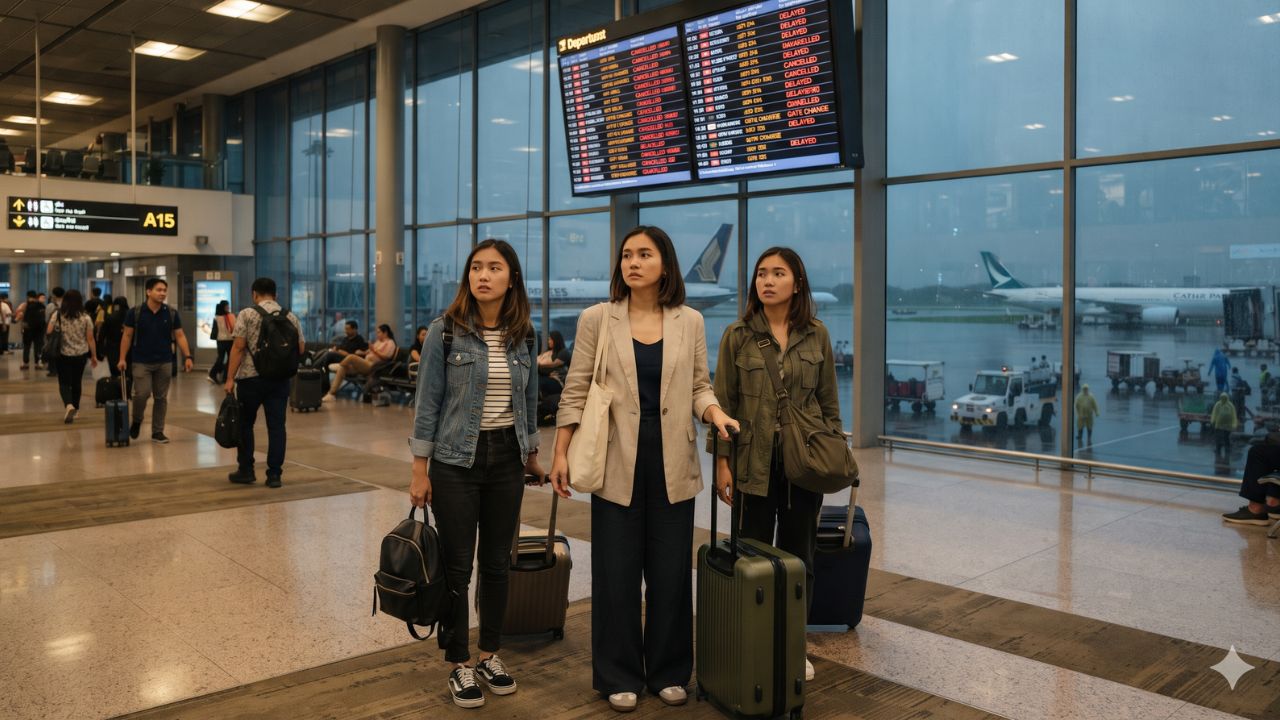
Asia Air Travel Hit by 193 Cancellations and 1,573 Delays: Mumbai, Jeddah, and Manila Lead Flight Gridlock

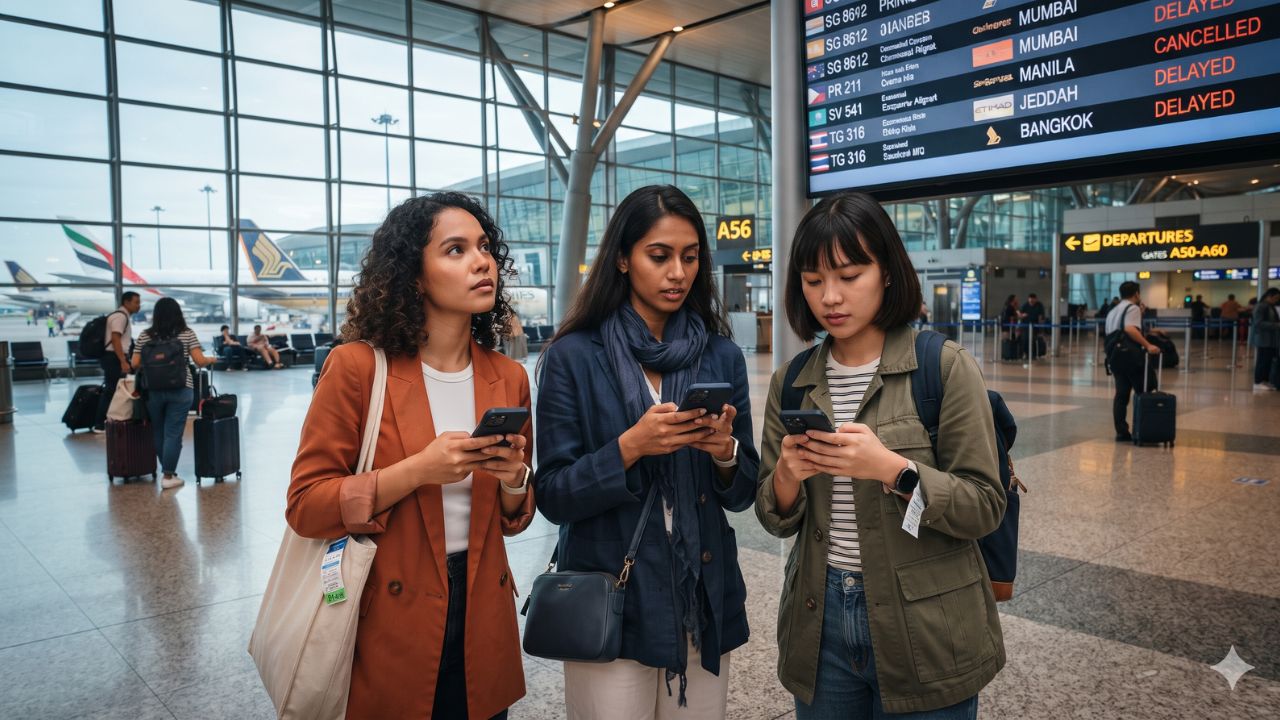
While Mumbai’s Chhatrapati Shivaji Maharaj International Airport saw a staggering 36% of its departures delayed as 308 flights fell behind schedule, the focal point of outright flight groundings shifted to the Arabian Peninsula, where airports in Jeddah and Riyadh accumulated 61 cancellations in a single day. Real-time tracking data logged by FlightAware as of 1 November 2026 at 1:26 pm US Eastern Time (11:56 pm Indian Standard Time) confirmed an aggregate of 193 cancellations and 1,573 flight delays across 18 major Asian airports. The cascading operational bottleneck spanned Indian commercial capitals, Southeast Asian transit crossroads like Jakarta and Manila, and Middle Eastern gateways, leaving international travelers and business commuters absorbing missed connections, aircraft turnaround deficits, and extended gate holds across the continent.
Trans-Asian Aviation Disruption: Gate Congestion and Middle East Reroutings
The disruption pattern reflects two distinct operational pressures converging across Asian airspace: heavy terminal congestion across South and Southeast Asian domestic corridors, compounded by geopolitical airspace restrictions surrounding the Arabian Peninsula.
In India, high passenger volumes and tight aircraft turnaround schedules created significant ground delays. Mumbai recorded 308 delayed flights (a 36% departure delay rate and a 30% arrival delay rate) alongside 17 cancellations. In the national capital, Delhi's Indira Gandhi International Airport logged 292 delays (a 21% departure delay rate and a 19% arrival delay rate) alongside 12 cancellations. Bengaluru’s Kempegowda International Airport experienced 100 delays and 19 cancellations, while newly inaugurated Navi Mumbai registered eight cancellations and 19 delays.
Concurrently, commercial air links between South Asia and the Gulf suffered severe schedule reductions. King Abdulaziz International Airport in Jeddah recorded 32 cancellations and 87 delays, while King Khalid International Airport in Riyadh posted 29 cancellations and 14 delays. The grounding of Gulf routes stems directly from ongoing security evaluations following attacks on aviation infrastructure in Saudi Arabia. Indian operators have enacted extended flight suspensions to protect passenger safety:
- Akasa Air: Grounded passenger services connecting India with Jeddah through 18 November 2026, and maintained Riyadh cancellations through 30 November 2026, leading all Asian airlines with 40 cancellations.
- Air India and Air India Express: Suspended scheduled services to Jeddah, Riyadh, and Dammam through 14 November 2026.
- IndiGo: Extended flight suspensions serving Riyadh, Jeddah, Dammam, and Madinah through 14 November 2026, while recording 396 delays across its broader domestic network.
In Southeast Asia, major island gateways experienced severe schedule pressure. Indonesia’s primary hub, Soekarno-Hatta International Airport in Jakarta, logged 228 delays (19% departure delay rate, 18% arrival delay rate) and 10 cancellations. In the Philippines, the Manila International Airport Authority reported 117 delays and 10 cancellations at Ninoy Aquino International Airport, representing a 14% departure delay rate and a 13% arrival delay rate.
Disrupted Airports and Carrier Performance Data
The scope of the disruption illustrates how schedule delays at primary hubs quickly spill into regional secondary stations. Across the 18 surveyed airports, delays outpaced cancellations by an eight-to-one margin, indicating that while flights eventually operated, crew duty-time limitations and gate congestion compounded throughout the operational day.
| Airport Gateway | City & Country | Flight Cancellations | Flight Delays Recorded | Primary Delay Pattern |
|---|---|---|---|---|
| King Abdulaziz (JED) | Jeddah, Saudi Arabia | 32 | 87 | Security restrictions & airspace holds |
| King Khalid (RUH) | Riyadh, Saudi Arabia | 29 | 14 | Extended regional flight groundings |
| Kempegowda (BLR) | Bengaluru, India | 19 | 100 | Peak morning departure congestion |
| Chhatrapati Shivaji (BOM) | Mumbai, India | 17 | 308 | 36% departure / 30% arrival delay rate |
| Indira Gandhi (DEL) | Delhi, India | 12 | 292 | 21% departure / 19% arrival delay rate |
| Bahrain International (BAH) | Manama, Bahrain | 12 | 12 | Regional Gulf transit adjustments |
| Ninoy Aquino (MNL) | Manila, Philippines | 10 | 117 | 14% departure / 13% arrival delay rate |
| Soekarno-Hatta (CGK) | Jakarta, Indonesia | 10 | 228 | 19% departure / 18% arrival delay rate |
| Navi Mumbai (NMI) | Navi Mumbai, India | 8 | 19 | Feeder rotation schedule delays |
| Mactan-Cebu (CEB) | Cebu, Philippines | 7 | 26 | Inter-island shuttle propagation |
| Calicut (CCJ) | Kozhikode, India | 6 | 9 | Suspended Gulf expatriate flights |
| Zunyi Xinzhou (ZYI) | Zunyi, China | 6 | 1 | Regional schedule rationalization |
| Netaji Subhash Chandra (CCU) | Kolkata, India | 5 | 49 | Eastern India connecting delays |
| Sultan Hasanuddin (UPG) | Makassar, Indonesia | 5 | 56 | Eastern archipelago transit holds |
| Pune Airport (PNQ) | Pune, India | 5 | 29 | Military slot restrictions & congestion |
| Rajiv Gandhi (HYD) | Hyderabad, India | 4 | 72 | Domestic connecting wave delays |
| Hongqiao (SHA) | Shanghai, China | 3 | 77 | Eastern China trunk route flow control |
| Capital International (PEK) | Beijing, China | 3 | 77 | Northern corridor airspace regulation |
| Total Disruption | 18 Asian Airports | 193 | 1,573 | Network-Wide Propagation |
Among individual airlines, low-cost carriers with high fleet utilization rates absorbed the heaviest schedule shocks. Budget carrier Akasa Air registered the highest cancellation volume with 40 grounded flights, alongside 40 delays. India’s largest airline, IndiGo, recorded the highest absolute delay figure across Asia with 396 delayed flights, while canceling 15 services. Indonesia’s Batik Air accumulated 19 cancellations and 64 delays, while China Eastern experienced 12 cancellations and 166 delays across Chinese domestic routes.
| Airline Operator | Nationality | Flight Cancellations | Flight Delays Recorded | Operational Status Summary |
|---|---|---|---|---|
| Akasa Air | India | 40 | 40 | Highest cancellations (Saudi suspensions) |
| Batik Air | Indonesia | 19 | 64 | Domestic Indonesian network rotation |
| IndiGo | India | 15 | 396 | Highest delay volume across Asia |
| China Eastern | China | 12 | 166 | Domestic Chinese air traffic control flow |
| Gulf Air | Bahrain | 12 | 4 | Regional Middle East flight adjustments |
| SpiceJet | India | 11 | 49 | Fleet maintenance and rotation deficits |
| Saudia | Saudi Arabia | 8 | 50 | Security re-routings and apron holds |
| Philippine Airlines | Philippines | 8 | 48 | Inter-island and regional Manila delays |
Visitor Insider Tips: Navigating Asian Airport Gridlock
For international travelers holding tickets through these congested hubs, proactive airport management strategies can prevent stranded itineraries:
- Monitor Aircraft Inbound Tail Numbers Rather Than Departure Times: When departing Mumbai, Delhi, or Jakarta, do not rely solely on the scheduled departure board. Use tracking apps to identify the exact inbound aircraft registration assigned to your flight. If the inbound jet has not departed its previous station, your departure will inevitably be delayed regardless of optimistic gate announcements.
- Buffer Manila NAIA Terminal Transfers by Four Hours: Terminal transfers at Manila Ninoy Aquino International Airport (between Terminals 1, 2, and 3) require exiting into city street traffic. With 14% of departures delayed, never book domestic Philippine connections with less than four hours between landing and your onward international flight.
- Assert Compensation Rights Under Directorate General of Civil Aviation India Civil Aviation Requirements: Under Indian DGCA Section 3 guidelines, if an airline cancels a flight without giving two weeks' prior notice, passengers are entitled to an alternate flight or a full refund, plus meals and refreshments if the delay exceeds two hours during airport layovers.
- Verify Direct Interlining Before Accepting Reroutes via the Gulf: If your flight connecting through Saudi Arabia or Bahrain is altered, confirm with the ticketing desk that your luggage is checked through to your final destination. Avoid booking separate unlinked tickets across different carriers, which leaves you unprotected during missed transfers.
- Download Offline Boarding Passes Before Entering Terminals: High passenger volumes in Mumbai T2 and Jakarta T3 frequently overload airport Wi-Fi and mobile cellular data towers. Save your boarding pass and e-ticket receipt directly to your mobile wallet before stepping out of your taxi.
Cultural and Environmental Context: Transit Arteries and Community Resilience
Air corridors across South Asia, Southeast Asia, and the Arabian Peninsula are fundamentally human lifelines. In the Philippines, domestic air links between Manila, Cebu, and Davao sustain archipelago family unity, allowing overseas Filipino workers returning from the Middle East to reach provincial island homes. In India and Indonesia, high-frequency domestic flights connect regional agrarian centers with economic capitals, supporting trade, family reunions, and regional pilgrimage journeys.
When aviation networks grind to a halt, the human toll is absorbed by ordinary travelers: migrant laborers sleeping on terminal carpets, elderly pilgrims waiting for delayed Umrah flights, and small business owners missing vital trade conferences. From an environmental perspective, 1,573 delayed aircraft burning thousands of gallons of auxiliary power fuel at idling gates and taxiway holding positions significantly increase local air pollution around densely populated metropolitan basins like Mumbai and Jakarta. Improving air traffic flow management and expanding modern rail alternatives remains imperative for regional environmental sustainability.
FAQ: Asian Flight Disruptions November 2026
Which Asian airports experienced the highest flight delays and cancellations?
Chhatrapati Shivaji Maharaj Airport in Mumbai recorded the highest number of delays with 308 flights behind schedule, while King Abdulaziz Airport in Jeddah registered the highest cancellations with 32 grounded flights.
Why are so many flights between India and Saudi Arabia being cancelled?
Commercial services to Jeddah, Riyadh, Dammam, and Madinah are disrupted due to regional security reviews and airspace restrictions following attacks on aviation infrastructure. Akasa Air, Air India, and IndiGo have extended route suspensions into mid-to-late November 2026.
What should I do if my flight in Mumbai or Jakarta is severely delayed?
Check your inbound aircraft's live tracking status, request meal vouchers from airline customer service desks if delays exceed two hours, and contact your travel insurance provider to document schedule modifications for compensation claims.
Are flight operations at Manila Ninoy Aquino Airport cancelled completely?
No. Ninoy Aquino Airport reported 10 cancellations and 117 delays, operating with a 14% departure delay rate. The majority of flights continue to depart, though passengers should allocate generous buffer times for transfers.
[Across the vast skies of Asia, patience, digital tracking tools, and generous connecting buffers remain the traveler's most reliable allies when schedule disruptions strike.]
Related Travel Guides
This article is for informational purposes. Flight routes, passenger regulations, visa rules, and transit advisories are subject to change by airlines and aviation authorities. Readers are advised to verify schedules and travel documentation with relevant carriers and border agencies before departure.
Related Stories

Middle East Flight Disruptions: 560 Delays and 95 Cancellations Hit Dubai, Jeddah, Cairo, and Regional Hubs

Asia Air Travel Hit by 371 Cancellations and 3,663 Flight Delays: Bangkok, Mumbai, and Shanghai Lead Gridlock