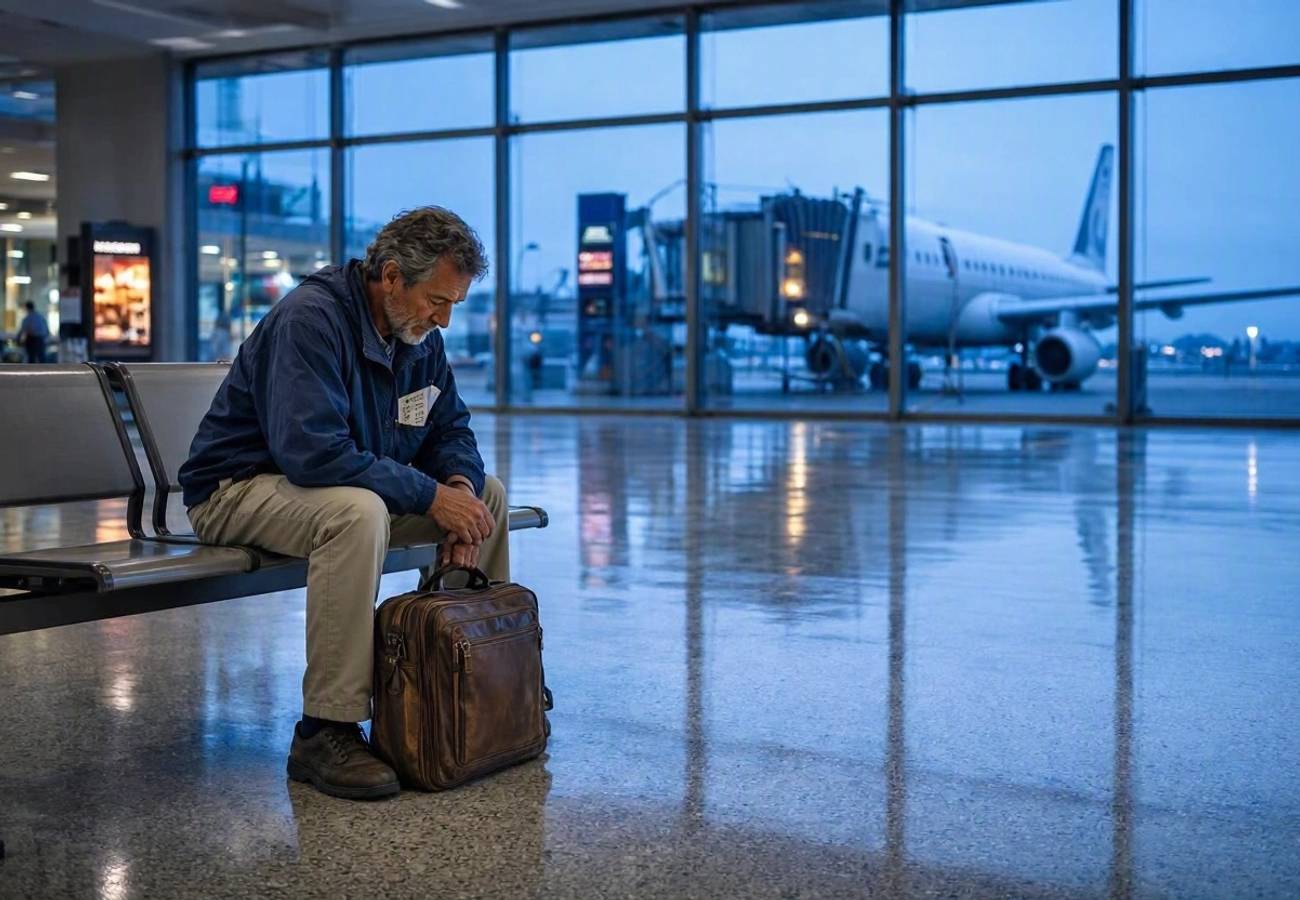
European Flight Bomb Threats Trigger Seven Emergency Landings and Diversions: Ryanair, LOT, and Wizz Air Security Guide 2026

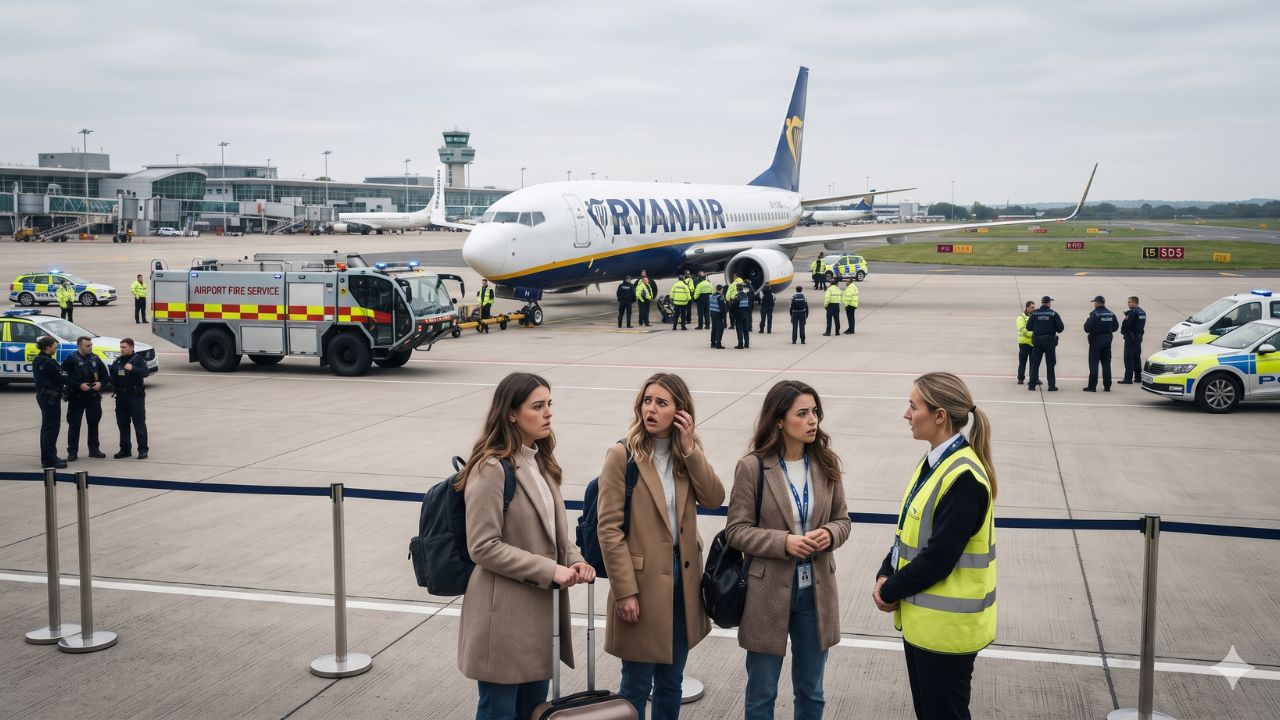
While European airspace manages over thirty thousand commercial passenger services daily, a wave of security threats on 3 November 2026 disrupted seven airliners simultaneously, triggering military fighter escorts, unscheduled diversions, and airport suspensions across four countries without a single explosive device being discovered. Initial emergency reports indicated six commercial services were impacted, but subsequent investigations by civil aviation ministries confirmed seven separate passenger flights received threats throughout Tuesday. The targeted operations included four flights operated by Ryanair, alongside individual services flown by LOT Polish Airlines, Scandinavian Airlines (SAS), and Wizz Air.
Aviation safety protocols activated immediately across Poland, Spain, Italy, and Bulgaria. Specialized military jets escorted airliners through international skies, law enforcement personnel cordoned off runways, and bomb disposal squads methodically swept passenger cabins, baggage holds, and cargo manifests. National aviation regulators, airport ground handlers, and civil protection teams worked under standard aerodrome frameworks established by the European Union Aviation Safety Agency, returning all grounded aircraft to service once inspections confirmed the threats were false.
Heightened Airspace Protocols: The Seven Disrupted Routes on 3 November 2026
The wave of security alerts struck passenger routes traversing Western, Central, and Southeastern Europe. While every affected aircraft landed safely and underwent thorough physical searches, the operational fallout varied considerably depending on aircraft fuel reserves, surrounding air traffic density, and available metropolitan airport infrastructure.
Poland's capital region absorbed two security alerts within hours. A LOT Polish Airlines service travelling from London Heathrow to Warsaw Chopin Airport received an in-flight threat, prompting pilots to execute an unscheduled diversion to Warsaw-Modlin Airport. Located forty kilometers north of Warsaw, Modlin suspended all airfield operations while emergency crews surrounded the aircraft. Authorities evacuated the passengers and conducted rigorous scans, with LOT confirming no suspicious items were present before normal airport movements resumed.
Simultaneously, Scandinavian Airlines flight SK751 from Copenhagen to Warsaw Chopin Airport received a security warning while on final approach. Unlike the LOT flight, the SAS crew completed their scheduled touchdown at Chopin. Air traffic controllers imposed immediate runway restrictions while emergency personnel met the aircraft on a remote taxiway, disembarked passengers, and cleared the airframe following technical inspections.
Ryanair absorbed the highest operational burden of the day, with four distinct aircraft targeted:
- Manchester to Murcia International: Flying into southeastern Spain, this service carried 121 people, comprising 114 passengers and seven crew members. Spanish airport operator Aena activated its emergency response protocol upon touchdown. Spain's Civil Guard examined the fuselage, baggage containers, and passengers before Francisco Lucas, Spanish Government Delegate for the Murcia region, officially confirmed that investigators ruled out the presence of explosives.
- Lisbon to Rome Fiumicino: Approaching central Italy, the aircraft landed under heightened security. Hub operator Aeroporti di Roma deployed police units, fire brigades, and specialized search teams to inspect the aircraft, carry-on luggage, and passenger manifests, clearing the alert without airport-wide disruptions.
- Dublin to Rome Fiumicino: Italian air defense authorities scrambled two Italian Air Force Eurofighter aircraft to intercept and escort the passenger jet through national airspace directly into Rome Fiumicino. Security personnel screened the airframe and cleared all cargo holds.
- Dublin to Sofia: Operating into western Bulgaria with 185 passengers on board, the airliner landed under security observation at Sofia Airport. Bulgarian transport authorities conducted a full physical inspection and verified that no explosive devices were present.
Wizz Air also recorded an alert on 3 November when its scheduled flight from Bergamo in northern Italy touched down at Sofia Airport with 176 passengers aboard. Specialized Bulgarian police units evacuated the cabin and inspected all baggage holds, finding no hazards.
Summary of European Flight Disruptions: 3 November 2026
| Operating Airline | Flight Route | Planned vs Actual Arrival | Security Protocol Activated | Clearance Status |
|---|---|---|---|---|
| LOT Polish Airlines | London Heathrow to Warsaw Chopin | Warsaw-Modlin (Diverted) | Unscheduled landing; Modlin runway operations halted | No suspicious items found; cleared |
| Scandinavian Airlines | Copenhagen to Warsaw Chopin (SK751) | Warsaw Chopin (Scheduled) | Remote apron parking; temporary runway restrictions | Aircraft inspected and cleared |
| Ryanair | Manchester to Murcia | Murcia International (Scheduled) | Aena emergency alert; 121 occupants disembarked | Civil Guard confirmed no explosives |
| Ryanair | Lisbon to Rome Fiumicino | Rome Fiumicino (Scheduled) | Ground inspection of cabin, baggage, and crew | Full inspection completed; cleared |
| Ryanair | Dublin to Rome Fiumicino | Rome Fiumicino (Scheduled) | Intercepted and escorted by 2 Italian Eurofighters | Security search completed; cleared |
| Ryanair | Dublin to Sofia | Sofia Airport (Scheduled) | Specialized Bulgarian police apron inspection | 185 passengers cleared; no hazards |
| Wizz Air | Bergamo to Sofia | Sofia Airport (Scheduled) | Bulgarian transport authority security sweep | 176 passengers cleared; no hazards |
Developing Pattern: Preceding European Aviation Incidents
The events of 3 November followed two separate aviation security scares across European skies during previous weeks. On 18 October 2026, an Austrian Airlines Airbus A320 flying from Tel Aviv to Vienna received a bomb threat while transiting Romanian airspace. Bulgarian defense commanders scrambled a Bulgarian Air Force MiG-29 fighter jet to intercept the flight, guiding it into Sofia Airport roughly 30 minutes after the alert sounded. All 51 passengers and six crew members evacuated safely on the tarmac, and bomb disposal officers cleared the aircraft before it resumed its journey to Vienna.
Two weeks later, on 2 November 2026, a Wizz Air flight connecting London Luton Airport to Sofia declared an airborne emergency after receiving an anonymous threat. Hungarian military controllers dispatched Gripen fighter jets to escort the passenger airliner into Budapest Ferenc Liszt International Airport. Hungary's Defence Minister Romulusz Ruszin-Szendi publicly confirmed the military intercept. Hungarian anti-terror units searched the passengers and luggage, finding no explosive devices.
| Incident Date | Airline | Route | Emergency Action Taken | Military or Civil Response | Outcome |
|---|---|---|---|---|---|
| 18 October 2026 | Austrian Airlines | Tel Aviv to Vienna | Diverted to Sofia Airport | Bulgarian Air Force MiG-29 escort | 51 passengers cleared; flight resumed |
| 2 November 2026 | Wizz Air | London Luton to Sofia | Diverted to Budapest Ferenc Liszt | Hungarian Air Force Gripen escort | Aircraft searched; no threat found |
| 3 November 2026 | Ryanair, LOT, SAS, Wizz Air | 7 routes across Europe | Diversions, runway holds, sweeps | Italian Eurofighter escorts; police sweeps | 7 aircraft cleared; 0 explosives found |
Federal investigators and police agencies across Europe continue to trace the digital communications behind these alerts. Authorities have not publicly identified the origin or established whether a single coordinated network orchestrated the threats.
Passenger Rights Under Regulation (EC) No 261/2004
When airborne security threats force unscheduled diversions or multi-hour tarmac inspections, travelers face significant itinerary disruptions, missed hotel reservations, and severed flight connections. The legal framework governing these events falls under Regulation (EC) No 261/2004, alongside post-Brexit British passenger regulations, monitored by the European Commission.
Under EU261 guidelines, substantiated bomb threats and security emergencies qualify as extraordinary circumstances. Because third-party threats fall outside an airline's direct operational control, carriers are generally exempt from paying statutory lump-sum delay compensation (typically ranging from €250 to €600). However, exemption from cash compensation does not release airlines from their mandatory statutory duty of care:
- Complimentary Food and Refreshments: Airlines must provide meal vouchers and drinking water during extended airport waiting periods tied to security holds.
- Communication Facilities: Passengers have the legal right to two free telephone calls, faxes, or email transmissions to arrange alternative travel plans.
- Hotel Accommodation and Ground Transfers: If a security sweep or diversion delays onward departure until the following day, the operating carrier must supply complimentary hotel lodging and round-trip transport between the terminal and hotel.
- Rerouting or Full Refund: If a flight is cancelled or delayed at departure by more than five hours due to airfield shutdowns, passengers can decline travel and demand a full ticket refund within seven days.
An unscheduled diversion does not automatically constitute a legal flight cancellation. If an airline lands at an alternate regional airport (such as Warsaw-Modlin instead of Warsaw Chopin) and arranges bus or rail transport to the original destination city, European transport law classifies the service as completed with an arrival delay.
Visitor Insider Tips: Managing Flight Diversions and Secondary Airport Arrivals in Europe
Experiencing an unexpected diversion or airport security lockdown requires quick thinking and reliable local knowledge:
- Master the Warsaw-Modlin Transit Route: If your Warsaw flight diverts to Warsaw-Modlin (WMI) rather than Chopin (WAW), do not wait for sporadic airport taxis that charge inflated metropolitan fares. Walk directly to the curb for the Koleje Mazowieckie shuttle bus, which runs every 20 minutes to Modlin railway station. From there, regional trains deliver you to Warszawa Centralna in 43 minutes for a combined ticket cost under 25 Polish złoty.
- Utilize Rome Fiumicino Express Links: Following security screenings at Rome Fiumicino Terminal 3, bypass crowded bus queues outside the arrivals hall. Follow the overhead pedestrian walkway directly to the Fiumicino Aeroporto rail station and board the non-stop Leonardo Express train to Roma Termini, running every 15 minutes with a journey time of 32 minutes.
- Plan Sofia Airport Terminal Transfers: Sofia Airport features two distinct terminals situated two kilometers apart. Low-cost services like Ryanair and Wizz Air often park at Terminal 1, which lacks direct metro access. Board the complimentary public airport shuttle bus that connects Terminal 1 to Terminal 2 every 30 minutes between 07:00 and 19:00, where Sofia Metro Line 1 whisks travelers to Serdika station in central Sofia in 18 minutes.
- Secure Written Airline Delay Certificates: Before leaving the baggage claim area after an emergency security search, visit the airline's ground handling desk and request an official written confirmation of diversion stating the flight number, arrival time, and underlying reason. Travel insurance providers require this documentation to reimburse independent hotel bookings and missed ground connections.
- Retain Every Expense Receipt: If airline representatives are unavailable to distribute meal or hotel vouchers during an active airfield emergency, purchase modest meals and budget hotel accommodation independently. Keep all itemized, date-stamped paper and digital receipts to submit an official EU261 duty of care reimbursement claim directly through the airline's customer relations portal.
Cultural and Environmental Context: Regional Airport Ecosystems and Airspace Resilience
The security events of 3 November highlight the vital role secondary and regional airports play across the European transport fabric. Facilities like Warsaw-Modlin, Murcia International, and Bergamo Orio al Serio were developed primarily to support regional economic development and low-cost leisure connectivity. When primary metropolitan gateways encounter sudden airspace restrictions, these outlying aerodromes function as safety valves, absorbing diverted commercial traffic and providing secure apron space away from congested city centers.
However, unexpected emergency diversions place distinct pressures on regional host communities. Secondary airports frequently operate with smaller firefighting contingents, limited border police staffing, and constrained ground transport fleets. A sudden influx of diverted wide-body or high-density narrow-body aircraft can overwhelm local taxi networks and municipal rail corridors.
Furthermore, military intercepts involving supersonic Eurofighters or Gripen fighters consume substantial quantities of aviation fuel, leaving an environmental footprint while preserving commercial airspace integrity. European cross-border civil-military aviation coordination ensures that despite malicious false alarms, commercial skies remain secure, orderly, and resilient.
FAQ: European Flight Security Protocols and Travel 2026
Are passengers entitled to EU261 cash compensation when flights divert due to bomb threats?
No. Aviation regulators classify security bomb alerts as extraordinary circumstances outside carrier control, exempting airlines from statutory compensation. However, airlines must fulfill their duty of care by providing meals, refreshments, and hotel accommodation.
How do travelers reach central Warsaw if diverted to Warsaw-Modlin Airport?
Warsaw-Modlin sits 40 kilometers north of the city. Travelers can board the airport shuttle bus to Modlin railway station to catch Koleje Mazowieckie trains to Warszawa Centralna, or reserve seats on direct express coach services.
What should travelers expect if their flight receives a military fighter escort?
Air defense fighters like Eurofighters or Gripens fly alongside commercial airliners as a precautionary measure to re-establish communication and guide the plane. Passengers remain seated normally while the airliner lands at an assigned secure apron for screening.
Does an unscheduled airport diversion count as a cancelled flight?
Not automatically. European passenger rights regulations distinguish between cancellations and diversions. If the carrier transports passengers overland to the scheduled destination or completes the final leg, the flight is treated as delayed rather than cancelled.
Rigorous emergency coordination and clear passenger rights guarantee that European air travel remains dependable and secure across every route.
Related Travel Guides
This article is for informational purposes. Flight routes, passenger regulations, visa rules, and transit advisories are subject to change by airlines and aviation authorities. Readers are advised to verify schedules and travel documentation with relevant carriers and border agencies before departure.
Related Stories
Warsaw Modlin Airport Bomb Hoax 2026: Analyzing EU Passenger Rights and Hidden Disruption Costs
US CDC Enforces Mandatory Ebola Attestation for India–USA Flights: 21-Day Health Rule and Boarding Guide 2026