
Malaysia East Coast Rail Link ECRL Enters Testing Phase for 2026-2027 Commercial Launch
The East Coast Rail Link (ECRL) begins critical system integration and 8,000-km trial runs to connect Kota Bharu and Port Klang by 2028.

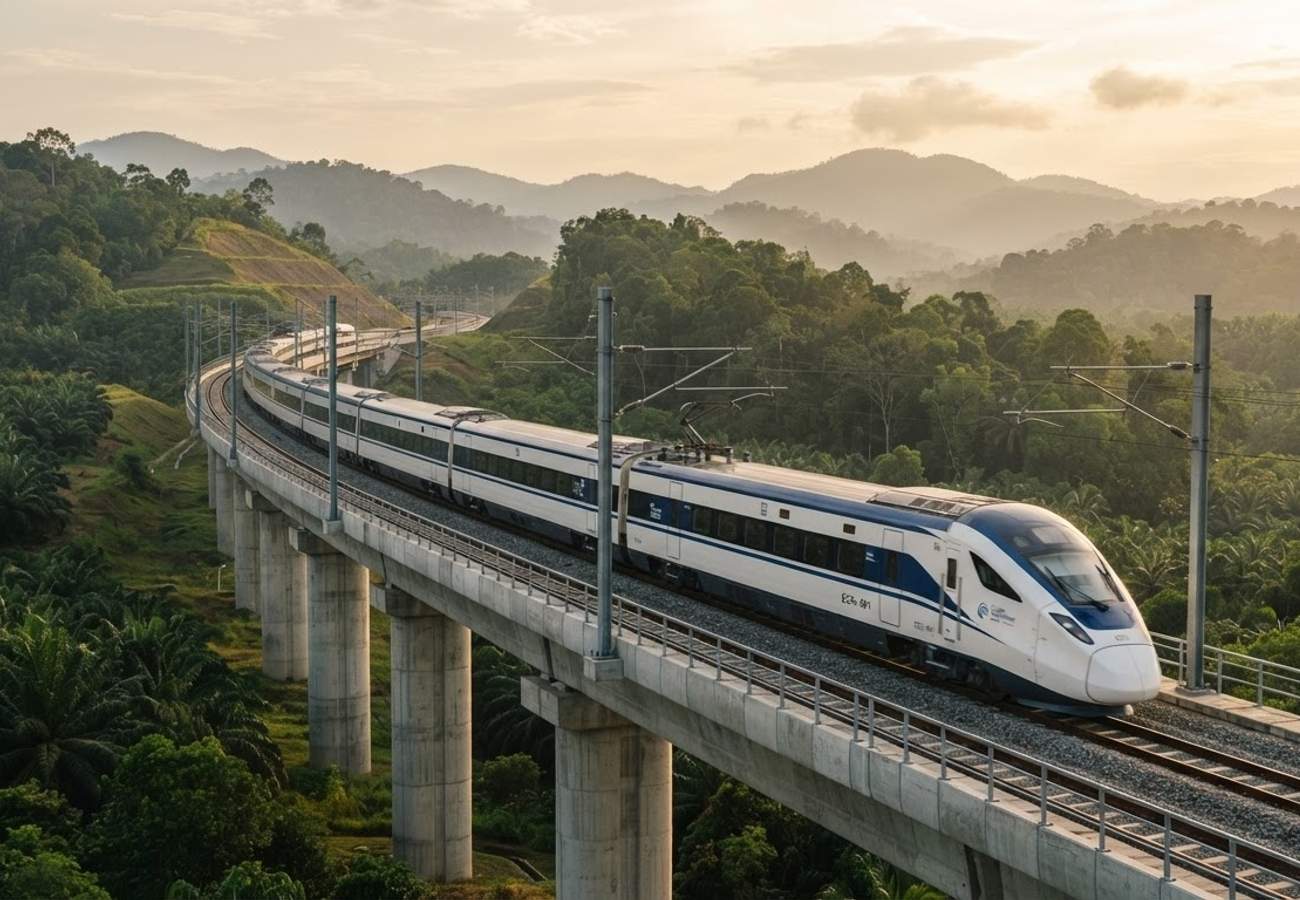
Image generated by AI
Malaysia has entered the critical commissioning phase of the East Coast Rail Link (ECRL), a 665-kilometer double electrification system designed to bridge the gap between the East Coast and the Klang Valley. The project is transitioning from heavy construction to system integration, marking a shift toward active passenger and freight operations.
The network will link Kota Bharu in Kelantan to Port Klang in Selangor, creating a strategic rail spine across Peninsular Malaysia. Current operations are focused on system checks for signaling, communications, and traction power, managed by the China Communications Construction Company (CCCC).
Operational Timeline and Milestones
To ensure operational safety and reliability, a rigorous 8,000-kilometre trial run is planned before the public is granted access to the service. The project is being delivered in two primary phases:
- Phase 1 (Kota Bharu to Gombak): Scheduled for completion in December 2026. Commercial services are targeted for January 2027, though authorities are exploring an earlier launch pending safety clearance.
- Phase 2 (Gombak to Port Klang): Scheduled for completion in December 2027, with full network operations targeted for January 2028.
ECRL Project Specifications
| ECRL Milestone | Status / Target |
|---|---|
| Total Railway Length | 665 kilometres |
| Phase 1 Route | Kota Bharu to Gombak |
| Phase 1 Completion | December 2026 |
| Phase 1 Commercial Target | January 2027 |
| Phase 2 Route | Gombak to Port Klang |
| Phase 2 Completion | December 2027 |
| Full Operations Target | January 2028 |
| Primary Testing | System integration & 8,000-km trial run |
Impact on Regional Transit and Logistics
The ECRL will fundamentally alter travel durations across the peninsula. Transport Minister Anthony Loke has highlighted specific time savings that will likely disrupt current road-dominant travel patterns:
- Gombak to Kuantan: Estimated travel time of 1 hour and 35 minutes via rail, compared to approximately 3 hours by road.
- Kota Bharu to Gombak: Estimated travel time of 4 hours via rail, compared to roughly 7 hours by road.
The Integrated Transport Terminal Gombak serves as the anchor for Phase 1. With construction reported at 99 percent completion after 26 months, this hub will act as the primary transfer point for travelers entering the Kuala Lumpur metropolitan area.
Strategic and Cultural Integration
The project is not merely a logistical upgrade but a cultural one. Station designs are being tailored to reflect the architecture and heritage of Kelantan, Terengganu, and Pahang. This approach aims to turn transit hubs into tourist attractions in their own right.
From a geopolitical and operational standpoint, the ECRL is a flagship Belt and Road initiative. While CCCC handles the engineering and commissioning, a 50:50 joint venture between Malaysia Rail Link and CCCC will manage operations. Crucially, Malaysia retains ownership of all assets, and the project targets an 80 percent local workforce for operations and maintenance.
Why This Matters: Industry Analysis
From a logistical perspective, the ECRL solves a chronic bottleneck in Malaysian domestic travel. For decades, the East Coast has been isolated by challenging road terrain, making it a secondary destination for international tourists and a grueling commute for locals during peak periods like Eid al-Fitr.
Our analysis suggests three primary impacts:
- Tourism Decentralization: By slashing travel times to Pahang, Terengganu, and Kelantan, the ECRL will likely trigger a surge in "multi-city" itineraries. Travelers who previously stayed in the Klang Valley can now realistically visit the East Coast coastline in a single trip.
- Freight Efficiency: The connection to Port Klang introduces a high-capacity electrified freight corridor, reducing the reliance on heavy trucking and lowering the carbon footprint of domestic logistics.
- Real Estate Shift: The Gombak terminal's completion will likely drive commercial development around the hub, shifting the "center of gravity" for East-West transit within the Greater Klang Valley.
Forward Outlook
The immediate focus remains on the 8,000-km trial run. Any failure in signaling or traction power during this phase could push the January 2027 commercial launch further back. However, if safety benchmarks are met, the ECRL will likely become the primary transit artery for the region by 2028, permanently reducing the dominance of road transport in Peninsular Malaysia.
The success of the ECRL will be measured not by its completion, but by its ability to maintain reliability during Malaysia's massive holiday migrations.
Related Travel Guides
Disclaimer
This article is for informational and educational purposes only. It does not constitute legal, financial, or professional advice. While we strive to provide accurate and up-to-date information, travel policies, regulations, and conditions change rapidly. Always verify information with official sources before making travel decisions. Nomad Lawyer makes no representations about the accuracy, reliability, completeness, or suitability of the information provided. Readers should consult qualified professionals for advice specific to their circumstances. The views expressed in this article are those of the author and do not necessarily reflect the views of Nomad Lawyer.
Preeti Gunjan
Contributor & Community Manager
A passionate traveller and community builder. Preeti helps grow the Nomad Lawyer community, fostering engagement and bringing the reader experience to life.
Learn more about our team →