
Arctic Sea Ice Decline Accelerates Across Greenland Canada and Svalbard in 2026
New scientific data confirms a renewed decline in Arctic winter sea ice, forcing expedition cruise operators and tourism leaders to overhaul navigation and risk management strategies.

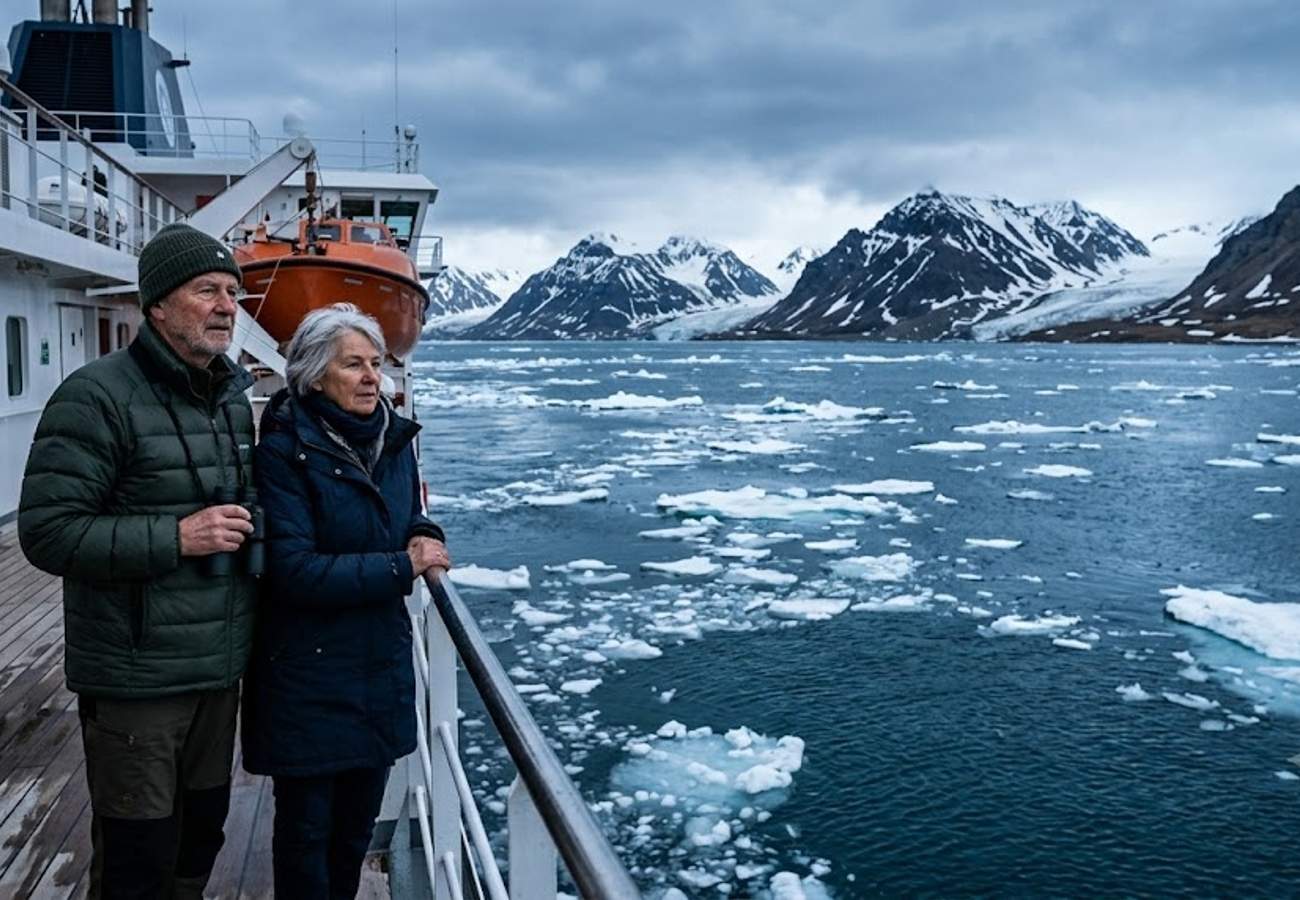
Image generated by AI
Recent scientific assessments have confirmed a sharp reduction in Arctic winter sea ice, signaling the end of a brief period of relative stability. This renewed decline reinforces the long-term warming trajectory of the region and presents immediate operational challenges for the global travel industry.
The shift impacts more than just environmental metrics; it directly alters the framework for expedition cruising, aviation, insurance underwriting, and destination management across the world’s most remote wilderness areas.
While a reduction in ice might seem to offer easier access to remote waterways, it actually introduces higher levels of operational volatility. The combination of coastal instability, unpredictable ice movement, and erratic weather patterns is making traditional voyage planning obsolete.
The End of the Arctic Stability Phase
For approximately two decades, researchers observed a moderate slowdown in the rate of sea ice loss. This anomaly prompted significant study, as it diverged from the expected outcomes of sustained global warming.
However, the latest satellite observations confirm that this stability was a temporary interruption rather than a recovery. The current data shows a significant drop in winter sea ice, proving that the overarching trend of decline remains active.
For commercial operators in northern waters, this distinction is vital. Temporary fluctuations in ice coverage should not be mistaken for a decrease in climate-related operational risks.
Systemic Impacts on Northern Hemisphere Travel
Sea ice acts as the Earth's primary climate regulator by reflecting solar radiation and insulating the ocean from the cold atmosphere. As this cover vanishes, the open ocean absorbs more heat during the summer, which is then released during autumn and winter.
This heat exchange disrupts atmospheric circulation patterns, creating a ripple effect that influences weather systems far beyond the polar circle. These shifts have direct implications for maritime safety and aviation reliability across the entire Northern Hemisphere.
The intersection of environmental change and commercial travel is detailed in the following breakdown:
| Area | Potential Travel Impact |
|---|---|
| Expedition cruises | Greater route variability and changing navigation windows |
| Adventure tourism | Increased need for flexible itineraries |
| Aviation | Possible influence on weather-related disruptions |
| Coastal tourism | Erosion affecting visitor infrastructure |
| Scientific tourism | Greater demand for research expeditions |
| Wildlife tourism | Changing animal distribution affecting visitor experiences |
Navigating the Evolving Arctic Tourism Market
Despite environmental pressures, demand for Arctic travel continues to climb. Travelers are increasingly seeking high-value experiences, including glacier trekking, Northern Lights excursions, and indigenous cultural encounters in northern Norway, Greenland, Iceland, Alaska, and the Svalbard archipelago.
This growth is driven by several key factors:
- A surge in nature-based and educational tourism.
- The rise of specialized adventure operators.
- Technological advancements in polar-class vessel construction.
- A growing interest in "last-chance" tourism to witness receding glaciers.
However, this expansion coincides with stricter environmental regulations and a necessity for science-led decision-making. Operators can no longer rely on historical navigation charts; they must adopt dynamic planning to survive the volatile environment.
Operational Risks and the "Accessibility Paradox"
The current climate shift creates a paradox: while some shipping corridors are open longer, the environment is simultaneously more dangerous. Thinner ice is more mobile and susceptible to wind-driven movement, which can trap vessels or block planned routes without warning.
Furthermore, the degradation of permafrost and accelerated coastal erosion are threatening the physical infrastructure required for land-based tourism. To mitigate these risks, leading expedition operators have pivoted from fixed schedules to dynamic itinerary management.
The Role of Real-Time Scientific Monitoring
The commercial viability of Arctic tourism now depends on high-tech environmental monitoring. Satellite imagery and meteorological models have transitioned from academic tools to essential business assets.
| Monitoring Tool | Operational Benefit |
|---|---|
| Satellite sea ice imagery | Navigation planning |
| Weather forecasting | Passenger safety |
| Ocean temperature monitoring | Route assessment |
| Ice movement analysis | Daily operational decisions |
| Seasonal climate outlooks | Long-term itinerary planning |
The Future of Expedition Cruising
Expedition cruising is one of the fastest-growing segments of the luxury travel market. Modern vessels can now reach areas previously reserved for research ships, but this accessibility does not equal predictability.
Cruise lines are now investing heavily in real-time ice monitoring and specialized expedition teams. For the modern traveler, flexibility is no longer an occasional inconvenience but a core component of the polar experience.
The Arctic is transitioning from a predictable frozen frontier to a dynamic and volatile maritime environment.
Related Travel Guides
Disclaimer
This article is for informational and educational purposes only. It does not constitute legal, financial, or professional advice. While we strive to provide accurate and up-to-date information, travel policies, regulations, and conditions change rapidly. Always verify information with official sources before making travel decisions. Nomad Lawyer makes no representations about the accuracy, reliability, completeness, or suitability of the information provided. Readers should consult qualified professionals for advice specific to their circumstances. The views expressed in this article are those of the author and do not necessarily reflect the views of Nomad Lawyer.
Preeti Gunjan
Contributor & Community Manager
A passionate traveller and community builder. Preeti helps grow the Nomad Lawyer community, fostering engagement and bringing the reader experience to life.
Learn more about our team →