
Lightning Strike at London Luton Airport Triggers 95-Minute Shutdown and Mass Flight Chaos 2026
A precision lightning strike on air traffic control systems at London Luton Airport caused a 95-minute total operational halt, leading to dozens of cancellations and widespread network disruption.
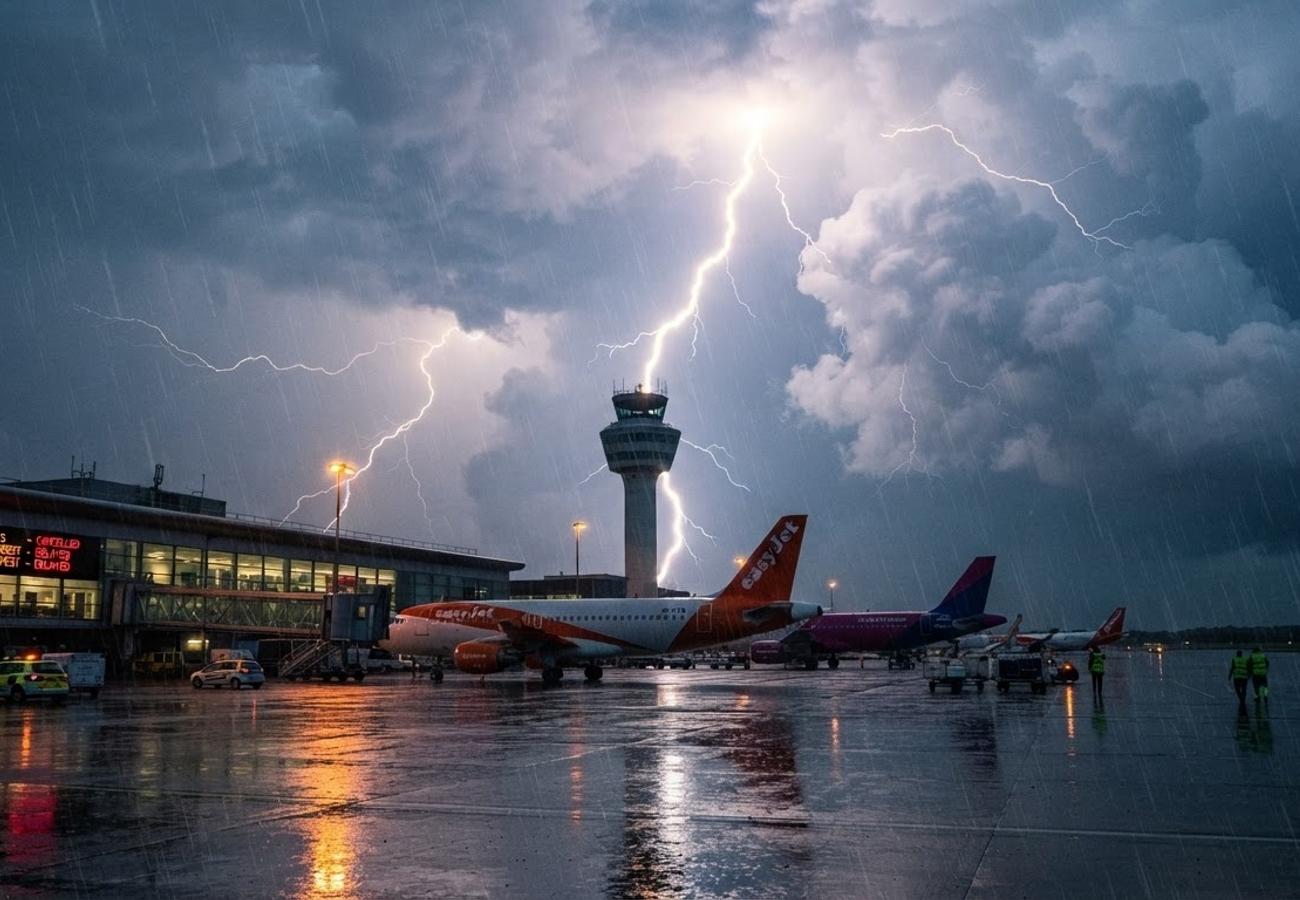
Image generated by AI
A sudden lightning strike on critical air traffic control infrastructure at London Luton Airport forced a total suspension of flights for 95 minutes, leaving thousands of passengers stranded and destabilizing short-haul networks across Europe.
Technical Failure Paralyzes Luton Air Traffic Control
On Thursday, August 27, 2026, severe thunderstorms sweeping across Bedfordshire and Hertfordshire resulted in a direct lightning strike on the equipment used to manage aircraft movements at London Luton Airport. The strike triggered an immediate operational shutdown, halting all arrivals and departures between approximately 17:40 and 19:15 BST.
The outage occurred during a period of intense meteorological instability. Heavy rainfall and frequent lightning coincided with the technical failure, necessitating a complete pause in operations while engineers and controllers conducted safety checks to restore the integrity of the air traffic control (ATC) systems.
While infrastructure was confirmed to be fully operational by Friday morning, the brief window of total closure created a significant backlog. The airport's recovery phase required a complex rebalancing of schedules, as airlines struggled to manage the sudden surge of displaced aircraft and passengers.
Operational Impact: Cancellations and Diversions
The 95-minute suspension had a disproportionate impact on the airport's flight volume. Data indicates that roughly 30 services were either cancelled or diverted during the shutdown and the immediate recovery window.
This disruption manifested in three primary ways:
- Inbound Diversions: Aircraft already in the air were forced to turn back or divert to alternative UK airports.
- Immediate Cancellations: Flights scheduled for departure during the window were scrubbed.
- Network Ripple Effects: Because many Luton-based carriers operate tight turnround schedules, the initial delay displaced crews and aircraft for later rotations.
Short-haul leisure routes to European destinations were the hardest hit. These services typically operate with minimal spare aircraft and strict crew duty limits; once the window for a flight passed, many carriers determined the services could not be recovered, leading to further cancellations late into Thursday night and the early hours of Friday.
Ground Chaos and Infrastructure Strain
The disruption extended beyond the runway. Intense storms caused localized flash flooding on access roads and disrupted public transport links serving the airport. This created a "double-bottleneck" effect where arriving passengers could not leave the terminal efficiently, and departing passengers struggled to reach the airport.
Inside the terminal, hundreds of travelers were stranded as departure boards shifted to mass delays. Ground handlers and airline staff were forced to manage overcrowding while simultaneously reworking flight plans under emergency conditions.
Wider Implications for London's Aviation Network
Luton serves as a primary hub for the UK's low-cost and short-haul market. The sudden loss of capacity during a peak summer evening reduced the overall resilience of the London airspace.
The impact was felt well beyond the airport's perimeter:
- European Connectivity: Aircraft scheduled to overnight at Luton were diverted, causing a shortage of planes for Friday morning departures across Europe.
- Resource Displacement: Airlines had to execute emergency aircraft substitutions and consolidate services to maintain basic schedule integrity.
- Systemic Fragility: The incident highlights a growing trend of weather-related volatility at European hubs, where even a short-lived technical failure can trigger wide-ranging operational failures.
Passenger Rights and Recovery Guidance
For travelers affected by the Luton shutdown, the distinction between "extraordinary circumstances" and airline negligence is key to compensation. Under UK aviation regulations, lightning strikes and ATC outages are generally classified as extraordinary circumstances, which may exempt airlines from paying monetary compensation.
However, passengers remain entitled to "duty of care" provisions, including:
- Provision of refreshments and meals during long waits.
- Hotel accommodation and transport if delayed overnight.
- Rebooking on the next available flight or rerouting via another London airport.
Travelers are encouraged to use official airline mobile apps for the most accurate real-time status updates rather than relying solely on airport monitors.
Summary of Disruption Data
| Metric | Detail |
|---|---|
| Incident Date | Thursday, August 27, 2026 |
| Shutdown Duration | 95 Minutes |
| Time Window | 17:40 – 19:15 BST |
| Total Affected Flights | Approximately 30 (Cancelled or Diverted) |
| Primary Cause | Lightning strike on ATC equipment |
| Secondary Impact | Flash flooding on access roads |
Key Takeaways
- Critical Infrastructure Vulnerability: A single lightning strike caused a total 95-minute operational halt at a major London gateway.
- Network Contagion: 30 flights were immediately impacted, but the ripple effect caused delays and cancellations into Friday morning across Europe.
- Multimodal Failure: Weather disruption affected both the aviation systems and the ground transport infrastructure simultaneously.
- Regulatory Nuance: While "duty of care" (hotels/meals) applies, the "extraordinary circumstance" of a lightning strike likely limits cash compensation claims.
Frequently Asked Questions
Was the airport completely closed? Yes, both arrivals and departures were suspended for 95 minutes (17:40 to 19:15 BST) on August 27, 2026.
Am I entitled to compensation for a cancelled Luton flight? Likely no. Lightning strikes are typically viewed as "extraordinary circumstances" under UK law, though airlines must still provide food, water, and accommodation.
How should I check if my flight is still running? Airlines recommend using their official mobile apps and websites as the primary source for live updates during recovery periods.
A stark reminder that in the era of tight flight rotations, a few minutes of atmospheric interference can derail a continent's travel schedule.
Related Travel Guides
Disclaimer
This article is for informational and educational purposes only. It does not constitute legal, financial, or professional advice. While we strive to provide accurate and up-to-date information, travel policies, regulations, and conditions change rapidly. Always verify information with official sources before making travel decisions. Nomad Lawyer makes no representations about the accuracy, reliability, completeness, or suitability of the information provided. Readers should consult qualified professionals for advice specific to their circumstances. The views expressed in this article are those of the author and do not necessarily reflect the views of Nomad Lawyer.