
Kenya Maasai Mara Safari Guide: Great Migration, Luxury Tented Camps and Conservation

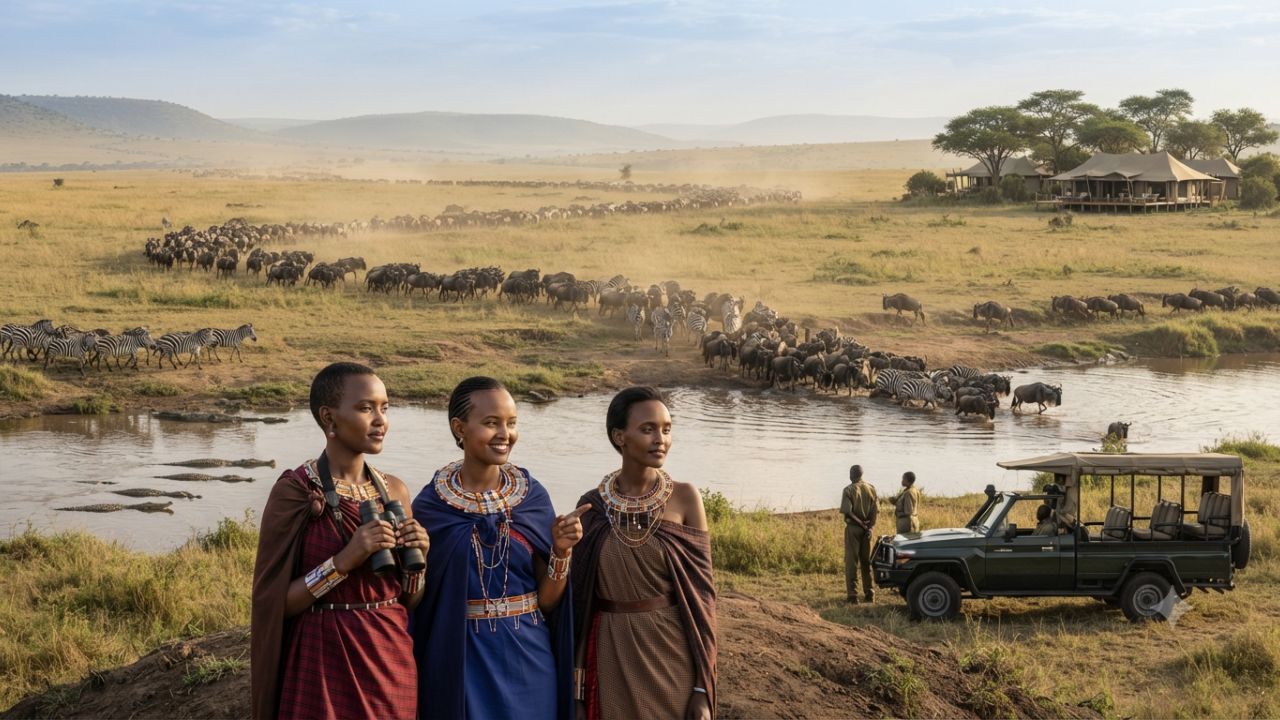
Image generated by AI
The peak season of the Great Migration in Kenya's Maasai Mara ecosystem brings hundreds of thousands of wildebeest and zebras across the Mara River, highlighting luxury tented camp experiences and community-led wildlife conservation. As seasonal animal movements reach a climax between September 28 and October 2, 2026, international safari travelers are pairing river crossing sightings with low-density private conservancies and conservation-focused hospitality.
The seasonal arrival of migratory herds from Tanzania's Serengeti into Kenya's Maasai Mara represents one of Africa's premier wildlife spectacles. Vast herds of wildebeest, zebras, and gazelles spread across open grasslands, attracting apex predators including lions, leopards, cheetahs, and hyenas. Beyond the immediate thrill of game viewing, the 2026 migration season emphasizes sustainable tourism management, vehicle regulation around river banks, and financial partnerships with local indigenous communities.
The Mechanics of the Serengeti-Mara Great Migration
The Great Migration is a continuous, circular wildlife movement driven by seasonal rainfall patterns, grazing availability, and water resources across the 30,000-square-kilometer Serengeti-Mara ecosystem. The Maasai Mara forms the northernmost refuge of this transboundary landscape, providing essential dry-season forage when southern plains dry out.
The Mara River represents the most famous obstacle along the migration route. As massive herds gather along the riverbanks, individual animals plunge into steep channels, navigating swift currents, riverbed rocks, and Nile crocodiles.
| Migration Phase / Window | Primary Geographical Location | Key Wildlife Dynamics | Safari Viewing Focus |
|---|---|---|---|
| Late July – August | Northern Serengeti & Mara Border | Herds enter Kenya across Mara River | Early River Crossing Observations |
| Sept 28 – Oct 2, 2026 | Greater Maasai Mara Ecosystem | Peak Migration Climax & High Herd Density | River Crossings & Predator Action |
| October – November | Southern Mara Conservancies | Herds graze open plains before rain returns | Savannah Game Drives & Big Cats |
| December – March | Southern Serengeti (Tanzania) | Calving season on short-grass plains | Predators & Newborn Herbivores |
Source: Greater Maasai Mara Ecosystem Wildlife Management Reports (2026).
Wildlife experts emphasize that river crossings are natural phenomena dictated by environmental conditions rather than fixed schedules. Rain showers miles away, predator presence, or herd instinct can cause animals to alter their movement paths unexpectedly.
Mara River Crossings Bring Wildlife Spectacle and Conservation Challenges
A Mara River crossing presents a dramatic natural scene as thousands of wildebeest and zebras move through narrow entry points along the bank. Dust clouds rise over the riverine forests as animals surge toward the water, while crocodiles position themselves in crossing channels and predators monitor the surrounding grasslands.
However, the popularity of river crossings has introduced operational challenges. Heavy vehicle concentrations around key crossing points can create traffic congestion and disrupt natural herd movements. In response, reserve management authorities and conservation bodies have implemented updated viewing guidelines:
- Buffer Zone Compliance: Safaris must maintain mandatory minimum distances from riverbanks to allow herds clear access to crossing points.
- Vehicle Limits: Restrictions on the number of game drive vehicles permitted at specific crossing sites simultaneously.
- Off-Road Regulations: Strict enforcement prohibiting off-road driving within sensitive riverine habitats to prevent soil erosion.
Responsible safari operators adhere to these management protocols, prioritizing animal welfare and habitat protection over forced close-up sightings.
Private Community Conservancies Provide Low-Density Safari Privacy
The Greater Maasai Mara encompasses both the core Maasai Mara National Reserve and neighboring private community conservancies. Established through legal agreements between indigenous Maasai landowners, safari operators, and non-profit conservation groups, these conservancies expand protected wildlife territory beyond official reserve borders.
Conservancies such as Mara North, Naboisho, and Olare Orok operate under strict low-density tourism models. Key operational differences between the National Reserve and private conservancies include:
- Guest Bed Density Limits: Strict caps on the total number of guest beds per square kilometer to ensure quiet, uncrowded wildlife viewing.
- Vehicle Restrictions: Limits on the maximum number of safari vehicles present at any single wildlife sighting.
- Exclusive Activities: Permission for night game drives, guided walking safaris, and bush dining—activities restricted inside the main National Reserve.
The conservancy model delivers direct economic benefits to local Maasai families through guaranteed monthly land lease payments, tourism employment, and community development funds for healthcare and education.
Luxury Tented Camps Blend High-End Hospitality with Wilderness Protection
Accommodation within the Maasai Mara has evolved beyond basic camping to encompass high-end eco-luxury tented camps. These properties combine traditional safari aesthetics—custom canvas suites, hardwood flooring, and private viewing decks—with modern sustainability features.
Leading luxury camps incorporate eco-friendly practices designed to minimize environmental footprints:
- Solar Power Systems: Fully off-grid solar energy installations for lighting, water heating, and guest electricity.
- Zero Single-Use Plastics: On-site reverse osmosis water filtration plants and reusable stainless steel bottles.
- Low-Impact Structures: Canvas and wooden raised platforms that can be dismantled without permanent land alteration.
High-end itineraries include private safari vehicles, expert native guides, and flexible schedules tailored to guest preferences, connecting luxury hospitality with habitat preservation narratives.
Planning a Maasai Mara Safari: Flight Logistics and Park Regulations
Organizing a safari during the peak migration window requires careful attention to transport and reserve regulations. Visitors can reach the Mara via a 45-minute flight from Nairobi’s Wilson Airport (WIL) to regional bush airstrips (such as Mara Serena, Musiara, or Olkiombo) or via a 5-to-6-hour road transfer from Nairobi.
Essential planning requirements for safari travelers include:
- Reserve & Conservancy Fees: Entry fees differ between the National Reserve and private conservancies; travelers visiting both must ensure correct daily permits are paid.
- Luggage Rules: Light aircraft transfers enforce a strict 15-kilogram (33 lb) weight limit per passenger in soft-sided bags.
- Travel Flexibility: Allowing multi-day stays increases the probability of witnessing major predator hunts or river crossings.
Kenya Maasai Mara Migration FAQ: October 2026
Are Mara River crossings guaranteed during a safari between late September and early October? No. While large herds remain in the Mara ecosystem during this period, river crossings depend entirely on localized rainfall, grass conditions, and animal movement decisions.
What is the main advantage of staying in a private conservancy rather than the National Reserve? Private conservancies enforce strict vehicle density limits, offer exclusive activities like night drives and walking safaris, and return lease income directly to local Maasai landowners.
How do travelers get from Nairobi to the Maasai Mara? Travelers can take a 45-minute domestic flight from Nairobi Wilson Airport (WIL) directly to Mara bush airstrips, or travel 5 to 6 hours by road in a 4x4 safari vehicle.
What luggage is allowed on domestic safari flights to the Mara? Airlines enforce a 15-kilogram (33 lb) total limit per person including hand luggage, packed exclusively in soft-sided duffel bags.
Why This Matters for High-End Travelers and Conservation in 2026
For international travelers, visiting the Maasai Mara during the Great Migration is transforming from a passive sightseeing trip into an active endorsement of sustainable wildlife management. By choosing low-density conservancies and eco-certified tented camps, visitors directly fund land lease payments for local communities and secure critical migration corridors against agricultural encroachment.
Rather than fixating solely on river crossing drama, high-end safari goers in 2026 benefit from a holistic wilderness experience—combining expert-led tracking, community culture, and quiet game viewing across one of Earth's most vital wildlife habitats.
Related Travel Guides
Disclaimer
This article is for informational and educational purposes only. It does not constitute legal, financial, or professional advice. While we strive to provide accurate and up-to-date information, travel policies, regulations, and conditions change rapidly. Always verify information with official sources before making travel decisions. Nomad Lawyer makes no representations about the accuracy, reliability, completeness, or suitability of the information provided. Readers should consult qualified professionals for advice specific to their circumstances. The views expressed in this article are those of the author and do not necessarily reflect the views of Nomad Lawyer.
Kunal K Choudhary
Co-Founder & Contributor
A passionate traveller and tech enthusiast. Kunal contributes to the vision and growth of Nomad Lawyer, bringing fresh perspectives and driving the community forward.
Learn more about our team →