
Kazakhstan's Silk Road Tourism Boom: Why Australian Travelers Are Swapping Europe for Central Asia in 2026
Australian travelers are increasingly bypassing crowded European capitals in favor of Kazakhstan's emerging Silk Road routes, driven by new luxury rail itineraries and a growing demand for non-commercialized cultural experiences.

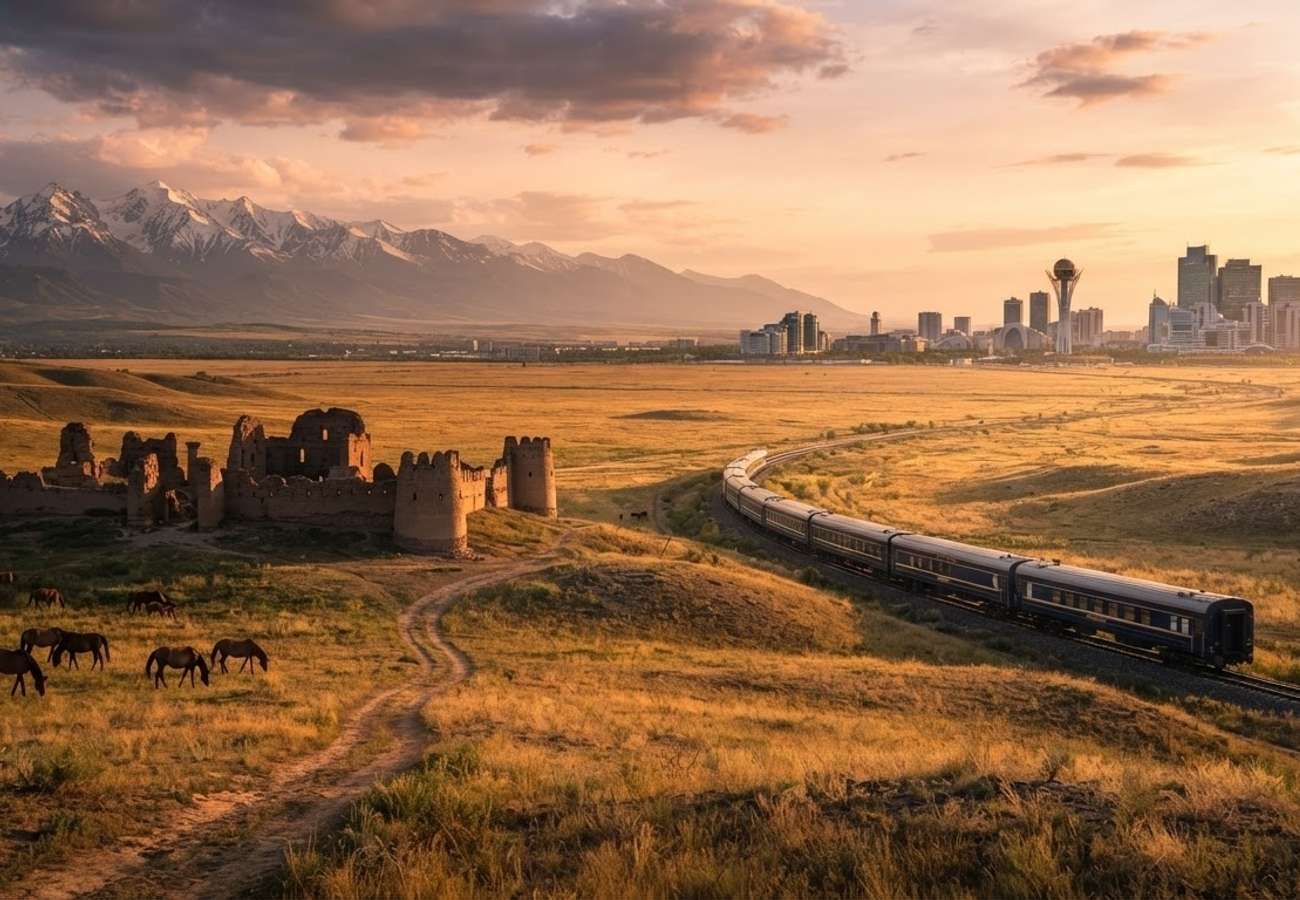
Image generated by AI
Australian holidaymakers are abandoning the over-tourism of London and Paris for the wide steppes and ancient trade hubs of Kazakhstan. This shift signals a broader movement toward "second wave" destinations where authenticity outweighs commercialization.
The traditional long-haul "big trip" for Australians is evolving. While Europe and North America remain staples, travel industry data reveals a steady climb in interest for Central Asia. Kazakhstan, in particular, is emerging as a primary gateway for those seeking culture-rich journeys that avoid the suffocating crowds of established Western capitals.
This trend is not a replacement for European travel but an expansion of the luxury and adventure portfolio. For a growing segment of experienced travelers—particularly those in their 40s, 50s, and 60s—Kazakhstan is now being weighed against destinations like Italy or Spain during the planning phase.
The Rise of Slow Travel via Silk Road Rail
A pivotal factor in this surge is Kazakhstan's strategic investment in rail-based tourism. To capitalize on the global "slow travel" movement, the national tourism promotion body and national railway operator have launched dedicated tourist trains.
These services are designed to trace the historic caravan paths of the south, connecting critical Silk Road nodes including:
- Almaty
- Turkistan
- Samarkand (Uzbekistan)
- Bukhara (Uzbekistan)
These flagship rail experiences utilize sleeper carriages and curated food programs, allowing passengers to traverse vast distances in comfort. Many of these routes align with the UNESCO-recognized "Chang’an to Tianshan Silk Roads" inscription, offering access to archaeological sites that remain far less commercialized than those in Europe.
Contrasting Urban Futurism with Nomadic Heritage
Kazakhstan offers a stark architectural contrast that appeals to the modern Australian traveler. The tourism profile is split between the hyper-modern and the ancient:
The Modern Hubs Astana, the capital, is marketed as a center of futuristic architecture and wide boulevards. Meanwhile, Almaty serves as the cultural heart, blending a sophisticated café culture with immediate access to the Tian Shan mountains.
The Historic South For those chasing the legacy of the Silk Road, the focus shifts to Turkistan, Shymkent, and Taraz. These cities feature medieval fortifications, caravanserai ruins, and mausoleums that once served as vital links between China and the Mediterranean.
Natural Frontiers Beyond the cities, the draw is the raw landscape. Itineraries now frequently pair historic site visits with excursions to Charyn Canyon and the high-altitude lake regions near the Chinese and Kyrgyz borders—offering a rugged alternative to the Alps or the Canadian Rockies.
Market Pivot: From Mass Tourism to Discovery
Australian tour operators are adapting their catalogs to meet this curiosity. There is a noticeable increase in "premium" or "discovery" packages that bundle Kazakhstan into broader "Five Stans" itineraries (Kazakhstan, Uzbekistan, Kyrgyzstan, Tajikistan, and Turkmenistan).
Because Central Asia is perceived as more complex to navigate than Southeast Asia, these packages prioritize:
- Professional local guides
- Seamless overland transfers
- Comprehensive visa support
While direct flights from Australia do not exist, the proliferation of hubs in Türkiye, East Asia, and the Gulf has made Almaty and Astana reachable in timeframes comparable to trips to North America.
Infrastructure Investment and Regional Integration
To sustain this growth, Kazakhstan is implementing aggressive infrastructure upgrades. Policy papers indicate significant modernization of Almaty and Astana airports, alongside improved signage and heritage site management in regional centers.
There is also a concerted effort to move away from isolated tourism. By coordinating visa regimes and marketing with neighboring Central Asian nations, Kazakhstan is helping position the region as a single, coherent destination for long-haul visitors.
| Key Destination | Primary Appeal | Travel Type |
|---|---|---|
| Astana | Futuristic Architecture | Urban/Modern |
| Almaty | Café Culture & Tian Shan Mountains | Urban/Nature |
| Turkistan | Silk Road Shrines & Mausoleums | Historical/Religious |
| Charyn Canyon | Geological Formations | Adventure/Outdoor |
| Samarkand/Bukhara | Ancient Trade Hubs (Cross-border) | Cultural/Heritage |
Key Takeaways
- Shift in Demand: Australians are seeking "second wave" destinations to avoid European over-tourism.
- Rail Innovation: New luxury tourist trains are making the historic Silk Road accessible and comfortable.
- Diversified Appeal: The destination blends futuristic urbanism (Astana) with ancient history (Turkistan) and raw nature (Charyn Canyon).
- Strategic Access: Improved connectivity via Gulf and Asian hubs has neutralized the distance barrier.
FAQ
Do Australians need a visa for Kazakhstan? While visa regimes are being simplified to attract long-haul travelers, it is recommended to check current requirements via official portals or use a tour operator who provides visa support.
What is the best way to travel between Kazakhstan and Uzbekistan? The new Silk Road tourist trains are the preferred method for those seeking a cultural experience, though flights between Almaty/Astana and Tashkent are also common.
Is Kazakhstan a safe destination for solo travelers? Most Australians utilize guided "discovery" packages to navigate the linguistic and logistical complexities of the region, though infrastructure in major cities is highly modernized.
The Silk Road is no longer just a history lesson—it is the new frontier for the adventurous Australian traveler.
Related Travel Guides
Disclaimer
This article is for informational and educational purposes only. It does not constitute legal, financial, or professional advice. While we strive to provide accurate and up-to-date information, travel policies, regulations, and conditions change rapidly. Always verify information with official sources before making travel decisions. Nomad Lawyer makes no representations about the accuracy, reliability, completeness, or suitability of the information provided. Readers should consult qualified professionals for advice specific to their circumstances. The views expressed in this article are those of the author and do not necessarily reflect the views of Nomad Lawyer.
Preeti Gunjan
Contributor & Community Manager
A passionate traveller and community builder. Preeti helps grow the Nomad Lawyer community, fostering engagement and bringing the reader experience to life.
Learn more about our team →