
Japan Rail Shinkansen Carries 13.21 Million Passengers During 2026 Bon Holiday Despite Kumamoto Earthquake
Japan's high-speed rail network moved 13.21 million passengers during the 2026 Bon holiday period, with the Tokaido Shinkansen hitting record ridership despite severe disruptions in Kyushu.

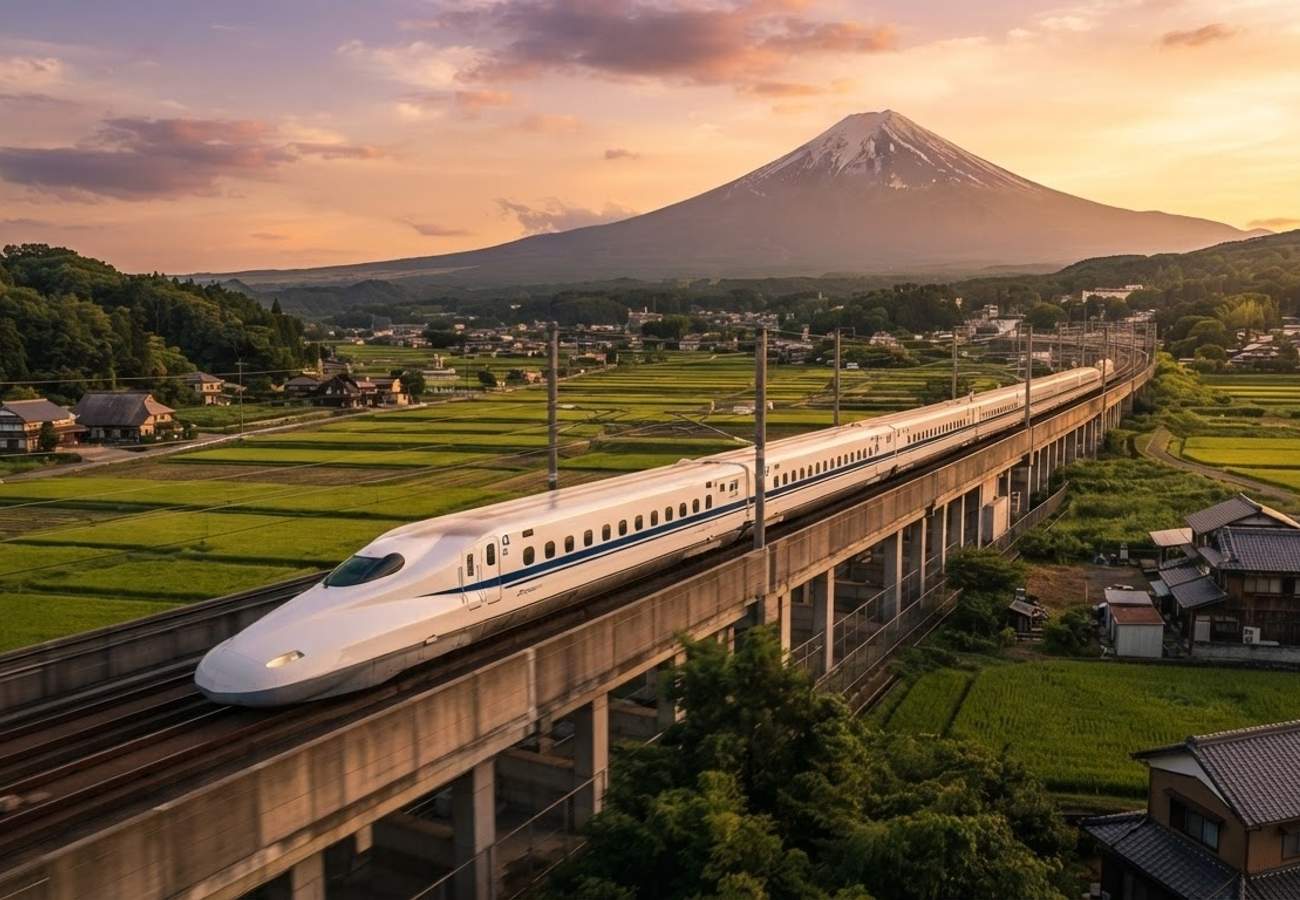
Image generated by AI
Thirteen point two one million passengers flooded Japan's Shinkansen and limited express networks between August 7 and 16, 2026, proving the resilience of the national rail system against severe natural disasters. Despite a damaging earthquake in Kumamoto and typhoon-led aviation chaos, the Japan Railways (JR) Group maintained service levels nearly identical to the previous year.
The 2026 Bon holiday period serves as a critical stress test for Japan's transport infrastructure. While the overall passenger volume remained stable, the data reveals a stark contrast between the record-breaking success of the central corridors and the severe operational failures in the south.
Rail Resilience Amidst Natural Disasters in Japan
The movement of 13.21 million travelers across 46 major rail sections highlights the strategic importance of the JR Group's intercity network. This stability is particularly noteworthy given the simultaneous occurrence of two major disruptive events: a powerful earthquake that compromised infrastructure in Kumamoto Prefecture and a series of typhoons that crippled air travel.
Industry reports indicate that the domestic aviation sector suffered significantly. Both All Nippon Airways (ANA) and Japan Airlines (JAL) saw a decline in domestic passenger numbers due to weather-related cancellations. In this environment, the rail network acted as a vital fail-safe, absorbing the overflow of travelers who were unable to fly, thereby protecting the country's domestic mobility.
Tokaido Shinkansen Hits Record Daily Ridership
The Tokaido Shinkansen emerged as the primary engine of growth during the summer peak. Carrying approximately 4.14 million passengers—a 1% increase over 2025—the line achieved record-breaking average daily ridership.
This surge was supported by a strategic timetable revision by Central Japan Railway, which increased the frequency of Nozomi services to a maximum of 13 trains per hour. This capacity boost allowed the network to handle an intense concentration of passengers traveling between Tokyo, Nagoya, and Osaka without causing a total system collapse.
The Tokaido corridor remains the "Golden Route" for both international tourists and domestic business travelers. By increasing the frequency of the Nozomi—the fastest service on the line—the operator effectively expanded tourism access to Kyoto and Kobe, allowing for more flexible itineraries and shorter stay durations.
Regional Collapse in Kyushu Following Kumamoto Earthquake
While the central arteries thrived, the regional network in Kyushu faced a crisis. The section connecting Hakata and Kumamoto saw a massive 39.8% drop in service levels. This decline was the direct result of the Kumamoto earthquake, which forced the suspension of services on damaged sections of the track.
This regional vulnerability suggests that while the national rail system is robust, specific geographic "choke points" remain susceptible to seismic activity. Interestingly, the disruption in the south likely contributed to the increased demand on the Tokaido Shinkansen, as travelers diverted their routes or shifted their destinations away from the affected earthquake zones.
Comparative Transport Performance During Bon 2026
The following data outlines the performance of rail and air services during the peak travel window from August 7 to 16, 2026.
| Travel Indicator | Bon Holiday Performance | Year-on-Year Movement | Primary Driver |
|---|---|---|---|
| Shinkansen & Limited Express (46 sections) | ~13.21 million passengers | Almost unchanged | High demand from tourism & family visits |
| Tokaido Shinkansen | ~4.14 million passengers | Up 1% | Increased Nozomi capacity |
| Tokaido Shinkansen Daily Ridership | Record Level | Record Reported | Up to 13 Nozomi trains per hour |
| Hakata–Kumamoto Section | Not specified | Down 39.8% | Kumamoto earthquake disruptions |
| ANA Domestic Services | Not specified | Down 7.7% | Typhoon-related cancellations |
| JAL Domestic Services | Not specified | Down 5.8% | Typhoon-related cancellations |
| ANA International Services | Not specified | Down 0.7% | General holiday performance |
| JAL International Services | Not specified | Down 8.1% | General holiday performance |
The Socio-Economic Driver of the Bon Holiday
The Bon (or Obon) period is more than a simple vacation window; it is a cultural imperative involving family reunions and ancestral remembrance. This creates a predictable but extreme spike in demand every August.
The 2026 figures demonstrate that this cultural driver outweighs almost any logistical deterrent. The mix of leisure, family, and business travel provides the JR Group with a diversified passenger base. Because the same train carries a corporate executive to Nagoya and a tourist to Kyoto, the system maintains high utility even if one specific sector of demand fluctuates.
Infrastructure Legacy and Modern Capacity
The Tokaido Shinkansen, which first opened on October 1, 1964, has evolved from a revolutionary experiment into a global benchmark for high-speed transit. Having carried approximately seven billion passengers since its inception, the line's ability to grow by 1% in a mature market is a testament to its operational efficiency.
The reduction in travel time between Tokyo and Osaka—from the original 3 hours and 10 minutes to approximately 2 hours and 21 minutes—has fundamentally altered Japanese tourism. It allows for "multi-city" itineraries that were previously impractical, fueling the growth of hotels and local businesses in mid-sized cities along the route.
Why This Matters for the Modern Traveler
For the traveler, these statistics reveal a critical lesson in Japanese transit: redundancy is the key to reliability. When typhoons ground flights and earthquakes sever regional lines, the high-capacity central rail arteries become the only viable option for movement.
From a logistical standpoint, the record ridership on the Tokaido Shinkansen underscores the necessity of advance planning. While 13 Nozomi trains per hour is a massive capacity, the "record" ridership suggests that the system is operating at its absolute limit. For those traveling during peak windows, the "walk-on" experience is increasingly rare; digital reservations are no longer a luxury but a requirement for guaranteed transit.
Furthermore, the 39.8% drop in the Hakata–Kumamoto section serves as a reminder that "high-speed" does not always mean "invulnerable." Travelers should always maintain a flexible itinerary when visiting seismic zones in Japan, as rail disruptions can be absolute and sudden.
Japan's rail network continues to prove that high-frequency capacity is the only effective antidote to the volatility of summer travel.
Related Travel Guides
Disclaimer
This article is for informational and educational purposes only. It does not constitute legal, financial, or professional advice. While we strive to provide accurate and up-to-date information, travel policies, regulations, and conditions change rapidly. Always verify information with official sources before making travel decisions. Nomad Lawyer makes no representations about the accuracy, reliability, completeness, or suitability of the information provided. Readers should consult qualified professionals for advice specific to their circumstances. The views expressed in this article are those of the author and do not necessarily reflect the views of Nomad Lawyer.
Raushan Kumar
Founder & Lead Developer
Full-stack developer with 11+ years of experience and a passionate traveller. Raushan built Nomad Lawyer from the ground up with a vision to create the best travel and law experience on the web.
Learn more about our team →