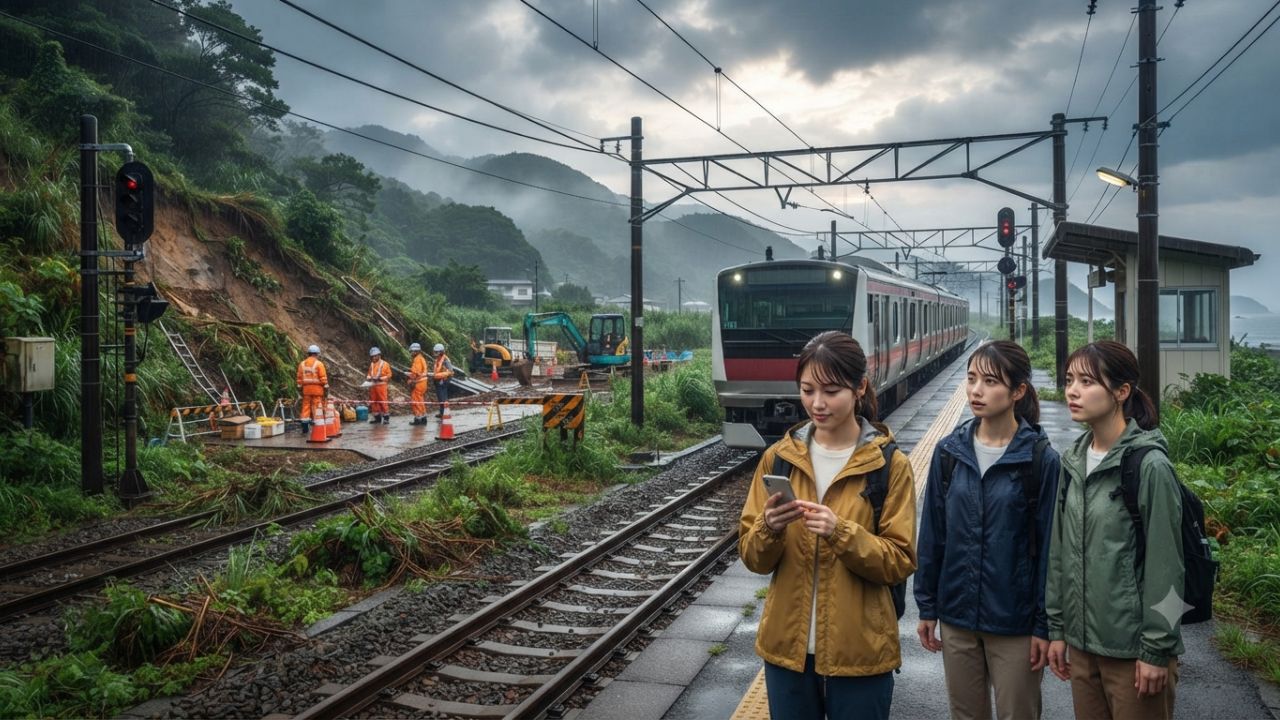
Japan Announces Major Narita Express Service Changes for November 6–8 as Tokyo Tunnel Repairs Sever Direct Lines

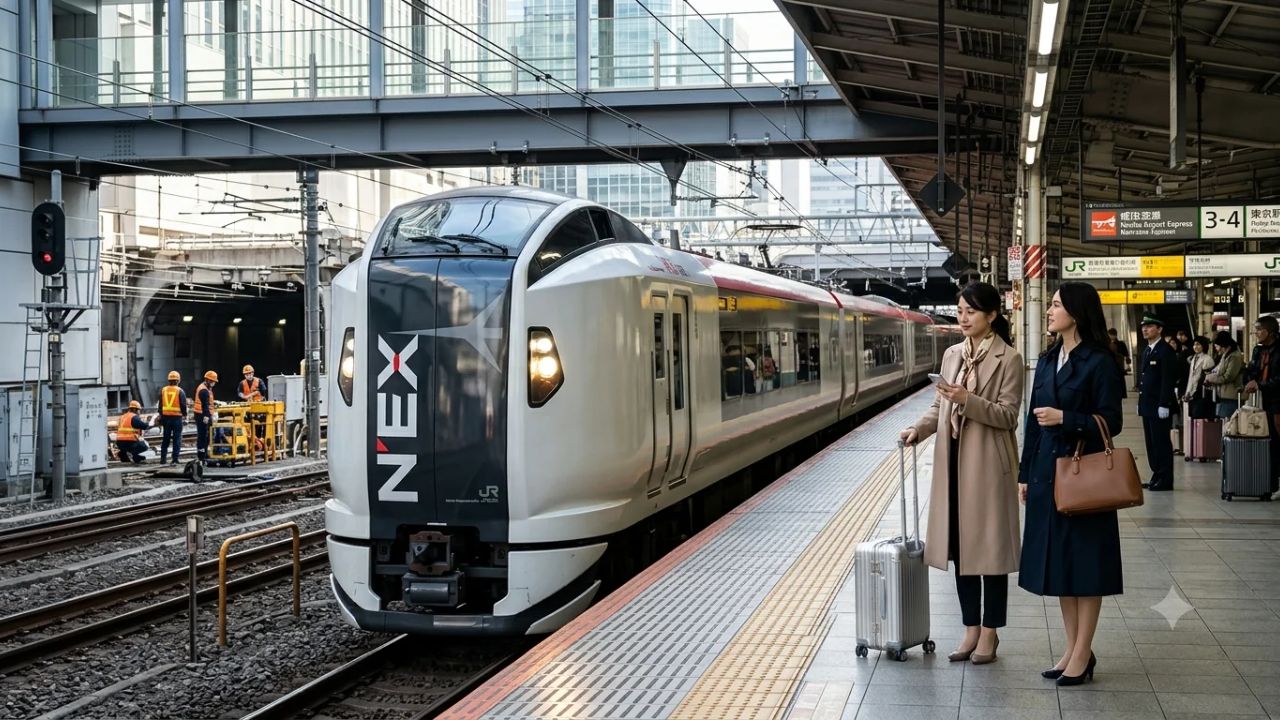
East Japan Railway Company's Narita Express will operate exclusively between Tokyo Station and Narita Airport on Saturday, November 7, 2026, as engineers execute intensive tunnel maintenance between Tokyo and Shinagawa.
TOKYO, November 3, 2026 — International air passengers and regional rail commuters moving across the Greater Tokyo Metropolitan Area face major transport adjustments from the evening of Friday, November 6, through the morning of Sunday, November 8, 2026, as East Japan Railway Company (JR East) executes a planned engineering blockade on the Yokosuka and Sobu Rapid subterranean tunnel network. The capital infrastructure project will sever direct Narita Express (N'EX) limited-express services between Narita International Airport and primary western Tokyo and Kanagawa terminals, including Shinjuku, Shibuya, Shinagawa, Yokohama, and Ofuna. The central disruption will culminate on Saturday, November 7, when the vital double-track underground corridor between Tokyo Station and Shinagawa Station will close completely from the first train of the morning until the final departure of the night.
[!NOTE] Key Passenger Advisory for November 6–8, 2026: Narita Express services between Tokyo Station and Narita International Airport will maintain their standard timetabled frequencies throughout the engineering period, completing the transit in approximately 53 minutes on the fastest runs. However, all through-running extensions west of Tokyo Station are cancelled throughout Saturday, November 7, with selective cancellations taking effect on Friday evening and early Sunday morning. Travelers originating in Shinjuku, Shibuya, or Kanagawa Prefecture must utilize alternative JR lines—such as the Chuo Rapid Line or Tokaido Line—to reach Tokyo Station before boarding the airport express.
NARITA EXPRESS (N'EX) NOVEMBER 6–8, 2026 OPERATIONAL STATUS
| Column 1 |
|---|
| [ SHINJUKU / SHIBUYA ] <=== WESTERN EXTENSION |
| X (Direct N'EX services SUSPENDED Friday evening, all-day Saturday, & early Sunday) |
| [ TOKYO STATION (Underground Platforms 1–4) ] <=== PRIMARY AIRPORT GATEWAY |
| +--- ALL-DAY SATURDAY NOV 7: Normal N'EX frequency operates TO/FROM Narita Airport |
| [ SHINAGAWA STATION ] |
| ^ |
| X (Yokosuka Line Underground Tunnel CLOSED between Tokyo & Shinagawa ALL DAY Nov 7) |
| [ YOKOHAMA / OFUNA / KURIHAMA ] <=== SOUTHERN EXTENSION |
| * Direct N'EX services SUSPENDED; Yokosuka Line local trains turn back at Shinagawa. |
| * Alternative: Tokaido Line / Keihin-Tohoku Line to Tokyo Station for airport connections. |
| [ NARITA INTERNATIONAL AIRPORT (Terminals 1, 2, & 3) ] |
| ^ |
The November 2026 Maintenance Window: Three Days of Calibrated Railway Operations
The upcoming service suspension spans three distinct calendar days, with operational impacts varying considerably depending on the exact date and departure time. JR East's published service blueprint indicates that while the infrastructure work is centered on central Tokyo's subterranean tunnel network, the ripple effects alter limited-express rosters, conventional commuter rotations, and platform allocations across four prefectures.
The operational sequence begins during the evening commute on Friday, November 6, 2026. Starting at approximately 7:40 PM Japan Standard Time (JST), JR East will truncate five consecutive inbound Narita Express services departing Narita International Airport. Instead of splitting at Tokyo Station to send coupled trainsets toward Shinjuku and Ofuna, these trains will terminate upon arrival at Tokyo Station's underground Sobu platforms.
FRIDAY EVENING, NOVEMBER 6: TRUNCATED INBOUND SERVICES
| Train Number | Departs Narita Airport | Arrives Tokyo Station | Suspended Onward Sections |
|---|---|---|---|
| :--- | :--- | :--- | :--- |
| Narita Express 46 | 6:45 PM | 7:45 PM | Tokyo to Ofuna & Shinjuku |
| Narita Express 48 | 7:17 PM | 8:13 PM | Tokyo to Shinjuku |
| Narita Express 50 | 7:49 PM | 8:51 PM | Tokyo to Ofuna & Shinjuku |
| Narita Express 52 | 8:44 PM | 9:40 PM | Tokyo to Ofuna & Shinjuku |
| Narita Express 54 | 9:44 PM | 10:38 PM | Tokyo to Ofuna & Shinjuku |
For international passengers landing at Narita during Friday's evening arrival bank, these truncations require careful attention. A traveler holding a ticket for Narita Express 48 with a hotel reservation in Shinjuku will arrive smoothly at Tokyo Station at 8:13 PM, but must disembark with their luggage and transfer to the surface-level Chuo Rapid Line to complete the remaining transit across the city center.
Saturday, November 7, represents the core disruption day. Throughout the 24-hour operational cycle—from the 4:30 AM departure of the first morning depot runs until the midnight stabling of late-night trains—the Yokosuka Line tunnel linking Tokyo Station and Shinagawa Station will be shut completely to all traffic. Direct Narita Express trains from western Tokyo and Kanagawa are eliminated entirely. However, to maintain international airport connectivity, JR East will operate its full scheduled complement of Narita Express trains exclusively between Tokyo Station and Narita Airport.
Airport-bound departures from Tokyo Station on Saturday commence at 6:18 AM with Narita Express 1, followed by regular departures throughout the morning peak, including Narita Express 3 at 7:00 AM, Narita Express 5 at 7:31 AM, Narita Express 7 at 7:56 AM, Narita Express 9 at 8:30 AM, Narita Express 11 at 9:03 AM, Narita Express 13 at 9:30 AM, and Narita Express 15 at 10:03 AM. Scheduled departures continue through the afternoon and evening, concluding with Narita Express 53 departing Tokyo at 8:03 PM to reach the airport at 9:13 PM.
On Sunday morning, November 8, 2026, the railway network enters a phased recovery phase. While the subterranean tunnel reopens to regular traffic prior to the start of morning passenger service, four early-morning Narita Express departures will retain modified operational patterns:
SUNDAY MORNING, NOVEMBER 8: PHASED SERVICE RECOVERY
| Entity / Facility | Delays | Cancellations | Details |
|---|---|---|---|
| Train Number | Origin Station | Departure Time | Modified Sunday Operating Profile |
| :--- | :--- | :--- | :--- |
| Narita Express 1 | Tokyo Station | 6:18 AM | Originates at Tokyo; Shinjuku/Ofuna cut. |
| Narita Express 3 | Shinjuku | 6:34 AM | Ofuna arm cancelled; stops at Shinagawa. |
| Narita Express 5 | Shinjuku | 7:07 AM | Ofuna arm cancelled; stops at Shinagawa. |
| Narita Express 7 | Shinjuku | 7:27 AM | Ofuna arm cancelled; stops at Shinagawa. |
Normal through-running operations across the entire network are scheduled to resume following the departure of Narita Express 7, subject to on-site engineering handback clearances.
The behind-the-scenes rolling stock logistics required for this truncated timetable demonstrate the intricate complexity of Tokyo's railway operations. Under standard timetables, Narita Express trainsets—composed of E259 series six-car electric multiple units—are stabled and serviced across multiple maintenance facilities, including the Kamakura General Rolling Stock Center in Kanagawa and depots in western Tokyo. Because the central tunnel is completely impassable on Saturday, JR East dispatchers must pre-position fleet allocations at eastern depots such as the Makuhari Vehicle Center in Chiba and underground storage sidings north of Tokyo Station on Friday evening. This stabling realignment ensures that morning airport runs can deploy on schedule without requiring deadhead movements across the severed central tracks.
For international travelers arriving on long-haul flights from North America, Europe, and Southeast Asia, Friday evening's service curtailment introduces unexpected physical friction. International fliers who have completed twelve-to-fourteen-hour journeys often step off the aircraft fatigued, disoriented by time differences, and carrying substantial family luggage. Discovering that their direct airport express terminates prematurely at Tokyo Station forces them to navigate late-evening crowds on multi-level pedestrian corridors. Travel planners advise evening arrivals during this window to factor in extra transit time, consider utilizing airport luggage forwarding services (such as Yamato Transport or JAL ABC) to send large suitcases directly to their hotels, or plan an initial overnight stay near Tokyo Station.
Underground Engineering Mechanics: The Tokyo–Shinagawa Yokosuka Tunnel Renewal
The planned suspension is driven by the structural demands of maintaining one of Japan's most heavily utilized and geotechnically challenging railway tunnels. The subterranean tunnel carrying the Yokosuka Line and Sobu Rapid Line between Tokyo Station and Shinagawa Station was constructed during the late 1960s and early 1970s, officially opening to commercial passenger traffic in 1976. Plunging up to thirty meters beneath central Tokyo's dense commercial districts, the twin-track concrete tube passes beneath historic canals, subway tunnels, high-rise building foundations, and Tokyo Bay's coastal water table.
After half a century of continuous train operations, the tunnel infrastructure requires intensive civil renewal. The primary engineering objectives of the November blockade encompass:
YOKOSUKA TUNNEL CAPITAL ENGINEERING RENEWAL OBJECTIVES
| Column 1 |
|---|
| [ 1. GROUNDWATER SEEPAGE CONTROL & INJECTION GROUTING ] |
| * High water tables near Tokyo Bay exert relentless hydrostatic pressure against tunnel walls. |
| * Engineers inject specialized chemical polymer grouting behind concrete tunnel segment joints. |
| * Restores waterproof integrity and eliminates corrosive mineral crystallization on tracks. |
| [ 2. MECHANICAL SLEEPER & SLAB TRACK REPLACEMENT ] |
| * Removal of fatigue-worn concrete sleepers and resilient baseplates subjected to heavy traffic. |
| * Installation of high-durability pre-cast concrete sleeper assemblies with elastomeric pads. |
| * Eliminates microscopic track gauge deviations and reduces wheel-rail contact vibration. |
| [ 3. DRAINAGE SUMP & PUMPING STATION OVERHAUL ] |
| * Industrial clearing of subterranean drainage flumes, sedimentation basins, and pump sumps. |
| * Ensures rapid evacuation of groundwater runoff during extreme typhoon inundation events. |
| [ 4. OVERHEAD CATENARY & POWER CABLE MODERNIZATION ] |
| * Inspection and tension adjustment of 1,500V DC overhead contact wires within tunnel ceiling. |
| * Replacement of insulated support brackets and high-voltage transmission feeder lines. |
Historically, Japanese railway operators executed tunnel maintenance exclusively during narrow overnight windows between the passage of the last evening commuter train (around 1:00 AM) and the departure of the first morning service (around 4:30 AM). Accounting for track safety isolation, equipment setup, and mandatory test running, engineering contractors were left with barely 90 to 120 minutes of effective productive tool time per night.
On February 17, 2026, JR East announced a fundamental transformation in its permanent way maintenance methodology. Confronted by severe demographic contractions in Japan's construction labor pool and an aging workforce, the company resolved to transition away from inefficient nocturnal possessions toward concentrated, continuous daytime blockades. By shutting the Tokyo–Shinagawa corridor for a continuous 24-hour period, engineering teams secure approximately 1,680 consecutive minutes of uninterrupted track access.
This continuous working model allows JR East to deploy heavy, specialized mechanized equipment—such as rail-mounted concrete delivery trains, high-output ballast tampers, and automated tunnel lining inspection cars—that cannot be practically mobilized during two-hour midnight windows. The November 6–8 closure represents the third concentrated engineering blockade executed along this specific subterranean corridor during 2026, following successful pilot closures on June 6 and September 5.
The engineering challenge is magnified by stringent seismic resilience standards governing Tokyo's underground transport infrastructure. Sitting atop one of the world's most active tectonic convergence zones, Japan's capital must maintain subterranean tunnels capable of absorbing severe ground deformation during a potential major South Kanto earthquake. During the November closure, geotechnical engineers will install high-tensile carbon-fiber reinforcement bands across structural joints and inject micro-fine mineral resins into micro-fractures detected along the precast concrete segments. These structural interventions prevent dynamic shear displacement while fortifying the tunnel against catastrophic soil liquefaction risks along the coastal landfill areas near Shinagawa.
Concurrently, JR East is modernizing its permanent way monitoring systems by integrating automated track diagnostic technology. Rather than relying entirely on manual visual inspections by lineside trackmen, the railway has deployed train-mounted laser scanners, ultrasonic rail flaw detectors, and optical 3D surface cameras mounted on test vehicles. These diagnostic systems generate digital twin mappings of the tunnel environment, identifying hairline rail surface fatigue and sub-millimeter gauge variances long before they affect ride comfort. The continuous 24-hour closure provides the operational window needed to execute precision laser realignment and mechanized sleeper replacements guided directly by this telemetry data.
Suburban Railway Operations: Decoupling the Yokosuka and Sobu Rapid Through-Services
The engineering closure between Tokyo and Shinagawa impacts far more than the dedicated airport express fleet. Under normal operating conditions, the Yokosuka Line and Sobu Rapid Line function as a fully integrated, high-capacity commuter spine, providing seamless through-running between Chiba Prefecture in the east and Kanagawa Prefecture in the south.
On Saturday, November 7, JR East will decouple the two lines, dividing the cross-capital network into two distinct, self-contained operating zones:
SUBURBAN COMMUTER DECOUPLING ON NOVEMBER 7, 2026
| Column 1 |
|---|
| [ SOBU RAPID LINE (EASTERN SECTOR: CHIBA TO TOKYO) ] |
| * Route: Chiba ==> Tsudanuma ==> Funabashi ==> Kinshicho ==> Tokyo Station Underground. |
| * Operation: All trains terminate and turn back at Tokyo Station Underground Platforms 1–4. |
| * Service Level: Standard scheduled Saturday train frequencies maintained into central Tokyo. |
| [ CENTRAL SUBTERRANEAN GAP (TOKYO TO SHINAGAWA) ] |
| * Status: TOTALLY SEVERED. Zero Yokosuka/Sobu trains operate through the tunnel. |
| * Surface Alternatives: Tokaido Line, Yamanote Line, Keihin-Tohoku Line (Surface platforms). |
| [ YOKOSUKA LINE (SOUTHERN SECTOR: SHINAGAWA TO KURIHAMA) ] |
| * Route: Shinagawa ==> Musashi-Kosugi ==> Yokohama ==> Ofuna ==> Kamakura ==> Kurihama. |
| * Operation: All trains terminate and turn back at Shinagawa Station (Surface Platforms 13–15). |
| * Service Level: Standard scheduled Saturday train frequencies maintained south of Shinagawa. |
Passengers commuting between Chiba and Kanagawa—such as travelers moving between Funabashi and Yokohama—must disembark at Tokyo Station, ascend from the deep underground Sobu platforms to the ground-level concourses, and board parallel surface lines to reach Shinagawa before resuming their journey.
To accommodate displaced passengers between Tokyo and Shinagawa, JR East will direct travelers onto three established surface routes: the Tokaido Main Line (rapid transit calling only at Tokyo, Shimbashi, and Shinagawa), the Yamanote Line (local loop line), and the Keihin-Tohoku Line. However, JR East has explicitly confirmed that it will not institute formal substitute transport arrangements (furi-yuso) with private railway operators or the Tokyo subway system for this planned maintenance. Standard JR East paper tickets and IC cards (Suica, Pasmo) will not grant free access to parallel Tokyo Metro or Toei Subway lines; passengers choosing to utilize the subway must purchase separate fares.
The passenger volume dynamics across this corridor underscore the immense operational sensitivity of the closure. The Yokosuka and Sobu Rapid through-corridor routinely accommodates over 400,000 daily passenger transits, funneling commuters from suburban bedroom communities into Tokyo's central business district. Severing the subterranean tunnel diverts tens of thousands of Saturday leisure travelers, shopping excursions, and airport-bound fliers onto surface platforms. To mitigate severe pedestrian congestion, JR East station management will deploy extra station marshals and multilingual crowd control staff across the main passenger concourses at Tokyo, Shimbashi, and Shinagawa, guiding arriving passengers toward appropriate transfer stairwells and elevators.
Special Green Car Operating Regulations
The network decoupling introduces specific procedural rules for passengers utilizing bilevel Green Cars (first-class commuter accommodation) on the Yokosuka and Sobu Rapid lines. Passengers holding Suica Green Car digital tickets for through-journeys between Chiba and Kanagawa (for example, Tsudanuma to Kamakura) are permitted to transfer to Green Cars operating on the parallel Tokaido Line or Ueno–Tokyo Line between Tokyo and Shinagawa without purchasing a second Green Car surcharge.
However, passengers must strictly adhere to the digital validation protocol: tapping their registered Suica card against the overhead Green Car IC reader upon disembarking the Sobu Rapid train at Tokyo Station, and tapping in again upon boarding the connecting Tokaido Line Green Car. Passengers who choose to complete the Tokyo–Shinagawa transfer aboard standard commuter cars on the Yamanote or Keihin-Tohoku lines will not be eligible for a refund of their Green Car fee for that specific segment.
Airport Transit Navigation: Managing Narita Access from Shinjuku, Shibuya, and Kanagawa
For overseas visitors staying in Tokyo's primary hotel districts or embarking on international flights from Narita Airport, the cancellation of direct Narita Express services requires proactive journey planning. Travelers originating in western Tokyo or Kanagawa must execute multi-leg transfers across Tokyo's rail stations.
ALTERNATIVE AIRPORT ACCESS ROUTES ON SATURDAY, NOVEMBER 7
| Column 1 |
|---|
| [ ROUTE OPTION A: SHINJUKU TO NARITA VIA JR CHUO RAPID & TOKYO STATION ] |
| * Leg 1: Board JR Chuo Rapid Line from Shinjuku (Platforms 7/8) to Tokyo Station (14 minutes). |
| * Transfer: Follow signs down to Underground Sobu/Yokosuka Platforms (Allow 15–20 mins!). |
| * Leg 2: Board operating Narita Express from Tokyo Station to Narita Airport (53–58 minutes). |
| [ ROUTE OPTION B: WESTERN TOKYO TO NARITA VIA KEISEI SKYLINER ] |
| * Leg 1: Board JR Yamanote Line from Shinjuku/Shibuya to Nippori Station (15–22 minutes). |
| * Transfer: Seamless cross-concourse transfer gate to Keisei Line (Allow 8–10 minutes). |
| * Leg 2: Board Keisei Skyliner from Nippori to Narita Airport (36 minutes non-stop at 160 km/h). |
| [ ROUTE OPTION C: KANAGAWA (YOKOHAMA / OFUNA) TO NARITA VIA TOKAIDO LINE ] |
| * Leg 1: Board JR Tokaido Main Line from Yokohama to Tokyo Station (28 minutes). |
| * Transfer: Descend to Underground Sobu/Yokosuka Platforms at Tokyo Station (Allow 15–20 mins). |
| * Leg 2: Board operating Narita Express from Tokyo Station to Narita Airport (53–58 minutes). |
Navigating Tokyo Station with Luggage
For travelers utilizing Route Option A or C, transferring at Tokyo Station demands careful time budgeting. Tokyo Station is one of the world's most intricate transport complexes. The Narita Express operates exclusively from the Underground Sobu/Yokosuka platforms (Platforms 1 through 4), which are buried four levels below ground on the Marunouchi side of the station.
Passengers arriving at Tokyo Station on surface-level platforms—such as the Chuo Line (Platform 1/2, elevated three levels above ground) or the Tokaido Line (Platforms 7/8, ground level)—must navigate multiple sets of escalators, elevators, and ticket concourses. For an international family or business traveler transporting multiple large airline suitcases, moving from the elevated Chuo Line platforms down to the subterranean Sobu platforms requires between fifteen and twenty-five minutes. Travelers should plan to arrive at Tokyo Station at least thirty minutes prior to their scheduled Narita Express departure time.
The Keisei Electric Railway Alternative
For passengers staying in Shinjuku, Ikebukuro, or northern Tokyo who wish to avoid the multi-level transfer at Tokyo Station, Keisei Electric Railway provides an independent alternative. Operating from its dedicated Keisei Ueno and Nippori terminals, Keisei runs the flagship Skyliner limited-express service.
Operating across the Narita Sky Access Line at speeds of up to 160 km/h (the fastest non-Shinkansen passenger train in Japan), the Keisei Skyliner connects Nippori Station directly to Narita Airport Terminal 2·3 in just 36 minutes. International visitors in Shinjuku can board the JR Yamanote Line inner loop, disembark at Nippori Station after twenty minutes, and execute a straightforward, barrier-free cross-station transfer directly onto the Skyliner platform. All Skyliner seats require reservations, and tickets can be booked online or purchased at Nippori ticket windows.
Highway Bus Alternatives: Weighing the Airport Limousine Bus Option
In addition to rail transfers, travelers in major western Tokyo hotel districts often consider direct highway coach transfers, most notably the Airport Limousine bus service operated by Tokyo Airport Transportation Co. Departing directly from major hotel driveways in Shinjuku, Shibuya, and Ikebukuro—including properties such as the Keio Plaza Hotel, Park Hyatt Tokyo, and Cerulean Tower Tokyu Hotel—the limousine bus eliminates the physical exertion of lugging heavy suitcases through train stations and transfer turnstiles.
However, choosing highway transport on a Saturday morning carries distinct operational vulnerabilities. While scheduled highway bus transit times between central Shinjuku and Narita Airport typically average 85 to 110 minutes, traffic congestion along the Shuto Expressway Central Circular Route (C2) and the Bayshore Route (Wangan Line) can introduce unpredictable delays, particularly around the Tokyo Bay crossing and Chiba toll plazas. For travelers with tight airline check-in deadlines, dedicated railway services—such as the Chuo Line to Narita Express connection or the Keisei Skyliner—remain far more reliable, maintaining precise, minute-perfect operating schedules immune to urban highway bottlenecks.
Comprehensive Service Alteration Matrix
The following analytical matrix summarizes confirmed service modifications across JR East and partner railway networks during the November 6–8, 2026 engineering period:
| Rail Service & Operator | Disrupted Route Segment | Operating Period Affected | Confirmed Operating Status | Recommended Passenger Action |
|---|---|---|---|---|
| Narita Express (JR East) | Tokyo Station to Shinjuku / Shibuya / Ikebukuro | Friday Nov 6 (from 7:40 PM) to Sunday Nov 8 (~8:00 AM) | CANCELLED / SUSPENDED; Selected Friday night trains cut; All Saturday trains cut. | Take JR Chuo Rapid Line between Shinjuku and Tokyo Station; transfer at Tokyo to operating airport trains. |
| Narita Express (JR East) | Tokyo Station to Shinagawa / Yokohama / Ofuna | Friday Nov 6 (from 7:40 PM) to Sunday Nov 8 (~8:00 AM) | CANCELLED / SUSPENDED; Full-day cancellation across Saturday; early Sunday cuts. | Use JR Tokaido Line or Keihin-Tohoku Line between Yokohama/Shinagawa and Tokyo Station. |
| Narita Express (JR East) | Tokyo Station to Narita Airport (Terminals 1, 2·3) | Entire Weekend (Nov 6–8, 2026) | NORMAL TIMETABLE OPERATING; Full scheduled frequencies maintained from Tokyo. | Board at Tokyo Station Underground Sobu Platforms 1–4. Allow 25 mins for transfer from surface trains. |
| Yokosuka Line (JR East) | Tokyo Station Underground to Shinagawa Station | Saturday, Nov 7 (First train to last train) | TOTALLY CLOSED for tunnel sleeper replacement and structural waterproofing. | Transfer to parallel surface tracks: Tokaido Main Line, Yamanote Line, or Keihin-Tohoku Line. |
| Yokosuka Line (JR East) | Shinagawa Station to Ofuna / Kamakura / Kurihama | Saturday, Nov 7 (First train to last train) | OPERATING NORMAL FREQUENCY; All trains turn back at Shinagawa surface platforms. | Passengers heading north must transfer at Shinagawa to Tokaido Line to reach central Tokyo. |
| Sobu Rapid Line (JR East) | Chiba / Tsudanuma / Kinshicho to Tokyo Station | Saturday, Nov 7 (First train to last train) | OPERATING NORMAL FREQUENCY; All trains turn back at Tokyo Underground platforms. | Passengers heading south must disembark at Tokyo Station and walk to surface tracks for onward transit. |
| Keisei Skyliner (Keisei) | Keisei Ueno / Nippori to Narita Airport Terminals | Entire Weekend (Nov 6–8, 2026) | UNAFFECTED / NORMAL SERVICE; High-speed 160 km/h airport transit operating normally. | Premier alternative for travelers in northern and western Tokyo seeking to bypass Tokyo Station transfers. |
Ticketing Policies, Seat Reservations, and Airline Connection Liabilities
The selective cancellation of Narita Express branches requires passengers holding advance seat reservations to take specific administrative actions before traveling.
The Narita Express operates under a strict all-reserved seating policy (zen-seki shitei). Passengers cannot board without a valid limited-express seat reservation. Travelers who purchased advance reserved-seat tickets for cancelled sections—such as a ticket departing Shinjuku Station on Saturday morning—must adjust their reservations. JR East passenger regulations stipulate that travelers whose booked trains are partially suspended may:
- Modify Reservations Without Penalty: Exchange their ticket at any JR East Travel Service Center, Midori-no-Madoguchi ticket office, or reserved-seat ticket vending machine to board the corresponding Narita Express departure from Tokyo Station.
- Obtain Partial or Full Refunds: Request a refund for the unoperated limited-express portion of their journey without being charged standard administrative cancellation fees.
- Pass Validity: Overseas visitors utilizing the nationwide Japan Rail Pass or the regional JR Tokyo Wide Pass can use their passes on all operating JR services, including the Chuo Rapid Line, Tokaido Line, and the Tokyo–Narita segment of the Narita Express. Seat reservations for the revised Tokyo Station departure can be issued at automated pass-enabled ticket machines.
RAILWAY OPERATOR LIABILITY vs. AIRLINE DEPARTURES
| [ CRITICAL PASSENGER NOTICE: NO AIRLINE FLIGHT REIMBURSEMENT ] |
|---|
| * Under standard conditions of carriage across Japanese passenger railways, JR East accepts |
| liability ONLY for the value of the rail transportation ticket. |
| * If an engineering delay, missed connection, or confusion during station transfers causes a |
| passenger to miss an international flight, THE RAILWAY OPERATOR WILL NOT REIMBURSE: |
| - Airline rebooking fees or missed flight penalties. |
| - Additional hotel accommodation expenses in Tokyo. |
| - Consequential travel losses or tour cancellations. |
| * Recommendation: International travelers must build a minimum 60-to-90-minute safety buffer |
| above standard airport check-in recommendations during the November 6–8 maintenance period. |
Narita International Airport Terminal Protocols and Airline Check-In Logistics
Navigating Narita International Airport once arriving by train requires an understanding of terminal distribution. Narita Airport features two distinct underground railway stations operated jointly by JR East and Keisei Electric Railway:
- Narita Airport Station: Directly serves Terminal 1, home to Star Alliance carriers (such as All Nippon Airways, United Airlines, Air Canada, Singapore Airlines, and Lufthansa) and SkyTeam carriers (including Delta Air Lines, Air France, and Korean Air). The station concourse is located on Basement Level 1, approximately a five-minute walk through escalators to Fourth Floor International Departures.
- Airport Terminal 2·3 Station: Serves both Terminal 2 and Terminal 3. Terminal 2 accommodates oneworld alliance carriers (including Japan Airlines, American Airlines, British Airways, Cathay Pacific, and Finnair). Passengers disembarking for Terminal 2 exit ticket gates on Basement Level 1 and reach Third Floor International Departures in roughly five minutes.
- Terminal 3 Transit: Dedicated to low-cost carriers (including Jetstar Japan, Spring Japan, and Jeju Air), Terminal 3 does not have its own dedicated railway platform. Passengers must disembark at Airport Terminal 2·3 Station and either walk along the 500-meter color-coded pedestrian corridor (approximately ten to twelve minutes) or board the free airport terminal shuttle bus departing every six minutes from Terminal 2 outside gate 24.
Airlines operating long-haul international flights from Narita enforce strict check-in cut-off times, typically closing bag drop counters sixty minutes prior to scheduled departure. When factoring in mandatory airport security screening, customs inspection, and biometric automated immigration gates, international travelers should target arrival at their designated airport terminal at least three full hours prior to flight departure during the engineering disruption weekend.
Frequently Asked Questions About the November 2026 Narita Express Changes
Will any Narita Express trains run to Narita Airport on Saturday, November 7?
Yes. JR East will operate its full scheduled frequency of Narita Express trains between Tokyo Station and Narita International Airport throughout Saturday. However, all direct services extending west of Tokyo Station to Shinjuku, Shibuya, Shinagawa, Yokohama, and Ofuna are suspended. Passengers must board the express at Tokyo Station.
How can travelers from Shinjuku reach Narita Airport during the closure?
Passengers in Shinjuku have two practical rail options: take the JR Chuo Rapid Line from Shinjuku Station to Tokyo Station (14 minutes), descend to Underground Sobu Platforms 1–4, and board the operating Narita Express; or take the JR Yamanote Line from Shinjuku to Nippori Station (20 minutes) and transfer directly to the high-speed Keisei Skyliner (36 minutes to Narita).
Why is the Yokosuka Line tunnel between Tokyo and Shinagawa being closed?
JR East is executing intensive capital maintenance inside the 50-year-old subterranean tunnel. Work includes injecting chemical grouting to seal groundwater seepage, replacing worn track sleepers, modernizing tunnel drainage flumes, and adjusting overhead catenary lines. The continuous 24-hour closure provides 1,680 minutes of uninterrupted work time for heavy mechanized machinery.
Can travelers use JR passes on the Keisei Skyliner if Narita Express is disrupted?
No. Keisei Electric Railway is a completely independent private railway corporation. The nationwide Japan Rail Pass and regional JR Tokyo Wide Pass are valid exclusively on JR East services (including the Chuo Line, Tokaido Line, and Narita Express). Passengers electing to take the Keisei Skyliner must purchase a separate Keisei train ticket and limited-express seat reservation.
What should passengers holding reserved tickets for suspended Narita Express sections do?
Passengers holding reserved-seat tickets for cancelled sections (such as Shinjuku to Narita or Narita to Yokohama) can visit any JR East Midori-no-Madoguchi ticket office or Travel Service Center to amend their reservation to depart from Tokyo Station without penalty, or claim a full refund for the unoperated portion of their ticket.
Related Travel Guides
- Hastings Line Reopens: Grove Hill Tunnel Repairs Complete Major Kent and East Sussex Rail Upgrades
- UK Celebrates 25 Years of Harry Potter: Five Magical Rail Journeys Across Famous Filming Sites
- UK Rail Trips Beyond London: Five Harry Potter Film Sites Face Major November Disruptions for 25th Anniversary
- UK Launches Everitt Transport Review: Rail Governance and Passenger Coordination Across Europe
This article is for informational purposes. Flight routes, passenger regulations, visa rules, and transit advisories are subject to change by airlines and aviation authorities. Readers are advised to verify schedules and travel documentation with relevant carriers and border agencies before departure.
Related Stories
Hastings Line Reopens: Grove Hill Tunnel Repairs Complete Major Kent and East Sussex Rail Upgrades
Japan's Kumamoto Rail Network Resumes Full Operation as Earthquake-Damaged Hisatsu Orange Railway Reopens After 77 Days