
Japan Aviation Network Faces Severe Disruption as Tokyo Haneda Logs 536 Flight Delays
**Japan's aviation network is under severe strain, with 19 flight cancellations and 765 delays hitting Fukuoka, Osaka, a

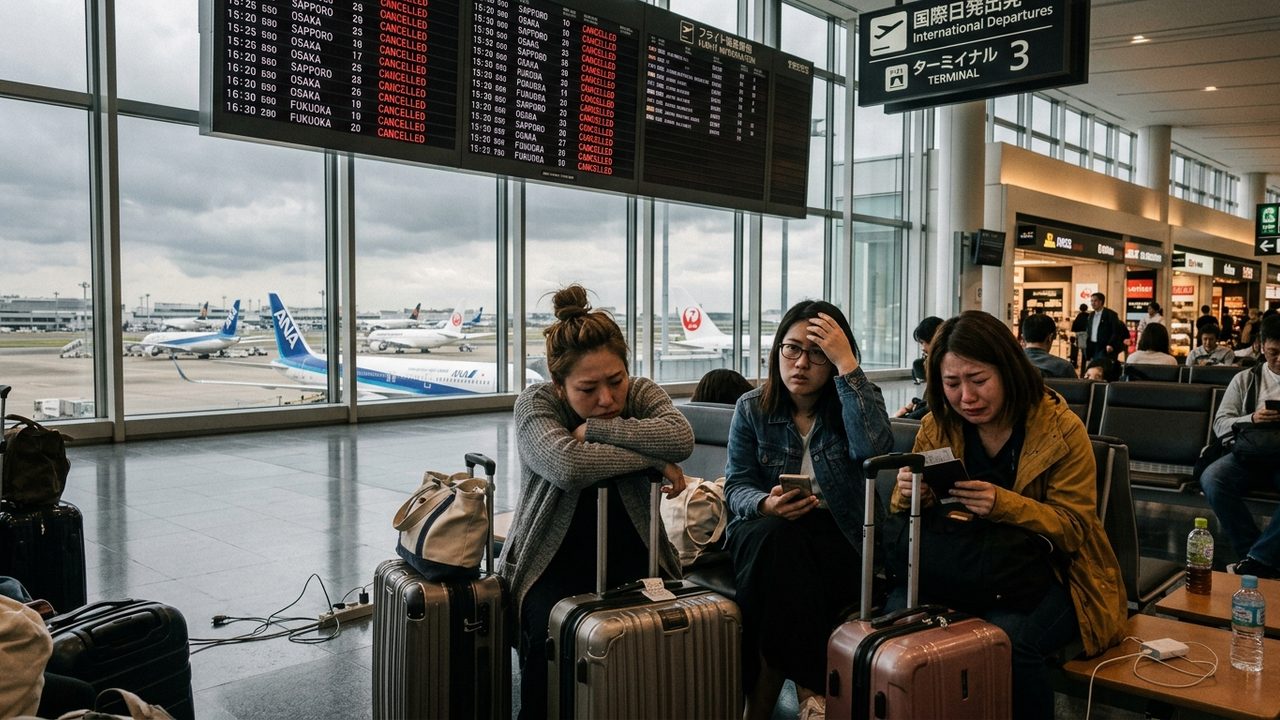
Image generated by AI
The Core Development
On June 28, 2026, a massive operational breakdown disrupted air travel across Japan. Tokyo Haneda Airport (HND) bore the brunt of the crisis. Osaka International Airport (ITM) and Fukuoka Airport (FUK) also faced significant scheduling instability.
Major carriers like Japan Airlines (JAL) and All Nippon Airways (ANA) struggled with fleet rotation delays. International operators, including American Airlines and Air China, faced canceled departures. The disruption heavily impacted domestic corridors linking Tokyo, Osaka, and Fukuoka. Long-haul connections to the United States and Europe also experienced extended delay chains.
Key Facts Breakdown
- Total network impact: 19 canceled flights, 765 delayed flights.
- Tokyo Haneda (HND): 11 cancellations, 536 delays. JAL, American Airlines, Air China, ANA, and ANA Wings canceled flights.
- Osaka Itami (ITM): 5 cancellations, 97 delays. JAL canceled all five flights.
- Fukuoka (FUK): 4 cancellations, 132 delays. JAL and ANA operations were cut.
- International carriers delayed: Delta, United, Lufthansa, British Airways, Cathay Pacific, Qantas, Garuda Indonesia, Air France.
- Primary causes: High domestic travel demand, aircraft rotation delays, Haneda congestion, weather variability in northern Japan, and knock-on effects from Asian hubs.
| Sl. No | Airport | Cancellations | Delays | Airlines affected by cancellations |
|---|---|---|---|---|
| 1 | Fukuoka (FUK) | 4 | 132 | Japan Airlines, All Nippon Airways |
| 2 | Osaka Itami (ITM) | 5 | 97 | Japan Airlines |
| 3 | Tokyo Haneda (HND) | 11 | 536 | Japan Airlines, ANA, American Airlines, Air China |
Why This Matters
Our analysis of the flight data indicates a structural imbalance in Japan's aviation infrastructure. Tokyo Haneda's dense slot scheduling creates a single point of failure. When aircraft rotation delays hit JAL and ANA, the ripple effects immediately paralyze domestic corridors.
Industry observers note that Haneda's massive delay accumulation—exceeding 500 flights—amplifies congestion across regional airports like Fukuoka and Osaka. This disrupts global tourism flows from North America and Europe. Market trends suggest that without operational stabilization, inbound tourism to major hubs like Tokyo, Osaka, Kyoto, and Hokkaido will suffer. Missed connections and rebooking delays directly impact hotel check-ins, domestic travel circuits, and tour schedules.
Industry Outlook
Airlines must address fleet rotation bottlenecks to prevent recurring disruption waves. Travelers should anticipate continued scheduling instability at Tokyo Haneda throughout peak travel periods. Industry participants advise passengers to avoid tight connections. Early morning departures offer the best chance of bypassing peak congestion. Without immediate intervention to balance slot occupancy and aircraft availability, Japan's domestic mobility and international tourism performance face ongoing risk.
Related Travel Guides
Disclaimer
This article is for informational and educational purposes only. It does not constitute legal, financial, or professional advice. While we strive to provide accurate and up-to-date information, travel policies, regulations, and conditions change rapidly. Always verify information with official sources before making travel decisions. Nomad Lawyer makes no representations about the accuracy, reliability, completeness, or suitability of the information provided. Readers should consult qualified professionals for advice specific to their circumstances. The views expressed in this article are those of the author and do not necessarily reflect the views of Nomad Lawyer.
Kunal K Choudhary
Co-Founder & Contributor
A passionate traveller and tech enthusiast. Kunal contributes to the vision and growth of Nomad Lawyer, bringing fresh perspectives and driving the community forward.
Learn more about our team →