
Korça International Carnival Festival 2026: Albania's Summer Season Opener Draws 25+ Balkan Delegations
Albania's historic Korça Carnival Festival officially launches the summer tourist season with 400+ handmade costumes, 25-30 international delegations, and zero ticket barriers—a radical return to authentic community celebration.

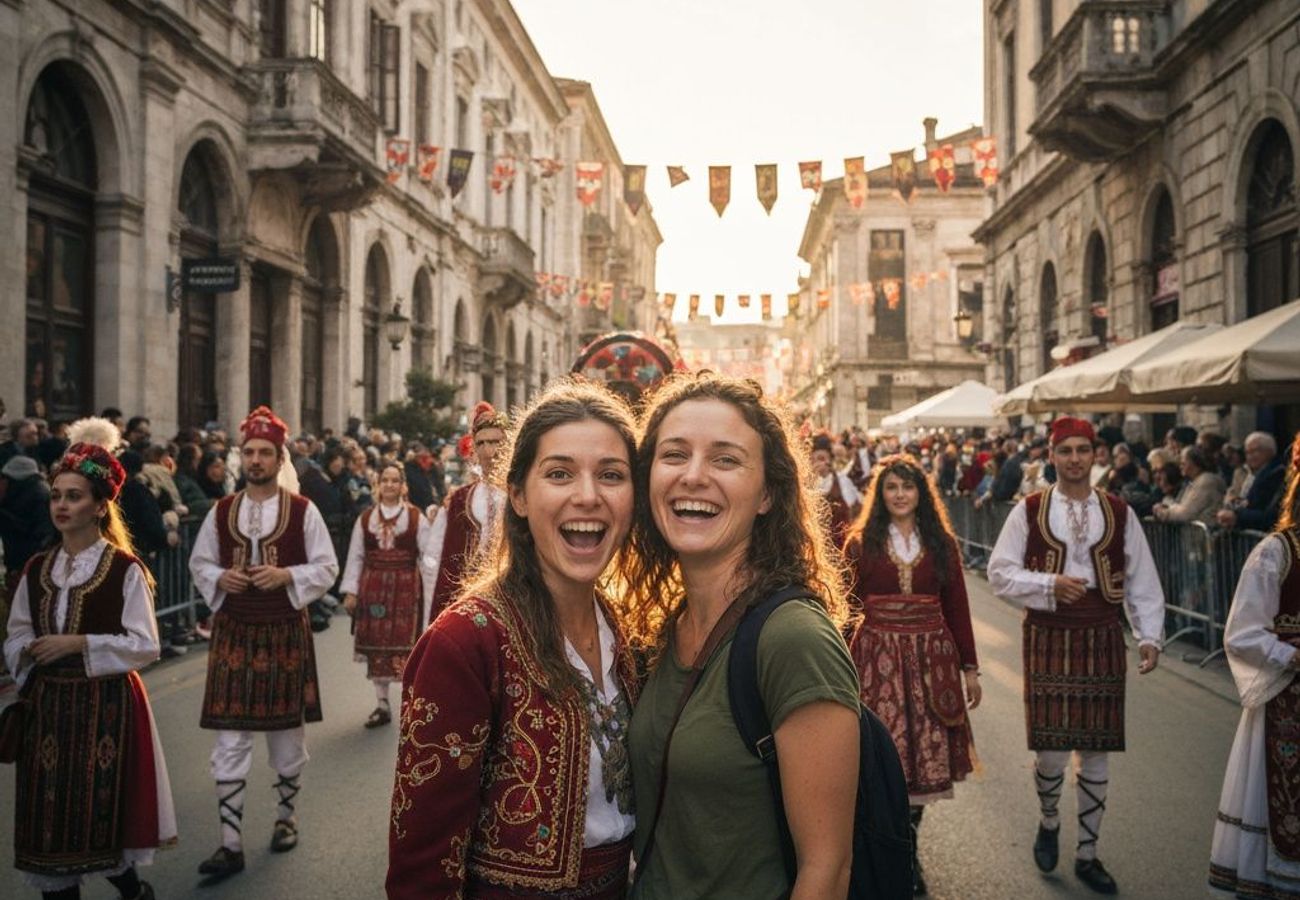
Image generated by AI
When June arrives in southeastern Albania, the cobblestone streets of Korça don't merely welcome the summer sun—they detonate into a kaleidoscopic explosion of color, music, and unfiltered collective joy. Known affectionately across the Balkans as the "City of Serenades," Korça has once again cemented its status as the region's cultural crown jewel by hosting its sprawling International Carnival Festival, which now officially marks the opening of the entire summer tourist season across the region.
This isn't your typical street fair. The festival functions as a systemic, cultural reset button for southeastern European tourism—a moment when hotels fill overnight, restaurants overflow, and the regional hospitality machine shifts into high gear.
A Tradition Born From Defiance and Reclaimed From Darkness
The story of Korça's Carnival reads like a lesson in cultural resilience. The festival's roots run deep into the 1940s, an era when the city thrummed with mandolin orchestras, romantic guitar serenades, and subversive street masquerades that felt genuinely dangerous to those in power.
Then came decades of systematic suppression. Communist authorities viewed the carnival as ideologically hazardous—its Western mask designs, satirical edge, and unfiltered public celebration were incompatible with totalitarian control. The festival was buried, along with thousands of old photographs and half-forgotten melodies.
The regime's collapse in the early 1990s triggered an immediate, passionate reclamation. Citizens dug through archives, revived old songs, and resurrected the masks their grandparents had worn. Today's carnival blends those nostalgic, historic traditions with high-energy contemporary performance art, creating what many regional tourism boards now recognize as one of South-Eastern Europe's most significant folk gatherings.
Reddit: "This is what real, unpolished cultural tourism looks like—not sanitized for Instagram, just pure community expression." — r/BalkanTravel
The Logistics of Organized Chaos
The 2026 edition transformed Korça's entire urban geography into a massive, interactive stage. The parade route kicks off at the historically significant Korça Beer Factory—a landmark deeply embedded in the city's sensory identity—and surges down the city's two primary arterial roads, including the iconic Republika Boulevard, before culminating in an all-night celebration inside the beautifully restored Old Bazaar.
The operational scale is staggering:
Festival Metrics at a Glance:
- Total Cost: Completely free; open street access for all spectators
- Handmade Costumes & Masks: 400+ unique, artisanal designs
- International Delegations: 25-30 regional and global troupes
- Participating Nations: Greece, Serbia, North Macedonia, Bulgaria, Montenegro, and Poland
The artistic curation intentionally merges localized parody with broader geopolitical commentary. Spectators watch theatrical sketches lampooning local political phenomena, historic wedding ceremonies, and Albania's ongoing bureaucratic journey toward European Union integration. It's participatory political satire performed on public boulevards.
International Artistry Meets Hyperlocal Passion
What separates this festival from corporate-sponsored events is its radical openness. Local artistic director Zamira Kita describes the modern carnival as a dynamic incubator where creative expression flows freely across borders.
For many Korça residents, crafting their carnival persona is a year-round obsession. It's not uncommon to meet local artisans who spend entire months in their spare bedrooms transforming raw fabric, wire, and paper-mâché into striking wearable art. This hyperlocalized dedication seamlessly merges with contributions from international guests—specialized historical costume troupes traveling from Florina, Greece, bringing authentic 1930s-era wartime attire that adds living history to the Albanian avenues.
The cross-pollination is genuine. Performers from neighboring Balkan nations bring winter and spring masquerade customs that enrich the spectacle with authentic regional variation.
The Economic Multiplier Effect
While artistic passion fuels the festival, its macroeconomic impact on southeastern Albania is equally profound. Korça's Mayor, Sotiraq Filo, has systematically weaponized the carnival as a powerful marketing lever to transition the city from seasonal mountain weekend tourism into a thriving, year-round visitor destination.
By launching the official summer season in early June with an event of this magnitude, the municipality ensures that local hotels, boutique guesthouses, traditional restaurants, and small-to-medium enterprises (SMEs) experience an immediate, massive infusion of tourist revenue. The carnival acts as a gateway experience that converts weekend visitors into extended-stay tourists.
First-time visitors commonly extend their stays to explore the surrounding cultural ecosystem:
Culinary Journeys: Traditional slow-cooked dishes and artisanal lakror pies in nearby mountain villages like Voskopoja, Boboshtica, and Dardha.
Natural Attractions: Short, scenic drives to the tranquil shores of Lake Ohrid and the charming lakeside town of Pogradec (Lake Ohrid UNESCO World Heritage Site).
Extended Events: Return visits throughout summer for Korça's legendary Beer Festival and international serenade gatherings, effectively extending tourism revenue across multiple seasons.
The carnival's success has inspired regional governments to develop similar cultural tourism strategies. Neighboring towns now actively coordinate events to create an interconnected, summer-long festival circuit that keeps visitors engaged across the broader region.
The Radical Democracy of the Mask
At its core, the Korça International Carnival Festival succeeds because it obliterates traditional barriers to cultural participation. There are no VIP velvet ropes, expensive ticket windows, or class distinctions separating spectators from performers. Anyone can slip on a mask, step into the street, and lose themselves in the collective rhythm of public celebration.
As Europe increasingly contends with sanitized, corporate travel experiences engineered for maximum Instagram engagement, Korça offers something genuinely countercultural: an authentic, uncontrolled, community-driven celebration where the primary goal is collective joy—not profit extraction or brand alignment.
If you're plotting summer travel through the Mediterranean and the Balkans, timing your arrival to witness the Korça Carnival explosion is your direct ticket to discovering the authentic, beating heart of Albanian culture.
The magic happens when entire cities reject the script and remember why celebration matters.
Related Travel Guides
Disclaimer
This article is for informational and educational purposes only. It does not constitute legal, financial, or professional advice. While we strive to provide accurate and up-to-date information, travel policies, regulations, and conditions change rapidly. Always verify information with official sources before making travel decisions. Nomad Lawyer makes no representations about the accuracy, reliability, completeness, or suitability of the information provided. Readers should consult qualified professionals for advice specific to their circumstances. The views expressed in this article are those of the author and do not necessarily reflect the views of Nomad Lawyer.
Preeti Gunjan
Contributor & Community Manager
A passionate traveller and community builder. Preeti helps grow the Nomad Lawyer community, fostering engagement and bringing the reader experience to life.
Learn more about our team →