Italy Suspends Florence-Faenza Rail Services After Landslide Alert Disrupts Tuscany-Emilia Romagna Travel 2026

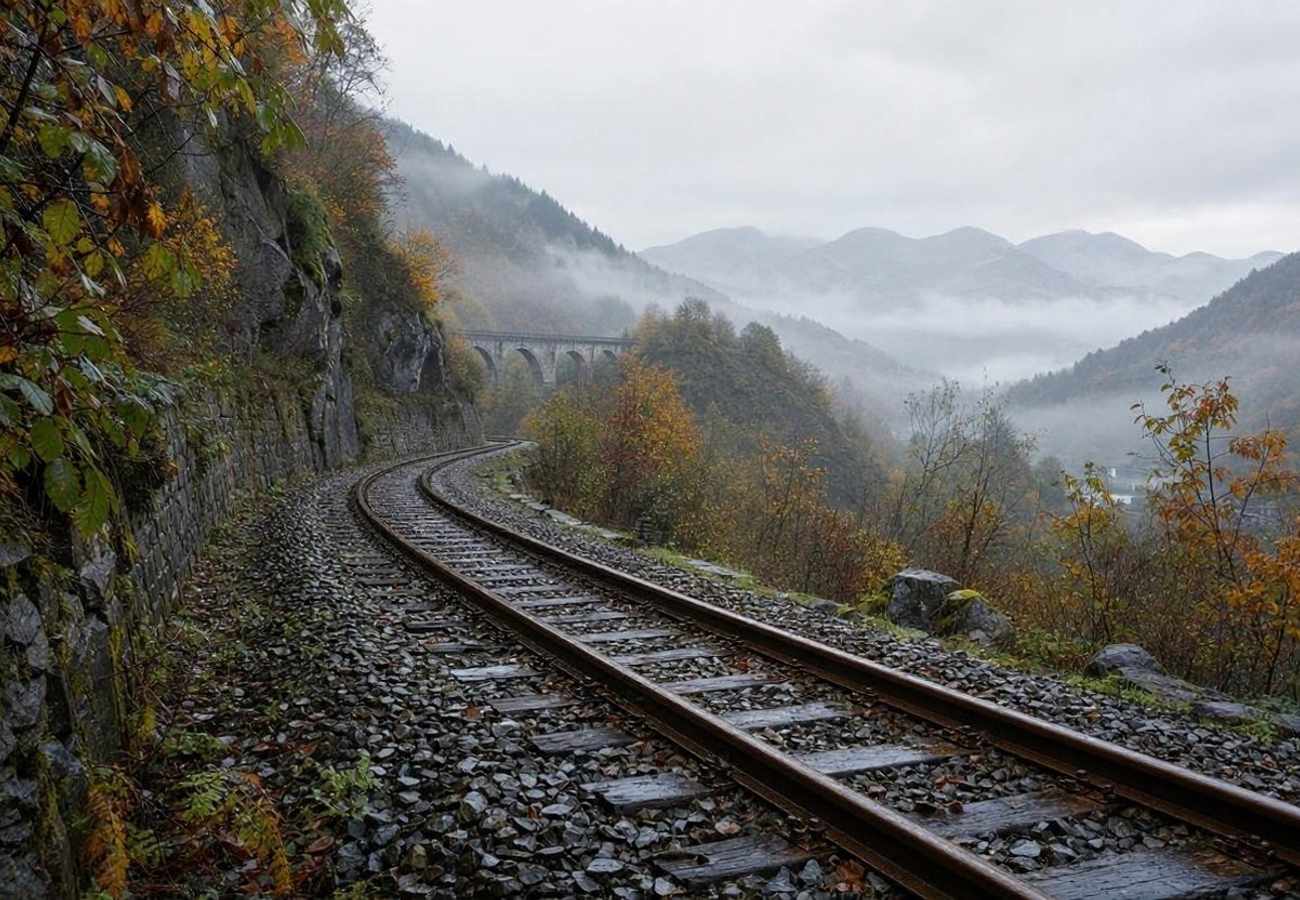
Image generated by AI
A landslide monitoring alert—not an actual collapse—is enough to freeze rail traffic in the Apennines. On 14 November 2026, Trenitalia triggered an immediate suspension of services between Borgo San Lorenzo and Faenza, proving that in Italy's mountainous corridors, the warning system is as influential as the event itself.
The Apennine Corridor Crisis: What is Happening Now
The regional rail artery connecting Tuscany and Emilia-Romagna is currently fractured. The suspension specifically targets the Florence–Borgo San Lorenzo–Faenza corridor. This isn't a case of a train being swept off the tracks or a bridge collapsing; rather, the sophisticated landslide monitoring systems installed along the route detected ground instability that exceeded safety thresholds.
For those unfamiliar with the geography, this route cuts through the rugged heart of the Apennines. When these sensors trigger, Trenitalia is mandated to halt traffic until engineers can physically verify the integrity of the tracks. While this prevents accidents, it creates a logistical vacuum for thousands of commuters and tourists moving between the cultural hub of Florence and the regional centers of the north.
What Makes the Florence-Faenza Route Unique
Unlike the high-speed Frecciarossa lines that zip between Milan and Rome, the Borgo San Lorenzo to Faenza section is a lifeline for "slow travel." It serves as the primary gateway for visitors escaping the crowds of Florence to explore the Mugello valley or the ceramic workshops of Faenza.
The experience here is defined by the geography. The tracks cling to hillsides and carve through deep valleys. This makes the route visually stunning but geologically precarious. Because this is a regional line, there are far fewer redundancies than on the main trunk lines. When the rail fails here, you aren't just switching to another train; you are switching to the road, which in the Apennines means winding two-lane highways and significantly slower transit times.
Regional Transit Logistics: Rail vs. Bus
To keep the corridor moving, Trenitalia has deployed replacement bus services for both Saturday, 14 November, and Sunday, 15 November. However, the transition from rail to road is rarely a one-to-one swap in terms of efficiency.
| Feature | Regional Rail (Normal) | Replacement Bus (Current) | Impact on Traveler |
|---|---|---|---|
| Travel Time | Scheduled Fixed | Variable (Traffic Dependent) | Significant Delays |
| Boarding Point | Train Platform | Station Forecourt/Bus Stop | Potential Confusion |
| Connection Reliability | High | Low | Missed Onward Links |
| Route | Direct Rail Path | Public Road Network | Longer Transit Distance |
Visitor Insider Tips
If you are currently in Tuscany or planning to move toward Emilia-Romagna this weekend, ignore the standard timetables.
- The "Bus Gap": Do not assume a bus departs exactly when your train was scheduled. Replacement buses often operate on a modified frequency. Check the official Visit Italy or Trenitalia app for real-time "Bus Sostitutivo" updates.
- Station Navigation: In smaller towns like Borgo San Lorenzo, the bus boarding area is often a short walk away from the platforms. Look for staff in high-visibility vests or signage pointing toward "Autobus."
- Buffer Your Connections: If you have a hotel check-in or a pre-booked tour in Faenza, add at least two hours to your expected travel time. The winding roads of the Apennines are prone to congestion, especially during weekend leisure travel.
- Alternative Hubs: If the bus queue is too long, consider checking for regional coach services (like FlixBus or Itabus) that connect Florence directly to Bologna, then taking a short local connection to Faenza.
Cultural and Environmental Context
This disruption is a microcosm of the struggle between Italy's commitment to regional connectivity and the reality of its changing environment. The Apennines are increasingly susceptible to hydrogeological instability due to erratic rainfall patterns and the natural fragility of the soil.
The reliance on monitoring systems shows a shift toward preventative safety. In previous decades, repairs often happened after a landslide occurred. Today, the "alert-first" approach prioritizes human life over schedule adherence. For the local communities in the Florence-Faenza stretch, these suspensions are a recurring reminder of their vulnerability to the landscape. Tourism provides the economic incentive to maintain these lines, but the cost of maintaining rail infrastructure in a landslide-prone zone is astronomical, often requiring constant reinforcement of the valley walls.
FAQ: Visiting Tuscany and Emilia-Romagna 2026
Is the entire Italian rail network affected? No. The suspension is localized strictly to the section between Borgo San Lorenzo and Faenza. High-speed trains and other regional lines across Italy are operating normally.
Do I need to buy a separate ticket for the replacement bus? Generally, your existing Trenitalia ticket is valid for the replacement bus service on the affected route. However, always confirm with the station master or conductor.
How do I find the replacement bus stop? Replacement buses typically depart from the parking areas or designated bus bays immediately outside the train station. Follow the "Bus Sostitutivo" signs.
Is it safe to travel in this region during landslide alerts? Yes, because the rail suspension is a preventative measure. The replacement buses use public roads that are monitored separately by road authorities.
Travel in Italy is as much about the detour as it is about the destination.
Related Travel Guides
This article is for informational purposes. Flight routes, passenger regulations, visa rules, and transit advisories are subject to change by airlines and aviation authorities. Readers are advised to verify schedules and travel documentation with relevant carriers and border agencies before departure.
Related Stories

Myanmar Railways Launches Yangon to Bagan Sleeper Train Service in November 2026
New Zealand Extends KiwiRail Land Lease to 2170: What It Means for Travel and Tourism