
Bengaluru Mumbai Vande Bharat Sleeper Gets Indian Railways Green Light
Indian Railways approves new Vande Bharat Sleeper service between Bengaluru and Mumbai in 2026, offering premium overnight rail travel that cuts journey time to 16–18 hours versus the 19-hour Udyan Express.

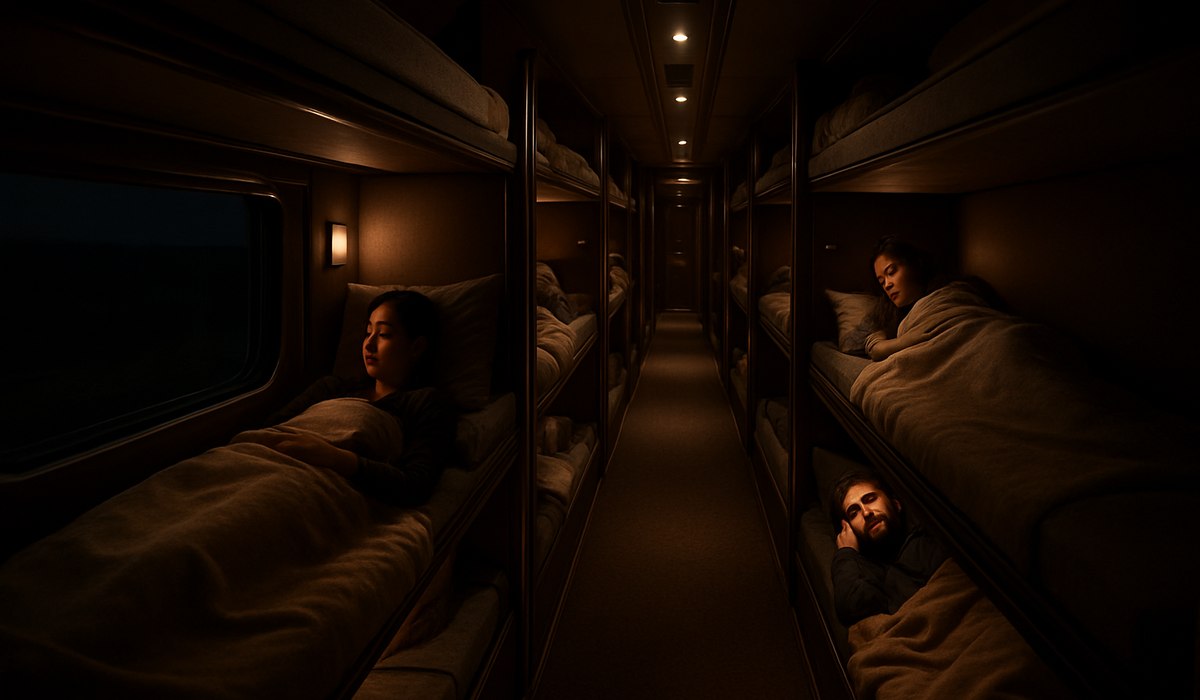
Image generated by AI
Breaking News: Premium Overnight Rail Service Launches Between India's Tech and Finance Capitals
Indian Railways has officially approved a new Vande Bharat Sleeper service connecting Bengaluru and Mumbai, marking a major milestone in the modernization of India's intercity rail network. The decision, announced in early April 2026, introduces the first premium overnight sleeper option on one of Asia's most congested business travel corridors. This new service targets business travelers and leisure passengers seeking a faster, more comfortable alternative to short-haul flights and the aging Udyan Express, which currently dominates the route with a grueling 19-hour overnight journey.
The approval signals Indian Railways' commitment to expanding Vande Bharat operations beyond daytime express services into long-distance overnight travel. Departing from KSR Bengaluru City and arriving at Chhatrapati Shivaji Maharaj Terminus (CSMT) in Mumbai, the new Bengaluru Mumbai Vande service will operate on a fully electrified corridor designed for speeds up to 130 km/h, substantially reducing travel times for the 650-kilometer route.
Premium Overnight Corridor Between India's Tech and Finance Hubs
The Bengaluru–Mumbai corridor ranks among India's most heavily trafficked intercity routes, serving millions of business professionals, entrepreneurs, and leisure travelers annually. Currently, the Udyan Express remains the only dedicated daily overnight train, with journey times routinely exceeding 19 hours. Passenger demand far outpaces supply, forcing many travelers toward premium airlines charging higher fares for marginal time savings.
The Vande Bharat Sleeper directly addresses this market gap by combining rail's affordability with overnight convenience and significantly faster transit times. Indian Railways' internal projections indicate the new service will attract approximately 35–40 percent of the current air traffic on this corridor, based on comparable performance metrics from newer Vande Bharat routes across India.
The two metropolitan regions represent India's dual economic engines: Bengaluru hosts the nation's information technology sector with companies like Infosys, TCS, and Wipro, while Mumbai remains the financial and entertainment capital. Business travelers between these hubs typically spend ₹4,000–₹8,000 on flights per segment, positioning overnight rail as an economically compelling alternative at expected fare points between ₹2,500–₹4,500 for sleeper accommodations. Learn more about Indian Railways' expansion strategy on the official portal.
Faster Route via Pune and Kalaburagi Reduces Journey Times Significantly
The strategic route selection separates the new Bengaluru Mumbai Vande service from existing slow-speed alternatives. Rather than following congested older rail lines, Indian Railways has chosen a path through Pune and the Kalaburagi–Kalyana Karnataka region, capitalizing on recently completed electrification and double-tracking projects.
The Pune–Bengaluru leg, often the bottleneck on conventional services, is projected to complete in just 13–14 hours using the upgraded infrastructure. This represents roughly 4–5 hours of time savings compared to slower express trains navigating older single-track sections. The entire Bengaluru–Mumbai journey is estimated at 16–18 hours, depending on final halt patterns and operational margins approved by Indian Railways management.
Kalaburagi's inclusion on this premium route carries significant regional connectivity implications. Historically underserved by premium intercity trains, the city and surrounding Kalyana Karnataka region will gain direct access to India's two largest metropolitan areas overnight. Local elected representatives have publicly endorsed the alignment as both an economic development tool and a long-overdue recognition of the region's transport needs. The fully electrified, double-line infrastructure supporting 130 km/h operations ensures reliable scheduling and reduced environmental impact compared to diesel-powered express services.
Modern Sleeper Configuration and Capacity Details
The Vande Bharat Sleeper design represents a generational leap beyond India's traditional sleeper coaches. Each fully air-conditioned rake will accommodate over 800 passengers across dedicated AC sleeping classes, eliminating the mixed-class model of conventional overnight trains where noise and crowding frequently disrupt rest.
Automatic door systems, sealed coaches with individual climate control, and modern washroom facilities address longtime passenger complaints about sleeper-class comfort. Modeled after the Howrah–Kamakhya Vande Bharat Sleeper—India's first premium sleeper service launched in 2024—the Bengaluru–Mumbai variant incorporates onboard Wi-Fi, USB charging at each berth, and enhanced catering with regional meal options prepared by contracted hospitality providers.
Indian Railways plans to deploy two dedicated Vande Bharat Sleeper rakes, enabling synchronized daily departures in both directions. This configuration ensures continuous availability without operational gaps that plague single-rake services. The Bengaluru Mumbai Vande configuration prioritizes night travel, with late-evening departures maximizing daytime productivity for business passengers at their destination.
Competitive Advantage Over Existing Services and Air Travel
The Bengaluru Mumbai Vande service fundamentally disrupts the current competitive landscape dominated by expensive short-haul flights and exhausting overnight trains. The Udyan Express, despite being the corridor's only direct overnight option, loses roughly 25 percent of potential passengers to air travel annually due to superior scheduling and perceived comfort advantages.
Premium airlines charge ₹3,500–₹7,000 for one-way business-class fares, while economy seats average ₹2,000–₹3,500 before ancillary fees. The Vande Bharat Sleeper undercuts this pricing while offering superior accessibility—no security theater, baggage restrictions, or weather delays. For corporate travel departments managing large employee volumes, bulk sleeper bookings present negotiating leverage that airlines rarely grant.
Industry analysts project the service will absorb 8,000–12,000 weekly passengers at launch, stabilizing around 6,000 weekly by year two as capacity constraints and competing services mature. Journey time parity with flights—both now requiring roughly 4–5 hours door-to-door including pre-flight procedures—shifts traveler preference toward rail's superior value proposition and overnight convenience. Discover more about premium Indian rail services through IRCTC's official booking platform.
Key Data: Bengaluru–Mumbai Vande Bharat Sleeper Service Specifications
| Feature | Details |
|---|---|
| Route | KSR Bengaluru City → CSMT Mumbai via Pune, Kalaburagi |
| Distance | Approximately 650 km |
| Estimated Journey Time | 16–18 hours (end-to-end) |
| Train Type | Vande Bharat Sleeper (AC only) |
| Total Capacity | 800+ passengers |
| Coach Configuration | All AC sleeper classes (no mixed-class) |
| Maximum Speed | 130 km/h (on electrified sections) |
| Dedicated Rakes Assigned | 2 (enabling daily bi-directional service) |
| Operational Pattern | Late-evening departure, morning arrival (overnight) |
| Expected Fare Range | ₹2,500–₹4,500 (approximate) |
| Comparison: Udyan Express | 19+ hours, mixed-class, ₹1,800–₹3,200 fares |
| Comparison: Air Travel | 2.5 hours flight + 3 hours airport procedures, ₹2,000–₹7,000 fares |
| Major Intermediate Halts | Pune, Kalaburagi |
Disclaimer
This article is for informational and educational purposes only. It does not constitute legal, financial, or professional advice. While we strive to provide accurate and up-to-date information, travel policies, regulations, and conditions change rapidly. Always verify information with official sources before making travel decisions. Nomad Lawyer makes no representations about the accuracy, reliability, completeness, or suitability of the information provided. Readers should consult qualified professionals for advice specific to their circumstances. The views expressed in this article are those of the author and do not necessarily reflect the views of Nomad Lawyer.
Preeti Gunjan
Contributor & Community Manager
A passionate traveller and community builder. Preeti helps grow the Nomad Lawyer community, fostering engagement and bringing the reader experience to life.
Learn more about our team →