
Iraq Revives Mesopotamian Marshes Eco-Tourism: Chibayish Gateway and UNESCO Site Updates 2026
Iraq is revitalizing the Mesopotamian Marshes through community-led eco-tourism in Chibayish, combining UNESCO-listed wetlands with ancient Sumerian heritage sites.

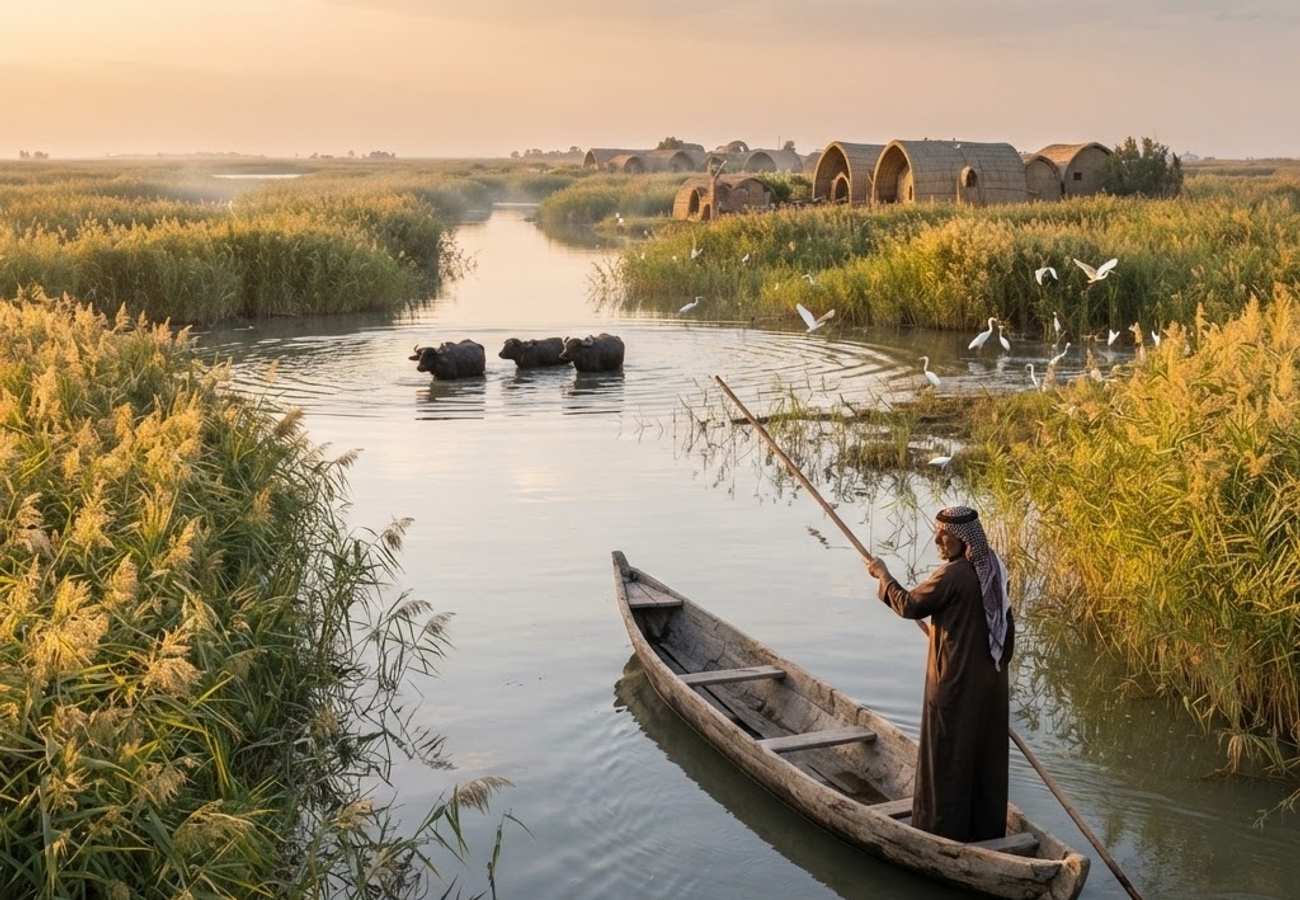
Image generated by AI
The revival of water flows in southern Iraq has unlocked a new era for the Mesopotamian Marshes, transforming the Chibayish region into a primary hub for sustainable eco-tourism and indigenous Marsh Arab heritage.
The Mesopotamian Marshes, known locally as Al-Ahwar, are undergoing a significant ecological and economic recovery. Recent improvements in water allocations from the Tigris and Euphrates river systems have restored critical reed bed formations and wildlife habitats. This environmental stabilization is directly fueling a community-based tourism model that integrates traditional livelihoods with international travel.
The region is not merely a natural reserve but a complex intersection of biodiversity and human history. Inscribed as a UNESCO World Heritage Site in 2016, the area spans approximately 5,500 sq km and consists of three primary wetland components: Hammar, Central, and Hawizeh.
Wetland Specifications and Tourism Infrastructure
The current tourism framework centers on Chibayish, located in the Dhi Qar province. This town serves as the operational base for visitors entering the Central Marshes. The experience is defined by the use of the mashoof—a traditional narrow wooden canoe—which allows for low-impact navigation through the reed channels.
| Parameter | Detail |
|---|---|
| UNESCO Status | Inscribed 2016 (The Ahwar of Southern Iraq) |
| Total Protected Area | Approx. 5,500 sq km |
| Primary Marsh Zones | Hammar, Central, Hawizeh |
| Main Visitor Gateway | Chibayish, Dhi Qar Province |
| Primary Transit Mode | Mashoof (Traditional Canoe) |
| Key Accommodations | Mudhif (Traditional Reed Guesthouses) |
| Associated Heritage Sites | Ziggurat of Ur (Sumerian City) |
Heritage Hospitality and Biodiversity
A cornerstone of the Chibayish experience is the mudhif. These traditional guesthouses, constructed entirely from locally harvested reeds, have transitioned from purely social community centers to sustainable hospitality venues. This shift allows travelers to engage directly with Marsh Arab culture while ensuring tourism revenue remains within the local economy.
From a biological perspective, the restoration of water flows has revitalized the area for birdwatchers and nature photographers. The marshes are critical habitats for herons, egrets, and kingfishers, while the presence of water buffalo remains a defining characteristic of the landscape.
The United Nations Development Programme (UNDP) has been instrumental in this transition, supporting projects that strengthen local livelihoods through guiding, boat operations, and handicraft production, ensuring that the economic benefits of tourism are distributed equitably among the indigenous populations.
Traveler Logistics Guide: Navigating Southern Iraq
From a ground-level perspective, navigating the marshes requires specific planning due to the remote nature of the Dhi Qar province.
Arrival and Transit The primary urban base for any expedition into the marshes is Nasiriyah. Travelers typically arrive in Nasiriyah and then proceed by road to Chibayish. While Nasiriyah International Airport is under development to improve regional access, travelers must verify its operational status and flight availability prior to departure, as ground transport from other major Iraqi cities remains the standard.
Booking and Timing Water levels in the marshes are volatile and subject to seasonal changes, climate pressures, and upstream water management. It is highly recommended to:
- Secure Local Guides: Avoid independent navigation; certified local guides are essential for safety and accessing the best wildlife spots.
- Verify Water Conditions: Check current water levels through local operators in Nasiriyah to ensure the channels are navigable by mashoof.
- Coordinate Heritage Links: The most efficient itineraries combine a visit to the Ziggurat of Ur with a multi-day stay in Chibayish, as both are located within the Dhi Qar province.
Essential Customs and Policy
- Currency: The Iraqi Dinar (IQD) is the sole accepted currency in local villages and for boat rentals.
- Digital Transit: Ensure all visa requirements are met via official Iraqi diplomatic channels. Travelers should monitor local security advisories and coordinate with registered tour operators to ensure seamless movement between Nasiriyah and the wetlands.
Regional Connectivity Impact
The integration of the Mesopotamian Marshes into the broader tourism circuit of southern Iraq creates a powerful synergy between natural ecology and ancient archaeology. By linking the living culture of the Marsh Arabs with the ruins of the Sumerian civilization at Ur, Iraq is establishing a unique "Nature-to-History" corridor. This not only diversifies the tourism offering beyond traditional urban sites but provides a sustainable economic alternative for communities previously dependent solely on fishing and agriculture.
The convergence of ancient Sumerian ruins and the living breath of the Al-Ahwar wetlands marks a pivotal moment in Iraq's cultural reclamation.
Related Travel Guides
Disclaimer
This article is for informational and educational purposes only. It does not constitute legal, financial, or professional advice. While we strive to provide accurate and up-to-date information, travel policies, regulations, and conditions change rapidly. Always verify information with official sources before making travel decisions. Nomad Lawyer makes no representations about the accuracy, reliability, completeness, or suitability of the information provided. Readers should consult qualified professionals for advice specific to their circumstances. The views expressed in this article are those of the author and do not necessarily reflect the views of Nomad Lawyer.
Preeti Gunjan
Contributor & Community Manager
A passionate traveller and community builder. Preeti helps grow the Nomad Lawyer community, fostering engagement and bringing the reader experience to life.
Learn more about our team →