
Yellowstone Wildlife Warning: Stricter Safety After Bison Clash
Yellowstone officials issue a wildlife safety alert reinforcing safe distances from large animals after a tourist is injured during a bison encounter.

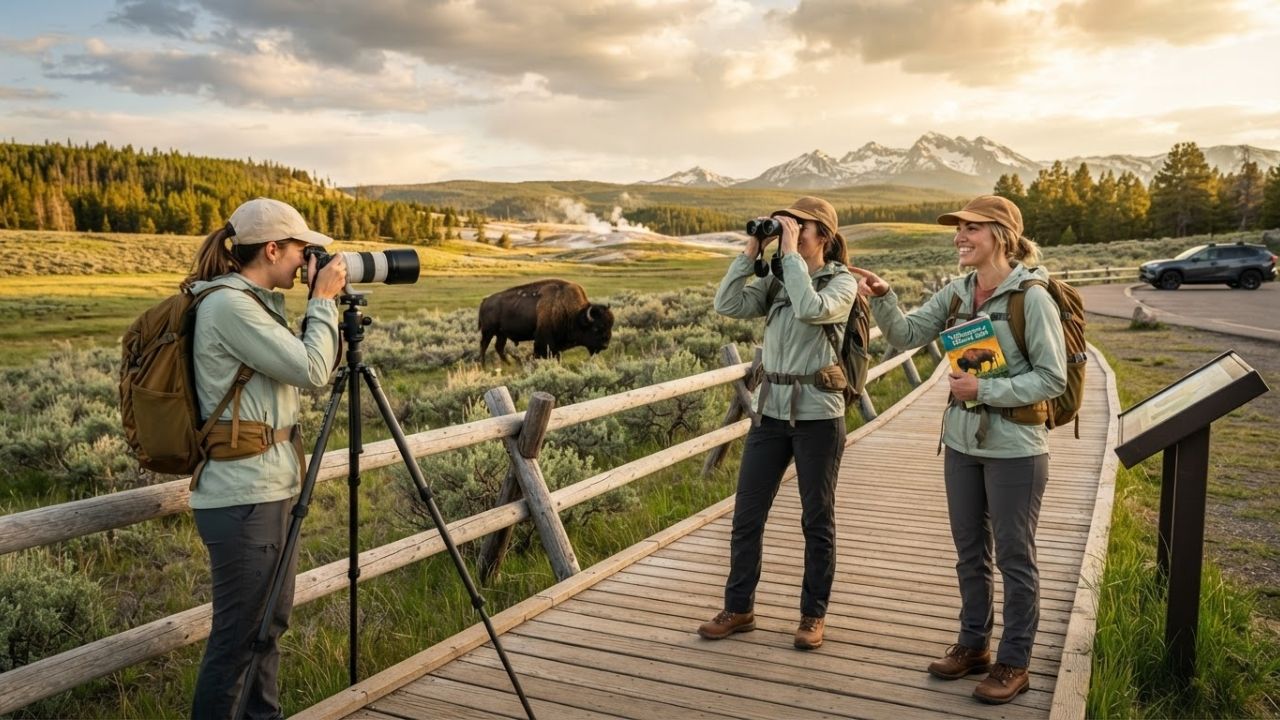
Image generated by AI
Yellowstone Wildlife Warning: Stricter Safety After Bison Clash
SEO Title: Yellowstone Wildlife Warning: Stricter Rules After Bison Clash 2026 Meta Description: Yellowstone National Park issues a wildlife safety warning. Read about mandatory viewing distances for bison, wolves, and bears to protect visitors. Slug: yellowstone-national-park-wildlife-safety-warning-bison-encounters-2026 Standfirst: Yellowstone National Park has issued an urgent wildlife warning, reinforcing mandatory safety distances after a recent bison encounter left a visitor injured in Wyoming's wilderness.
Article
[Yellowstone, August 7, 2026] — Yellowstone National Park officials and the National Park Service are reinforcing wildlife viewing guidelines following a series of bison encounters. The warnings follow a recent tourist injury in Wyoming's backcountry, highlighting the speed and power of free-ranging wildlife. Park rangers are instructing domestic and international visitors to maintain a minimum distance of 25 yards from bison, elk, and deer, and at least 100 yards from apex predators such as bears and wolves.
Bison weigh up to 900 kilograms and can run three times faster than humans, making them highly dangerous when approached closely. Consular offices and travel operators are incorporating these safety updates into regional tourist materials, warning against leaving boardwalks or approaching animals for photographs. These precautions apply to wilderness zones throughout the United States, including South Dakota and Wyoming.
The renewed warnings follow severe tourist encounters, such as the campground incident detailed in Yellowstone National Park Bison Attack Sends 65-Year-Old Visitor Eight Feet Into Air During 2026 Rampage, and regional herd management reported in Custer State Park Emerges as a Wildlife Tourism Hotspot in South Dakota's Black Hills.
US National Park Wildlife Vetting Parameters
The following table summarizes the mandatory viewing distances, behavioral rules, and regional safety focus areas monitored across major US wildlife reserves.
| Wildlife Category or Area | Minimum Safe Distance Requirement | Primary Vetting Threat Area | Required Visitor Behavior | Local Oversight Agency |
|---|---|---|---|---|
| Bison, Elk, and Deer | 25 yards (23 meters) | Charges, headbutts, trampling | Stay on boardwalks, do not feed | National Park Service (NPS) |
| Bears and Wolves | 100 yards (91 meters) | Predatory defense charges | Carry bear spray, travel in groups | Wyoming Game & Fish Dept |
| Bison (South Dakota) | 25 yards (23 meters) | Highway blocking, charges | Drive slowly, keep windows rolled | South Dakota Game & Fish Board |
| Alligator and Reptiles | Keep out of shoreline zones | Snap bites, water dragging | Do not swim near marshy areas | Florida State Parks Service |
| Cougars & Large Felines | Group hiking recommended | Stalking, defensive attacks | Keep children close on trails | National Park Service (NPS) |
Safety guidelines compiled in coordination with reports from Yellowstone National Park and Destination Wyoming.
Traveler Logistics Guide
From a ground-level perspective, the best way to navigate this is to carry a zoom lens for wildlife photography and verify that your vehicle is equipped with bear-safe food containers before entering remote trailheads.
- Distance Vetting Preparation: Familiarize yourself with the 25-yard and 100-yard benchmarks. If an animal changes its behavior (such as stopping grazing, stamping, or raising its tail), you are too close.
- Bison Encounter Safety: If a bison approaches your vehicle or path, move back slowly. Bison attacks are detailed in Yellowstone National Park Bison Attack Sends 65-Year-Old Visitor Eight Feet Into Air During 2026 Rampage.
- Secondary Park Vetting: Verify wildlife rules when traveling through adjacent state parks. Regional herd details are outlined in Custer State Park Emerges as a Wildlife Tourism Hotspot in South Dakota's Black Hills.
- Food Storage Rules: Keep all food, garbage, and scented items in bear-proof lockers to prevent wildlife habituation.
Infrastructure Impact Assessment
By enforcing strict wildlife distance regulations, park authorities reduce the frequency of animal-visitor conflicts, protecting both tourists and local wildlife populations. The reduction in close-up encounters prevents animals from becoming habituated to human foods, preserving the natural ecology of the park system. Reinvesting entry fees into boardwalk maintenance, park ranger patrols, and warning signs ensures that national park infrastructure remains safe and accessible to future generations of nature-based travelers.
Related Travel Guides
Custer State Park Emerges as a Wildlife Tourism Hotspot in South Dakota's Black Hills
The 10 Best Things to Know About Yellowstone Wildlife Safety, According To Reddit
Disclaimer
This article is for informational and educational purposes only. It does not constitute legal, financial, or professional advice. While we strive to provide accurate and up-to-date information, travel policies, regulations, and conditions change rapidly. Always verify information with official sources before making travel decisions. Nomad Lawyer makes no representations about the accuracy, reliability, completeness, or suitability of the information provided. Readers should consult qualified professionals for advice specific to their circumstances. The views expressed in this article are those of the author and do not necessarily reflect the views of Nomad Lawyer.
Kunal K Choudhary
Co-Founder & Contributor
A passionate traveller and tech enthusiast. Kunal contributes to the vision and growth of Nomad Lawyer, bringing fresh perspectives and driving the community forward.
Learn more about our team →