
Indonesia Travel Faces Ferry Crisis as Java Sea Disaster Raises Island Safety Concerns
Indonesia Travel Faces Ferry Crisis as Java Sea Disaster Raises Island Safety Concerns

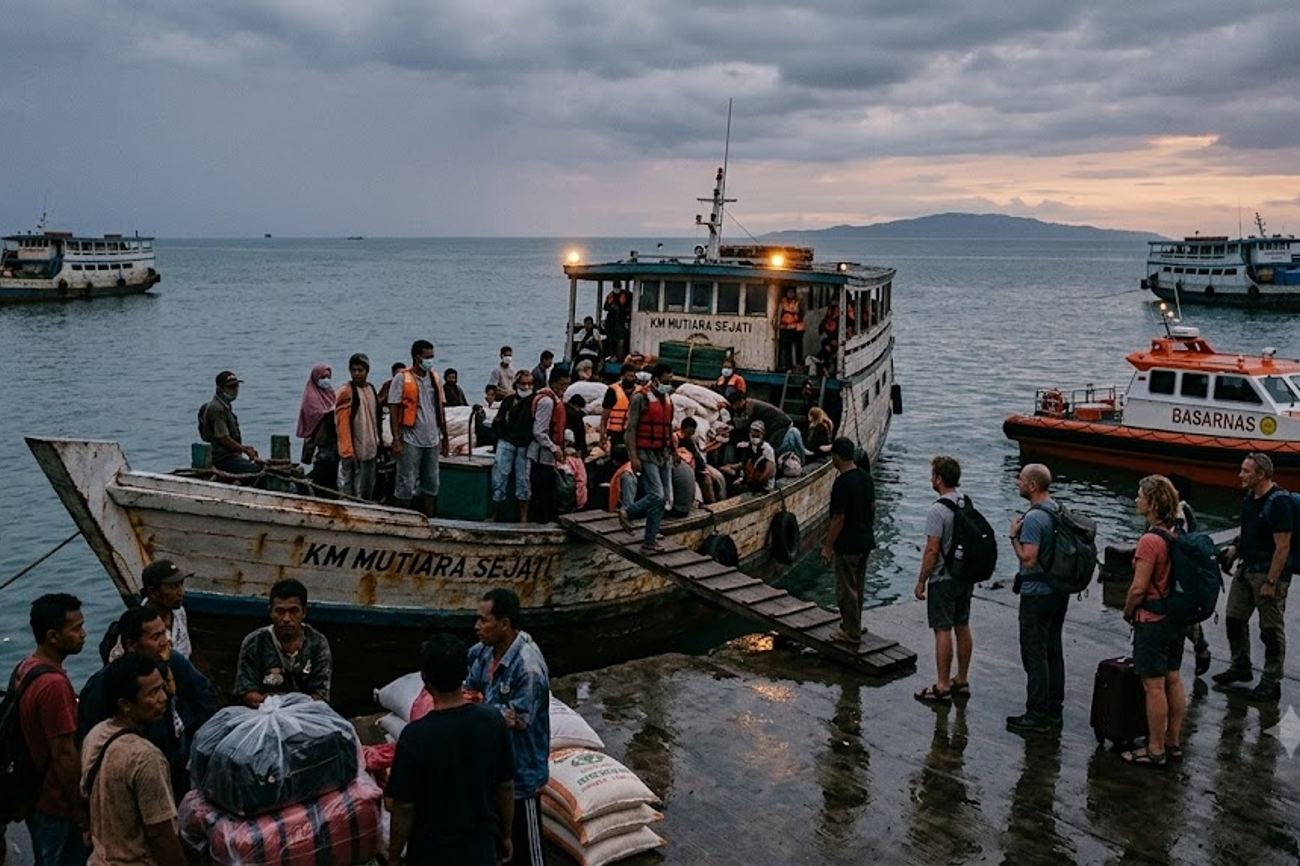
Image generated by AI
Are you planning an island-hopping itinerary through the Indonesian archipelago? Following the capsizing of the Virgo Transport 8, it is time to re-evaluate how you book and execute your maritime transfers in the Java Sea and beyond.
The Java Sea Maritime Crisis
The recent disaster involving the Virgo Transport 8 ferry has sent shockwaves through Indonesia's transit network, exposing critical vulnerabilities in passenger safety and emergency response. On September 14, 2026, this vessel capsized while navigating the route between Surabaya in East Java and Banjarmasin in South Kalimantan. The tragedy occurred after the ship encountered severe weather and waves reaching several meters, leading to a distress signal followed by a total loss of communication.
This incident is not merely a localized accident but a systemic warning for anyone relying on the archipelago's ferry infrastructure. With a manifest of 243 individuals—consisting of 213 passengers, 30 crew members, and 89 vehicles—the scale of the disaster highlights the high density of passengers and cargo on these routes. While rescue teams deployed helicopters and navy units to recover over 100 survivors, the confirmation of fatalities has reignited a national debate on vessel maintenance and the reliability of weather monitoring systems used by commercial operators.
Route and Schedule Details
The affected corridor is one of the most vital logistics arteries connecting the urban hub of East Java to the resource-rich regions of Kalimantan. While other routes remain operational, travelers should note the specifics of the high-risk corridor identified in the recent disaster.
| Route | Frequency | Aircraft/Vessel | Duration | Status |
|---|---|---|---|---|
| Surabaya $\rightarrow$ Banjarmasin | Scheduled | Ro-Ro Ferry (Virgo Transport 8) | Multi-day | Under Investigation |
| Surabaya $\rightarrow$ Bali | Daily | Fast Boat / Ferry | 3-5 Hours | Operational |
| Lombok $\rightarrow$ Gili Islands | Frequent | Local Boat | 15-30 Mins | Operational |
| Labuan Bajo $\rightarrow$ Komodo | Daily | Tourist Boat | 2-4 Hours | Operational |
Traveler Logistics Guide
Navigating Indonesia's waters requires more than just a ticket; it requires a strategic approach to risk management. As a logistics consultant, I advise the following step-by-step protocols for all inter-island movements.
1. Operator Vetting and Booking Avoid "street-side" ticket agents. Use official channels or recognized travel operators. Ensure your operator is licensed by the Ministry of Transportation of the Republic of Indonesia. If you are booking a long-haul route like the Surabaya-Banjarmasin corridor, request the vessel's name in advance to check for recent safety reports.
2. Weather-Based Scheduling Indonesia's tropical climate creates volatile sea states. Before departing any port, check the latest maritime weather warnings via the BMKG (Meteorology, Climatology, and Geophysical Agency). If waves are forecasted above 2-3 meters, reschedule your transit. The Virgo Transport 8 disaster proves that "rough seas" can escalate into catastrophic failures rapidly.
3. On-Board Safety Protocol Do not wait for a crisis to locate your safety gear. Upon boarding:
- Immediately identify the nearest life jacket station.
- Verify that the life jacket is in good condition and fits your size.
- Locate the primary and secondary evacuation exits.
- Follow all crew instructions without hesitation, regardless of your destination's urgency.
4. Digital Documentation and Communication Because communication can be lost instantly during a maritime emergency, leave a detailed "Transit Manifest" with a contact person on land. This should include:
- The name of the vessel.
- The departure and expected arrival times.
- The port of origin and destination.
- A digital copy of your passport uploaded to a cloud service.
5. Baggage and Vehicle Logistics For those transporting vehicles (Ro-Ro ferries), ensure your vehicle is properly lashed and secured by the crew. Overloaded or improperly balanced decks can contribute to vessel instability in rough waters.
Regional Connectivity Impact
The Java Sea is the primary link between the densely populated islands of Java and the expansive territories of Kalimantan and Sulawesi. For the average traveler, this disaster creates a psychological barrier to sea travel, potentially driving a surge in demand for short-haul flights. However, for those visiting remote coastal regions or the Gili Islands, ferries remain the only viable option.
The tragedy at Trisakti Port in Banjarmasin, where families waited for news, underscores the lack of real-time passenger tracking systems. This event will likely force a shift toward digitized passenger manifests and more stringent boarding controls. Until these systemic changes are implemented, the "island-hopping" experience carries a higher risk profile during the monsoon transitions. Travelers should expect increased inspections at ports and potential delays as authorities implement new safety audits across the fleet.
FAQ: Indonesia Ferry Transit 2026
Do I need a transit visa for island-hopping? If you remain on the vessel or within the port transit area, you generally do not need a separate visa. However, if you exit the port to stay in a city like Surabaya or Banjarmasin, you must hold a valid Indonesian visa or VOA (Visa on Arrival).
How long are the typical layovers between ferries? Inter-island connections are notoriously unpredictable. I recommend a minimum layover of 12 to 24 hours between different ferry operators. Weather delays are common, and missing a connection in a remote port can leave you stranded for days.
Can I check bags through to my final destination? No. Indonesian ferry travel is almost exclusively "self-carry." You are responsible for transporting your luggage from the pier to the vessel and from the vessel to your hotel. Use waterproof dry bags for all electronics and documents.
Are fast boats safer than large Ro-Ro ferries? Not necessarily. While fast boats are quicker, they are more susceptible to rough sea conditions and can be more unstable in high waves. Large ferries have more stability but may suffer from poor maintenance. Always prioritize licensed operators over speed.
Prioritize your safety over your schedule; the sea does not negotiate with itineraries.
#SurabayaBanjarmasinRoute #JavaSeaTransit2026 #IndonesiaMaritimeSafety #VirgoTransport8 #IndonesianFerryLogistics #ArchipelagoTravelSafety
Related Travel Guides
- Oregon Travel Warning: Wildfire Smoke Forces Tourism Industry to Rethink Summer Demand
- Taiwan Warns Travellers Over Mainland China Risks As New Border Checks Raise Digital Security Concerns
- UK Follows Turkey And More Countries As Australia Issues New Travel Advisory With Fresh Warnings On Protests And Entry Changes
Disclaimer
This article is for informational and educational purposes only. It does not constitute legal, financial, or professional advice. While we strive to provide accurate and up-to-date information, travel policies, regulations, and conditions change rapidly. Always verify information with official sources before making travel decisions. Nomad Lawyer makes no representations about the accuracy, reliability, completeness, or suitability of the information provided. Readers should consult qualified professionals for advice specific to their circumstances. The views expressed in this article are those of the author and do not necessarily reflect the views of Nomad Lawyer.
Kunal K Choudhary
Co-Founder & Contributor
A passionate traveller and tech enthusiast. Kunal contributes to the vision and growth of Nomad Lawyer, bringing fresh perspectives and driving the community forward.
Learn more about our team →