
Mauritius Evaluates Strict Tourism Caps as Overdevelopment and Resource Strain Threaten Island Ecology: What Every Traveller Must Know
Mauritius reassesses tourist volume targets as coastal erosion, coral bleaching, and high per-capita water use push the island's carrying capacity to the brink.

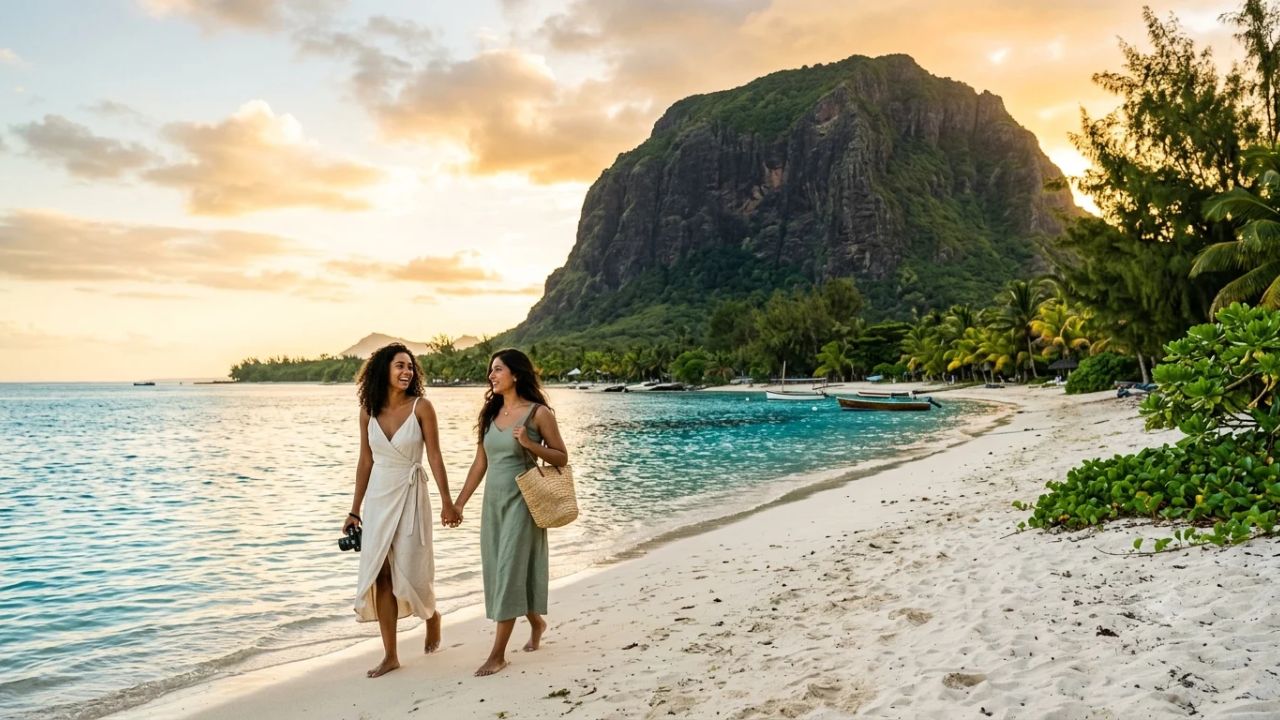
Image generated by AI
A critical policy reassessment of Mauritius tourism carrying capacity is underway across the Indian Ocean island nation, as environmental regulators and tourism planners re-evaluate unrestricted visitor targets to safeguard finite ecological resources. Following high-level symposiums during World Tourism Day in 2026, authorities are questioning ambitious proposals to push annual arrivals toward two million, recognizing that the current influx of over 1.4 million annual visitors already exceeds the resident population of approximately 1.26 million. International travelers visiting Mauritius face impending policy recalibrations—including potential cap-based entry regulations, mandatory conservation levies, and strict digital quotas at sensitive natural landmarks—designed to curb severe coastal erosion, protect degraded lagoons, and alleviate acute strains on municipal water and landfill networks.
[!NOTE] Quick Summary: Key Developments at a Glance
- Population-to-Visitor Imbalance: Mauritius welcomed over 1.4 million tourists in 2025, surpassing its native population of 1.26 million and establishing an unsustainable ratio of 1.1 visitors per resident.
- Freshwater Consumption Disparity: International guests in luxury coastal resorts consume 350 to 500 liters of freshwater daily, compared to just 150 liters daily utilized by local island residents.
- Landfill and Waste Stress: Annual municipal waste generation exceeds 540,000 metric tons, with commercial hospitality generating 15% to 20% of peak-season refuse, transferring over 80% of waste directly to the saturated Mare Chicose landfill.
- Severe Marine Habitat Decline: Live coral cover across primary resort lagoons—including Grand Baie, Trou aux Biches, and Le Morne—has suffered degradation exceeding 50%, accompanied by coastal erosion of 0.2 to 0.5 meters annually.
- High Aviation Carbon Footprint: Direct round-trip flights from London or Paris (~18,000 km) generate 2.2 to 2.8 metric tons of CO2e per passenger, accounting for over 75% of a visitor’s total environmental footprint.
State economic planners acknowledge that the historical pivot from sugar cane cultivation to international hospitality transformed the national economy into an upper-middle-income success story. However, contemporary ecological realities dictate that physical island limits cannot be resolved through promotional marketing or automated algorithms alone. Industry leaders emphasize that clear, binding environmental policies must precede the adoption of digital technologies, shifting destination performance metrics away from raw arrival counts toward net economic yield and environmental preservation.
The Carrying Capacity Breakdown: Resource Pressures Across Mauritian Lagoons
The core tension confronting Mauritian destination managers lies in the physical and spatial concentration of tourism infrastructure. Over 85% of all tourist overnight stays are packed into narrow coastal strips, creating severe geographic imbalances that stress municipal utility systems and escalate competition over public space.
In the freshwater sector, the vast consumption gap between tourists (350–500 liters/day) and permanent residents (150 liters/day) creates recurring municipal supply deficits, particularly during dry seasons when inland reservoirs experience critical depletion. Concurrently, solid waste management has reached an operational crisis point: with total annual refuse surpassing 540,000 metric tons, the central landfill site at Mare Chicose receives more than 80% of the island's solid waste, prompting urgent calls for mandatory hotel composting and material recovery frameworks.
Along the shoreline, live coral reefs in world-famous lagoons—including Grand Baie, Trou aux Biches, and Le Morne—have experienced over 50% loss of live coral coverage over two decades due to recurrent marine heatwaves, coastal construction runoff, and heavy motorized watercraft traffic. In shallow sandbanks around Île aux Cerfs, boat propellers continuously resuspend seafloor sediments, suffocating delicate seagrass meadows and obstructing natural coral regeneration.
| Resource / Indicator | Baseline Metric | Tourist Impact / Concentration | Environmental & Social Consequence |
|---|---|---|---|
| Annual Visitor Volume | 1.26M Resident Population | >1.4M Tourists (1.1:1 ratio) | Spatial overcrowding; 2M target challenged |
| Daily Freshwater Use | 150 Liters/day (Resident) | 350–500 Liters/day (Luxury Guest) | Seasonal reservoir depletion; utility strain |
| Municipal Solid Waste | 540,000 Metric Tons/year | 15%–20% generated by hotels | >80% transferred to Mare Chicose landfill |
| Lagoon Coral Coverage | Historical pristine baseline | >50% live coral cover loss | Reef bleaching in Grand Baie, Trou aux Biches, Le Morne |
| Sandy Beachline Erosion | Stable coastal fringe | 0.2–0.5 meters shoreline loss/year | Costly artificial beach nourishment required |
| Long-Haul Aviation CO2 | 18,000 km round trip (Europe) | 2.2–2.8 metric tons CO2e/passenger | >75% of visitor carbon footprint; $35M offset need |
| Peak Monthly Receipts | Pre-expansion baseline | MUR 12.1 Billion (~USD 260M) | 40%–70% economic leakage out of host economy |
On land, high tourist vehicle density along primary corridors connecting central business hubs near Port Louis to coastal resort belts increases daily commute times for local workers by 20% to 35% during high season, while residential property values have climbed 8% to 12% annually, eroding housing affordability in coastal fishing villages.
Economic Leakage and Long-Haul Aviation Carbon Realities
Despite impressive gross revenues—with peak monthly tourism receipts reaching MUR 12.1 billion (approximately USD 260 million) in late 2025—a significant proportion of travel capital fails to benefit the local population. Economic analyses across Small Island Developing States reveal that 40% to 70% of gross tourist spending leaks out through foreign-owned hotel corporations, imported luxury foodstuffs, international aviation services, and overseas digital booking engines.
Nevertheless, the hospitality sector remains an indispensable pillar of the domestic labor market, providing over 10% of direct national employment and sustaining approximately 20% of indirect jobs across agriculture, artisanal handicrafts, marine transport, and culinary services.
Aviation logistics present a parallel structural challenge. Because Mauritius relies heavily on long-haul markets in Western Europe, a single direct round-trip journey from Paris or London to Sir Seewoosagur Ramgoolam International Airport in Port Louis covers roughly 18,000 kilometers, emitting 2.2 to 2.8 metric tons of CO2e per traveler. In total, international flights generate more than 75% of all greenhouse gas emissions tied to Mauritian tourism. Offsetting this aggregate aviation burden across 1.4 million annual visitors would require international carbon offset investments exceeding USD 35 million annually.
What Authorities Are Saying: Transitioning from Volume to Value
During deliberations coordinated by the Ministry of Tourism and the Tourism Authority on World Tourism Day 2026, policy analysts delivered a unified directive: technological tools and artificial intelligence cannot replace structural policy limits. While automated systems can optimize room allocations or track visitor movements, algorithms cannot expand the physical carrying capacity of coral lagoons or replenish freshwater aquifers.
Consequently, destination planners are formally abandoning the chase for raw visitor volume. Instead, official strategy is shifting toward yield optimization, length-of-stay extensions, and environmental regeneration. By optimizing occupancy rates across the island's existing 110 licensed large-scale hotel resorts—which provide more than 13,500 certified rooms operating at 68% to 75% average occupancy—hoteliers can increase Revenue Per Available Room (RevPAR) by 15% to 20% without constructing new beachfront properties or clearing additional coastal mangrove forests.
Practical Travel Advice for Eco-Conscious Visitors in Mauritius
Travelers planning an itinerary to Mauritius can minimize their ecological footprint and support sustainable local development through several proactive steps:
- Practice Strict Freshwater Conservation in Coastal Resorts: Even when staying at five-star all-inclusive properties, limit daily shower lengths, decline unnecessary daily towel changes, and support properties that deploy on-site reverse-osmosis desalination and rainwater-harvesting systems.
- Decentralize Your Itinerary toward Inland Eco-Tourism: Spend time away from saturated beach strips by booking guided visits to inland conservation areas like Chamarel Seven Colored Earth and Ebony Forest. Inland eco-tours divert 15% to 20% of foot traffic away from fragile lagoons while injecting direct revenue into local communities.
- Patronize Locally Owned Businesses to Mitigate Leakage: Dine at family-run table d'hôte culinary venues, hire certified local community guides, and purchase authentic Mauritian handicrafts rather than imported resort souvenirs. Cultural eco-tourists spend 30% more with local micro-enterprises than resort-bound guests.
- Choose Motor-Free Marine Recreation: Avoid high-speed motorized watercraft excursions in shallow, reef-fringed lagoons. Opt for guided sea kayaking, stand-up paddleboarding, or sailing catamarans that operate outside sensitive coral restoration nurseries in Grand Baie and Le Morne.
- Pre-Book Digital Permits for National Parks: When visiting protected reserves such as Black River Gorges National Park, utilize automated reservation platforms to secure designated off-peak arrival slots, which reduces overcrowding and preserves trail ecosystems.
Deploying Artificial Intelligence for Predictive Crowd Management
Rather than employing artificial intelligence to fuel aggressive tourist acquisition, the Mauritian Tourism Authority is exploring smart destination management technologies to protect fragile assets:
- Automated Peak-Hour Crowd Caps: Rolling out automated reservation software across high-traffic reserves like Black River Gorges National Park can reduce peak-hour visitor congestion by up to 25%, redistributing hikers across underutilized morning and late-afternoon windows.
- Smart Resort Energy Sensor Networks: Integrating Internet-of-Things (IoT) environmental sensors into existing resort complexes reduces baseline commercial energy consumption by 18% to 30%, substantially trimming fuel-import demands.
- Targeting High-Value, Extended-Stay Demographics: Using predictive data analytics to attract remote professionals and long-stay cultural travelers can elevate average per-night guest spending from USD 150 to over USD 300, doubling economic yields without requiring additional flight frequencies or room expansions.
Looking Ahead: Institutionalizing Ecological Carrying Capacities
The forward-looking agenda for Mauritius hinges on whether the government formally codifies binding visitor caps and mandatory ecological standards into national law. By establishing statutory limits on new resort construction, instituting real-time environmental monitoring across lagoon ecosystems, and redirecting traveler flows into inland cultural corridors, Mauritius aims to pioneer a resilient development model for Small Island Developing States worldwide.
Ultimately, preserving the island's pristine natural heritage, vibrant Creole culture, and coastal biodiversity ensures that Mauritius retains its enduring appeal—not as an overcrowded mass-market playground, but as a protected, high-value ecological sanctuary.
Frequently Asked Questions: Mauritius Tourism Carrying Capacity and Eco-Rules
How many tourists visit Mauritius annually compared to its resident population?
In 2025, Mauritius welcomed over 1.4 million international tourists, exceeding the island’s resident population of approximately 1.26 million and establishing an annual ratio of roughly 1.1 visitors per resident.
Why is freshwater consumption a critical issue for tourism in Mauritius?
Guests staying in luxury coastal resorts consume between 350 and 500 liters of freshwater daily, which is more than double the 150 liters daily consumed by permanent residents. This disparity strains municipal utility networks, especially during dry seasonal periods.
What environmental damage have coral reefs in Mauritius experienced?
Over the past two decades, live coral coverage across major resort lagoons—including Grand Baie, Trou aux Biches, and Le Morne—has suffered degradation exceeding 50% due to marine heatwaves, coastal runoff, and motorboat sediment resuspension.
What is economic tourism leakage, and how does it affect Mauritius?
Economic leakage occurs when tourist expenditures flow out of the destination country through foreign-owned resorts, imported food, foreign airlines, and overseas booking platforms. Between 40% and 70% of gross tourism spending leaks out of Small Island Developing States like Mauritius.
How are automated digital systems being used to protect national parks in Mauritius?
Automated digital reservation systems deployed at sensitive ecological landmarks, such as Black River Gorges National Park, manage visitor flows in real time, reducing peak-hour physical overcrowding by up to 25%.
Related Travel Guides
Disclaimer
This article is for informational and educational purposes only. It does not constitute legal, financial, or professional advice. While we strive to provide accurate and up-to-date information, travel policies, regulations, and conditions change rapidly. Always verify information with official sources before making travel decisions. Nomad Lawyer makes no representations about the accuracy, reliability, completeness, or suitability of the information provided. Readers should consult qualified professionals for advice specific to their circumstances. The views expressed in this article are those of the author and do not necessarily reflect the views of Nomad Lawyer.
Raushan Kumar
Founder & Lead Developer
Full-stack developer with 11+ years of experience and a passionate traveller. Raushan built Nomad Lawyer from the ground up with a vision to create the best travel and law experience on the web.
Learn more about our team →