
Indiana's Franklin County Tourism Recovery: Historic Metamora Faces Critical Rebuilding After 2026 Floods
Historic Metamora and Franklin County enter a critical tourism revival phase as officials work to restore infrastructure and visitor access following severe 2026 floodwaters.

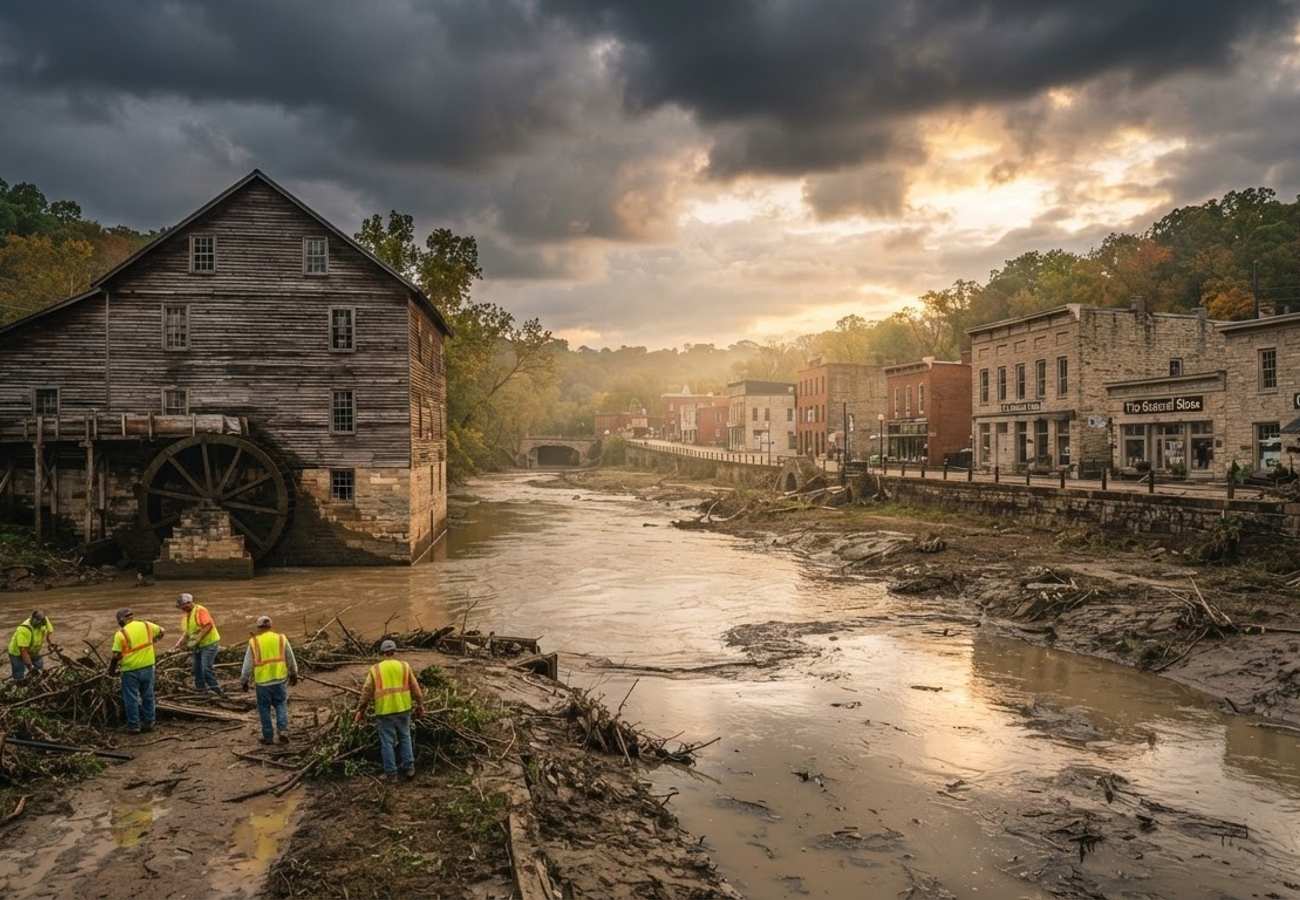
Image generated by AI
Severe flooding has crippled the tourism hub of Historic Metamora, forcing Franklin County, Indiana, into an urgent recovery phase to save its heritage economy. While cleanup operations are underway, persistent storm threats and damaged infrastructure continue to obstruct visitor access to one of the state's most timeless destinations.
The crisis in Franklin County represents a precarious moment for the region's travel sector. Floodwaters have not only damaged physical structures but have severed critical transportation arteries, making it difficult for tourists to reach historic sites and local businesses. As the community begins the arduous process of rebuilding, travelers are being urged to monitor official updates before attempting to visit the area.
Persistent Storm Threats Complicate Franklin County Recovery
The recovery effort in Franklin County is currently operating under a cloud of meteorological uncertainty. While cleanup crews have deployed to assess damages and assist residents, the communities bordering the Whitewater River remain under strict surveillance. Authorities warn that additional storm systems could trigger renewed flooding, potentially undoing the progress made in clearing debris and restoring access.
The scale of the weather event extends across the state of Indiana. Official reports confirm at least five fatalities statewide resulting from these severe storms and flood-related incidents. While there have been no publicly confirmed deaths specifically within Franklin County, the regional trauma underscores the volatility of the current weather patterns. Emergency response teams are maintaining a high state of alert, balancing the need for rapid restoration with the necessity of public safety.
For the local tourism economy, this instability is particularly damaging. The window for recovery is narrow, and the continued threat of rain creates a climate of uncertainty for small business owners who rely on predictable visitor flows to sustain their operations.
Heritage Tourism Under Pressure in Historic Metamora
The flooding has placed a spotlight on the inherent vulnerability of heritage destinations. Metamora, the crown jewel of Franklin County’s tourism, depends heavily on its quaint, historic atmosphere and the ease with which visitors can wander its streets. When floodwaters infiltrate these zones, the impact is twofold: immediate physical destruction and a long-term erosion of visitor confidence.
Restoration in a historic district is significantly more complex than standard urban cleanup. Many of the affected shops, restaurants, and museums require specialized inspections and heritage-compliant repairs to maintain their historic designations. This extended timeline for restoration means that even after the water recedes, the "travel experience" remains diminished, leading to a prolonged financial slump for the local hospitality sector.
Ground Transportation and Visitor Access Disruptions
Unlike major metropolitan hubs, Franklin County is almost exclusively a road-access destination. This makes the current state of the local infrastructure the single biggest bottleneck for tourism revival. Severe warnings remain in effect for transportation routes surrounding Metamora, Laurel, Brookville, and Cedar Grove.
Local officials have issued stern warnings against attempting to traverse flooded roadways. The rapid fluctuation of water levels in the Whitewater River basin makes driving through submerged areas an extreme safety risk. For the modern traveler, the disruption is not found in flight cancellations—as aviation connectivity remains largely unaffected—but in the "last mile" of the journey.
The psychological impact on tourism is equally significant. Potential visitors are increasingly postponing trips due to a lack of clear information regarding which attractions are operational and which roads are safe. This hesitation creates a secondary economic crisis, as the loss of seasonal revenue can be more devastating to a small-town economy than the physical flood damage itself.
Franklin County Flood Impact Assessment: Travel and Tourism Situation
| Impact Area | Current Situation | Effect on Travelers and Tourism |
|---|---|---|
| Road Transportation | Local roads and access routes in Franklin County are heavily affected by flooding. | Travelers face significant delays, mandatory route changes, and limited site access. |
| Historic Attractions | Heritage zones and visitor facilities in Metamora have sustained flood damage. | Traditional tourism experiences are temporarily disrupted during the restoration phase. |
| Local Businesses | Tourism-centric shops and restaurants are undergoing cleanup and restoration. | A sharp decline in visitor activity is impacting local tourism revenue. |
| Public Access | Safety conditions are being monitored continuously by local authorities. | Visitors must verify current status updates before initiating travel. |
| Aviation Connectivity | No major disruptions to commercial flight schedules reported. | Air travelers should focus on monitoring onward ground transportation safety. |
| Recovery Timeline | Officials anticipate a prolonged rebuilding process. | Tourism recovery will require community patience and external support. |
The Strategic Importance of Metamora’s Revival
Metamora is more than a collection of shops; it is a vital cultural link to Indiana’s past. Its economy is built on the specific desire of travelers to escape modern urbanity for a curated historic experience. Because this destination is so specialized, its recovery requires a coordinated effort between government agencies and private business owners.
The current crisis highlights a broader trend in rural tourism: the tension between natural beauty and natural risk. The very rivers and landscapes that draw visitors to Franklin County are the same elements that now threaten its economic survival. For the region to bounce back, there must be a shift toward climate-resilient infrastructure that protects heritage sites without destroying their aesthetic appeal.
Navigating Future Visits to Franklin County
For those planning to support the region's recovery, timing is essential. Industry observers suggest that autumn—specifically September and October—is the optimal window for visiting. During these months, the risk of severe rainfall is lower, and the scenic landscapes provide a strong draw for tourists.
While spring and summer remain popular, they are historically more prone to the type of volatile weather seen in the current crisis. Travelers are encouraged to maintain flexibility in their itineraries and utilize official county communication channels to confirm that the businesses and attractions they intend to visit have fully reopened.
Why This Matters: The Traveler's Perspective From a logistical standpoint, this situation transforms a simple day trip into a complex navigation exercise. For the visitor, this means that "business as usual" is suspended. You cannot rely on GPS alone, as road closures may not be updated in real-time. Furthermore, the experience of visiting Metamora will likely involve seeing active construction and cleanup for several months. Supporting these businesses now, even in a diminished capacity, is the only way to ensure the destination survives the 2026 season.
The road to recovery for Metamora is long, but the resilience of Indiana's heritage remains steadfast.
Related Travel Guides
Disclaimer
This article is for informational and educational purposes only. It does not constitute legal, financial, or professional advice. While we strive to provide accurate and up-to-date information, travel policies, regulations, and conditions change rapidly. Always verify information with official sources before making travel decisions. Nomad Lawyer makes no representations about the accuracy, reliability, completeness, or suitability of the information provided. Readers should consult qualified professionals for advice specific to their circumstances. The views expressed in this article are those of the author and do not necessarily reflect the views of Nomad Lawyer.
Kunal K Choudhary
Co-Founder & Contributor
A passionate traveller and tech enthusiast. Kunal contributes to the vision and growth of Nomad Lawyer, bringing fresh perspectives and driving the community forward.
Learn more about our team →