
Hong Kong’s Flower Market Emerges as a Top Travel Spot for Nature Lovers
Hong Kong’s Flower Market Emerges as a Top Travel Spot for Nature Lovers

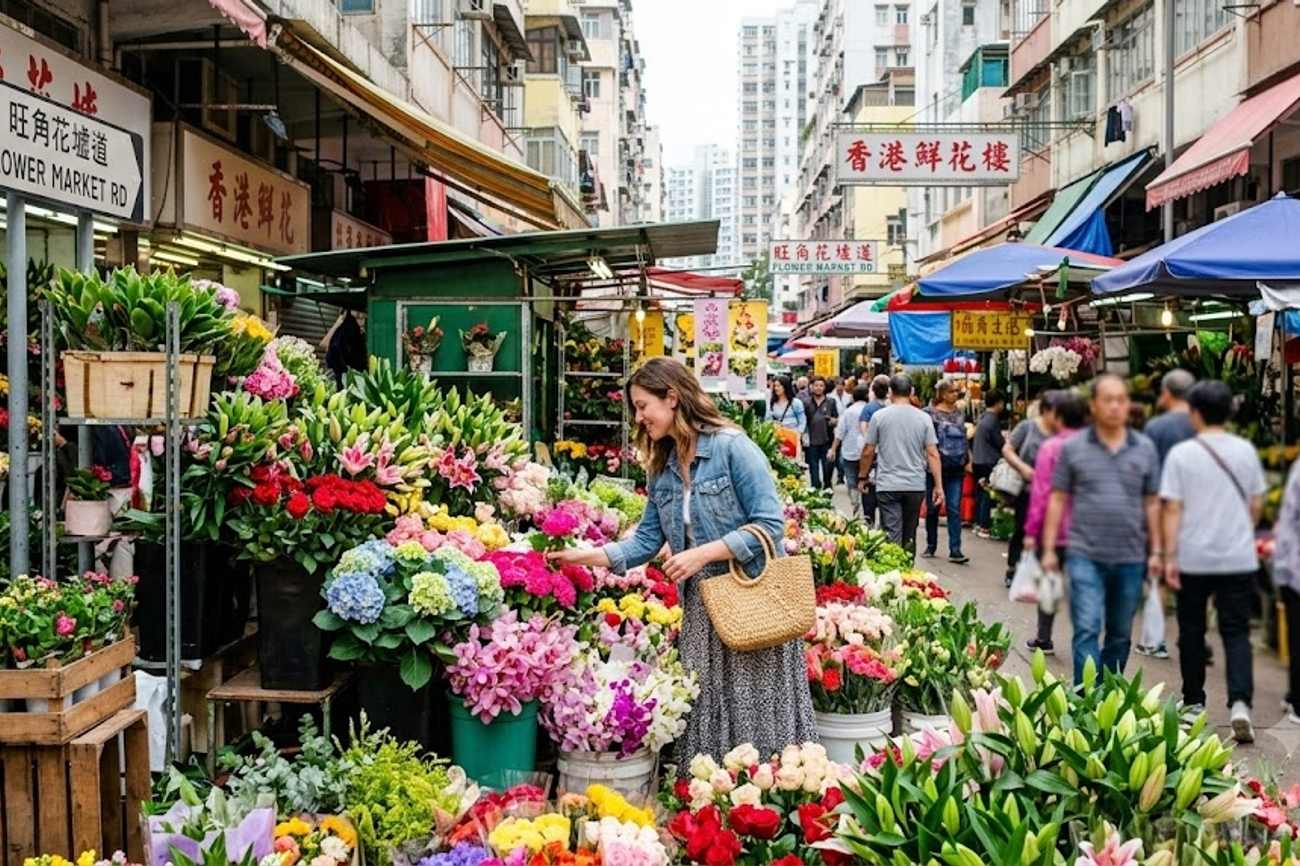
Image generated by AI
While traditional luxury retail in Hong Kong has seen volatile recovery patterns, the surge in "hyper-local" cultural tourism—exemplified by the Hong Kong Flower Market—indicates a structural shift in visitor behavior toward low-cost, high-authenticity experiences. This movement mirrors a global trend where travelers are eschewing paid landmarks in favor of organic neighborhood exploration, a pivot that is fundamentally altering the tourism distribution across the Kowloon peninsula.
The Hyper-Local Pivot in Numbers
The Hong Kong Flower Market, situated on Flower Market Road in Prince Edward, Kowloon, represents a critical data point in the city's diversification strategy. Unlike the high-barrier entry points of themed attractions or luxury malls, the market operates on a zero-cost entry model. This "Free Entry" metric is a primary driver for the current demographic shift, attracting four specific high-growth segments: nature enthusiasts, photography specialists, family units, and budget-conscious cultural explorers.
The market functions as a physical manifestation of Hong Kong's status as a global logistics hub. The inventory is not merely local; it is a cross-section of international botanical trade, integrating species from diverse global origins. This creates a unique economic ecosystem where independent flower shops benefit from a steady stream of international foot traffic that was previously concentrated in the Central or Tsim Sha Tsui districts.
The peak volatility of visitor numbers coincides with the Lunar New Year. During this period, the market transitions from a steady-state retail zone to a high-density cultural epicenter. The demand for "prosperity plants" and traditional festive greenery creates a seasonal spike that outperforms standard quarterly traffic, turning the Prince Edward neighborhood into a primary destination for both domestic residents and international tourists seeking authentic ritualistic commerce.
Comparative Regional Context: The Rise of "Slow Tourism"
The growth of the Hong Kong Flower Market is not an isolated event but part of a broader regional movement toward "Slow Tourism." According to data patterns observed by the World Tourism Organization (UNWTO), there is a measurable increase in travelers seeking "neighborhood-style" experiences over curated tourist traps. In the context of Kowloon, we are seeing a redistribution of tourist density from the high-cost corridors of Mong Kok's main shopping streets toward the residential and artisanal pockets of Prince Edward.
Historically, Hong Kong tourism was anchored by "The Peak" and luxury shopping. However, the current trajectory shows a preference for "accessible authenticity." The Flower Market's lack of a ticketing system removes the friction of entry, making it a high-conversion stop for travelers already visiting the Mong Kok area.
The following table illustrates the shift in attraction profiles within the Kowloon region:
| Metric | Traditional Landmark (e.g., Theme Parks/Museums) | Neighborhood Attraction (e.g., Flower Market) | Trend Direction |
|---|---|---|---|
| Entry Cost | Paid / Ticketed | Free / Open Access | $\downarrow$ Cost Preference |
| Visitor Pace | Scheduled / Queued | Spontaneous / Walking | $\uparrow$ Flexibility |
| Primary Value | Curated Experience | Authentic Local Life | $\uparrow$ Authenticity |
| Economic Impact | Corporate Revenue | Independent Small Business | $\uparrow$ Localized Spend |
| Peak Timing | Consistent / Seasonal | High Spike (Lunar New Year) | $\uparrow$ Event-Driven |
This shift is further supported by IATA data regarding the recovery of Asian travel markets, which suggests that while passenger volumes are returning, the spending patterns are shifting toward "experience-based" activities rather than purely "goods-based" consumption.
What This Means for Travelers
For the individual traveler, the rise of neighborhood-centric destinations like the Flower Market requires a change in planning strategy. The data suggests that the "standard" Hong Kong itinerary is becoming obsolete.
If you are planning a visit to Kowloon, the following actionable advice is grounded in current traffic and seasonal patterns:
- Optimize for Morning Windows: To avoid the peak crowds and witness the arrival of fresh international shipments, schedule your visit for the early morning hours. This is when the inventory is most diverse and the photography lighting is optimal for the colorful displays.
- Strategic Clustering: Do not visit the Flower Market in isolation. Because it is located in Prince Edward, it should be clustered with other Mong Kok attractions to minimize transit time. The MTR system provides the most efficient access, allowing for a high-density day of exploration.
- Calendar Alignment: If your goal is cultural immersion, align your trip with the Lunar New Year. However, be aware that this is the period of maximum congestion. If you prefer a "slow tourism" experience, avoid the two weeks surrounding the New Year.
- Budget Allocation: Since entry is free, travelers can reallocate their daily budget from "attraction fees" to "local commerce," supporting the independent vendors who sustain the market's authenticity.
Forward Projection: The Decentralization of Kowloon Tourism
Based on current trajectory, we can project a further decentralization of tourism in Hong Kong. The success of the Flower Market signals to urban planners and the Hong Kong Tourism Board that there is significant untapped value in "lifestyle streets."
We expect to see a 15-20% increase in the promotion of "neighborhood circuits" over the next 24 months. This will likely lead to the emergence of more curated walking tours that link the Flower Market with other local artisanal hubs in Prince Edward and Mong Kok. As travelers continue to prioritize "Instagrammable" yet authentic locations, the Flower Market will likely see a sustained increase in photography-driven tourism, potentially leading to more formalized "photo-walk" events and seasonal botanical exhibitions.
The long-term movement is clear: the "tourist bubble" is bursting, and the "local neighborhood" is becoming the primary product. The Flower Market is the blueprint for how Hong Kong can leverage its existing urban fabric to attract a new generation of mindful, budget-conscious, and culturally curious travelers.
FAQ: Hong Kong Flower Market 2025
Is there an admission fee for the Hong Kong Flower Market? No. The market is a public street attraction with free entry, making it one of the most budget-friendly cultural activities in the Kowloon region.
When is the best time to visit for the most vibrant experience? The Lunar New Year period is the absolute peak for color and cultural activity. For those seeking a quieter experience with the freshest flower arrivals, early morning visits on non-holiday weekdays are recommended.
How do I get to the market using public transport? The market is located in Prince Edward, Kowloon. The most efficient method of access is via the MTR system, which connects the market to the rest of the city and nearby Mong Kok attractions.
What should I bring when visiting? A camera is essential due to the high visual density of the floral displays. Comfortable walking shoes are highly recommended, as the experience is based on exploring the street-level shops of Flower Market Road.
The shift from luxury malls to flower markets isn't just a change in destination—it's a change in the very definition of the Hong Kong experience.
Tags: Prince Edward Tourism 2025, Kowloon Hyper-Local Trends, Hong Kong Cultural Spend, Flower Market Road Traffic, Asia Slow Tourism Shift
Related Travel Guides
- Venezuela Expands Travel Access With New PRO-V-90 Visa for Consultants and Business Experts
- Paramaribo Leads A Remote Work Travel Boom For Freedom Seekers Finding Cheap Tropical Living Deep Inside Suriname
- United Kingdom and More Drive Italy Tourism as New Staff Housing Boosts Hotels, Services and Longer Stays
Disclaimer
This article is for informational and educational purposes only. It does not constitute legal, financial, or professional advice. While we strive to provide accurate and up-to-date information, travel policies, regulations, and conditions change rapidly. Always verify information with official sources before making travel decisions. Nomad Lawyer makes no representations about the accuracy, reliability, completeness, or suitability of the information provided. Readers should consult qualified professionals for advice specific to their circumstances. The views expressed in this article are those of the author and do not necessarily reflect the views of Nomad Lawyer.
Naina Thakur
Contributor & Travel Specialist
Travel enthusiast and legal writer covering visa regulations, responsible tourism, and cultural journeys across global destinations.
Learn more about our team →