
Himachal Pradesh Accelerates Sustainable Tourism Drive as Bir and Kangra Target Regional Capital Status
With Shri Sandeep Kumar named Tourism Secretary, Himachal Pradesh is expanding responsible tourism in Bir and positioning Kangra as the state's tourism capital.

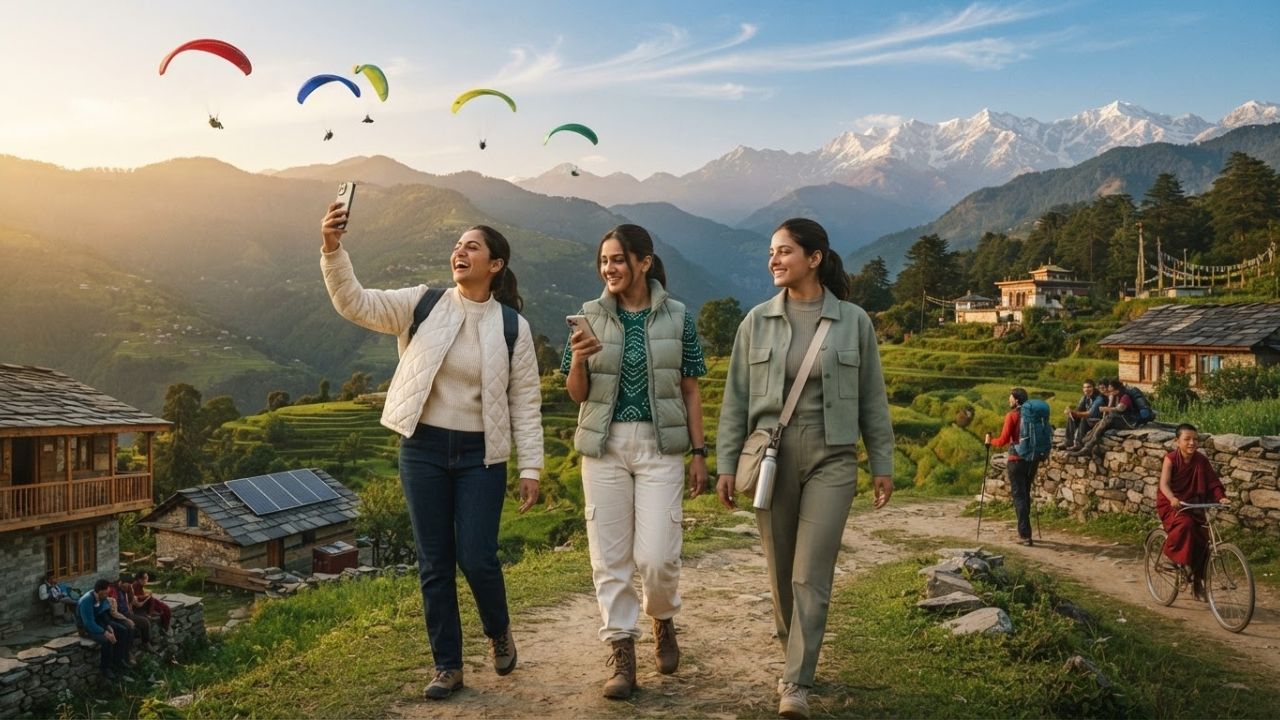
Image generated by AI
Himachal Pradesh is advancing a comprehensive sustainable tourism framework across the Kangra valley, leveraging the global success of Bir as a premier paragliding, wellness, and remote work hub to establish the region as the state's primary tourism capital.
SHIMLA, India — The Department of Tourism and Civil Aviation in Himachal Pradesh has launched a renewed strategic push to transform the Kangra region into a sustainable mountain travel hub. Spearheaded by the appointment of Shri Sandeep Kumar as Secretary of Tourism and Civil Aviation, state authorities are expanding infrastructure co-investments while protecting the ecological balance and community-driven hospitality model that turned the mountain village of Bir from an off-grid escape into an internationally recognized travel destination.
| Key Tourism Milestone | Regional Significance |
|---|---|
| New Leadership Appointment | Shri Sandeep Kumar named Secretary of Tourism and Civil Aviation |
| Administrative Background | Former Deputy Commissioner and Divisional Commissioner of Kangra |
| Regional Development Goal | Position Kangra as the official Tourism Capital of Himachal Pradesh |
| Pioneer Hub Model | Transition Bir from a seasonal paragliding spot to a year-round eco-destination |
Sandeep Kumar Takes Charge as Tourism Secretary to Drive Kangra Master Plan
The appointment of Shri Sandeep Kumar brings specialized administrative experience to the Himachal Pradesh Tourism Development Corporation (HPTDC). Having previously served as Deputy Commissioner of Kangra and Divisional Commissioner of the Kangra Division, Kumar possesses direct administrative familiarity with local land management, village infrastructure, and community stakeholders.
State officials report that positioning Kangra as the tourism capital of Himachal Pradesh requires moving beyond traditional hotel developments. Instead, state planning emphasizes strengthening grassroots networks, supporting family-run homestays, empowering licensed adventure guides, and funding local micro-entrepreneurs.
| Administrative Pillar | Policy Focus |
|---|---|
| Grassroots Empowerment | Direct financial and marketing support for local homestays |
| Infrastructure Modernization | Upgrading road connectivity and civic amenities across Kangra valley |
| Adventure Safety Standards | Formalizing licensing and safety protocols for paragliding and trekking |
| Community Partnerships | Engaging village councils in eco-tourism decision-making |
The Transformation of Bir: From Backpacking Haven to Global Adventure and Remote Work Hub
Over the past decade, Bir evolved from a secluded Himalayan hamlet known primarily to long-stay backpackers and world-class paragliders into a multi-faceted travel destination. Famous for hosting international paragliding events at Billing—one of the highest launch sites in the world—Bir now attracts a diverse demographic of long-stay travelers.
The village has embraced the global slow travel movement, establishing itself as a preferred destination for remote workers, wellness practitioners, and cultural tourists. Low-impact eco-lodges, organic cafes, and co-working spaces now operate alongside traditional Tibetan monasteries and native Gaddi agricultural communities.
| Visitor Segment | Primary Destination Draw in Bir |
|---|---|
| Adventure Enthusiasts | World-class paragliding from Billing and Himalayan trekking routes |
| Digital Nomads | High-speed connectivity, co-working spaces, and long-stay rentals |
| Wellness Travelers | Meditation retreats, yoga centers, and peaceful mountain surroundings |
| Cultural Tourists | Tibetan Buddhist monasteries, tea garden walks, and local craft markets |
Slow Travel and Remote Work Reshape Himalayan Tourism Economics
The rise of remote working and wellness-focused travel has altered visitor patterns across Northern India. Modern travelers are extending trip durations from short weekend visits to multi-week stays, shifting financial impact directly into local village economies.
Local homestay operators in Bir report sustained year-round occupancy, reducing the severe seasonal income fluctuations that traditionally impacted mountain communities. This shift supports long-term economic stability for local families who provide catering, transport, and guided excursion services.
| Economic Shift | Impact on Local Mountain Communities |
|---|---|
| Longer Average Stays | Increases overall visitor spending on local services and dining |
| Direct Homestay Income | Keeps tourism revenue within village households rather than corporate chains |
| Year-Round Demand | Reduces financial instability caused by monsoon and winter off-seasons |
| Micro-Entrepreneurship | Spurs local initiatives in organic farming, artisan crafts, and guiding |
Balancing Rapid Tourism Expansion with Environmental Preservation
State tourism officials acknowledge that rapid destination growth creates operational challenges for mountain ecosystems. Unmanaged waste generation, traffic congestion, and unauthorized construction threaten the natural environment that draws visitors to the Kangra valley.
To protect the regional character of Bir and surrounding villages, the Tourism Department is implementing strict environmental guidelines, waste management protocols, and sustainable building standards across new commercial projects.
| Sustainability Challenge | Government Policy Mitigation |
|---|---|
| Solid Waste Accumulation | Mandatory community recycling programs and plastic reduction mandates |
| Water Resource Stress | Rainwater harvesting requirements for commercial hospitality units |
| Overcrowding & Traffic | Designated parking zones and pedestrian-friendly village corridors |
| Unregulated Construction | Enforcing traditional architectural codes and height restrictions |
Future Blueprint for Kangra as Himachal’s Tourism Capital
The strategic development plan for Kangra aims to integrate adventure sports, spiritual heritage, cultural preservation, and eco-friendly hospitality into a unified destination brand. By linking Bir’s paragliding ecosystem with Dharamshala’s cultural prominence and Kangra’s historical temples, state planners are creating a comprehensive travel circuit across the Dhauladhar range.
| Development Objective | Long-Term Vision for Kangra |
|---|---|
| Integrated Circuit Travel | Connecting Bir, Palampur, Dharamshala, and Kangra fort into unified routes |
| Global Eco-Recognition | Establishing Kangra as a international benchmark for sustainable mountain travel |
| Preservation of Heritage | Protecting native Gaddi traditions, local arts, and monastic culture |
| Sustainable Job Creation | Generating long-term employment for youth across rural Himachal Pradesh |
Practical Advice for Travelers Planning a Visit to Bir
Travelers visiting Bir in Kangra district can reach the village via Gaggal Airport in Dharamshala (approximately 67 kilometers away) or by overnight Volvo buses running from New Delhi and Chandigarh. The peak flying season for paragliding runs from March to June and September to November, when weather conditions over the Dhauladhar range provide optimal thermals.
Visitors are encouraged to book accredited community homestays, respect local Tibetan monastic guidelines, avoid single-use plastics, and support local village guides when exploring nearby trekking trails.
Frequently Asked Questions
What makes Bir in Himachal Pradesh famous globally?
Bir is internationally renowned as a top paragliding destination, with its takeoff site at Billing considered one of the best in the world. It is also famous for Tibetan monasteries, eco-tourism, and remote work retreats.
Who is the new Secretary of Tourism and Civil Aviation in Himachal Pradesh?
Shri Sandeep Kumar, a senior administrator with prior experience as Deputy Commissioner and Divisional Commissioner of Kangra, has been appointed as Secretary of Tourism and Civil Aviation.
What is the government's strategy for Kangra district's tourism development?
The state government aims to position Kangra as the Tourism Capital of Himachal Pradesh by supporting grassroots homestays, adventure sports safety, sustainable infrastructure, and community-led hospitality.
How has remote working impacted tourism in Bir?
The rise of slow travel and remote working has transformed Bir into a digital nomad hub, encouraging longer visitor stays, year-round occupancy, and steady income for local village businesses.
Related Travel Guides
Disclaimer
This article is for informational and educational purposes only. It does not constitute legal, financial, or professional advice. While we strive to provide accurate and up-to-date information, travel policies, regulations, and conditions change rapidly. Always verify information with official sources before making travel decisions. Nomad Lawyer makes no representations about the accuracy, reliability, completeness, or suitability of the information provided. Readers should consult qualified professionals for advice specific to their circumstances. The views expressed in this article are those of the author and do not necessarily reflect the views of Nomad Lawyer.
Kunal K Choudhary
Co-Founder & Contributor
A passionate traveller and tech enthusiast. Kunal contributes to the vision and growth of Nomad Lawyer, bringing fresh perspectives and driving the community forward.
Learn more about our team →