
Hanoi Expands Asian Flight Network: New Mumbai Route, Daily Incheon Service, and Surging Regional Frequencies
Noi Bai International Airport welcomes direct Mumbai flights from Akasa Air, daily Incheon services from Parata Air, and expanded Japan and Taiwan frequencies.

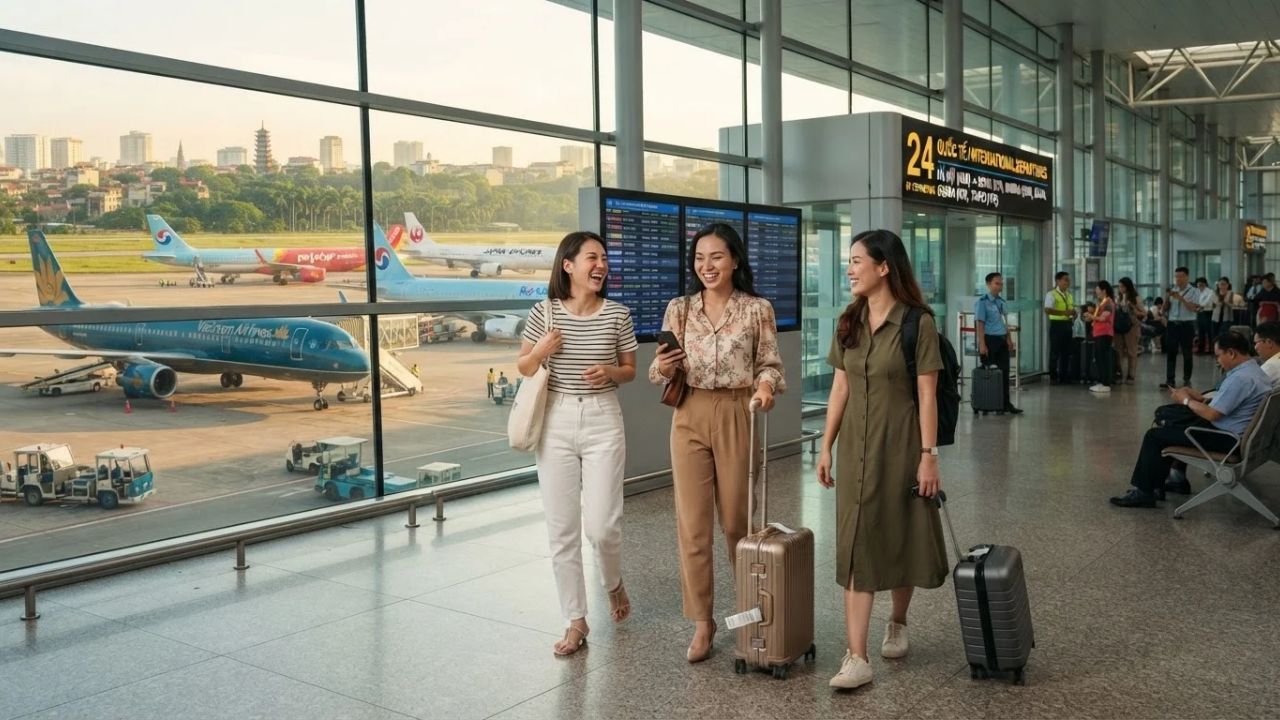
Image generated by AI
Hanoi welcomed its five-millionth international traveler of the year on July 7, 2026, crossing a historic milestone months before the peak autumn travel season even commenced. That unprecedented arrival velocity reflects a profound transformation taking place above the skies of the Red River Delta. On September 16, 2026, a surge of newly inaugurated air corridors and sharp frequency increases firmly cemented Noi Bai International Airport as one of Southeast Asia's fastest-growing transit engines. Key developments include Akasa Air launching direct Mumbai–Hanoi flights on September 4, 2026, Parata Air establishing scheduled daily services from Incheon on July 13, and Vietnam Airlines rolling out massive capacity expansions connecting the capital to Osaka and Taipei.
The Northeast and South Asian Flight Surge: Connecting Noi Bai to Regional Capitals
The dramatic expansion across Noi Bai International Airport bridges two critical regions: the surging outbound travel market of India and established passenger corridors across East Asia. India provides the freshest link in Hanoi’s network, marked by Akasa Air’s official inaugural service connecting Mumbai to Noi Bai on September 4, 2026. This milestone carries dual significance: it represents Akasa Air's first destination in Vietnam and the carrier's seventh international destination overall. The route provides direct, non-stop access between India’s commercial capital and northern Vietnam, eliminating previous multi-hour layovers in Bangkok or Kuala Lumpur. With this launch, the total roster of commercial carriers operating at Noi Bai reached 72 airlines, connecting the capital to more than 90 domestic and international destinations.
East Asian connectivity expanded in tandem on July 13, 2026, when South Korean carrier Parata Air introduced daily scheduled services between Seoul Incheon and Hanoi. The daily timetable is calibrated for seamless night travel: the flight departs Incheon at 19:55 and arrives in Hanoi at 22:50 local time, while the return flight leaves Noi Bai at 00:20 and touches down in Incheon at 06:40.
Simultaneously, Vietnam’s national flag carrier is scaling up seat capacity on mature Northeast Asian routes. According to official determinations by the Civil Aviation Authority of Vietnam, Vietnam Airlines will increase its Hanoi–Osaka operation from seven weekly flights to 11 per week between October 26 and November 30, 2026. Beginning December 1, frequency will surge to 14 weekly flights, establishing double-daily direct service just as winter travel peaks. Taiwan is also securing additional air capacity, with Vietnam Airlines lifting its Hanoi–Taipei frequency from seven to 11 flights per week.
These new routes unfold against a backdrop of exceptional airport productivity. During the first six months of 2026, Noi Bai handled approximately 18.2 million passengers, representing a 10 percent increase year on year. Aircraft movements exceeded 111,300, marking an 11 percent climb, while cargo and parcel handling soared by 20.9 percent to exceed 548,000 tonnes. This aviation boom mirrors Hanoi’s wider visitor economy, which logged an estimated 4.64 million international arrivals in the first half of 2026 alone—a 26.8 percent surge compared to the same period in 2025.
What Makes Hanoi Different: Between Ancient Guilds and Jet-Age Transit
Unlike the glittering vertical towers of Singapore or the dizzying elevated highways of Bangkok, Hanoi retains an introspective, literary grace shaped by its thousand-year history as Thang Long, the historic "City of the Ascending Dragon." Flying into Noi Bai and crossing the Red River via the futuristic cable-stayed Nhat Tan Bridge delivers travelers directly into a living urban labyrinth that feels untouched by sterile commercialization.
The experiential core of the city resides within the 36 Guild Streets of the Old Quarter (Khu Pho Co). Here, each narrow lane still honors its ancestral artisan craft: Hang Bac glitters with silversmiths, Hang Ma glows with paper lanterns and ceremonial votives, and Hang Gai showcases hand-woven mulberry silks. Dawn reveals a city in serene motion: elderly residents practice tai chi beneath the weeping willows surrounding Hoan Kiem Lake, while morning mist hangs over the red wooden Huc Bridge.
Coffee culture here is an art form rather than a quick morning transaction. Sidewalks are lined with low plastic stools where locals sit for hours watching street life unfold, sipping dark robusta brewed through traditional tin phin filters sweetened with condensed milk. The sensory atmosphere is grounded by the fragrance of slow-simmered beef bones, scorched ginger, and charred star anise wafting from open-front soup stalls. Authoritative travel programs from the Vietnam National Authority of Tourism highlight how this preserved street culture makes Hanoi one of the most culturally authentic capital cities in Asia, offering depth that modern transit hubs rarely possess.
Visitor Insider Tips: Navigating Hanoi Like a Local
Maximizing your time in Vietnam’s northern capital requires practical street knowledge, local timing insights, and an appreciation of regional dining customs:
Noi Bai Airport Ground Transit: Avoid aggressive private taxi drivers soliciting fares inside the arrival terminal. Instead, book an authorized ride via the Grab application or take the direct express public Bus 86. Departing every 30 minutes right outside Terminal 2, Bus 86 provides clean, air-conditioned transit directly to Long Bien and the Hanoi Central Post Office near Hoan Kiem Lake for just 45,000 VND (under $2 USD). Allow 45 to 60 minutes for the journey depending on Red River bridge traffic.
Timing Temple and Street Visits: To experience the historic Temple of Literature (Van Mieu) in tranquil contemplation, arrive promptly at 7:30 AM when the wooden gates open, well before tour coaches arrive. For the famous railway tracks along the Old Quarter perimeter, avoid the heavily congested southern crossings; head instead toward the quieter pedestrian sections along Phung Hung street, where vibrant community murals depict historic street vendors.
Northern Pho Etiquette: When ordering a bowl of pho bo (beef noodle soup) at iconic institutions like Pho Gia Truyen on Bat Dan Street or Pho Thin on Lo Duc, respect northern culinary purism. Never ask for hoisin sauce or raw bean sprouts—traditional northern cooks view heavy condiments as an insult to their carefully balanced bone broth. Season your broth solely with fresh lime wedges, a spoonful of pickled garlic vinegar (giam toi), and freshly sliced red bird's eye chilies. Pair your breakfast with crisp fried dough crullers (quay) dipped directly into the soup.
Historic Cafe Pilgrimages: Skip international chain cafes and seek out the birthplace of egg coffee (ca phe trung) at Cafe Giang on Nguyen Huu Huan Street. Created during wartime milk shortages in 1946, this velvety mixture of whisked chicken egg yolks, condensed milk, and robusta coffee delivers a rich, tiramisu-like morning indulgence.
Neighborhood Bases: If you prefer atmospheric history and easy walking access to street food, base yourself in the French Quarter south of the Hanoi Opera House, known for tree-lined boulevards, quiet colonial villas, and upscale dining. For extended stays or a more tranquil atmosphere, stay in the lakeside district of Tay Ho (West Lake), offering cool breezes, lotus ponds, and artisanal bakeries.
Cultural and Environmental Context: Sustainable Tourism on the Red River Delta
The arrival of 4.64 million international visitors during the first six months of 2026 brings vital economic prosperity, yet it also places considerable strain on Hanoi's municipal infrastructure, traffic corridors, and historic neighborhoods. Noise and emissions from scooters and tourist vehicles along the narrow alleyways of the Old Quarter have accelerated municipal initiatives to transition city center transport toward electric buses and pedestrian-only weekend zones around Hoan Kiem Lake.
At the same time, cultural preservation remains an urgent priority. Ancient wood-and-masonry shophouses require constant structural conservation to withstand northern Vietnam's intense seasonal humidity. Just west of the Old Quarter stands the Central Sector of the Imperial Citadel of Thang Long, an ancient political center inscribed by the UNESCO World Heritage Centre. Protecting this vast archaeological site from commercial overdevelopment requires careful visitor management and community education.
Travelers can practice mindful exploration by extending their journeys beyond the central tourist core. Taking day trips to traditional craft villages across the delta—such as the ceramics workshops of Bat Trang, the silk-weaving families of Van Phuc, or the conical hat makers of Chuong—ensures that tourism expenditures flow directly into rural family cooperatives, keeping centuries-old artisanal traditions alive for future generations.
FAQ: Visiting Hanoi 2026
How do I get from Noi Bai Airport to central Hanoi? Express Bus 86 departs outside Terminal 2 every 30 minutes, reaching the Old Quarter and Hoan Kiem Lake in approximately 45 to 60 minutes for 45,000 VND. Reliable fixed-fare private rides can also be arranged via the Grab mobile app.
Do international tourists need a visa for Vietnam? Travelers from dozens of eligible countries enjoy visa-free entry for up to 45 days. Visitors from other nations can easily secure a 90-day electronic visa (e-visa) through the official government immigration portal prior to arrival.
What is the best season to visit Hanoi? Autumn, spanning October through December, is the premier season. Hanoi enjoys crisp, dry days, pleasant temperatures averaging 20°C to 25°C, and blooming milk flowers, avoiding the intense tropical heat and downpours of midsummer.
What are the newest international air routes into Hanoi in 2026? Akasa Air inaugurated direct flights from Mumbai on September 4, while Parata Air launched daily scheduled Incheon services on July 13, joined by major frequency increases on Osaka and Taipei routes operated by Vietnam Airlines.
As new runways bring the capitals of Asia closer, Hanoi's timeless rhythm endures on the quiet shores of Hoan Kiem and the incense-scented corners of the Old Quarter.
Related Travel Guides
Disclaimer
This article is for informational and educational purposes only. It does not constitute legal, financial, or professional advice. While we strive to provide accurate and up-to-date information, travel policies, regulations, and conditions change rapidly. Always verify information with official sources before making travel decisions. Nomad Lawyer makes no representations about the accuracy, reliability, completeness, or suitability of the information provided. Readers should consult qualified professionals for advice specific to their circumstances. The views expressed in this article are those of the author and do not necessarily reflect the views of Nomad Lawyer.
Kunal K Choudhary
Co-Founder & Contributor
A passionate traveller and tech enthusiast. Kunal contributes to the vision and growth of Nomad Lawyer, bringing fresh perspectives and driving the community forward.
Learn more about our team →