Sun PhuQuoc Airways Launches Daily Hanoi to Shanghai Flights: Expanding Vietnam's Aviation Bridge to China

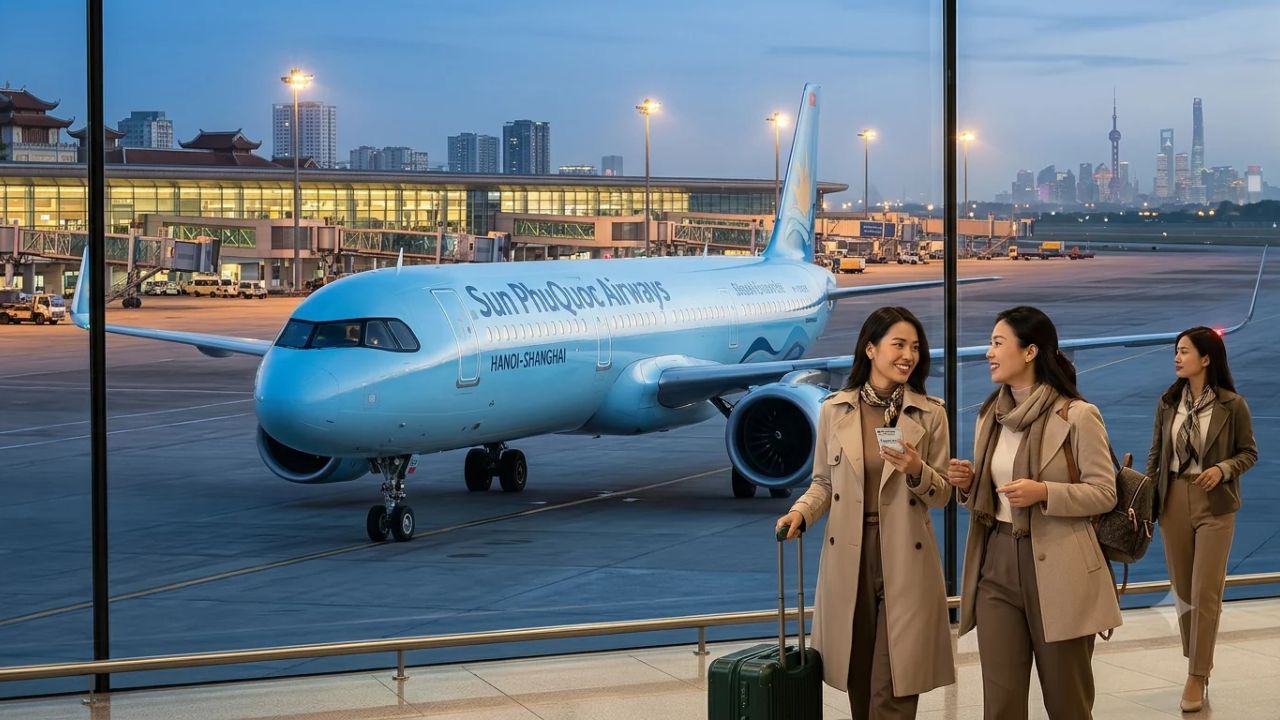
Sun PhuQuoc Airways introduces daily non-stop flights between Hanoi Noi Bai and Shanghai Pudong, expanding its Chinese route network with modern Airbus A321neo aircraft.
HANOI, November 3, 2026 — Vietnamese leisure and hybrid carrier Sun PhuQuoc Airways has announced the commencement of daily non-stop scheduled passenger flights between Hanoi and Shanghai, marking a major milestone in Vietnam's post-pandemic aviation expansion into mainland China. Launching on November 26, 2026, the daily service links Noi Bai International Airport (HAN) directly with Shanghai Pudong International Airport (PVG) utilizing modern, fuel-efficient Airbus A321neo aircraft. Operating on an overnight schedule tailored for high-yield corporate travelers and regional holidaymakers, the new connection represents the airline's fourth route into the Chinese market within its second year of operations, strengthening cross-border trade, corporate investment corridors, and bilateral tourism flows between two of Asia's most dynamic economic epicenters.
[!NOTE] Key Operational Summary of the Hanoi–Shanghai Service: Sun PhuQuoc Airways (IATA: 9G) will inaugurate daily return flights connecting Hanoi (HAN) and Shanghai Pudong (PVG) starting November 26, 2026. Outbound flight 9G674 departs Hanoi nightly at 23:05, arriving in Shanghai at 03:00 the following morning. Inbound flight 9G675 departs Shanghai at 04:15, touching down in Hanoi at 06:55. Operated by Airbus A321neo aircraft, the route features an introductory 20% discount on base fares for tickets issued through November 30, native digital payment processing via WeChat Pay, Alipay, and UnionPay, and a complimentary 5GB data eSIM for international passengers.
SUN PHUQUOC AIRWAYS HANOI (HAN) TO SHANGHAI (PVG) ROUTE PROFILE
| [ ORIGIN GATEWAY: NOI BAI INTERNATIONAL AIRPORT, HANOI (HAN) ] |
|---|
| * Profile: Political capital of Vietnam; primary gateway to Northern industrial & tourism hubs. |
| * Terminal Facilities: Modern Terminal 2 International Concourse; Sun Executive Lounge access. |
| * Inbound Tourism Catchment: Halong Bay, Ninh Binh, Sapa, & Red River Delta cultural circuits. |
| [ DAILY OVERNIGHT FLIGHT ROTATION (EFFECTIVE 26 NOVEMBER 2026) ] |
| * Aircraft Model: Airbus A321neo configured with 'Resort in the Sky' premium hospitality. |
| [ DESTINATION HUB: SHANGHAI PUDONG INTERNATIONAL AIRPORT (PVG) ] |
| * Profile: China's premier commercial, financial, & manufacturing command center. |
| * Economic Synergies: Yangtze River Delta high-tech supply chains connecting to Northern Vietnam. |
| * Digital Integration: Seamless passenger payments via WeChat Pay, Alipay, & UnionPay. |
| [ CHINA NETWORK FOOTPRINT: 4TH TRANS-BORDER SERVICE ] |
Capital to Metropolis: The Commercial Strategy of the Hanoi–Shanghai Corridor
The launch of daily non-stop flights between Hanoi and Shanghai reflects a calculated expansion strategy that bridges Vietnam's political capital with China's largest economic metropolis. For decades, the economic relationship between Vietnam and China was dominated by cross-border land trade through northern border gates like Lang Son and Lao Cai. However, the rapid transformation of Vietnam into a global manufacturing powerhouse has altered bilateral logistics, creating massive corporate demand for fast, reliable, point-to-point air connectivity between executive decision-makers in Shanghai and production complexes across Northern Vietnam.
Hanoi sits at the center of Northern Vietnam's flourishing industrial growth corridor, which includes surrounding high-tech manufacturing provinces such as Bac Ninh, Hai Phong, Thai Nguyen, and Vinh Phuc. Global electronics conglomerates, semiconductor fabricators, and automotive suppliers—including Foxconn, Pegatron, Luxshare-ICT, and major Japanese and Korean electronics giants—operate extensive manufacturing plants in these provinces that depend heavily on parts, technical machinery, and engineering expertise sourced directly from China's Yangtze River Delta. Having a daily direct flight operated by Sun PhuQuoc Airways between Noi Bai and Pudong allows corporate executives, quality-control engineers, and investment bankers to travel back and forth with unprecedented scheduling flexibility.
Simultaneously, the new route serves as a high-capacity conduit for cultural and leisure tourism. China has historically represented Vietnam's largest single source of international inbound visitors, accounting for nearly six million annual arrivals prior to global travel suspensions. While coastal beach resorts in Da Nang, Nha Trang, and Phu Quoc have attracted significant numbers of Chinese package travelers, Hanoi appeals to affluent, independent cultural explorers. The Vietnamese capital offers world-renowned street gastronomy, centuries of dynastic history, French colonial architecture, and immediate highway access to world-famous natural wonders such as the limestone karsts of Halong Bay and the UNESCO-listed waterways of Ninh Binh.
By deploying brand-new Airbus A321neo aircraft on a daily schedule, Sun PhuQuoc Airways is establishing a dependable air bridge capable of supporting high-frequency corporate commuting while capturing rising leisure flows. The daily regularity of the service is essential for commercial viability; business travelers require the assurance of daily frequencies to handle sudden meetings or operational emergencies, while tour operators need consistent seat inventory to build structured multi-day travel packages.
The diplomatic and macroeconomic momentum underpinning this aviation expansion is reinforced by the Comprehensive Strategic Cooperative Partnership between Vietnam and China. Two-way trade between the two nations has soared past one hundred and seventy billion dollars annually, establishing China as Vietnam's largest trading partner and premier source of capital equipment, raw textiles, and technological inputs. Bilateral civil aviation negotiations between the Civil Aviation Authority of Vietnam (CAAV) and the Civil Aviation Administration of China (CAAC) have actively expanded air traffic entitlements, granting private and hybrid carriers like Sun PhuQuoc Airways the regulatory green light to challenge state-owned flag carrier monopolies. By securing daily frequencies into Shanghai Pudong, the airline taps directly into this bilateral trade corridor, ensuring that corporate supply chain managers and technical specialists can move rapidly across borders without encountering scheduling bottlenecks.
Overnight Flight Economics: Analyzing the Red-Eye Schedule Advantage
A defining characteristic of Sun PhuQuoc Airways' new Hanoi–Shanghai service is its deliberate overnight, or 'red-eye,' flight schedule. Operating between late evening and early morning, the published timetable has been carefully engineered to maximize operational productivity for both passengers and the airline's aircraft fleet.
HANOI–SHANGHAI FLIGHT SCHEDULE & PASSENGER TIME UTILITY
| Flight Number | Sector | Departure Time | Arrival Time | Next-Day Practical Utility |
|---|---|---|---|---|
| :--- | :--- | :--- | :--- | :--- |
| 9G674 | Hanoi to Shanghai | 23:05 (Night) | 03:00 (+1) | Full working day in Hanoi; |
| (HAN ==> PVG) | Local Time | Local Time | early morning Shanghai entry. | |
| 9G675 | Shanghai to Hanoi | 04:15 (Dawn) | 06:55 (Dawn) | Rest in flight; direct dawn |
| (PVG ==> HAN) | Local Time | Local Time | arrival in Hanoi for tours. |
For business travelers, the late-night departure of flight 9G674 from Hanoi at 23:05 allows professionals to complete an entire business day, conduct evening client dinners, and travel to Noi Bai Airport without missing working hours. Touching down at Shanghai Pudong at 03:00 the following morning, travelers can clear customs smoothly during quiet off-peak airport hours, take a short rest, and be fully prepared for morning business engagements across Shanghai's Lujiazui financial district or industrial zones in neighboring Jiangsu province.
For inbound Chinese holidaymakers, the early morning schedule of flight 9G675 offers unmatched vacation efficiency. Departing Shanghai Pudong at 04:15 and landing in Hanoi at 06:55, tourists touch down just as the Vietnamese capital awakens. Rather than spending a vacation day sitting in an airport terminal or arriving late at night to an expensive hotel room, visitors can clear immigration at Noi Bai, enjoy an authentic bowl of steaming Pho for breakfast, and immediately board morning tourist coaches bound for Halong Bay or Ninh Binh, maximizing their holiday time from the moment they arrive.
From the perspective of airline fleet economics, overnight scheduling represents the holy grail of aircraft productivity. Single-aisle commercial jets that sit idle on airport tarmac aprons between midnight and 6:00 AM incur substantial parking fees while generating zero revenue. By scheduling a late-night rotation between Hanoi and Shanghai, Sun PhuQuoc Airways extends the daily utilization rate of its Airbus A321neo fleet to more than fifteen hours per day. Higher aircraft utilization dilutes fixed aircraft leasing costs, insurance expenses, and flight crew overhead across more flight hours, allowing the airline to offer lower baseline fares while preserving healthy profit margins.
Airspace management and airport slot dynamics at Shanghai Pudong International Airport also highlight the operational ingenuity of this overnight scheduling. As one of the world's most heavily utilized aviation hubs, Pudong operates at near-capacity during daytime commercial banks between 08:00 and 22:00, making daytime landing and departure slots notoriously difficult for emerging foreign carriers to acquire. By strategically positioning its operations during off-peak nighttime and pre-dawn windows—touching down at 03:00 and departing at 04:15—Sun PhuQuoc Airways successfully secured guaranteed daily slots without enduring multi-year waiting lists. Operating during these quiet hours eliminates costly airborne holding patterns over the East China Sea, avoids ground taxiway congestion, and capitalizes on discounted nighttime landing charges and air navigation service tariffs.
The China Expansion Blueprint: Sun PhuQuoc Airways' Network Trajectory
The introduction of the Hanoi–Shanghai service marks a major acceleration in Sun PhuQuoc Airways' international route development. Entering its second full year of commercial flight operations, the carrier has transitioned rapidly from an island-focused leisure carrier into a dynamic international hybrid airline operating thirteen domestic corridors and sixteen international routes across the Asia-Pacific region.
SUN PHUQUOC AIRWAYS EXPANDING CHINA ROUTE ARCHITECTURE
| Column 1 |
|---|
| [ ROUTE 1: CHENGDU TIANFU (TFU) <==> PHU QUOC ISLAND (PQC) ] (LAUNCHED JULY 2026) |
| * Strategic Target: Direct access from Western China to Vietnam's premier luxury island resort. |
| [ ROUTE 2: CHENGDU TIANFU (TFU) <==> HO CHI MINH CITY (SGN) ] (LAUNCHED AUGUST 2026) |
| * Strategic Target: Trade, industrial sourcing, & business connections to Southern Vietnam. |
| [ ROUTE 3: HO CHI MINH CITY (SGN) <==> SHANGHAI PUDONG (PVG) ] (LAUNCHED 15 OCTOBER 2026) |
| * Strategic Target: Primary commercial link between Vietnam's southern financial hub & Shanghai. |
| [ ROUTE 4: HANOI (HAN) <==> SHANGHAI PUDONG (PVG) ] (LAUNCHING 26 NOVEMBER 2026) |
| * Strategic Target: Northern industrial, diplomatic, & cultural bridge completing China matrix. |
| [ THE DUAL-GATEWAY 'OPEN-JAW' ADVANTAGE ] |
| * Complete Coverage: Links Shanghai directly to both Hanoi (North) and Ho Chi Minh City (South). |
| * Seamless Itineraries: Travelers fly into Hanoi, explore southward, & depart via Ho Chi Minh. |
The airline's strategic focus on the Chinese market unfolded in disciplined phases throughout 2026. In July, the carrier launched non-stop flights connecting Chengdu Tianfu International Airport (TFU) in Sichuan province directly with Phu Quoc Island (PQC), catering to high-spending leisure travelers from Western China seeking tropical beach holidays, luxury hospitality, and water sports. In August, SPA reinforced this corridor by introducing flights between Chengdu and Ho Chi Minh City, linking Sichuan's technology and manufacturing sectors with Southern Vietnam's economic engine.
The expansion reached a pivotal milestone on October 15, 2026, when Sun PhuQuoc Airways inaugurated direct flights between Ho Chi Minh City (SGN) and Shanghai Pudong (PVG). With the impending November 26 launch of the Hanoi–Shanghai service, the carrier successfully establishes a powerful 'dual-gateway' network connecting Shanghai with both of Vietnam's primary metropolitan hubs.
This dual-hub presence provides a profound competitive advantage. International travelers and corporate groups are no longer restricted to out-and-back itineraries. Instead, business travelers and tourists can book convenient 'open-jaw' tickets, flying from Shanghai into Hanoi to explore the northern manufacturing corridors and natural landscapes of Halong Bay, traveling overland or via domestic flights down the Vietnamese coast through Da Nang and Nha Trang, and finally departing home to Shanghai directly from Tan Son Nhat Airport in Ho Chi Minh City. This operational flexibility positions Sun PhuQuoc Airways as a premier choice for modern travel agencies assembling comprehensive Vietnam discovery tours.
The network architecture is further amplified by Vietnam's progressive visa policies, particularly on Phu Quoc Island. Under Vietnamese immigration law, international travelers visiting Phu Quoc directly benefit from a unique thirty-day visa exemption, regardless of nationality. By maintaining scheduled routes from Chengdu directly into Phu Quoc alongside metropolitan trunk services linking Shanghai to Hanoi and Ho Chi Minh City, Sun PhuQuoc Airways creates a flexible regional ecosystem. Chinese tourists can take advantage of visa-free access for tropical beach getaways on Phu Quoc, or apply for streamlined Vietnamese electronic visas to embark on expansive multi-city discovery journeys connecting Hanoi, Da Nang, and Ho Chi Minh City. This multi-layered product offering provides travel agents with unprecedented freedom to package diverse travel itineraries across the airline's interconnected route map.
Digital Integration and Passenger Incentives: WeChat Pay, Alipay, and Free eSIMs
To guarantee strong commercial adoption in the highly digitized Chinese consumer market, Sun PhuQuoc Airways has eliminated the traditional payment and connectivity friction points that frequently hinder cross-border travel between China and Southeast Asia.
SUN PHUQUOC AIRWAYS PASSENGER DIGITAL ECOSYSTEM & PERKS
| Column 1 |
|---|
| [ NATIVE CHINESE DIGITAL PAYMENT PROCESSING ] |
| * Platforms Integrated: WeChat Pay (Weixin Pay), Alipay, & China UnionPay. |
| * Consumer Benefit: Zero foreign currency credit card surcharges; instant mobile confirmation. |
| * Channels: Available across official booking website & mobile smartphone applications. |
| [ 'TOUCH VIETNAM, CONNECT NOW!' CONNECTIVITY INITIATIVE ] |
| * Complimentary Offering: Free 5GB high-speed 5G/4G data eSIM for eligible international fliers. |
| * Immediate Access: QR code sent upon booking; activates automatically upon arrival in Vietnam. |
| [ SUN SIGNATURE LOYALTY & CONGLOMERATE SYNERGY ] |
| * Airline Perks: Sun Executive Lounge access, priority check-in, & bonus baggage allowance. |
| * Resort Synergy: Points redeemable across Sun World theme parks & luxury international hotels. |
| * Hospitality Assets: JW Marriott Phu Quoc, Sun World Fansipan Legend, & Ba Na Hills. |
| [ 20% BASE FARE LAUNCH INCENTIVE ] |
| * Booking Window: Valid for ticket purchases between October 31 and November 30, 2026. |
| * Target: Stimulates early corporate and holiday bookings ahead of the Lunar New Year surge. |
Chief among these innovations is the full native integration of China's dominant digital payment platforms: WeChat Pay (Weixin Pay), Alipay, and China UnionPay. In mainland China, cash and traditional international credit cards (like Visa and Mastercard) are rarely used by everyday consumers. By enabling direct payment via smartphone wallets on its booking portal, Sun PhuQuoc Airways allows Chinese travelers to purchase flights, select seats, and add baggage with a single biometric scan, bypassing complex foreign exchange conversions and international card authentication failures.
Addressing the critical connectivity needs of modern travelers, the airline has launched its proprietary 'Touch Vietnam, Connect Now!' initiative. Under this program, every eligible passenger booking an international flight ticket to Vietnam receives a complimentary 5GB digital eSIM free of charge. Delivered digitally via email or mobile app prior to departure, travelers can scan the QR code to install the profile on their smartphones. Upon touching down at Noi Bai International Airport, the device immediately connects to Vietnam's leading telecommunications networks, providing travelers with instant high-speed data to navigate ride-hailing apps, check hotel reservations, and share travel memories without purchasing expensive airport SIM cards.
The customer experience is further elevated through deep commercial integration with the multi-billion-dollar ecosystem of parent company Sun Group. Through the Sun Signature loyalty program, frequent fliers accumulate points on every flight that can be redeemed not only for free flights and baggage upgrades, but also across Sun Group's prestigious national portfolio of resorts, entertainment complexes, and luxury hotels. Members enjoy access to dedicated Sun Executive Lounges in Hanoi and Ho Chi Minh City, as well as exclusive discounts at iconic attractions such as Sun World Ba Na Hills, the world-record cable car at Fansipan Legend in Sapa, and the Sun World Ha Long Complex.
To catalyze initial booking demand ahead of the launch, Sun PhuQuoc Airways introduced an attractive promotional campaign offering a 20% discount on baseline airfares for eligible tickets purchased between October 31 and November 30, 2026. This promotion provides travelers with substantial savings ahead of the year-end holiday travel window and the peak 2027 Lunar New Year (Tet / Spring Festival) family reunion season.
The commercial strategy behind native mobile payment integration also reflects the changing distribution dynamics of the Chinese travel market. Modern Chinese outbound travelers increasingly plan and book journeys through mobile-first social commerce platforms like Fliggy, Ctrip, and Xiaohongshu (Little Red Book), where direct-to-consumer digital engagement drives holiday purchasing decisions. By enabling frictionless booking through WeChat Pay and Alipay, Sun PhuQuoc Airways captures direct retail bookings without paying substantial distribution fees to third-party global distribution systems. In addition, integrating the complimentary 5GB eSIM directly into the booking confirmation flow removes one of the most persistent anxieties for outbound Chinese travelers, guaranteeing that passengers can access instant translation tools, ride-hailing services, and digital maps the moment they step off the aircraft in Hanoi.
The "Resort in the Sky" Concept: Modern Narrowbody Fleet Capabilities
The physical onboard experience on the Hanoi–Shanghai route is anchored by Sun PhuQuoc Airways' fleet of brand-new Airbus A321neo aircraft, customized under the carrier's signature 'Resort in the Sky' service philosophy. Rather than adopting a spartan, low-cost ultra-dense seating configuration, the airline has designed its cabins to evoke the tranquil atmosphere of a tropical luxury resort.
AIRBUS A321NEO 'RESORT IN THE SKY' CABIN ARCHITECTURE
| Entity / Route | Metrics | Operational Status |
|---|---|---|
| Cabin Dimension | Aircraft Specification | Passenger Sensory Benefit |
| :--- | :--- | :--- |
| Propulsion Technology | CFM LEAP-1A / Pratt & Whitney GTF Engines | 50% quieter cabin acoustic |
| Seating Configuration | Ergonomic leather seating with extra pitch | Enhanced legroom & posture |
| Device Power & Charging | Dual USB-A & USB-C fast charging at seat | Devices charged on arrival |
| Circadian Lighting | Intelligent full-spectrum LED mood lights | Simulates natural dawn/dusk |
| Cabin Air Quality | Hospital-grade HEPA particulate filtration | Clean air renewed 3 minutes |
| Culinary Hospitality | Authentic Vietnamese & Asian fusion dining | Fresh Pho, Banh Mi, Coffee |
The Airbus A321neo represents the pinnacle of modern single-aisle aviation engineering. Featuring advanced aerodynamic Sharklets and state-of-the-art high-bypass turbofan engines, the aircraft delivers a 20% reduction in fuel consumption and carbon emissions per seat compared to previous-generation airliners. For passengers, the neo platform's most noticeable enhancement is acoustic comfort: the advanced engine nacelles cut exterior noise footprints by 50%, creating an exceptionally quiet cabin environment that allows passengers on overnight red-eye flights to sleep soundly.
The interior architecture incorporates full-spectrum LED circadian mood lighting designed to mitigate the physical fatigue associated with overnight flying. As flight 9G674 departs Hanoi, the cabin dims into a soothing deep-twilight indigo that encourages restful sleep. Approaching dawn on flight 9G675 into Hanoi, the lighting gradually transitions through warm golden and rose hues, simulating a gentle sunrise that eases passengers awake naturally before landing.
Culinary hospitality aboard the flight reflects Vietnam's rich gastronomic heritage. Passengers are served hot meals that highlight authentic Vietnamese dishes, including slow-simmered beef Pho, freshly baked artisanal Banh Mi, and tropical fruit medleys sourced directly from orchards in Southern Vietnam. Beverage offerings include Vietnam's famous highland robusta and arabica coffees, brewed freshly on board, alongside Chinese tea selections and fine wines. Combined with attentive, resort-style cabin crew service, Sun PhuQuoc Airways transforms a standard regional flight into a memorable extension of the holiday experience.
The environmental and fuel burn efficiency of the Airbus A321neo is particularly advantageous on the approximately two-thousand-kilometer sector between Hanoi and Shanghai. The aerodynamic efficiency of the extended Sharklet wingtip devices, combined with the ultra-high bypass ratio of its modern turbofan engines, allows the A321neo to consume up to five hundred kilograms less aviation kerosene per flight compared to older classic narrowbody airframes. Over the course of three hundred and sixty-five daily return rotations annually, these fuel savings translate into substantial operational expenditure reductions and measurable cuts in carbon dioxide emissions. This environmental performance aligns with Sun Group's corporate sustainability commitments, providing corporate travelers with verifiable greenhouse gas savings that support corporate Environmental, Social, and Governance (ESG) reporting standards.
Digital connectivity and entertainment architecture further elevate the passenger journey. Rather than installing heavy seatback television screens that increase aircraft empty weight and fuel consumption, Sun PhuQuoc Airways utilizes a lightweight, high-bandwidth wireless inflight entertainment streaming platform. Passengers connect their personal smartphones, tablets, or laptops directly to the aircraft's local wireless intranet, gaining immediate access to a curated multimedia library featuring Vietnamese cinema, Chinese film releases, international audio playlists, and interactive digital destination guides highlighting Northern Vietnam's premier attractions. This wireless entertainment solution provides seamless personal device integration while keeping airframe weight lean, reinforcing the carrier's dual commitment to modern passenger comfort and high operational efficiency.
Comprehensive Hanoi–Shanghai Route Verification Matrix
The following analytical matrix summarizes the technical flight numbers, schedule parameters, aircraft specifications, and commercial policies governing Sun PhuQuoc Airways' new daily service:
| Operational Dimension | Policy Specification | Technical Implementation | Passenger Guidance |
|---|---|---|---|
| Operating Carrier | Sun PhuQuoc Airways (SPA / 9G) | Vietnamese scheduled hybrid airline | Backed by Sun Group tourism conglomerate. |
| Route Corridor | Hanoi (HAN) to Shanghai Pudong (PVG) | Non-stop trans-border international service | Connects Noi Bai Terminal 2 and Pudong T2. |
| Launch Date | November 26, 2026 | Daily scheduled return operations | Tickets bookable via website, app, & OTAs. |
| Outbound Flight | Flight 9G674: Departs HAN 23:05; Arrives PVG 03:00 (+1) | Block time: 2 hours and 55 minutes | Arrive at Noi Bai 3 hours prior to departure. |
| Inbound Flight | Flight 9G675: Departs PVG 04:15; Arrives HAN 06:55 | Block time: 3 hours and 40 minutes | Pre-book ground transit at Shanghai Pudong. |
| Assigned Aircraft | Airbus A321neo (New Generation) | Configured with 'Resort in the Sky' interior | High-speed HEPA filtration & quiet cabin. |
| Base Fare Promotion | 20% discount on eligible baseline fares | Valid for tickets issued 31 Oct to 30 Nov 2026 | Taxes, airport charges, and fees excluded. |
| Payment Gateways | WeChat Pay, Alipay, UnionPay, Visa/MC | Integrated native mobile checkout | Pay with native Chinese smartphone wallets. |
| Mobile Connectivity | Free 5GB digital eSIM for international fliers | 'Touch Vietnam, Connect Now!' program | Download QR code before departing for Hanoi. |
| Loyalty Benefits | Sun Signature Points & Resort Rewards | Earn points redeemable across Sun Group assets | Access Sun Executive Lounge in Hanoi. |
Essential Travel Guidance for Passengers Flying Between Hanoi and Shanghai
Travelers planning journeys on Sun PhuQuoc Airways' new Hanoi–Shanghai service should observe several vital practical recommendations to ensure a seamless international trip:
- Verify Passport Validity and Visa Regulations: International travelers traveling between Vietnam and China must verify entry visa requirements prior to departure. Chinese passport holders visiting Vietnam should secure an official Vietnamese e-Visa through the official government portal, while foreign travelers visiting China must possess an appropriate consular visa or qualify for Shanghai's 144-hour visa-free transit scheme when continuing to a third country on a confirmed onward ticket.
- Pre-Arrange Shanghai Ground Transportation for 03:00 Arrival: Flight 9G674 arrives at Shanghai Pudong International Airport at 03:00 local time. At this early hour, the Shanghai Metro Line 2 and the high-speed Shanghai Maglev train are not operating (services typically begin around 06:00 AM). Travelers should pre-book a licensed airport taxi, private chauffeur, or hotel shuttle to reach downtown Puxi or Pudong, or plan to relax in Pudong's 24-hour arrivals lounges until public transit resumes.
- Activate the Complimentary 5GB eSIM Before Boarding: Passengers entitled to the free 5GB eSIM under the 'Touch Vietnam, Connect Now!' initiative should add the cellular plan to their smartphone settings prior to boarding in Shanghai. Because internet connectivity inside international arrivals halls can occasionally experience signal degradation, installing the eSIM profile in advance guarantees instant data access for messaging and navigation immediately after touchdown in Hanoi.
- Coordinate Early Hotel Check-In in Hanoi: Flight 9G675 touches down at Noi Bai Airport at 06:55 local time. Standard international hotel check-in across Hanoi typically begins at 14:00. Travelers desiring immediate access to a hotel room for a shower and rest should pre-book an early check-in service with their hotel or arrange for their luggage to be held at the front desk while they embark on morning sightseeing around Hanoi's historic Old Quarter.
- Set Up Digital Smartphone Wallets for Cross-Border Payments: Travelers flying into Shanghai should ensure that mobile payment apps like Alipay or WeChat Pay are pre-linked to valid bank accounts or international cards (such as the Alipay TourCard service). Cash is rarely accepted for everyday transactions in Shanghai, from convenience stores and street cafes to taxi fares. Having active mobile payment accounts configured ensures effortless daily spending across China.
Frequently Asked Questions About Sun PhuQuoc Airways' Hanoi–Shanghai Service
When will Sun PhuQuoc Airways begin flights between Hanoi and Shanghai?
Sun PhuQuoc Airways will officially commence daily non-stop flights between Hanoi Noi Bai International Airport (HAN) and Shanghai Pudong International Airport (PVG) on November 26, 2026.
What are the flight numbers and schedules for the Hanoi–Shanghai service?
Flight 9G674 departs Hanoi at 23:05 local time and arrives in Shanghai at 03:00 local time the following morning. The return service, flight 9G675, departs Shanghai at 04:15 local time and touches down in Hanoi at 06:55 local time.
What aircraft will operate the Hanoi to Shanghai route?
The service will be operated by modern, fuel-efficient Airbus A321neo aircraft configured with Sun PhuQuoc Airways' 'Resort in the Sky' premium hospitality, featuring ergonomic seating, ambient mood lighting, and in-seat fast charging.
Can Chinese passengers pay for tickets using WeChat Pay and Alipay?
Yes. Sun PhuQuoc Airways has integrated native Chinese payment methods into its official website and mobile app, enabling passengers to book and pay directly using WeChat Pay (Weixin Pay), Alipay, and China UnionPay without foreign card surcharges.
How do eligible passengers claim the free 5GB eSIM?
Passengers booking eligible international flights through Sun PhuQuoc Airways receive a digital voucher and QR code for a complimentary 5GB data eSIM under the 'Touch Vietnam, Connect Now!' initiative, providing immediate mobile connectivity upon arrival in Vietnam.
Related Travel Guides
- Solomon Airlines Overhauls Flight Schedules from December 2026: Inside the Brisbane, Honiara, and Munda Network Restructuring
- Wizz Air Flight Diverts to Budapest After Mid-Flight Bomb Threat: Inside the NATO Gripen Intercept and Security Response
- Sydney Airport Unveils First Independent Domestic Lounge in Terminal 2: Inside Plaza Premium's Australian Expansion
- Jet Airways vs. Boeing NCLAT Battle: Why Manufacturer Litigation Offers No Quick Ticket Refunds for Indian Travel Agents
This article is for informational purposes. Flight routes, passenger regulations, visa rules, and transit advisories are subject to change by airlines and aviation authorities. Readers are advised to verify schedules and travel documentation with relevant carriers and border agencies before departure.
Related Stories

Jet Airways vs. Boeing NCLAT Battle: Why Manufacturer Litigation Offers No Quick Ticket Refunds for Indian Travel Agents
Solomon Airlines Overhauls Flight Schedules from December 2026: Inside the Brisbane, Honiara, and Munda Network Restructuring