
Breaking Airline News: Severe Geopolitical Travel Chaos Paralyzes Gulf Transit Hubs as Massive Airspace Closures Trigger Global Flight Cancellations
Breaking airline news: Amidst a terrifying era of sudden operational failures, Middle Eastern transit hubs completely collapse under severe airspace restrictions, igniting massive global travel chaos.

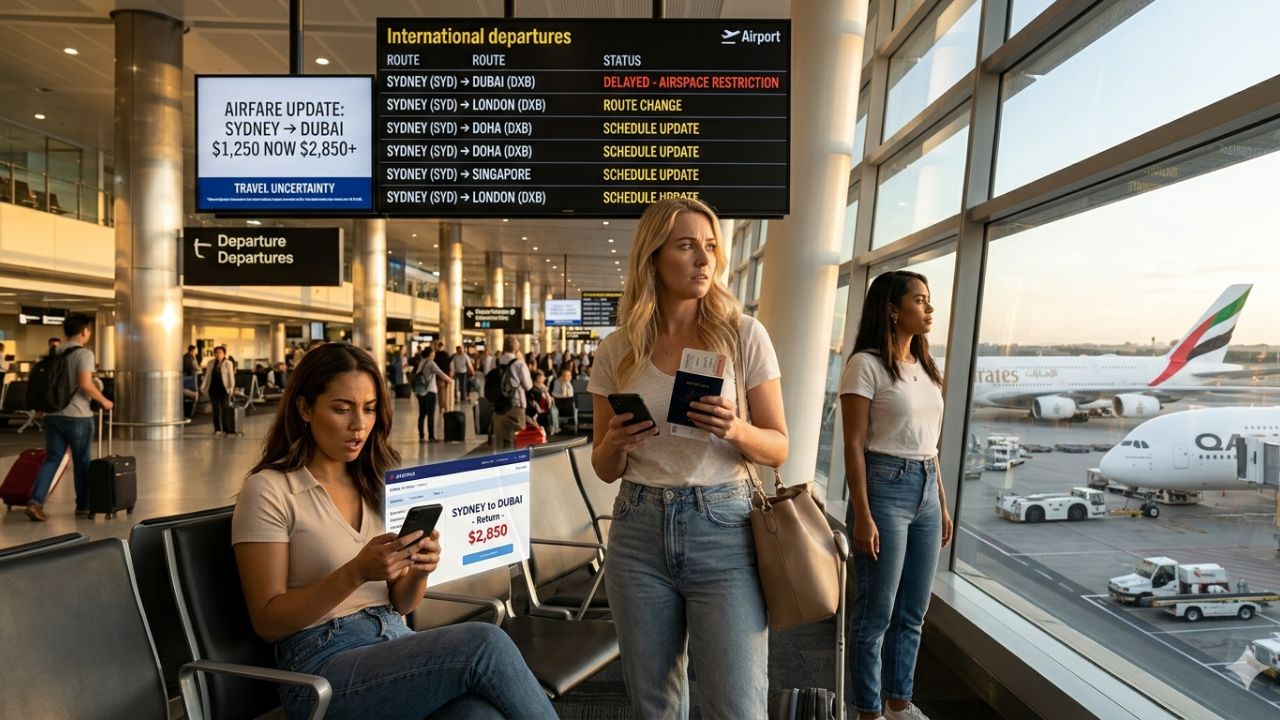
Image representing the intense strategic battle as global aviation leaders desperately attempt to contain severe flight cancellations and massive travel chaos across the volatile Middle Eastern transit corridor.
Breaking Airline News: Severe Geopolitical Travel Chaos Paralyzes Gulf Transit Hubs as Massive Airspace Closures Trigger Global Flight Cancellations
As paralyzing airport disruptions and terrifying waves of suddenly restricted airspace violently sweep through the Middle East, the iconic Gulf transit model has completely buckled under severe geopolitical pressure. In a devastating blow to global connectivity, an intensifying military lockdown across the strategic Strait of Hormuz has triggered a catastrophic cascade of massive flight diversions, aggressive schedule cancellations, and an unprecedented fuel crisis, violently plunging thousands of transcontinental travelers into an inescapable web of severe travel chaos.
In a harrowing display of modern aviation fragility, a seemingly routine season of international travel has rapidly devolved into a high-stress financial and logistical survival scenario. For generations, the historically efficient flight path connecting Europe to Australia via the Middle East served as a reliable bridge. Today, that connection has been violently severed. The Australian Department of Foreign Affairs and Trade (DFAT), operating alongside global transport oversight boards, has officially broadcasted a massive regulatory alert across the Smartraveller network, placing key international aviation junctions under a severe Level 4 “Do Not Travel” and “Do Not Transit” advisory window. This aggressive structural contraction has forced premium network operators like Qantas to execute immediate mid-flight diversions, completely dismantling traditional cross-continental stopover networks and leaving massive passenger loads utterly stranded in the wake of sudden airport structural lockdowns.
Expanded Overview: The Massive Scale of the Contagion
The terrifying crisis currently gripping the global transit network brutally exposes the severe economic vulnerability of modern air travel. The sudden military lockdown has aggressively choked vital energy exports, triggering a massive $100 billion surge in baseline fuel costs. According to aviation economics analysts at the International Air Transport Association (IATA), jet fuel price inflation is currently tracking at an absolutely astounding 70 percent increase. Because fuel accounts for the single largest operating expense for any carrier, this sudden shock effectively slices projected global airline industry profitability exactly in half, flattening overall net rewards to just $23 billion globally. To prevent total corporate collapse, airlines are systematically rolling out aggressive fuel recovery fees and raising baseline international ticket prices by double-digit percentages, effectively locking ordinary working families out of the global travel market.
Section-Wise Breakdown: The Operational Collapse
The Gulf Hub Epicenter: Dubai, Doha, and Abu Dhabi
The incident aggressively centered around the absolute collapse of the iconic Gulf Hub transit model. Because commercial airlines must now completely bypass highly restricted airspace over Iran, Iraq, and surrounding volatile territories, the historically efficient routing model is structurally dead. Flights traversing these altered pathways must endure massive detours that add hours to total transit durations. This extreme geographic friction has severely compromised the operational throughput of core transit hubs like Dubai, Doha, and Abu Dhabi, triggering widespread schedule delays, localized flight cancellations, and forcing displaced passengers to compete frantically for a rapidly diminishing pool of available seats.
The Alternative Corridors: Taipei and Shanghai
As the primary Middle Eastern routes violently choke, the terrifying contagion has forced a massive logistical shift toward secondary aviation corridors. Smart booking agents and dynamic airline dispatchers are aggressively rerouting transcontinental traffic safely through North Asia to completely bypass the conflict zone. Consequently, historically stable hubs like Taipei and Shanghai are currently experiencing record-breaking traffic spikes. However, this sudden influx of displaced global travelers is heavily stressing regional airport infrastructure, threatening to ignite secondary waves of airport disruptions across the Asian theater.
The Australian Lifeline: Sydney and Melbourne
At the far end of the severed transcontinental bridge, the Australian travel market is violently reacting to the crisis. Despite the terrifying economic warning signs and skyrocketing ticket prices, broader consumer demand indicators show an incredibly surprising level of resilience, with international passenger traffic volumes stubbornly managing a stable 2 percent increase. However, the financial burden is massive, as operators like Qantas aggressively enforce high-priced fares to absorb the staggering operational costs of these massive, fuel-burning detours.
Flight Details & Aviation Defense Matrix
To fully comprehend the massive logistical and strategic fallout of this geopolitical hub collapse, corporate travel managers must review the exact economic and operational metrics currently paralyzing the global network. The following matrix provides a granular breakdown of the specific factors driving the crisis.
| Strategic Aviation Metric | Data Specification |
|---|---|
| DFAT/Smartraveller Advisory | Level 4 "Do Not Travel/Transit" |
| Jet Fuel Price Inflation | 70 Percent Increase |
| Baseline Fuel Cost Surge | $100 Billion Increase |
| Projected Industry Net Profit | $23 Billion (50% Reduction) |
| Passenger Traffic Demand | 2 Percent Increase |
| Restricted Airspace Zones | Iran, Iraq, Strait of Hormuz |
Passenger Impact: Surviving the Terminal Nightmare
For the thousands of passengers physically trapped by these rolling flight suspensions, the human cost of this operational emergency is absolutely terrifying. The brutal reality of watching a hard-earned family reunion warp into an impossible luxury inflicts intense psychological stress.
Survival Guide for Disrupted Travelers
Travelers desperately navigating this geopolitical chaos must immediately execute the following survival protocols under the guidance of consumer protection bureaus:
- Do Not Cancel Prematurely: Regulatory compliance directors explicitly warn that nervous passengers must absolutely avoid initiating premature flight cancellations on their own. Doing so completely invalidates core consumer guarantees under national transport protection laws, leaving any financial remedy entirely at the mercy of the airline’s specific non-refundable fare rules.
- Wait for Official Cancellations: Patiently wait for carriers to officially trigger a cancellation or schedule change due to airspace restrictions. This automatically unlocks mandatory compensation mechanisms, comprehensive carrier credits, or full cash refunds.
- Pivot to Regional Travel: As major international airlines rapidly park their massive, gas-guzzling wide-body aircraft to cut fuel consumption, savvy holidaymakers are embracing localized exploration and booking heavily insulated, stress-free regional domestic tourism packages.
Industry Analysis: The Fragility of the Global Corridors
From a strategic aviation perspective, the travel turmoil currently decimating the network highlights the terrifying vulnerability of highly critical international air corridors. The preservation of global travel now relies entirely on flexible dynamic route modeling networks and advanced automated flight trackers. When vital shipping lines and high-altitude transport grids stall due to geopolitical volatility, the traditional consumer habit of booking cheap, spontaneous round-the-world trips completely dissolves.
Conclusion: A Strategic Retreat to Ensure Aviation Survival
As the situation remains highly fluid and extremely volatile, the catastrophic collapse of the Gulf transit model represents a massive warning to the global aviation cartel. The rolling flight diversions and massive fuel surcharges prove that international flight schedules remain terrifyingly fragile. Corporate travel buyers and everyday passengers attempting to navigate this highly unstable era of airport disruptions must maintain extreme flexibility. To survive this travel chaos, flyers must adapt to changing pricing dynamics, heavily prioritize real-time updates over published schedules, and strictly adhere to consumer protection guidelines to shield their hard-earned vacation savings.
Key Takeaways
- Massive Transit Collapse: The iconic Gulf transit model operating through Dubai, Doha, and Abu Dhabi has violently buckled under severe airspace restrictions over Iran and Iraq.
- Level 4 Warnings Issued: Civil aviation authorities and DFAT have officially issued Level 4 "Do Not Travel/Transit" advisories for highly volatile regional junctions.
- Catastrophic Fuel Surge: A military lockdown in the Strait of Hormuz has triggered a 70% spike in jet fuel inflation, slashing global airline profitability by 50% to just $23 billion.
- Consumer Advisory: Passengers must absolutely not cancel their flights prematurely; wait for the airline to initiate the cancellation to secure mandatory cash refunds or carrier credits.
- Asian Hubs Surge: Displaced transcontinental traffic is violently shifting toward alternative secondary corridors in North Asia, triggering massive traffic spikes in Taipei and Shanghai.
Related Travel Guides
Disclaimer
This article is for informational and educational purposes only. It does not constitute legal, financial, or professional advice. While we strive to provide accurate and up-to-date information, travel policies, regulations, and conditions change rapidly. Always verify information with official sources before making travel decisions. Nomad Lawyer makes no representations about the accuracy, reliability, completeness, or suitability of the information provided. Readers should consult qualified professionals for advice specific to their circumstances. The views expressed in this article are those of the author and do not necessarily reflect the views of Nomad Lawyer.
Kunal K Choudhary
Co-Founder & Contributor
A passionate traveller and tech enthusiast. Kunal contributes to the vision and growth of Nomad Lawyer, bringing fresh perspectives and driving the community forward.
Learn more about our team →