
Asia Flight Gridlock Hits 3,615 Delays and 263 Cancellations: Changi, Bohol-Panglao, and Hub Transit Guide

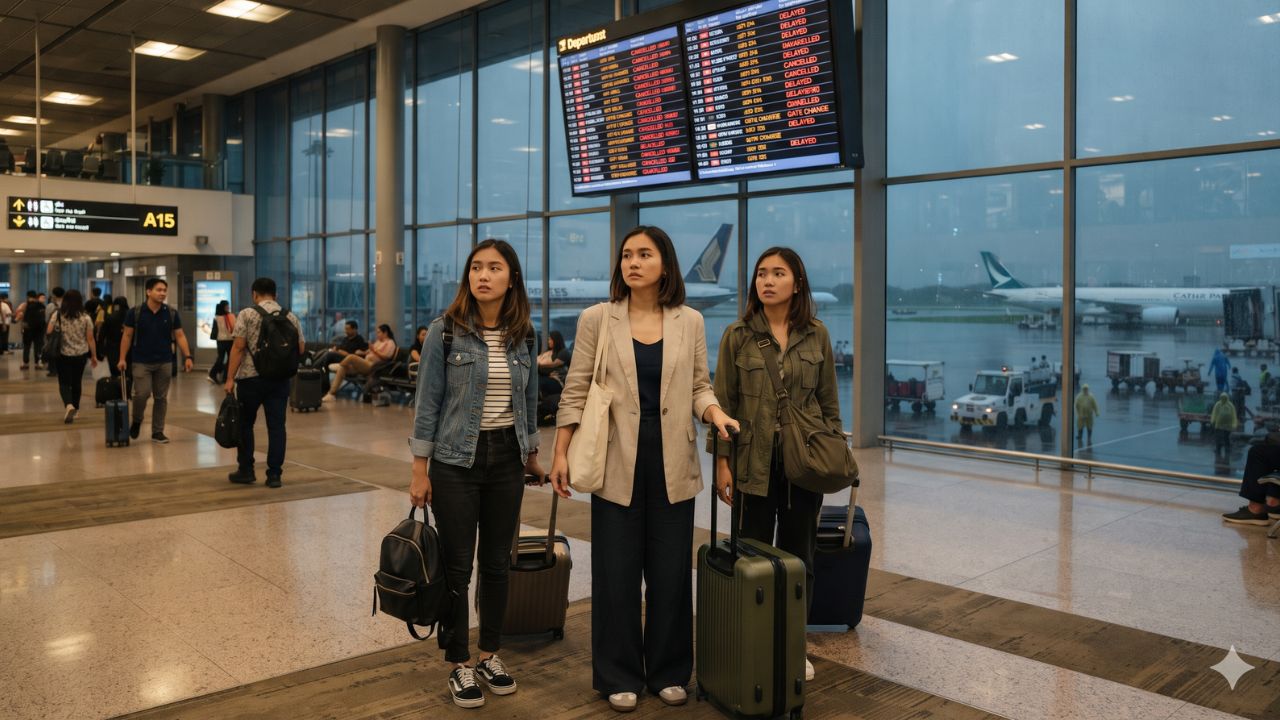
While mega-hubs like Singapore Changi absorbed 197 flight delays with just three cancellations, regional island gateways bore the sharpest brunt—Bohol-Panglao International Airport in the Philippines saw up to 15 percent of departures scrubbed as unstable equatorial weather collided with tight inter-island aircraft rotations. Official real-time tracking audits compiled through FlightAware on 30 October 2026 reveal a sprawling wave of aviation gridlock across Asia, tallying 3,615 delayed flights and 263 outright cancellations. From toxic agricultural haze reducing visibility across Jakarta to severe pre-cyclonic squalls over eastern India and airspace closures across the Middle East, intercontinental travelers are enduring extensive gate holds, severed connections, and rebooking delays.
Asia-Wide Aviation Gridlock: Weather Hazards and Airspace Bottlenecks
The operational crisis unfolding across Asian terminals stems from an aggressive convergence of meteorological events and airspace restrictions. In eastern China, heavy seasonal weather systems slowed ground movements across Shanghai Pudong, which logged 279 delays and 8 cancellations, alongside Shenzhen Bao’an with 262 delays and 7 cancellations, and Guangzhou Baiyun with 247 delays and 4 cancellations. Beijing Capital recorded 156 delays alongside 16 cancellations.
India experienced acute disruptions across commercial hubs. Mumbai’s Chhatrapati Shivaji Maharaj International Airport reported 234 delays and 17 cancellations, while Bengaluru’s Kempegowda International Airport logged 161 delays and 11 cancellations. Emerging secondary hubs faced high cancellation ratios: Navi Mumbai registered 32 delays alongside 11 cancellations, driving its origin cancellation rate to 10 percent. Regional airfields recorded severe cancellations, led by Barapani in Meghalaya with 66 percent of origin flights canceled, Zunyi in China with 45 percent canceled, and Gorakhpur in northern India with 20 percent cancelled.
Southeast Asian transit points contended with overlapping weather and infrastructure strains. Manila’s Ninoy Aquino International Airport weathered 206 delays and 11 cancellations, while Singapore Changi Airport matched Jakarta’s Soekarno-Hatta Airport with 197 delays, though Jakarta suffered 9 cancellations due to lingering peatland haze. In Vietnam, Hanoi Noi Bai registered 151 delays and 7 cancellations. In the Middle East, security restrictions caused Riyadh’s King Khalid International Airport to log 19 cancellations against 15 delays (a 20 percent origin cancellation rate), while Jeddah recorded 68 delays and 15 cancellations.
| Airport Gateway (IATA Code) | Delayed Flights | Outright Cancellations | Origin Cancelled % | Departure Cancelled % | Primary Disruption Factor |
|---|---|---|---|---|---|
| Shanghai Pudong (PVG) | 279 | 8 | 0% | 0% | Severe coastal thunderstorms and runway flow controls. |
| Shenzhen Bao’an (SZX) | 262 | 7 | 0% | 0% | Pearl River Delta terminal air traffic saturation. |
| Guangzhou Baiyun (CAN) | 247 | 4 | 0% | 0% | Southern China convective squall lines. |
| Mumbai Shivaji Maharaj (BOM) | 234 | 17 | 1% | 1% | Pre-cyclonic weather bands and single-runway congestion. |
| Manila Ninoy Aquino (MNL) | 206 | 11 | 0% | 1% | Tropical depression bands and ground equipment delays. |
| Singapore Changi (SIN) | 197 | 3 | 0% | — | Heavy equatorial lightning and ramp ground stops. |
| Jakarta Soekarno-Hatta (CGK) | 197 | 9 | 1% | 0% | Peatland wildfire haze and low morning visibility. |
| Bengaluru Kempegowda (BLR) | 161 | 11 | 1% | 1% | Airspace holding patterns and cascading feeder aircraft delays. |
| Istanbul Sabiha Gökçen (SAW) | 159 | 5 | — | 0% | Crosswind shear and low-cost carrier turnarounds. |
| Beijing Capital (PEK) | 156 | 16 | 0% | 1% | Northern air defense route rationing and de-icing tests. |
| Hanoi Noi Bai (HAN) | 151 | 7 | 0% | 1% | Tropical monsoon downpours and ramp drainage buffers. |
| Istanbul Airport (IST) | 144 | 3 | — | 0% | High-capacity transfer wave delays. |
| Jeddah King Abdulaziz (JED) | 68 | 15 | 1% | 3% | Middle Eastern security flight track adjustments. |
| Navi Mumbai (NMI) | 32 | 11 | 10% | 6% | New facility calibration and regional feeder cancellations. |
| Riyadh King Khalid (RUH) | 15 | 19 | 20% | 12% | Heightened regional airspace restrictions and re-routings. |
| Bohol-Panglao (TAG) | 6 | Data unavail. | 14% | 15% | Island weather squalls and single-apron turnaround limits. |
| Barapani / Shillong (SHL) | Data unavail. | High | 66% | — | Mountain fog and visual flight rule shutdowns. |
| Zunyi Airport (ZYI) | Data unavail. | High | 45% | 27% | Guizhou karst mountain cloud cover and low ceilings. |
Airline Performance: Measuring Scale vs Proportional Disruption
Examining flight disruptions requires distinguishing between total flight counts and the percentage of a carrier's scheduled schedule affected. Budget carrier IndiGo recorded the highest absolute disruption in Asia, logging 560 delays that affected 25 percent of its flying, though it contained cancellations to 12 flights (rounded to 0 percent). China Eastern registered 402 delays (17 percent) and 10 cancellations. Japan Airlines encountered 276 delays representing 35 percent of operations, yet canceled only two flights.
In contrast, smaller low-cost operators experienced severe schedule breakdowns. India's SpiceJet recorded 47 delays affecting 49 percent of its operations, alongside 16 cancellations representing 16 percent of its flights. Akasa Air saw 39 cancellations (15 percent) paired with 45 delays (17 percent).
Network carriers faced widespread ripple effects across Southeast Asia:
- Philippine Airlines: 66 delays (43 percent of operations) and 8 cancellations (5 percent), caused by severe weather patterns over the Visayas.
- Jetstar: 153 delays (39 percent) and 6 cancellations (1 percent), reflecting tight turnaround schedules across Australian and Southeast Asian routes.
- Pegasus Airlines: 197 delays (26 percent) and 5 cancellations.
- Shenzhen Airlines: 150 delays (21 percent) and 9 cancellations (1 percent).
- Vietnam Airlines: 72 delays (18 percent) and 7 cancellations (1 percent).
- Batik Air: 54 delays (19 percent) and 11 cancellations (3 percent).
- Air China: 183 delays (10 percent) and 17 cancellations (1 percent).
- Saudia: 59 delays (15 percent) and 10 cancellations (2 percent).
- Gulf Air: 23 delays (15 percent) and 8 cancellations (5 percent).
Visitor Insider Tips: Managing Island Flights, Changi Layovers, and Delays
- Build 4-Hour Buffers for Philippine Island Flights: If you are vacationing in Bohol, Boracay, or Siargao, never book a same-day domestic connection that leaves less than four hours before your international flight out of Manila or Cebu. Island airports like Bohol-Panglao have single-runway setups without instrument landing systems; a brief afternoon squall can prompt instant ground delays or cancellations.
- The Bohol Ferry Escape Route: If your flight from Bohol-Panglao International Airport is canceled, do not wait in endless ticket queues at the terminal. Take a 25-minute taxi to Tagbilaran Port and board the OceanJet fast ferry to Cebu City (a two-hour voyage departing almost hourly). From Cebu’s Mactan-Cebu International Airport, you will have dozens of domestic and international departures to keep your journey moving.
- Changi Free Rest Zones and Early Bag Drop: If stranded on a long layover at Singapore Changi, do not pay for an expensive transit hotel unless necessary. Head to the free snooze lounges in Terminal 3 (Mezzanine level) or Terminal 2, which offer padded reclining loungers in quiet, darkened zones. Take advantage of Changi's early bag check-in counters located inside the Jewel complex, freeing you to visit the indoor rainforest and canopy park without dragging heavy luggage.
- Use Airline In-App Chat for Rebooking: When a flight cancels at high-density hubs like Mumbai, Jakarta, or Shanghai, the physical customer service desks easily develop lines of several hundred travelers. Open the airline’s smartphone application immediately and connect with their live chat support, or contact their international reservations call center in the UK or US, which can reassign your seat while terminal queues remain stationary.
- Keep Essential Documents and Medications in Carry-On: Always pack two days worth of prescription medication, a universal power bank, charging cables, and an extra change of clothes in your cabin bag. If an aircraft is held on the apron or your checked baggage is trapped in a multi-flight cancellation backlog, you will avoid medical distress and expensive airport retail purchases.
Cultural and Environmental Context: Monsoons, Island Life, and Haze
Flight disruptions across Asia highlight the intricate relationship between modern air travel and delicate local ecosystems. In Southeast Asia, peatland fires across Sumatra and Kalimantan generate seasonal smoke haze that chokes aviation corridors from Jakarta to Singapore, threatening biodiversity and public health while degrading runway visibility.
Similarly, tourism on islands like Bohol balances economic vitality with environmental fragility. Famous for the UNESCO-recognized Bohol Island Geopark and the Chocolate Hills, the province relies on eco-tourism to support dive operators, tarsier sanctuaries, and local boatmen along the Loboc River. When bad weather isolates the island by halting flights, small family guesthouses face immediate financial strain, illustrating how closely island livelihood is tied to aviation infrastructure.
In India, seasonal cyclonic weather across the Bay of Bengal emphasizes the growing frequency of extreme weather events across the subcontinent. As civil aviation authorities build larger airports to satisfy rising domestic demand, incorporating resilient drainage systems, radar installations, and flood protections has become indispensable for safeguarding passenger safety and preserving the economic benefits of regional mobility promoted by Tourism Philippines.
FAQ: Asian Flight Disruptions 2026–2027
Why are flight cancellations so high at Bohol-Panglao Airport?
Bohol-Panglao operates with a single runway and limited apron parking. When regional storms roll across the Visayas, airlines cancel short island hops to prevent aircraft from getting stranded away from main hubs.
What should I do if my flight is canceled in Singapore or Mumbai?
Contact your airline immediately via their official mobile app or phone hotline rather than waiting in terminal lines. Request re-routing on the next available flight or claim full ticket refunds under local passenger rights rules.
Are airlines required to provide hotel rooms during weather delays in Asia?
Weather is generally categorized as an extraordinary circumstance outside airline control, meaning free hotel accommodation is not legally guaranteed, though full-service carriers often assist stranded transit passengers.
How does agricultural haze impact flights in Jakarta?
Seasonal peatland burning causes dense smoke that drops runway visibility below legal landing minimums, forcing air traffic control to enforce flow restrictions and ground stops at Soekarno-Hatta Airport.
When tropical skies unleash their fury across the Asian archipelago, the wise traveler measures distance not in flight hours, but in patience, preparedness, and the flexibility to embrace the unexpected detour.
Related Travel Guides
Emirates Brings Airbus A350 to Durban in March 2027: Premium Economy Completes South Africa Trio
US Airlines Overhaul Overseas Routes: Nonstop Flights to Regional Europe and Asia Expand for 2027
The Best Southeast Asia Ferry Alternatives and Island Transit Hacks, According To Reddit (Coming Soon)
This article is for informational purposes. Flight routes, passenger regulations, visa rules, and transit advisories are subject to change by airlines and aviation authorities. Readers are advised to verify schedules and travel documentation with relevant carriers and border agencies before departure.
Related Stories
Gulf and Türkiye Aviation Turmoil: 832 Delays and 62 Cancellations Snarl Dubai, Riyadh, and Istanbul

Odyssey Residential Cruise Strands 203 Passengers in Sihanoukville Cambodia as Fourfold Fuel Inflation Triggers Vessel Lay-Up
