
SWISS Extends Dubai Flight Suspension to Late November 2026: Western Governments Escalate Middle East Travel Warnings

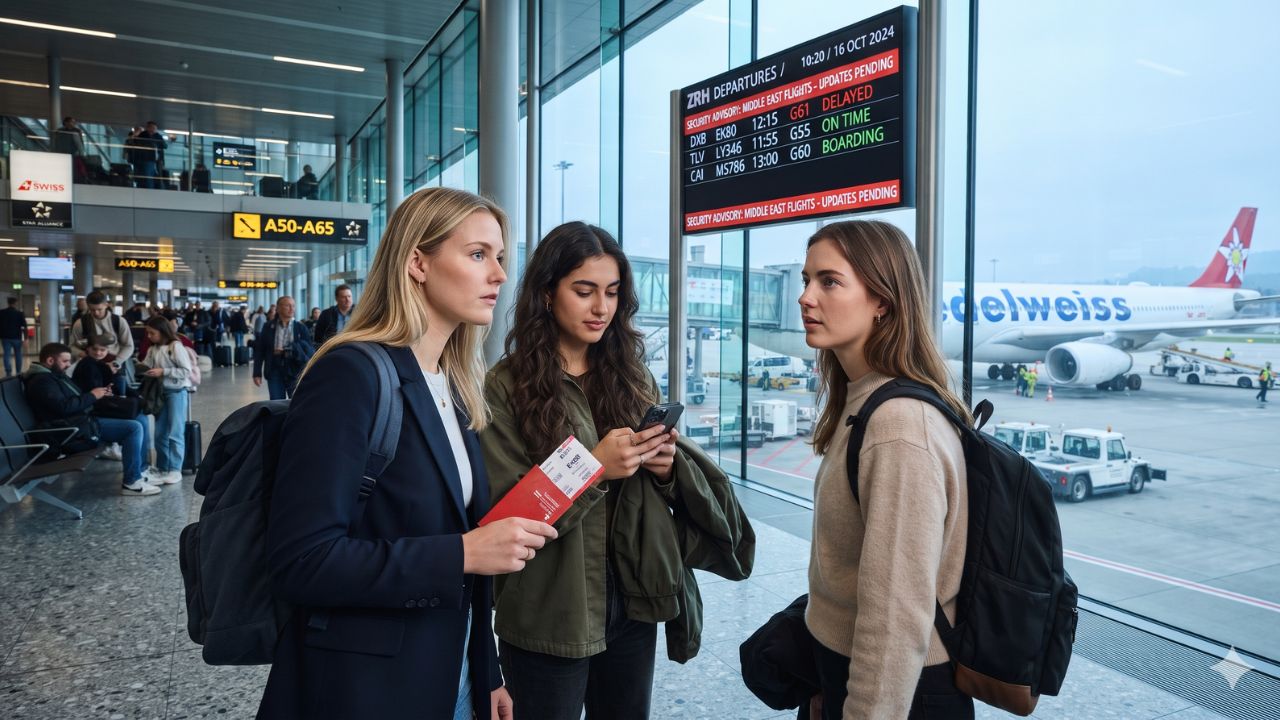
Voluntarily sacrificing millions of francs on one of its most profitable winter sun routes, Swiss International Air Lines abruptly canceled its planned 27 October 2026 return to the United Arab Emirates, extending its complete grounding of daily Zurich-to-Dubai flights until at least 25 November 2026. The unexpected decision by SWISS to withdraw its premium-configured Airbus A340-300 aircraft from flight pairs LX242 and LX243 has triggered a sweeping reassessment of commercial aviation safety across the Middle East, prompting the United States, the United Kingdom, the European Union, and Canada to issue coordinated travel security warnings.
Rather than relying on diplomatic statements alone, Switzerland’s zero-tolerance operational stance directly highlights the extreme vulnerability of international air corridors to terrestrial conflict. As European regulators mandate extensive flight diversions around Iranian and Iraqi airspace, travelers and corporate executives are encountering rerouted intercontinental connections, increased transit durations, and insurance policy clauses that leave unverified bookings financially exposed.
The Swiss Preemptive Grounding: Unpacking the Dubai Decision
The commercial link between Zurich Airport (ZRH) and Dubai International Airport (DXB) serves as a vital financial artery for SWISS and its parent conglomerate, the Lufthansa Group. Configured with dedicated First Class, Business Class, and Premium Economy cabins, the wide-body Airbus A340-300 fleet deployed on this route captures lucrative holiday travelers escaping European cold alongside multinational executives commuting between European banking centers and Gulf corporate headquarters.
Originally slated to resume daily rotations on 27 October 2026, the sudden extension of the suspension through 25 November 2026 underscores how intelligence assessments override commercial revenue. With thousands of passengers holding tickets across the four-week blackout window, SWISS customer support teams are scrambling to rebook travelers onto partner airlines operating outside high-risk flight corridors.
The Swiss carrier's operational withdrawal established an immediate domino effect, accelerating regulatory actions across Western civil aviation authorities and diplomatic ministries.
Coordinated International Advisories: US, UK, EU, and Canadian Directives
Western governments have enacted distinct regulatory strategies to protect their citizens and airlines operating through the region:
- The United States’ Sweeping Tiered Warnings: The U.S. Department of State has imposed high-level travel warnings across more than a dozen Middle Eastern nations. Strict Level 4 "Do Not Travel" advisories apply to volatile conflict territories including Yemen, Iran, Iraq, Lebanon, and Syria, where consular services are severely curtailed. Concurrently, the State Department maintains Level 3 "Reconsider Travel" advisories across primary Gulf transit gateways—including the United Arab Emirates, Saudi Arabia, Qatar, Bahrain, Kuwait, Oman, and Jordan. This sweeping categorization heavily influences corporate travel, as institutional duty-of-care policies frequently bar corporate personnel from visiting Level 3 destinations.
- The United Kingdom’s Precision Risk Mapping: The Foreign, Commonwealth & Development Office (FCDO) has implemented a geographically differentiated model. Rather than enforcing blanket national bans, the UK strongly advises against all travel to Lebanon and specific border regions of Saudi Arabia adjacent to Yemen. For primary commercial and financial transit hubs across the Gulf Cooperation Council (GCC), the FCDO enforces heightened situational awareness protocols, allowing hundreds of thousands of British expatriates and business travelers to operate safely while pinpointing localized border risks.
- The European Union’s Conflict Airspace Directives: The European Union Aviation Safety Agency (EASA) has issued urgent Conflict Zone Information Bulletins (CZIBs), recommending that all European commercial carriers completely avoid the sovereign airspace of Iran, Iraq, and parts of Syria. Furthermore, EASA mandates heightened caution for aircraft operating over the Persian Gulf and the Gulf of Oman.
- Canada’s Expatriate Readiness Warnings: Global Affairs Canada maintains heightened vigilance for Saudi Arabia and the UAE, urging Canadian citizens to register with the Registration of Canadians Abroad registry. Canadian advisories explicitly warn that regional conditions can shift without notice, potentially closing commercial airports and borders.
Middle East Flight Suspensions and International Advisory Tiers Matrix
The verified flight suspensions, international advisory categories, and aviation detour parameters are organized below:
| Country or Agency | Regulatory Scope & Directive | Impacted Regional Corridors | Strategic Travel & Aviation Impact |
|---|---|---|---|
| Switzerland (SWISS) | LX242 / LX243 daily service suspended | Zurich (ZRH) to Dubai (DXB) route | Grounded until at least 25 Nov 2026; A340-300 reassigned |
| United States (State Dept) | Level 4 "Do Not Travel" Directives | Yemen, Iran, Iraq, Lebanon, Syria | Travel insurance invalidated; consular support restricted |
| United States (State Dept) | Level 3 "Reconsider Travel" Warnings | UAE, Saudi Arabia, Qatar, Bahrain, Kuwait, Oman | Triggers corporate travel bans and policy cancellations |
| United Kingdom (FCDO) | Targeted Geographic Advisories | Lebanon and Saudi-Yemen border zones | Differentiated risk mapping; strict vigilance for Gulf hubs |
| European Union (EASA) | Conflict Zone Information Bulletins (CZIBs) | Complete ban: Iran, Iraq, and Syrian airspace | Requires southern detours over Egypt/Red Sea or Central Asia |
| EASA Regional Alert | Heightened Operational Vigilance | Persian Gulf and Gulf of Oman flight paths | Extended block times, higher fuel burn, cargo weight limits |
| Canada (Global Affairs) | Urgent Vigilance & Citizen Registry | GCC transit hubs; Saudi Arabia & UAE | Contingency departure planning; emergency citizen tracking |
| Passenger Rights (EU261) | Cancellation refunds & rerouting apply | European-originating flights (SWISS) | Extraordinary circumstance exemption waives cash compensation |
Visitor Insider Tips: Rerouting, Passenger Rights, and Insurance Rules
- Understand Your Rights Under EU Regulation 261/2004: Because SWISS is a European-regulated carrier, passengers affected by the cancellation of flight LX242 or LX243 are legally entitled to a full ticket refund or alternative re-routing to Dubai on another airline at the earliest opportunity. However, because regional geopolitical airspace closures are classified as "extraordinary circumstances" beyond the airline's control, carriers are legally exempt from paying statutory cash delay compensation (typically €600).
- Secure Cancel For Any Reason (CFAR) Coverage: Standard travel insurance policies universally contain "acts of war," "civil unrest," or "government travel advisory" exclusion clauses. If your government elevates a destination to Level 3 or 4 after you purchase insurance, standard coverage will not reimburse non-refundable hotel or tour bookings. Travelers visiting or transiting the Gulf should purchase comprehensive "Cancel For Any Reason" coverage at least 14 to 21 days before departure.
- Factor in Extended Connection Block Times: Long-haul flights connecting Europe with India, Southeast Asia, and Australia are taking substantial detour tracks around Iranian and Iraqi skies. Routing south over Egypt and the Red Sea or north over Central Asia adds between 45 and 90 minutes of flight time. Avoid booking tight 60-minute international connections in hubs like Doha, Dubai, or Abu Dhabi; ensure connection windows are at least 2.5 hours.
- Monitor Real-Time Airline Applications: Flight routings and departure slots are shifting rapidly based on daily air traffic control releases. Download the official smartphone applications for your operating carrier and enable immediate push notifications for gate changes, diversions, or rescheduled departure times.
Cultural and Environmental Context: Rerouted Corridors and Economic Resilience
The avoidance of traditional Middle Eastern flight corridors creates severe environmental and economic consequences. The airspace over Iran and Iraq historically offered the shortest, most fuel-efficient great-circle flight tracks between European capitals and Asian economic centers. Rerouting hundreds of wide-body flights daily south over the Red Sea or north over the Caucasus burns tens of thousands of additional tons of aviation kerosene, driving up operating costs and significantly increasing carbon emissions across the global aviation sector.
Simultaneously, the escalation of Western travel advisories directly affects Gulf destination economies. Over the past two decades, cities like Dubai, Doha, and Abu Dhabi have invested hundreds of billions of dollars to position themselves as safe global Crossroads of commerce, luxury tourism, and international conferences. The imposition of Level 3 warnings by the United States dampens corporate delegations and convention attendance, testing the resilience of local hospitality networks.
Yet, Switzerland’s decisive leadership proves that in modern global aviation, passenger safety supersedes seasonal commercial revenue. Maintaining transparent airspace protocols protects civilian passengers while upholding the long-term credibility of international commercial aviation networks.
FAQ: Middle East Travel and SWISS Suspensions 2026
How long has SWISS suspended its Zurich-Dubai flights?
SWISS suspended its daily LX242/LX243 routes between Zurich and Dubai through at least 25 November 2026, postponing its planned 27 October relaunch due to regional security assessments.
Are passengers entitled to compensation under EU261 for these cancellations?
Passengers are entitled to a full ticket refund or free rebooking on alternative flights, but airlines are exempt from paying additional cash compensation because geopolitical threats qualify as extraordinary circumstances.
What is the difference between US Level 3 and Level 4 advisories?
Level 4 "Do Not Travel" represents the highest danger warning (e.g., Iran, Lebanon), invalidating insurance. Level 3 "Reconsider Travel" (e.g., UAE, Qatar) urges caution due to sudden airspace or security risks.
How do flight detours around Iran and Iraq affect travel times?
Aviation reroutings around closed airspace add between 45 and 90 minutes of flight time, requiring airlines to carry extra fuel and adjust connecting schedules across European and Asian hubs.
As international flight paths navigate shifting geopolitical winds, traveler safety remains the non-negotiable beacon guiding every commercial departure.
Related Travel Guides
- Charlotte Amalie Named 2026 World War II Heritage City: St. Thomas Cultural Guide
- Thanksgiving Parade Destinations 2026: Comparing New York, Chicago, and Philadelphia
- Beyond the Golden Route: Japan's Six Governors Launch Historic US Tourism Campaign
- Salem vs. New Orleans Halloween 2026: Inside the Booking Surge and Rate Spike
Disclaimer
This article is for informational and educational purposes only. It does not constitute legal, financial, or professional advice. While we strive to provide accurate and up-to-date information, travel policies, regulations, and conditions change rapidly. Always verify information with official sources before making travel decisions. Nomad Lawyer makes no representations about the accuracy, reliability, completeness, or suitability of the information provided. Readers should consult qualified professionals for advice specific to their circumstances. The views expressed in this article are those of the author and do not necessarily reflect the views of Nomad Lawyer.
Kunal K Choudhary
Co-Founder & Contributor
A passionate traveller and tech enthusiast. Kunal contributes to the vision and growth of Nomad Lawyer, bringing fresh perspectives and driving the community forward.
Learn more about our team →