Qantas Ground Worker Strikes Hit Five Major Australian Airports: Freight Alerts, Sydney Security Delays, and Passenger Guide

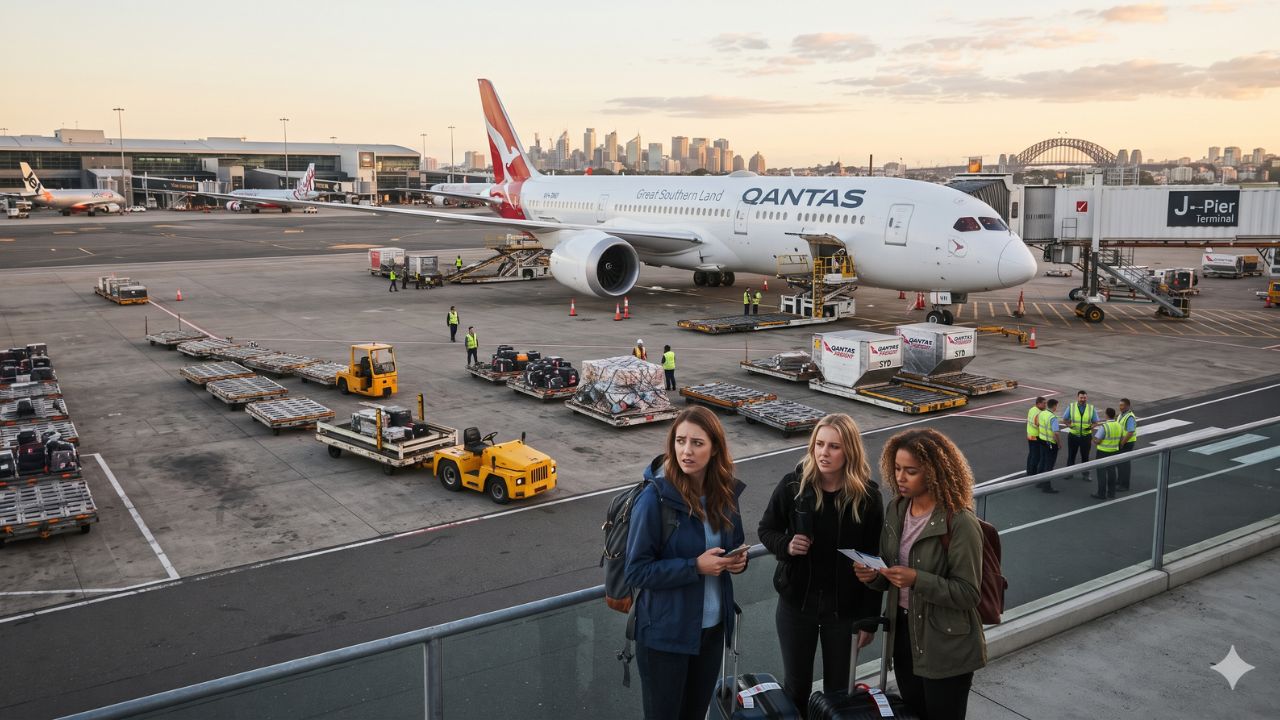
Across Australia's vast distances, commercial aircraft transport over 26,700 tonnes of domestic air cargo each month—sharing belly space with passenger luggage to keep fresh produce, medical supplies, and mail moving between cities thousands of kilometers apart. On 28 and 29 October 2026, that vital transcontinental logistics chain faced substantial pressure as Qantas ground handling employees initiated rolling 24-hour work stoppages across five state capitals: Sydney, Melbourne, Brisbane, Adelaide, and Perth. In parallel, a separate airport security screening dispute scheduled for 30 October at Sydney Kingsford Smith Airport threatens to create extensive terminal queues for departing domestic travelers.
Rolling Stoppages Across Five Capital Cities: The Scope of Industrial Action
The current wave of industrial unrest centers on longstanding disputes regarding compensation, roster predictability, and permanent staffing. Represented by transport labor organizations, ground workers across five major air gateways are demanding industry-standard wage increases, the creation of additional full-time positions, more allocated hours for part-time staff, and the structural reunification of divided workforce divisions. Stoppages officially commenced on 28 October and extend across 29 October, operating on staggered regional timetables tailored to local time zones.
In Adelaide, action runs from 5:00 a.m. to 4:59 a.m. Australian Central Daylight Time (ACDT), while Sydney adheres to the identical hours in Australian Eastern Daylight Time (AEDT). Melbourne's ground crews walk off from 10:00 a.m. to 9:59 a.m. AEDT. In Queensland, Brisbane operations face stoppages from 7:00 p.m. to 6:59 p.m. Australian Eastern Standard Time (AEST), while Perth follows that evening window in Australian Western Standard Time (AWST). In each capital, the 24-hour stoppage concludes on the following morning or evening.
In response to the threatened freight bottlenecks, Qantas confirmed plans to keep freight facilities open throughout the action, deploying contingency staffing to prioritize urgent consignments, live animal shipments, and time-sensitive pharmaceuticals. While the operational advisories do not indicate widespread passenger flight cancellations directly linked to cargo handling, business shippers and domestic travelers with checked freight have been advised to prepare for processing backlogs.
Sydney Security Screening Dispute: Morning and Evening Terminal Pinch Points
Compounding ground handling friction, a distinct labor dispute among contracted security personnel at Sydney Airport introduces significant passenger screening disruptions on Friday, 30 October 2026. Security staff plan to execute work stoppages during peak commuter windows: from 5:00 a.m. to 8:00 a.m. in the morning, and again from 4:30 p.m. to 7:30 p.m. in the evening.
To mitigate expected security checkpoint gridlock, airport management announced that Domestic Terminal 2 (T2) and Terminal 3 (T3) will unlock their doors early at 3:00 a.m. Qantas has introduced a dedicated rebooking waiver for passengers ticketed on eligible departures from Sydney on 30 October. Eligible travelers holding reservations made prior to that date on Qantas-operated T3 services, or Jetstar domestic services operating out of T2 with a Qantas flight code, may move their departures forward to 29 October or postpone them to 31 October without paying change fees.
However, airline rebooking terms specify that fare differences and seat availability rules still apply. Passengers seeking alternative departures must maintain identical origins, destinations, and cabin classes. Because terminal location alone does not guarantee automatic rebooking qualification, travelers must confirm specific itinerary eligibility directly through their booking agents or airline service counters before making alterations.
Transport Data and the Economic Significance of Aviation Labor
These industrial actions take place within a heavily utilized domestic aviation network. Official data published by the Bureau of Infrastructure and Transport Research Economics (BITRE) recorded 5.76 million domestic passengers across Australia in July 2026, encompassing scheduled flights and charter operations. Scheduled commercial carriers transported 5.33 million travelers—a modest 0.3% contraction compared to July 2025—while processing 26,700 tonnes of air cargo, down 5.9% year-on-year. Regional aviation hubs processed 2.35 million passenger movements.
Aviation punctuality benchmarks for September 2026 revealed that 79.0% of domestic flights operated on time, with a nationwide cancellation rate of 1.3%—an improvement from the 2.0% cancellation figure recorded in September 2025. These operational metrics illustrate that while overall network reliability has rebounded from post-pandemic lows, terminal bottlenecks remain highly disruptive.
Furthermore, domestic air travel underpins an expanding visitor economy. International visitor survey metrics through the year ending June 2026 show that Australia welcomed 8.4 million overseas travelers, an expansion of 9% year-on-year. Expenditure within Australia reached A$40.5 billion, climbing 16% over the preceding year, as highlighted by Tourism Australia. Although individual industrial disputes rarely cause broad macroeconomic drops, localized disruptions quickly erode visitor goodwill and create logistical friction for independent travelers connecting across regional destinations.
Qantas Industrial Action Timetable and National Aviation Performance Benchmarks
To help passengers and commercial shippers evaluate exposure across different gateways, the table below consolidates the verified work stoppage schedules and recent national aviation indicators:
| Airport Gateway / Metric | Workgroup & Action Type | Scheduled Stoppage Window (Local Time) | Operating Impact & Guidance |
|---|---|---|---|
| Sydney Airport (SYD) AEDT | Qantas Ground Handlers (24-Hour Action) | 5:00 a.m. (28 Oct) – 4:59 a.m. (29 Oct) | Freight processing delays; contingency staff prioritized |
| Adelaide Airport (ADL) ACDT | Qantas Ground Handlers (24-Hour Action) | 5:00 a.m. (28 Oct) – 4:59 a.m. (29 Oct) | Cargo handling delays on interstate consignments |
| Melbourne Airport (MEL) AEDT | Qantas Ground Handlers (24-Hour Action) | 10:00 a.m. (28 Oct) – 9:59 a.m. (29 Oct) | Freight sorting slowdowns; critical deliveries prioritized |
| Brisbane Airport (BNE) AEST | Qantas Ground Handlers (24-Hour Action) | 7:00 p.m. (28 Oct) – 6:59 p.m. (29 Oct) | Overnight cargo transfers face extended processing |
| Perth Airport (PER) AWST | Qantas Ground Handlers (24-Hour Action) | 7:00 p.m. (28 Oct) – 6:59 p.m. (29 Oct) | Transcontinental air freight connections impacted |
| Sydney Airport Security (T2/T3) | Contracted Passenger Screening Personnel | 5:00–8:00 a.m. & 4:30–7:30 p.m. (30 Oct) | Extended passenger lines; terminals open early at 3:00 a.m. |
| July 2026 National Air Cargo | Domestic Airport Freight Throughput | 26,700 Tonnes Statewide (-5.9% YoY) | Demonstrates scale of belly cargo vulnerable to delays |
| September 2026 Flight Reliability | Domestic Airline Industry Averages | 79.0% On-Time / 1.3% Cancelled | Benchmark performance preceding current industrial action |
Visitor Insider Tips for Handling Australian Airport Disruptions
Navigating Australian domestic terminals during periods of industrial friction demands strategic preparation:
- Adopt a Carry-On-Only Strategy: Ground handler walkouts primarily affect belly cargo loading, sorting facilities, and baggage carousels. If you are flying domestically between Sydney, Melbourne, or Brisbane on 28 or 29 October, avoid checking luggage. Confining your gear to an airline-compliant 7 kg cabin bag enables you to bypass baggage drop desks and proceed straight through departures to your gate.
- Arrive Exceptionally Early for Sydney Departures on 30 October: If departing Sydney Domestic T2 or T3 on Friday, 30 October, plan to arrive at the airport at least two to two-and-a-half hours before domestic boarding times. With security screening actions occurring from 5:00 to 8:00 a.m. and 4:30 to 7:30 p.m., lines can stretch along terminal concourses. Take advantage of the early 3:00 a.m. terminal opening if scheduled on early morning departures.
- Evaluate Rebooking Fee Nuances: When utilizing the Qantas travel waiver for 30 October flights, note that while change fees are waived, fare differences remain active. If your preferred alternative departure on 29 or 31 October has only high-fare ticket buckets remaining, you may face unexpected out-of-pocket expenses. Review all alternate flights online before confirming the switch.
- Know Your Statutory Consumer Rights: According to guidance from the Australian Competition and Consumer Commission (ACCC), consumers possess protections under Australian Consumer Law if flights face unreasonable delays or cancellations within the carrier's control. However, refunds are not automatic during third-party actions, and airlines generally fulfill their legal obligations by rebooking passengers on the next available service.
- Monitor Visa Expiry Timelines: International visitors holding short-stay visas who encounter rescheduled international connections must verify their lawful status through the Department of Home Affairs. Airline disruptions do not grant automatic visa extensions. If a flight alteration forces an extended stay beyond your permitted window, contact immigration authorities promptly to regularize your entry status.
Cultural and Environmental Context: Aviation Reform in the World's Driest Inhabited Continent
The recurring industrial actions across Australian aviation reflect deep structural shifts following the pandemic. Over recent years, labor disputes have spotlighted the outsourcing of ground handling operations and the challenges of high living costs in major coastal hubs like Sydney and Melbourne. For aviation staff, campaigns for reliable full-time hours and standardized pay scales represent an effort to re-establish stable middle-class careers in a sector that has faced heavy casualization.
Geographically, Australia is uniquely dependent on commercial aviation. With major metropolitan capitals separated by expansive stretches of desert and ocean, reliable domestic air routes function as essential social and commercial arteries rather than mere conveniences. From Perth's isolated mining logistics to fresh seafood exported from South Australia, airport ramps are integral to national supply lines.
At the same time, Australian airports operate under strict environmental and community parameters. Curfew regulations at Sydney Kingsford Smith and Adelaide airports prohibit takeoffs between 11:00 p.m. and 6:00 a.m. to protect urban residential communities from noise pollution. These curfews leave little flexibility when ground delays accumulate, forcing airlines to manage ramp turnaround times with extreme precision. Balancing fair labor conditions, stringent community environmental limits, and operational reliability remains one of the central challenges shaping the future of Australian transport.
FAQ: Traveling Through Australian Airports During October 2026 Disputes
Which airports are affected by the Qantas ground worker strike? Ground handling stoppages affect five major airports: Sydney, Melbourne, Adelaide, Brisbane, and Perth across 28 and 29 October 2026. The action primarily impacts freight processing and baggage sorting.
When are security screening disruptions expected at Sydney Airport? Separate security screening walkouts take place on Friday, 30 October 2026, from 5:00 a.m. to 8:00 a.m. and from 4:30 p.m. to 7:30 p.m. Domestic terminals T2 and T3 open at 3:00 a.m.
Can I change my Qantas flight from Sydney without penalty? Eligible passengers booked to fly out of Sydney on 30 October can rebook to 29 or 31 October without change fees, though seat availability and fare differences still apply.
Will travel disruptions automatically extend an Australian tourist visa? No. Airline delays do not extend immigration permissions. Visitors must monitor their visa validity and contact the Department of Home Affairs if departure postponements risk exceeding permitted stay limits.
As transport staff advocate for sustainable workplace conditions, travelers navigating Australia's primary aviation hubs will find that arriving early and traveling light remain their best defenses against terminal delays.
Related Travel Guides
The 10 Best Airport Transit Hacks for Sydney and Melbourne, According To Reddit
This article is for informational purposes. Flight routes, passenger regulations, visa rules, and transit advisories are subject to change by airlines and aviation authorities. Readers are advised to verify schedules and travel documentation with relevant carriers and border agencies before departure.
Related Stories

Qantas Frequent Flyer Status Credits Expand to Home Loans and Banking in December 2026

Emirates Skywards Launches Winter Double Miles on Hotels and Car Rentals: Earning Guide and Insider Travel Tips