
Carbon Fiber's Divergent Path: Why Airbus and Boeing Built Their Next-Generation Widebodies So Differently
Breaking airline news and aviation industry updates for 2026.

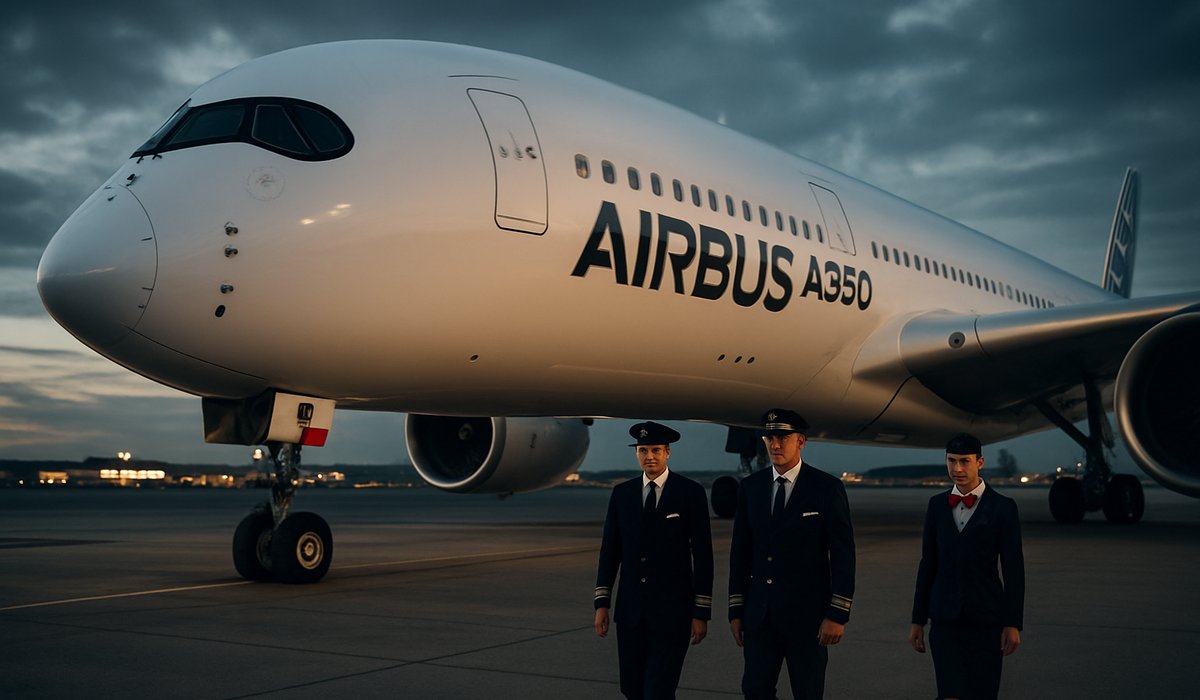
Image generated by AI
Carbon Fiber's Divergent Path: Why Airbus and Boeing Built Their Next-Generation Widebodies So Differently
The A350 and 787 represent fundamentally opposing manufacturing strategies that could reshape aircraft production for decades
The Composite Revolution Reshapes Aviation Manufacturing
Advanced composite materials have fundamentally transformed how the world's largest aircraft manufacturers design and build long-haul widebody jets. Both Boeing and Airbus have embraced carbon-fiber-reinforced polymers as the structural backbone of their flagship next-generation aircraft—the Boeing 787 Dreamliner and the Airbus A350 XWB—delivering substantial weight reductions and enhanced fuel efficiency that directly impact operating costs and environmental footprints.
Yet despite pursuing the same material science breakthrough, these aviation giants have adopted strikingly different construction methodologies that reveal deeper philosophical divides about production efficiency, maintenance logistics, and long-term supply chain management.
Boeing's Continuous Barrel Approach
Boeing's 787 program pioneered the use of seamlessly wound composite barrels for fuselage construction. This methodology involves winding carbon-fiber material continuously around cylindrical forms, creating a single integrated structural tube that minimizes joints and potential failure points.
The continuous barrel technique offers several operational advantages: it reduces manufacturing complexity for Boeing's production facilities, decreases the number of individual fasteners required, and creates an exceptionally strong, monolithic fuselage structure. From an aeronautical engineering perspective, the absence of panel seams translates to superior structural integrity and predictable stress distribution throughout the aircraft's service life.
Airbus's Panelized Assembly Strategy
Conversely, Airbus selected a fundamentally different architectural approach for the A350's fuselage. Rather than continuous wound barrels, Airbus engineers developed a panelized assembly system where individual composite sections are manufactured separately and subsequently joined together through carefully engineered interfaces.
This methodology reflects Airbus's emphasis on manufacturing flexibility and supply chain resilience. By segmenting the fuselage into discrete panels, Airbus creates multiple production pathways, allowing different component suppliers and manufacturing facilities to operate with greater autonomy. The panelized approach also simplifies the replacement of damaged sections and reduces production bottlenecks when unforeseen complications emerge.
Operational and Economic Implications
Both manufacturing philosophies achieve comparable weight savings and fuel efficiency targets, yet they represent divergent risk assessments regarding production scalability and maintenance accessibility. Boeing's continuous barrel design prioritizes structural elegance and reduced fastener counts, while Airbus's panelized structure emphasizes operational flexibility and distributed supply chain resilience.
These architectural choices will influence aircraft maintenance programs, spare parts inventory requirements, and repair procedures for commercial operators for decades. Airlines operating either aircraft will experience markedly different service intervals and structural inspection protocols, fundamentally shaping their long-term fleet management strategies.
The Broader Industry Landscape
As fuel price volatility continues affecting airline profitability, the weight advantages delivered by carbon-fiber construction in both designs remain economically invaluable. However, manufacturers' divergent implementation strategies suggest that future aircraft development will increasingly reflect each company's institutional priorities: Boeing emphasizing streamlined monolithic design, Airbus prioritizing modular manufacturing flexibility.
Frequently Asked Questions
What are the weight benefits of carbon fiber composites in aircraft fuselages? Carbon-fiber-reinforced polymers reduce structural weight by approximately 20 percent compared to conventional aluminum construction, directly lowering fuel consumption and operating costs across an aircraft's 25-30 year operational lifecycle.
Why did Boeing and Airbus choose different manufacturing methods for composite fuselages? Boeing prioritized seamless structural integrity through continuous wound barrels, while Airbus emphasized manufacturing flexibility and supply chain resilience through panelized assembly—reflecting each manufacturer's production philosophy and risk management approach.
How do these manufacturing differences impact airline maintenance costs? Panelized fuselages simplify component replacement and reduce maintenance downtime, while continuous barrel designs minimize fastener-related inspections, resulting in different long-term maintenance expenditure profiles for operators.
Will other aircraft manufacturers adopt one approach over the other? Future widebody programs will likely continue splitting between these methodologies based on manufacturers' existing infrastructure, supply chain relationships, and operational priorities rather than convergence toward a single standard.
How do composite fuselages affect jet fuel consumption and airline fees? Weight reductions from composite construction directly lower fuel consumption by 15-20 percent, enabling airlines to reduce ticket prices and ancillary charges—though geopolitical factors and fuel price volatility often override these savings.
Related Travel Guides
External Resources
Disclaimer
This article is for informational and educational purposes only. It does not constitute legal, financial, or professional advice. While we strive to provide accurate and up-to-date information, travel policies, regulations, and conditions change rapidly. Always verify information with official sources before making travel decisions. Nomad Lawyer makes no representations about the accuracy, reliability, completeness, or suitability of the information provided. Readers should consult qualified professionals for advice specific to their circumstances. The views expressed in this article are those of the author and do not necessarily reflect the views of Nomad Lawyer.
Kunal K Choudhary
Co-Founder & Contributor
A passionate traveller and tech enthusiast. Kunal contributes to the vision and growth of Nomad Lawyer, bringing fresh perspectives and driving the community forward.
Learn more about our team →