
Greece’s Peloponnese Emerges as Europe’s New Travel Escape With Ancient Heritage, Luxury Stays and Untouched Beauty
Greece’s Peloponnese Emerges as Europe’s New Travel Escape With Ancient Heritage, Luxury Stays and Untouched Beauty

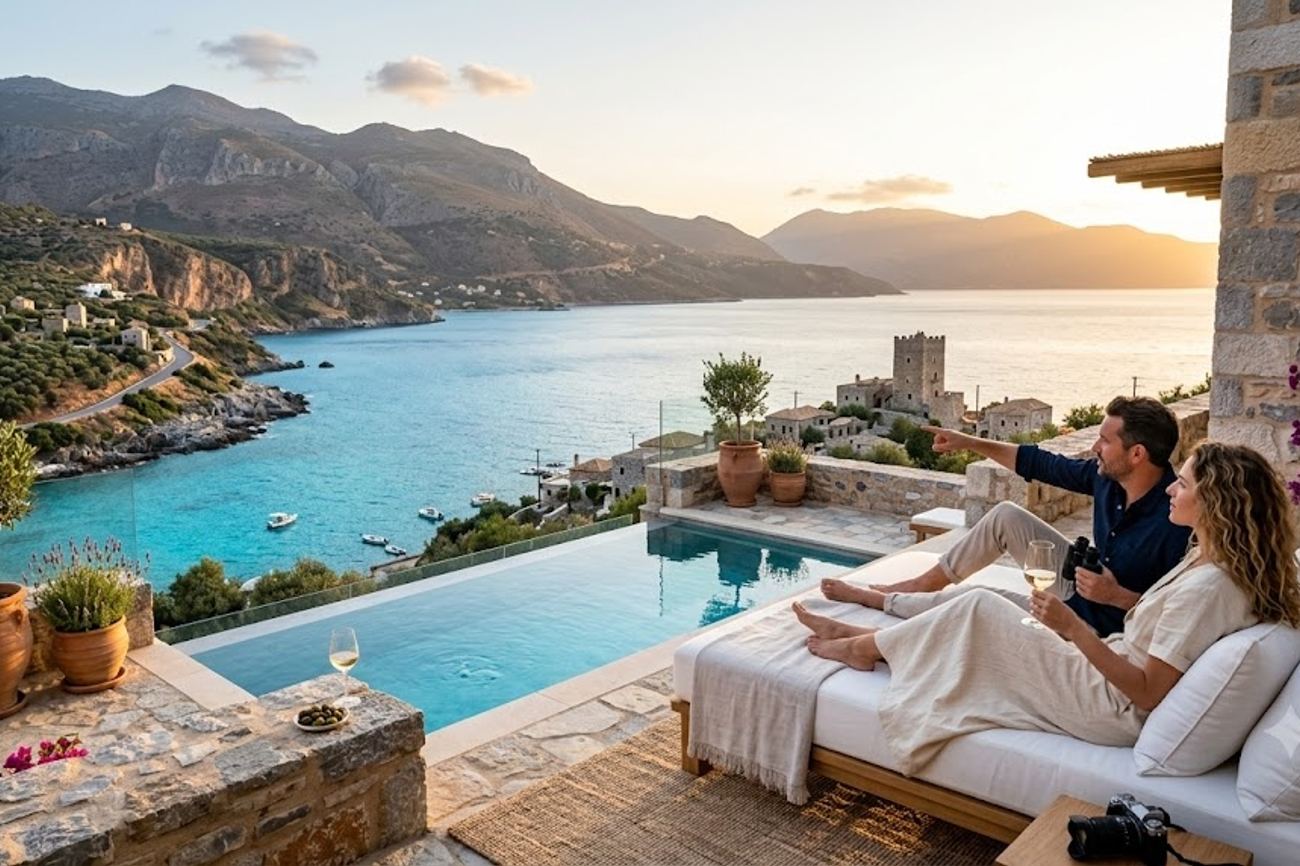
Image generated by AI
[Kalamata, October 2023] — The Peloponnese peninsula is aggressively pivoting Greece's tourism model away from the saturated island markets of Santorini and Mykonos to establish itself as a primary Mediterranean hub for high-end cultural and sustainable travel.
The regional shift focuses on diversifying the Greek travel portfolio by leveraging a dense concentration of archaeological landmarks, mountain ranges, and luxury hospitality developments. By positioning itself as a "slow travel" alternative, the Peloponnese aims to capture a growing demographic of international visitors who prioritize authentic cultural immersion and outdoor adventure over traditional beach-centric vacations.
The Shift Toward Low-Impact Tourism
The immediate driver of this transition is a global movement toward "sincere, gradual, and low" tourism. This model rejects the superficial, high-volume crowds typical of Greece's most famous islands in favor of enduring, story-led experiences. The Peloponnese is utilizing its geographical diversity—spanning from the rugged Mani Peninsula to the forests of Arcadia—to distribute tourist traffic more evenly across the mainland.
This strategy is supported by the Greek National Tourism Organization (GNTO), which emphasizes the region's ability to support longer stays and multi-destination road trips. By integrating coastal escapes with inland mountain excursions, the region is attempting to break the seasonal cycle of "peak-summer" travel, pushing for year-round visitation during the spring and autumn shoulder seasons.
Markets and Destinations Impacted
The expansion of the Peloponnese tourism model affects several specific sectors and geographical zones:
- Cultural Tourism Hubs:
- Ancient Olympia: The birthplace of the Olympic Games, serving as the primary anchor for sports and history enthusiasts.
- Mycenae: The central pillar for visitors exploring Mycenaean civilization.
- Epidaurus: A critical site for those seeking architectural and acoustic history via its ancient theatre.
- Mystras and Monemvasia: Key destinations for Byzantine and medieval heritage.
- Adventure and Nature Segments:
- The Menalon Trail (Arcadia): A primary draw for the global hiking community, connecting remote mountain villages.
- Messinia and Mani Peninsula: Target zones for Mediterranean coastal exploration and nature-focused retreats.
- Premium Hospitality Sector:
- Messinia: Currently the epicenter of high-end investment, featuring international-standard resorts, golf courses, and integrated wellness facilities.
Practical Traveler Advisory and Strategic Insights
For the modern traveler, the rise of the Peloponnese translates to a shift in how a Greek holiday is structured. Instead of relying on ferry hops between islands, visitors are encouraged to utilize rental cars and road networks to navigate the mainland.
Practical Impacts:
- Crowd Avoidance: Travelers can access world-class archaeological sites and beaches without the extreme congestion found in the Cyclades.
- Diversified Itineraries: A single trip now allows for a combination of luxury resort stays, rigorous mountain hiking (via the Menalon Trail), and deep historical exploration.
- Gastronomic Access: The region offers direct access to agricultural production centers, specifically in Kalamata, where visitors can engage in olive oil and wine tourism.
- Infrastructure Growth: The increase in boutique hotels and luxury resorts means that "authentic" travel no longer requires sacrificing high-end amenities or international hospitality standards.
The Luxury and Sustainability Roadmap
The future of the region depends on the completion of several large-scale luxury projects currently in the later stages of development. These investments are not designed as isolated enclaves but as "integrated lifestyle developments" that connect guests with local communities and traditional Greek lifestyles.
Investment is flowing heavily into Messinia, where the goal is to merge modern luxury with regional identity. This approach aligns with the World Tourism Organization (UN Tourism) guidelines on sustainable development by ensuring that tourism growth benefits local producers and preserves cultural heritage.
Simultaneously, the region is leaning into "culinary travel." By promoting the vineyards and olive groves of the Peloponnese, the region is creating a sustainable economic loop where tourism spending directly supports local agriculture. This move is intended to make the Peloponnese a formidable competitor to other Mediterranean destinations in Italy and Spain.
Travelers can access the region via Athens International Airport or through regional ports serving the Mani and Messenia peninsulas. Detailed transit guides and regional itineraries are available through the Visit Greece official tourism portal to help visitors navigate the landscape.
Strategic Logistics Analysis and 2026 Traveler Insights
Navigating the Peloponnese requires a departure from the hub-and-spoke model typical of the Cyclades. For the 2026 traveler, the region demands a decentralized itinerary that prioritizes flexibility over rigid scheduling.
Transit and Connectivity While Athens remains the primary gateway, the strategic entry point for high-end travelers is increasingly Kalamata International Airport, which provides direct access to the Messinia and Mani regions. However, the Peloponnese is fundamentally a driving destination. To experience the "slow travel" ethos, a premium 4x4 rental is highly recommended; the rugged terrain of the Mani Peninsula and the remote elevations of Arcadia often feature unpaved roads that are inaccessible to standard sedans. For those avoiding rentals, private chauffeurs are the gold standard for seamless transit between archaeological sites, as public bus networks (KTEL) are infrequent in the interior.
Optimal Timing and Seasonality The traditional July-August window is increasingly discouraged due to extreme heat and peak crowds. The "Golden Windows" for 2026 are May to June and September to October. During these shoulder seasons, the Menalon Trail is traversable, and the archaeological sites of Epidaurus and Mycenae offer a more contemplative atmosphere. Autumn is particularly strategic for luxury travelers, coinciding with the olive harvest and vineyard activity in Nemea.
Booking and Accommodation Strategy The region is seeing a surge in "boutique heritage" stays—converted stone towers in Mani and restored manor houses in Arcadia. These properties have limited inventory and often operate on a seasonal basis. Forward booking of 6–9 months is advised for these niche luxury stays. Travelers should prioritize "circuit-based" lodging—splitting stays between a coastal hub (e.g., Costa Navarino or Monemvasia) and a mountain retreat—to minimize daily transit times.
Regional Context for the Discerning Visitor Visitors should approach the Peloponnese as a collection of distinct micro-regions rather than a single destination. The transition from the Byzantine ruins of Mystras to the stark, lunar landscapes of the Mani requires a shift in pace and expectation. To maximize the experience, integrate "anchor" sites (Olympia, Epidaurus) with "discovery" stops in smaller villages, ensuring a balance between high-density history and the untouched beauty that defines the region's current appeal.
FAQ: Peloponnese Travel 2023
How do I get to the Peloponnese from Athens? The region is easily accessible from Athens via a network of highways. Most travelers rent a car for flexibility, though regional buses serve major hubs like Kalamata and Olympia.
When is the best time to visit for hiking and sightseeing? Spring and autumn are the ideal shoulder seasons. These periods offer milder temperatures for the Menalon Trail and fewer crowds at major archaeological sites like Mycenae.
Is the Peloponnese suitable for luxury travelers? Yes. The Messinia region, in particular, has seen a surge in international-standard luxury resorts, high-end wellness facilities, and premium golf tourism.
What are the "must-visit" historical sites in the region? Ancient Olympia, the theatre at Epidaurus, and the ruins of Mycenae are the primary landmarks, alongside the medieval fortress town of Monemvasia.
The Peloponnese is no longer a secondary stop—it is the new blueprint for the Greek experience.
Related Travel Guides
Disclaimer
This article is for informational and educational purposes only. It does not constitute legal, financial, or professional advice. While we strive to provide accurate and up-to-date information, travel policies, regulations, and conditions change rapidly. Always verify information with official sources before making travel decisions. Nomad Lawyer makes no representations about the accuracy, reliability, completeness, or suitability of the information provided. Readers should consult qualified professionals for advice specific to their circumstances. The views expressed in this article are those of the author and do not necessarily reflect the views of Nomad Lawyer.
Preeti Gunjan
Contributor & Community Manager
A passionate traveller and community builder. Preeti helps grow the Nomad Lawyer community, fostering engagement and bringing the reader experience to life.
Learn more about our team →