
Greece and Azerbaijan Forge Strategic Travel Corridor: 2026–2028 Tourism Pact, Green Energy, and Caspian Routes
Signed in Athens on 1 October 2026, the Greece-Azerbaijan Joint Action Plan for Tourism links the Mediterranean with the Caspian Sea through sustainable travel and green energy.

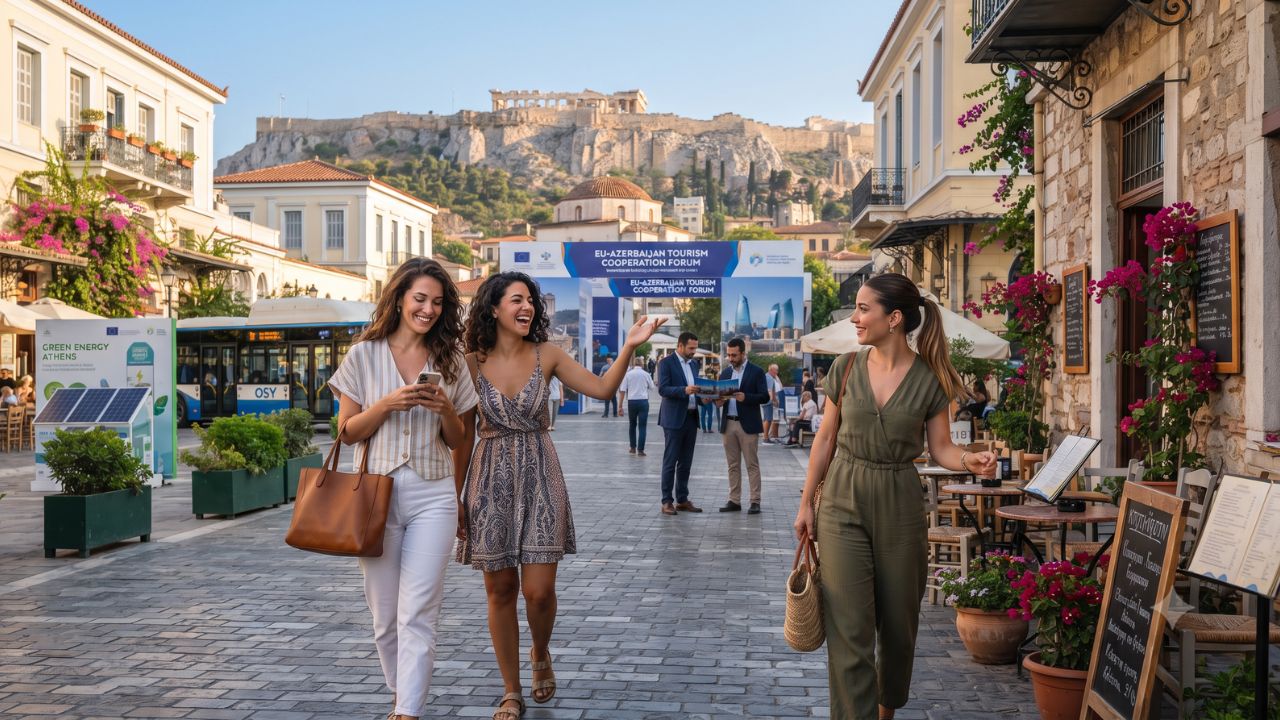
With bilateral trade between Athens and Baku reaching $631 million—dominated by $564 million in Azerbaijani energy exports against $67 million in Greek outbound goods—Greece and Azerbaijan ratified a landmark Joint Action Plan on Tourism for 2026–2028 on 1 October 2026 to connect the Mediterranean and Caspian travel sectors directly. Rather than treating tourism as an isolated leisure market, the intergovernmental agreement links cross-continental flight paths, hospitality standards, and eco-friendly infrastructure with regional renewable energy grids.
The agreement was signed in Athens during the 6th Intergovernmental Commission on Cooperation between the Governments of Azerbaijan and Greece, co-chaired by Azerbaijani Energy Minister Parviz Shahbazov and Greek Deputy Foreign Minister Harry Theoharis. Supported by the simultaneous launch of the Azerbaijan-Greece Business Forum, the initiative encourages Greek hospitality operators to deploy capital into emerging Caspian cultural circuits while opening Mediterranean holiday routes to high-spending travelers from the Caucasus.
For independent travelers and cultural enthusiasts, this emerging corridor provides an unprecedented bridge between the ancient classical antiquities of Greece and the Silk Road heritage of the Caucasus.
The Athens Accord: Architecting a Mediterranean-Caspian Travel Axis
The 2026–2028 blueprint focuses on dismantling bureaucratic friction, upgrading aviation connections, and promoting multi-destination itineraries that combine Mediterranean island exploration with Caspian overland adventures.
GREECE & AZERBAIJAN BILATERAL PARTNERSHIP MATRIX
| Entity / Route | Metrics | Operational Status |
|---|---|---|
| Strategic Indicator | Greece (Mediterranean) | Azerbaijan (Caspian Hub) |
| Lead Representative | Deputy Foreign | Energy Minister |
| & Department | Minister Theoharis | Parviz Shahbazov |
| Bilateral Trade | $67 Million | $564 Million |
| Volume ($631M Total) | (Services & Goods) | (Energy & Raw Materials) |
| Strategic Target | Direct Caspian Inbound | Economic Diversification |
| & Tourism Focus | Growth & Joint Venture | Beyond Hydrocarbon Exports |
| Core Green Focus | Mediterranean Marine | Caspian Wind & Solar Grids; |
| & Transition | Energy & Clean Transit | Decarbonized Tour Operations |
The involvement of high-ranking energy ministers highlights the ecological dimension of the partnership. As international travel moves toward decarbonization, both nations are linking electricity interconnectors and investing in solar and wind power installations to ensure that expanded hotel developments and transit fleets operate on sustainable energy.
What Makes Greece and Azerbaijan Compelling Complementary Destinations
Bridging the Mediterranean Sea and the Caspian Basin offers travelers two distinct historical aesthetics and geological worlds.
Greece: Ancient Antiquities and Aegean Island Life
Promoted through the Visit Greece Official Tourism Portal, Greece represents the cradle of Western civilization. Beyond the iconic Acropolis in Athens, travelers can explore Venetian harbor towns in Crete, Byzantine monasteries perched atop the rock pillars of Meteora, and tranquil whitewashed villages across the Cyclades.
Azerbaijan: Silk Road Caravanserais and Modernist Architecture
Across the Caspian, Azerbaijan offers a synthesis of ancient Zoroastrian traditions, medieval Silk Road stops, and cutting-edge contemporary design. The capital city of Baku showcases the 12th-century Maiden Tower and the Shirvanshah's Palace, protected by the UNESCO World Heritage Centre, sitting alongside the undulating curves of Zaha Hadid's Heydar Aliyev Center. Beyond the capital, cultural travelers explore the petroglyphs of Gobustan and the historic silk-weaving center of Sheki, using travel resources from the Azerbaijan Tourism Board Official Portal.
Comparative Travel Highlights and Practical Logistics
| Travel Dimension | Greece (Mediterranean Gateway) | Azerbaijan (Caspian Gateway) | Practical Connection Advice |
|---|---|---|---|
| Primary International Hub | Athens International Airport (ATH) | Heydar Aliyev International (GYD) | Connect via non-stop & direct charter feeds |
| Cultural Heritage Focus | Classical Greek, Hellenistic & Byzantine | Zoroastrian, Islamic Silk Road & Caucasian | Combine Athens archaeology with Baku old town |
| Visa & Entry Regulations | Schengen Visa / EU Passport Freedom | ASAN Electronic Visa (3-Hour / 3-Day) | Apply for ASAN e-visa online before travel |
| Local Currency | Euro (EUR) | Azerbaijani Manat (AZN) | Credit cards widely accepted in major cities |
| Optimal Travel Seasons | May–June / September–October | April–June / September–November | Plan dual-region trips during spring or autumn |
Visitor Insider Tips
Planning an integrated journey across both countries requires practical local insight:
- Obtain an ASAN E-Visa for Azerbaijan Early: Foreign tourists visiting Azerbaijan can secure an official electronic visa through the government's ASAN Visa portal within three working days (or three hours for urgent expedited requests) for a standard fee of $26.
- Pair Athens with Baku on Long-Haul Itineraries: When flying between Western Europe and Asia, take advantage of expanded Aegean and Caucasus flight combinations to explore two ancient civilizations on a single ticket.
- Taste Regional Specialties in Local Neighborhoods: In Athens, dine at family-run tavernas in Psyrri or Koukaki for grilled octopus and moussaka; in Baku, visit historic tea houses (chaykhanas) in Icherisheher for lamb plov, fresh lavash, and spiced black tea served in pear-shaped armudu glasses.
- Explore Regional Silk Road Hubs in Sheki: Do not limit your Azerbaijan itinerary to Baku. Take the comfortable high-speed electric train west toward Ganja and Sheki to tour the 18th-century Palace of Sheki Khans with its stained-glass shebeke windows.
- Rely on Electric Urban Metro Systems: Both Athens and Baku operate extensive, low-cost underground metro systems that connect major historical districts directly with railway stations and airports, avoiding urban road traffic.
Cultural and Environmental Context
The Greece-Azerbaijan tourism initiative places sustainable development at the core of its bilateral strategy. By integrating renewable solar and wind energy grids into hospitality corridors, both countries aim to minimize the environmental footprint of cross-border tourism.
Furthermore, cultural exchange initiatives supported by the Joint Commission involve university partnerships and artisan preservation programs. In Greece, sustainable rural tourism initiatives protect mountain olive groves and traditional stone villages; in Azerbaijan, community-based tourism programs in remote Caucasus villages like Khinalug and Lahij ensure that craft traditions and indigenous languages continue to thrive alongside ethical travel.
FAQ: Traveling Between Greece and Azerbaijan 2026
What is the Greece-Azerbaijan Joint Action Plan on Tourism?
It is a formal bilateral agreement signed on 1 October 2026 in Athens to enhance cultural tourism, streamline travel logistics, and align hospitality standards between 2026 and 2028.
Do I need a visa to visit Azerbaijan after visiting Greece?
Yes. Travelers holding non-exempt passports must obtain an ASAN electronic visa online before boarding flights to Baku.
What is the best time of year to visit both destinations?
Spring (April to June) and autumn (September to October) provide ideal, mild weather for exploring both Mediterranean islands and Caspian historical centers.
How do I travel between Athens and Baku?
Direct and connecting scheduled flights link Athens International Airport (ATH) with Baku Heydar Aliyev International Airport (GYD) in approximately four hours of flight time.
By uniting Mediterranean heritage with Caspian traditions, the growing partnership between Greece and Azerbaijan opens a dynamic new horizon for cultural explorers.
Related Travel Guides
Disclaimer
This article is for informational and educational purposes only. It does not constitute legal, financial, or professional advice. While we strive to provide accurate and up-to-date information, travel policies, regulations, and conditions change rapidly. Always verify information with official sources before making travel decisions. Nomad Lawyer makes no representations about the accuracy, reliability, completeness, or suitability of the information provided. Readers should consult qualified professionals for advice specific to their circumstances. The views expressed in this article are those of the author and do not necessarily reflect the views of Nomad Lawyer.
Raushan Kumar
Founder & Lead Developer
Full-stack developer with 11+ years of experience and a passionate traveller. Raushan built Nomad Lawyer from the ground up with a vision to create the best travel and law experience on the web.
Learn more about our team →