Finland, Sweden, and Nordic Capitals Lead Christmas Travel Surge with Guaranteed Snow and Sustainable Winter Tourism

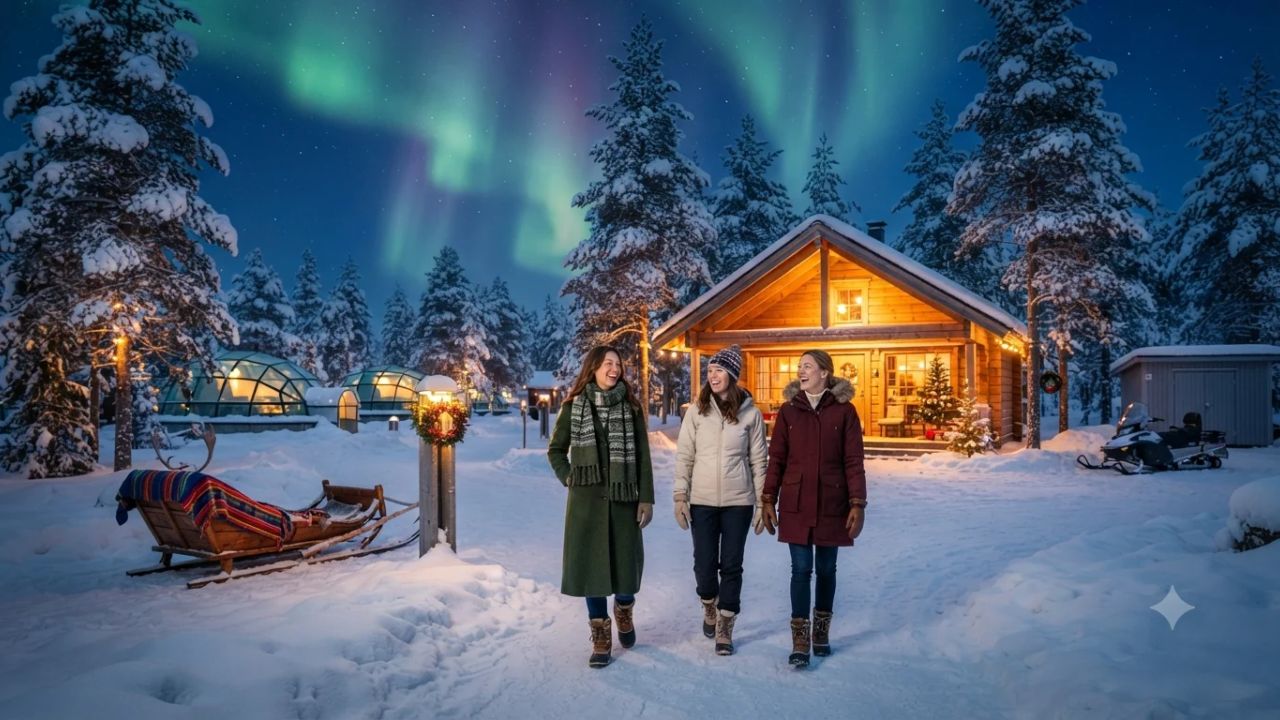
Finland, Sweden, Denmark, and Norway have emerged at the forefront of European Christmas travel in 2026, drawing record numbers of international holidaymakers seeking guaranteed snowfall, sustainable tourism initiatives, and the cultural comfort of Nordic hygge. As rising winter temperatures across Central and Western Europe leave traditional alpine ski resorts grappling with inconsistent snow cover, Scandinavia’s dependable sub-zero climate and Arctic latitudes provide the rare certainty of a genuine White Christmas. Guided by collaborative regional policies like the Nordic Tourism Plan 2025–2030, these nations are transforming the holiday travel experience by rejecting overcrowded commercial mass tourism in favor of regenerative ecotourism, renewable-powered markets, and emotionally resonant heritage traditions.
From silent electric snowmobile expeditions beneath the Aurora Borealis in Finnish Lapland to historic 19th-century open-air markets in Stockholm, candlelit St. Lucia processions, and the whimsical winter illuminations of Copenhagen’s Tivoli Gardens, Northern Europe presents a compelling alternative to conventional holiday itineraries. By combining environmental stewardship with living history and progressive public transit networks, the Nordic region is establishing a new benchmark for winter vacations that balances ecological responsibility with authentic festive celebration.
NORDIC WINTER & CHRISTMAS TOURISM PROFILE (2026)
| Entity / Facility | Delays | Cancellations | Details |
|---|---|---|---|
| Country | Signature Hubs | Core Festive Magnet | Key Sustainability Initiative |
| Finland | Rovaniemi, Helsinki | Santa Claus Village, | Zero-emission eSled safaris, |
| & Turku | Senate Square Market | 100% renewable holiday markets | |
| Sweden | Stockholm, Gothenb. | Stortorget Gamla Stan, | Solar-powered Sámi camps, |
| & Jämtland | Liseberg Wonderland | Electric rail network expansion | |
| Denmark | Copenhagen, Aarhus | Tivoli Gardens, Nyhavn | Certified green design markets, |
| & Odense | Canal, Hygge Culture | Zero-waste street food vendors | |
| Norway | Oslo, Bergen, | Jul i Vinterland, | EV transit capital of Europe, |
| Røros & Tromsø | Røros Mining Town | Certified plastic-free retreats |
The Forces Propelling the Nordic Winter Surge
The growing preference for Nordic winter travel reflects both environmental realities and shifting traveler values across Europe, North America, and Asia. For generations, traditional December holidays were centered on the medieval town squares of Germany, France, and Austria. However, consecutive seasons of mild winter weather, artificial snow machines on muddy slopes, and overcrowded city plazas have prompted travelers to look northward toward Scandinavia’s Arctic wilderness and illuminated coastal capitals.
Climate Resilience and Snow Certainty
Across northern Scandinavia, winter is an enduring geographic certainty rather than a seasonal gamble. High-latitude regions like Finnish Lapland, Swedish Norrland, and Northern Norway experience continuous sub-zero temperatures and stable snowpacks that settle in late October and persist through April. For families seeking winter activities such as husky sledding, reindeer sleigh rides, ice hotels, and backcountry cross-country skiing, the region delivers reliable conditions that lower-latitude European destinations can no longer promise.
WINTER CLIMATE & SNOW RELIABILITY: NORDIC vs CENTRAL EUROPE
| Entity / Facility | Delays | Cancellations | Details |
|---|---|---|---|
| Geographic Zone | Average Dec Temp | Historical Snow Chance | Primary Winter Activities |
| Finnish Lapland | -10°C to -16°C | 100% Guaranteed Snow | Dog sledding, aurora hunting |
| Central Sweden | -2°C to -6°C | 80% to 90% Probability | Ice skating, heritage markets |
| Norwegian Fjords | 0°C to -4°C | High in Elevations | Fjord cruises, mountain rail |
| Central European Alps | +2°C to -2°C | Variable / Unreliable | Often requires artificial sno |
The Nordic Tourism Plan 2025–2030
Scandinavia’s winter surge is not accidental; it is guided by the Nordic Tourism Plan 2025–2030, an intergovernmental compact established by the Nordic Council of Ministers. The framework commits regional tourism boards to three core principles:
- Regenerative Growth: Prioritizing high-yield, low-impact travel over mass passenger volume, ensuring that tourism benefits local biodiversity and preserves fragile ecosystems.
- Seasonal and Geographic Dispersion: Actively encouraging travelers to explore secondary cities, historic coastal towns, and rural indigenous territories, preventing localized overcrowding in capital city centers.
- Decarbonized Infrastructure: Expanding electric vehicle charging grids, modernizing electrified intercity rail corridors, and eliminating single-use plastics and fossil-fuel generators across Christmas markets.
The Rise of Meaningful Retail
Accompanying this ecological focus is an evolution in holiday retail. Discerning travelers are turning away from mass-produced trinkets in favor of authentic Scandinavian craftsmanship. Nordic Christmas markets emphasize handmade glasswork, local knitwear crafted from pure Scandinavian wool, hand-carved wooden kitchenware, natural beeswax candles, and artisanal culinary specialties like cloudberry preserves, smoked arctic char, and organic gingerbread.
Finland: Santa Claus, Arctic Innovation, and Capital Festivities
Finland stands as the undisputed centerpiece of Nordic Christmas travel, dividing its appeal between the festive wilderness of Lapland and the historic, eco-conscious cities of the south.
FINLAND FESTIVE HUBS & ARCTIC ATTRACTIONS
| Entity / Route | Metrics | Operational Status |
|---|---|---|
| Destination Hub | Core Winter Attraction | Signature Festive Experience |
| Rovaniemi (Lapland) | Santa Claus Village & Arctic Circ | Crossing the Arctic Circle, husky safaris |
| Helsinki (Capital) | Senate Square (Tuomaan Markkinat) | 100% renewable market, sauna & hot glögi |
| Turku (Coast) | Old Great Square & Cathedral | National Christmas Peace Declaration |
| Levi & Ylläs | Arctic Skiing & Aurora Havens | Downhill skiing, glass-roofed igloo stays |
Rovaniemi and Arctic Lapland
Situated directly on the Arctic Circle, Rovaniemi is recognized globally as the official hometown of Santa Claus. In Santa Claus Village, international visitors can cross the illuminated Arctic Circle line, mail letters from the official Santa Claus Main Post Office with its coveted Arctic Circle postmark, and meet reindeer herders in surrounding snow forests.
However, Rovaniemi’s recent tourism evolution focuses heavily on sustainable Arctic exploration. The region has pioneered zero-emission winter safaris using electric snowmobiles (eSleds). Unlike traditional two-stroke snowmobiles that produce exhaust fumes and high-pitched engine noise, electric snowmobiles glide across pristine powder snow in near-complete silence, preserving tranquility and avoiding the disruption of wild reindeer and Arctic wildlife.
Complementing these daytime safaris are innovative luxury accommodations, including glass-roofed thermal igloos that allow travelers to view the Aurora Borealis directly from bed, and the ephemeral Snowman World and Arctic SnowHotel, rebuilt every November entirely from natural river ice and compacted snow.
Helsinki’s Sustainable Senate Square
In the national capital, the historic neoclassical Senate Square transforms from late November through December 22 into Tuomaan Markkinat (the Helsinki Christmas Market), the oldest outdoor market in the city. Backed by the white columns of Helsinki Cathedral, the market operates entirely on certified renewable electricity.
More than 100 artisan cabins showcase Finnish craftsmanship, ranging from hand-forged forged iron tools to hand-knitted Lapland mittens. The market’s central focal point is a beloved, beautifully restored vintage carousel that offers free rides to children. In the licensed food hall, visitors warm up with steaming cups of traditional Finnish glögi—spiced berry juice or red wine infused with cardamom, cinnamon, and cloves, garnished with raisins and slivered almonds—paired with warm korvapuusti (cardamom-spiced cinnamon buns) and savory Karelian pastries (karjalanpiirakka) topped with egg butter.
Turku: Finland’s Official Christmas City
For travelers seeking profound historical depth, Turku, Finland’s oldest city and former medieval capital, holds the formal title of Finland’s Christmas City. The tradition centers on the Declaration of Christmas Peace (Joulurauhan julistus), an ancient ceremony read aloud from the balcony of the Brinkkala Mansion on the Old Great Square at noon on Christmas Eve, a continuous tradition originating in the 14th century. Turku’s cobblestone lanes, riverside craft markets, and medieval Turku Castle offer a peaceful, atmospheric journey into ancient Nordic customs.
Sweden: Living Folklore, Royal Splendor, and St. Lucia
Sweden approaches the festive season by weaving centuries of folkloric tradition and royal history into living, interactive winter celebrations.
SWEDISH WINTER MARKETS & FOLKLORIC MILESTONES
| Entity / Route | Metrics | Operational Status |
|---|---|---|
| Destination Hub | Key Holiday Venue | Unique Cultural Offering |
| Stockholm | Stortorget (Gamla Stan) & Skansen | 1837 historic market; 1903 folk museum |
| Gothenburg | Liseberg Amusement Park & Haga | Millions of fairy lights; giant pastries |
| Jämtland / Östers. | Jamtli Open-Air Museum | Historic 19th-century snow village market |
| Luleå (Lapland) | Gammelstad Church Town | UNESCO World Heritage cottage village |
| Nationwide Event | St. Lucia’s Day (13 December) | Candlelit choral processions, saffron buns |
Stockholm’s Historic Stortorget and Skansen
In the heart of Stockholm’s medieval Old Town (Gamla Stan), the Stortorget Christmas Market has operated continuously on the historic cobblestone square since 1837. Surrounded by 17th-century terracotta-colored merchant houses, the red wooden stalls offer hand-carved Swedish handicrafts, smoked elk and reindeer sausages, gingerbread biscuits (pepparkakor), and steaming cups of aromatic glögg.
Across the harbor on the leafy island of Djurgården, the Skansen Open-Air Museum presents an extraordinary journey into Swedish social history. Operating its festive market since 1903, Skansen decorates more than 150 historical farmhouses, schoolhouses, and manor homes gathered from across the country to demonstrate how Christmas was prepared and celebrated across different centuries and social classes. Bonfires roar in the snow, costumed artisans demonstrate traditional butter churning and candle-dipping, and visitors dance around the central festive tree.
Gothenburg and the Liseberg Winter Wonderland
On Sweden’s west coast, Gothenburg positions itself as Scandinavia’s premier holiday entertainment hub. The city’s historic Haga district features gas-lit cobblestone streets and independent boutiques where visitors gather for fika (the traditional Swedish coffee ritual) over enormous cinnamon buns (hagabullen).
Nearby, Liseberg Amusement Park transforms from mid-November through December 30 into one of the largest Christmas experiences in Northern Europe. Illuminated by more than five million twinkling fairy lights, Liseberg incorporates an expansive artisan market, a dedicated Santa’s Village, choreographed figure-skating ice ballets, outdoor ice rinks, and a traditional Swedish julbord (Christmas smorgasbord) featuring pickled herrings, cured salmon, roast ham, and meatballs with lingonberry jam.
St. Lucia’s Day: Bringing Light to Winter Darkness
On December 13, Sweden pauses to celebrate St. Lucia’s Day, one of the most culturally moving events in the Nordic calendar. Commemorating the Christian martyr who brought food and assistance to Christians hiding in Roman catacombs, the festival marks the triumph of light over the winter solstice darkness.
Throughout Swedish cities, towns, schools, and historic cathedrals, young women and men participate in solemn processions dressed in flowing white gowns. The chosen Lucia wears a crown of glowing lingonberry boughs and illuminated candles, leading choirs singing ancient atmospheric melodies. Visitors are offered freshly baked saffron buns shaped like curled scrolls (lussekatter) and ginger biscuits, creating an unforgettable cultural memory far removed from modern commercialism.
Indigenous Sámi Tourism in Swedish Lapland
In northern Sweden, sustainable tourism policies encourage visitors to explore indigenous Sámi heritage respectfully. Around Gammelstad Church Town in Luleå—a UNESCO World Heritage site consisting of 424 preserved wooden cottages clustered around a 15th-century stone church—and at the Jamtli Museum in Östersund, travelers participate in horse-drawn sleigh rides and solar-powered Sámi encampments (lávvu). Herders share insights into sustainable reindeer migration, Arctic climate adaptation, and traditional handicrafts (duodji), offering travelers an authentic cultural education.
Denmark: The Art of Hygge and Iconic Nordic Design
Denmark’s contribution to Christmas travel is anchored in its defining cultural export: hygge—the Danish philosophy of intentional coziness, intimate warmth, and peaceful togetherness.
COPENHAGEN CHRISTMAS HUBS & CULINARY SIGNATURES
| Entity / Route | Metrics | Operational Status |
|---|---|---|
| Market / Landmark | Setting & Architecture | Signature Delights & Atmosphere |
| Tivoli Gardens | 1843 historic amusement park | 1 million lights, ballet, vintage rides |
| Nyhavn Waterfront | 17th-century canal & timber homes | Live harbor jazz, designer craft chalets |
| H.C. Andersen Mkt | Nytorv Square in Old Town | Fairytale themes, carousel, storytelling |
| Kongens Nytorv | Beside historic Hotel d'Angleterr | Luxury holiday displays, ice rink, crafts |
| FLID Design Market | Independent modern design venue | Hand-thrown ceramics, sustainable fashion |
Tivoli Gardens’ Fairytale Transformation
In central Copenhagen, Tivoli Gardens, the legendary amusement park that opened in 1843, serves as the crown jewel of Danish holiday tourism. From mid-November through the first week of January, Tivoli transforms into an illuminated wonderland covered in fake and natural snow, featuring over one million LED fairy lights.
Visitors meander through more than 50 charming alpine stalls selling Danish knitwear, mouth-blown glass ornaments, and handmade wooden toys. The park hosts holiday performances by the Royal Danish Ballet, an open-air ice rink, and nightly choreographed light and music shows across Tivoli’s central lake. Vintage rollercoasters and historical carousel rides operate alongside heated garden pavilions where guests enjoy traditional holiday dining.
Nyhavn and Fairytale City Squares
Beyond Tivoli, festive celebrations spread across Copenhagen’s historic quarters:
- Nyhavn Canal Market: Stalls line the cobblestone quay of the iconic 17th-century canal, framed by brightly painted merchant townhouses and historic wooden sailing ships strung with lights, while jazz musicians perform along the waterfront.
- Hans Christian Andersen Market at Nytorv: Dedicated to Denmark’s most famous fairytale author, this market features stalls named after his beloved tales, with costumed characters and storytelling circles for younger travelers.
- Kongens Nytorv Market: Positioned in the historic Royal Square, framed by the Royal Danish Theatre and the lavishly decorated facade of the Hotel d’Angleterre, offering refined holiday elegance.
Meaningful Design and Hearty Street Food
Copenhagen’s status as a global design capital is on full display at specialized holiday venues like the FLID Design Market, where independent Scandinavian artists, ceramists, and textile designers present small-batch, sustainably produced creations.
Culinary exploration is central to the Danish holiday experience. Street markets feature comforting winter delicacies:
- Æbleskiver: Golden, spherical pancake puffs dusted with powdered sugar and served with tart blackcurrant or raspberry jam.
- Flæskestegssandwich: Slices of roasted pork served inside a crusty artisan roll, topped with salted crackling, warm red pickled cabbage, and tangy mustard mayonnaise.
- Gløgg: The robust Danish version of mulled red wine, fortified with port or dark rum, spiced with whole cinnamon sticks and star anise, and ladled with almonds and raisins soaked for days in spirits.
Norway: Fjord Landscapes, Fairytale Towns, and the Aurora
Norway pairs vibrant urban festive markets with dramatic fjord topography and untouched Arctic wilderness, supported by an advanced electric vehicle network.
NORWAY WINTER WONDERS: MARKETS TO ARCTIC FJORDS
| Entity / Route | Metrics | Operational Status |
|---|---|---|
| Destination Hub | Winter Setting & Landscape | Signature Holiday Highlights |
| Oslo | Spikersuppa (Karl Johans gate) | Jul i Vinterland market, city ice rink |
| Bergen | Surrounded by seven mountains | Pepperkakebyen (Gingerbread City), fjords |
| Røros | UNESCO-listed mountain mining tow | Living Frozen snow globe, horse sleighs |
| Tromsø & Lofoten | Arctic Circle archipelago | Northern Lights hunting, whale watching |
Oslo’s Jul i Vinterland
In the Norwegian capital, Jul i Vinterland transforms the Spikersuppa park on Karl Johans gate, stretching between the Parliament building and the Royal Palace, into a lively holiday village. A massive illuminated Ferris wheel gives riders panoramic views of the snowy city, while a refrigerated outdoor ice rink offers free public skating. Wooden chalets offer hand-knitted Norwegian sweaters (lusekofte), elk burgers, reindeer sausages, and hot mugs of spiced gløgg.
Bergen: Gateway to Winter Fjords
On Norway’s dramatic western coast, Bergen hosts a charming market at Festplassen beneath snow-capped peaks. Bergen is home to Pepperkakebyen, officially recognized as the world's largest gingerbread city, where local residents, schools, and businesses construct an intricate, miniature gingerbread metropolis complete with illuminated houses, bridges, trains, and boats. From Bergen, travelers can easily embark on winter fjord cruises through the icy waters of the UNESCO-listed Nærøyfjord, where waterfalls freeze into giant blue-ice sculptures against sheer mountain cliffs.
Røros: The Real-Life Winter Fairytale
To relieve tourism pressure on coastal gateways and support rural cultural preservation, Norway promotes hidden alpine treasures like Røros. A UNESCO World Heritage copper mining town founded in the 17th century, Røros features over 80 preserved dark wooden houses with turf roofs lining lantern-lit streets. Famous as the visual inspiration for Disney’s Frozen, Røros in December resembles a living snow globe. The local Christmas market features horse-drawn sleigh rides with reindeer pelts, authentic Sámi handicrafts, and local mountain game stews.
Chasing the Northern Lights in the Arctic North
In northern hubs like Tromsø, the festive period coincides with the Polar Night, when the sun remains below the horizon, casting a mysterious blue twilight over the snow. Visitors combine holiday celebrations with dog sledding across Arctic plateaus, overnight stays in certified plastic-free retreats like Manshausen Island, and expeditions to witness the emerald ribbons of the Aurora Borealis dancing across the Arctic sky.
Essential Practical Logistics for Nordic Winter Travel
Navigating a winter journey through Scandinavia requires smart preparation around the region's unique geography, lighting conditions, and transport systems.
PRACTICAL NORDIC WINTER TRAVEL CHECKLIST
| Category / Entity | Details / Impact |
|---|---|
| Planning Dimension | Essential Advice & Operational Protocols |
| Daylight Window | Sun sets 2:30–3:30 PM in south; Polar Night in North. Sightsee early! |
| Layering Strategy | Merino wool base, fleece/wool mid-layer, windproof/waterproof outer shell |
| Footwear Protection | Insulated waterproof boots with rubber lug soles + detachable ice cleats |
| Currency & Payments | Virtually 100% cashless. Visa, Mastercard, Apple Pay universally accepted |
| Rail Connectivity | Choose cross-border high-speed trains (SJ, Vy, VR) over regional buses |
| Luggage Management | Use station lockers; avoid hauling heavy suitcases over icy cobblestones |
Mastering the Daylight Schedule
In December, daylight hours are compressed. In southern capitals like Oslo, Stockholm, and Helsinki, the sun rises around 8:45 AM and dips below the horizon by 3:00 PM; in northern Lapland and Tromsø, the Polar Night means the sun does not rise at all.
Experienced travelers organize their days around this rhythm:
- 7:00 AM – 8:30 AM: Start with a revitalizing Nordic morning sauna and cold dip, followed by a hearty breakfast.
- 9:00 AM – 2:00 PM: Maximize the daylight window for outdoor activities: winter fjord cruises, city architecture walks, or snowshoe treks.
- 2:30 PM Onward: When darkness falls, step into the Christmas markets, illuminated gardens, and museums, where hundreds of thousands of fairy lights transform the darkness into an atmospheric spectacle.
Transport: Trains Over Buses
Scandinavia boasts one of the most reliable and comfortable passenger rail networks in the world. High-speed SJ trains connect Copenhagen to Stockholm in just five hours, while Norwegian Vy trains operate the scenic Bergen Railway across the snow-covered Hardangervidda mountain plateau. In Finland, the legendary Santa Claus Express double-decker night train connects Helsinki directly to Rovaniemi, offering private en-suite sleeping compartments.
Travelers hopping between smaller historic towns (such as Sigtuna in Sweden or Fredrikstad in Norway) should choose rail over regional intercity buses whenever possible. Buses often drop passengers at highway peripheral stops far from historic centers, forcing travelers to haul heavy luggage across unplowed sidewalks and icy cobblestones. Rail stations are situated in the city centers and offer secure electronic luggage storage lockers.
Cold-Weather Clothing Protocols
Staying comfortable in sub-zero Nordic temperatures depends on the classic Scandinavian three-layer system:
- Base Layer: Pure merino wool long-sleeve thermal top and leggings. Avoid cotton completely, as it retains moisture and chills the skin.
- Insulating Mid-Layer: A wool sweater, dense fleece jacket, or lightweight packable down jacket that traps body heat.
- Protective Outer Shell: A windproof, waterproof, and breathable parka or heavy coat with an insulated hood.
- Accessories & Footwear: Waterproof winter boots with thick rubber soles and fleece or wool linings. Pack detachable rubber ice grips (crampons) to slip over boots when walking on slippery urban cobblestones. Thermal mittens are warmer than finger gloves, paired with a windproof wool beanie and scarf.
A Completely Cashless Society
Scandinavia is virtually 100% cashless. From luxury department stores to open-air market stalls selling roasted nuts and carousel tickets, credit and debit cards (Visa and Mastercard) or contactless mobile wallets (Apple Pay and Google Pay) are accepted universally. Carrying substantial physical cash in local currencies (Swedish Krona, Danish Krone, Norwegian Krone, or Finnish Euros) is unnecessary and often impractical, as many independent merchants do not accept paper notes.
Frequently Asked Questions (FAQ)
What makes Nordic countries better for Christmas travel than Central Europe?
Nordic destinations offer guaranteed natural snowfall, stable sub-zero temperatures, zero-emission winter safaris, uncrowded open-air historical markets, and the cozy cultural philosophy of hygge, whereas Central European alpine regions face increasingly unpredictable winter snowfall.
Where is the best place to experience a White Christmas in Scandinavia?
For a 100% guaranteed snowy White Christmas, head to Finnish Lapland (Rovaniemi, Levi, or Inari), Swedish Lapland (Kiruna or Luleå), or mountain towns like Røros and Tromsø in Norway, where snow cover is reliable from November through April.
How cold does it get in Scandinavia during December?
Southern capitals (Copenhagen, Stockholm, Oslo, and Helsinki) typically range from +2°C to -6°C. Northern Arctic hubs like Rovaniemi and Tromsø experience colder temperatures between -8°C and -20°C, requiring proper merino wool thermal layering.
What is celebrated on St. Lucia’s Day in Sweden?
Celebrated on December 13, St. Lucia’s Day honors the bearer of light during winter solstice darkness. Choirs of young women and men dress in white gowns, led by a Lucia wearing a crown of glowing candles, singing traditional hymns and sharing saffron buns (lussekatter).
Do I need local currency cash for Nordic Christmas markets?
No. Scandinavia is virtually 100% cashless. Market vendors, food stalls, carousels, and transit kiosks across Finland, Sweden, Denmark, and Norway accept international credit cards and contactless mobile payments like Apple Pay.
What is the best way to travel between Scandinavian Christmas cities?
Modern electrified intercity trains (such as SJ in Sweden, Vy in Norway, and VR in Finland) provide the most reliable, comfortable, and scenic travel between major hubs, offering spacious luggage storage and downtown-to-downtown connectivity.
Related Travel Guides
- Saudi Arabia Travel Warnings Renew Focus on Middle East Stopover Refunds
- Morocco Unleashes Tourism Revolution with Massive Investments Ahead of FIFA World Cup 2030
- Hong Kong WinterFest 2026: Central Winter Wonderland and Holiday Guide
- France Leads European Source Markets as Tunisia Tourism Reaches 9 Million Arrivals
This article is for informational purposes. Flight routes, passenger regulations, visa rules, and transit advisories are subject to change by airlines and aviation authorities. Readers are advised to verify schedules and travel documentation with relevant carriers and border agencies before departure.
Related Stories
Sendas del Tren: Paraguay Launches South America’s Longest Planned Rail-Trail Cycling Greenway
Antigua and Barbuda Corporate Incentive Travel Growth: 448,626 Arrivals Signal Luxury Shift 2026