
Giola Lagoon: Thassos' Hidden Crystal-Clear Natural Pool Taking Greece by Storm
Discover Giola Lagoon, Thassos' breathtaking natural swimming pool carved into towering 8-meter rocks. Learn why this secluded Astris treasure is revolutionizing Greek destination tourism with pristine waters and adventure diving.

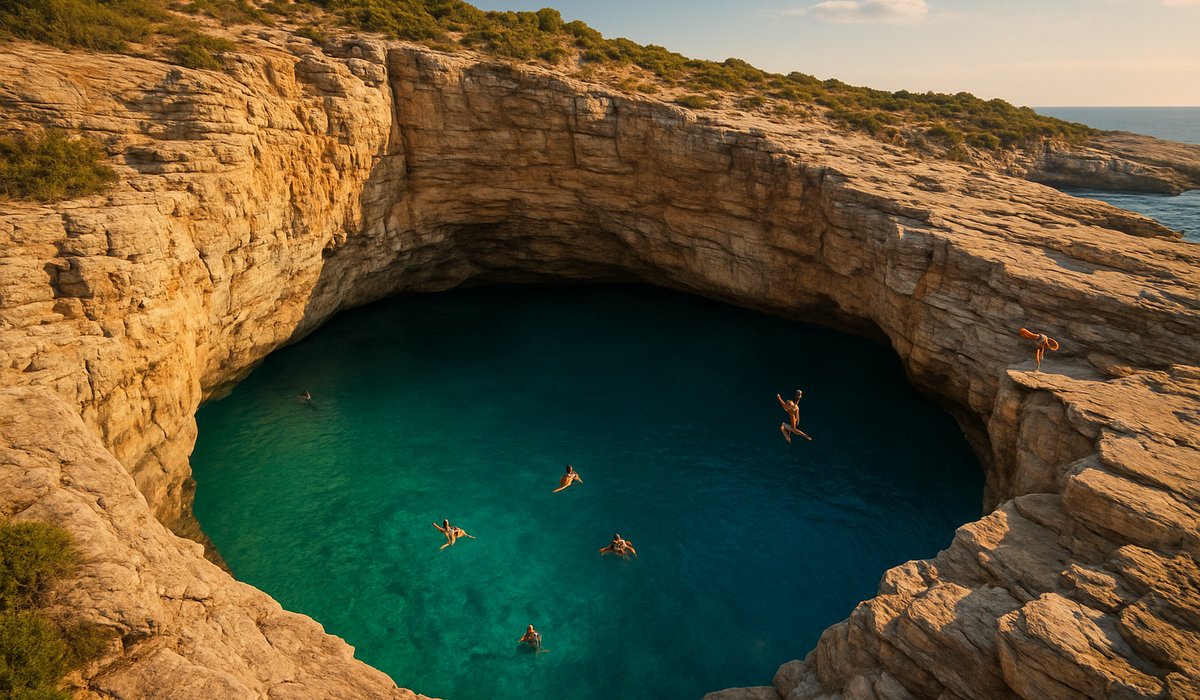
Image generated by AI
Quick Summary
- Natural Marvel: Giola Lagoon sits as an isolated crystal-clear swimming pool encircled by dramatic 8-meter rocky formations
- Location: Tucked in the Astris area, southern Thassos, approximately 40 minutes from island capital Limenas
- Adventure Hub: Towering rocks provide thrilling diving opportunities alongside peaceful swimming and sunbathing
- Photography Hotspot: Instagram-famous destination attracting nature photographers globally with unique geological formations
- Peak Season: May through September offers optimal swimming conditions; early morning visits recommended to avoid crowds
Giola Lagoon: Where Nature Creates Hidden Swimming Wonders
Thassos island just unveiled one of the Mediterranean's most captivating natural attractions—and travelers are rushing to experience it. Nestled within the rocky confines of the Astris region, Giola Lagoon represents a geological masterpiece that few destinations can match. This naturally-formed swimming pool, surrounded by imposing stone structures rising 8 meters skyward, has transformed from obscure local knowledge into a major tourism phenomenon. The lagoon's crystalline azure waters and dramatic setting have made it an essential addition to any serious traveler's Greek island itinerary, rivaling celebrated destinations across the Aegean.
What distinguishes Giola from conventional beach destinations is its uniqueness: a hidden oasis where nature alone designed every element. Unlike commercialized resort pools requiring extensive engineering, Giola remains entirely natural—carved by centuries of waves, wind, and geological processes into a perfectly functional swimming basin. For adventure-seekers, photographers, and nature enthusiasts, this represents travel authenticity that increasingly elusive throughout the Mediterranean.
The Geological Marvel: Understanding Giola's Unique Formation
Giola Lagoon exemplifies how powerful natural forces sculpt extraordinary landscapes over millennia. The lagoon didn't emerge from human construction or landscaping efforts—it exists as a testament to geological time. Surrounding the crystal-clear waters, imposing rocky formations reach heights of approximately 8 meters, creating a natural amphitheater effect. These stones, weathered by relentless Aegean waves and shaped by seasonal storms, present jagged surfaces alongside smooth sections polished by countless swimmers' contact.
The encircling rocks serve dual purposes: protective barrier sheltering the lagoon's tranquil waters from open-sea turbulence, and natural diving platform for adventurous visitors. The geological architecture creates seemingly unnatural perfection—you'll question whether the setting appeared accidentally or through deliberate design. The water clarity depends partly on this rocky containment; the enclosed environment limits sediment disturbance that compromises visibility at conventional beaches.
Geologically speaking, Giola represents a tidal pool scaled dramatically upward. While most tide pools occupy modest dimensions, this natural formation expanded into a swimming-appropriate size, offering surprising depth and stable water conditions. The pool maintains consistent salinity levels, slightly less brackish than open Aegean waters, providing gentle conditions suitable for various swimming abilities.
Location and Access: Reaching Thassos' Hidden Treasure
Getting to Giola Lagoon requires intentional effort—a factor that paradoxically contributes to its appeal. The lagoon's location in Astris, a quieter settlement in southern Thassos, sits approximately 40 kilometers from Limenas, the island's primary port and capital. This distances places the destination beyond casual day-tripper range, filtering casual visitors and preserving a sense of discovery for determined explorers.
From Limenas, travelers typically require 40-50 minutes via rental car or organized transportation to reach Astris. The main coastal road provides straightforward navigation, though several smaller communities create navigational choices along the route. Most modern GPS systems recognize Giola specifically, eliminating traditional uncertainty.
Upon arrival at the marked parking area, the real journey begins: a rocky descent requiring roughly 10-15 minutes on foot. The pathway, untamed and genuinely rugged, demands appropriate footwear—sturdy hiking boots or sports shoes with genuine grip prove essential. The stone trail features sections requiring hand use for balance; it's not technical rock climbing, but rather moderately challenging terrain demanding respect and caution. The ascent on return is slightly more strenuous, so visitors should honestly assess personal fitness before committing.
Pro Tip: Wear water shoes or sandals that pack easily in backpacks, preserving hiking boot condition. The rocky pathways are unforgiving on delicate footwear.
A Swimmer's and Diver's Paradise
For water enthusiasts, Giola represents the perfect convergence of accessibility and adventure. The lagoon accommodates swimmers of varying abilities, with gentle entry points alongside deeper sections reaching several meters. The enclosed rocky formation prevents dangerous currents; water movement remains minimal, creating almost lake-like conditions despite the saltwater composition.
Recreational swimmers discover safe zones near water-level rock formations where entry gradually transitions from shallow to deeper sections. The clear water visibility—often exceeding 10 meters—encourages exploration without navigation anxiety. Swimmers can drift peacefully, observing small fish schools and marine vegetation without requiring advanced diving certification.
For diver-inclined visitors, the entertainment multiplies exponentially. The 8-meter rocky formations provide legitimate platforms for cliff diving, with sufficient water depth below preventing dangerous shallow-area impacts. However, serious caution applies—diving requires confidence navigating the rock faces, understanding personal water competency, and honest assessment of regional tidal conditions affecting depth. The rocks contain aged barnacles and sharp edges; protective footwear remains necessary even during water activities.
The most experienced visitors push beyond recreational swimming, conducting deeper exploration of submerged rock formations and examining marine ecosystems in detail. Underwater photographers document intricate geological formations and unexpected wildlife. Given the shallow surrounding terrain, experienced snorkelers see more dramatic sights than typical Mediterranean locations.
Important Safety Note: While adventurous diving is possible, several deaths have occurred at Giola from overconfident visitors attempting dives beyond their abilities. Respect personal skill limits strictly.
Photography and Social Media Phenomenon
Instagram transforms Giola from hidden discovery into global destination spectacle. The lagoon's dramatic visual composition—crystalline waters contrasting against weathered rocky faces, framed by Mediterranean vegetation—creates photographic opportunities that consistently generate engagement on social platforms. Travel influencers regularly feature Giola content; dedicated hashtags produce thousands of visitor-submitted images daily.
The optimal photography window extends during golden hour—early morning and late afternoon—when low-angle sunlight casts dramatic shadows across rock faces while illuminating water with warm tones. Midday harsh shadows create unflattering contrast that flattens the dramatic landscape's dimensionality. Sunrise visits offer double advantage: spectacular lighting alongside minimal visitor presence, enabling crowd-free images.
The geological uniqueness translates to genuine visual distinction from standard Mediterranean beach content. Professional photographers recognize Giola's potential for portfolio differentiation. Tourism boards increasingly feature Giola imagery in destination marketing, amplifying awareness among international audiences.
However, photographers should note: the dramatic setting sometimes encourages risky behavior among visitors prioritizing image capture over personal safety. Precarious positioning near water's edge or rock faces for "perfect shots" has resulted in preventable injuries. Professional photographers typically establish safety parameters before attempting ambitious compositions.
Seasonal Considerations and Best Timing
Giola Lagoon experiences dramatic seasonal variation affecting the visitor experience substantially.
Summer Season (May-September)
Warmest weather and calmest sea conditions define summer visits. Water temperatures climb into comfortable swimming ranges (approximately 22-26°C / 72-79°F), making extended water immersion pleasant rather than shocking. Calmer seas mean more stable water conditions within the lagoon, though influxes of day-trippers and families can reach uncomfortable levels during peak July-August weekends.
Early morning arrival (7:00-8:00 AM) before significant crowds arrive provides superior experiences. Beach facilities in Astris open earlier than many realize; strategic timing allows coffee/breakfast before the hike while avoiding peak visitor congestion. Evening visits (5:00-7:00 PM) similarly offer reduced crowds paired with excellent photographic light.
Shoulder Seasons (May-Early June, Late August-September)
These periods balance favorable swimming conditions against reduced crowds. Water temperatures remain warm while visitor density decreases substantially. September particularly offers exceptional conditions: maintained warmth without peak-season congestion.
Off-Season (October-April)
Colder water temperatures (approximately 12-18°C / 54-64°F) and potentially rough seas limit comfort. Winter storms can render the hiking path genuinely dangerous; slippery conditions combined with wind make descent and ascent significantly more challenging. Most visitors avoid this period entirely, though experienced winter swimmers occasionally brave conditions for solitude.
Practical Essentials for Giola Visitors
Successful Giola visits require realistic preparation—this isn't a developed resort with amenities.
Bring Deliberately:
- Abundant water (more than typical beach visits—the hike creates surprising dehydration)
- Sunscreen (reapply frequently; the reflective water intensifies UV exposure)
- Snacks (no food vendors exist within reasonable distance)
- Small towel or changing robe (limited dry spaces exist)
- First aid supplies (minor cuts from rocks are common; minor infections develop if untreated)
- Sturdy footwear for the rocky descent/ascent
- Bag for carrying shoes during water time
Avoid Bringing:
- Excessive valuables (theft occasionally occurs; secure belongings or leave with trusted accommodation keepers)
- Alcohol (intoxicated swimming in rocky environments presents genuine danger)
- Large groups requiring coordination (excessive noise disturbs the tranquility that makes Giola special)
Water Safety Realities:
- No lifeguards monitor the lagoon
- Mobile phone service proves unreliable; emergency access requires hiking back to main road
- The water, while sheltered, can experience unpredictable temperature variations
- Sharp rocks cause rapid injury; bleeding in saltwater requires immediate attention
Giola's Impact on Thassos Tourism Growth
Giola Lagoon has fundamentally altered Thassos' international tourism trajectory. Previously recognized as quieter alternative to Rhodes or Crete, Thassos now positions itself as adventure destination attracting younger demographics and adventure-focused travelers. Tourism board statistics reveal steady growth correlating with Giola's rising social media prominence.
The lagoon's popularity influences broader Astris development patterns. Accommodations expand; restaurants proliferate; the formerly sleepy settlement evolves into modest tourist hub. This creates genuine paradox: growing visitation potentially threatens the exact qualities—seclusion, natural preservation, undeveloped character—that generated initial appeal.
Local communities demonstrate ambivalence about transformation. Economic benefits from tourism investment compete against environmental concerns and lifestyle disruption. Discussions increasingly address carrying capacity: how many daily visitors can Giola accommodate before ecological degradation and experience quality deterioration become measurable?
Thassos tourism generally maintains authenticity compared to more developed Greek destinations. The island's natural beauty—pristine beaches, forested interiors, charming mountain villages—combines with Giola to create comprehensive appeal. Visitors discovering Giola often extend island visits exploring complementary attractions like Alyki beach, Potamia waterfall, and traditional mountain villages.
FAQ: Common Giola Lagoon Questions
Q: Is swimming at Giola Lagoon safe for children? A: Giola accommodates older children (8+) comfortable with rocky terrain and independent swimmers. Young children require experienced adult supervision; the rocky environment presents hazards requiring constant attention. Before visiting, honestly assess your child's water confidence and physical capability navigating the rocky path.
Q: What's the appropriate swimwear for Giola? A: Standard swimwear suffices, though experienced visitors recommend additional protection—rash guards or wetsuits provide coral/rock abrasion protection. Many visitors wear water shoes throughout, including in the water, protecting feet from barnacles and sharp stones.
Q: Can I visit Giola with mobility limitations? A: Unfortunately, the rocky terrain and steep path create genuine accessibility challenges for persons with mobility restrictions. The hike isn't possible for wheelchair users or persons requiring mobility assistance. Personal fitness assessment should be honest—hiking is moderately strenuous.
Q: Does Giola get too crowded during summer? A: Yes, July-August peak season brings substantial visitors, particularly weekends. Early morning arrival (before 8 AM) provides dramatically different experiences than 11 AM-3 PM peak hours. Consider visiting during May-June or September if crowd avoidance is important.
Q: Is overnight camping permitted at Giola? A: No formal camping facilities exist; local authorities discourage overnight stays. The lagoon area receives minimal monitoring, but organizing accommodation in Astris provides legitimate alternatives supporting local business.
The Future of Giola as a Tourism Destination
As Giola's international profile expands, sustainability questions become increasingly urgent. The natural formation, unchanged for millennia, now experiences daily impact from hundreds of visitors. Erosion concerns, waste management, and marine ecosystem stress warrant serious consideration.
Tourism authorities in Thassos discuss potential management strategies: limited daily visitor caps, mandatory guide requirements, or formal infrastructure development. Each approach presents tradeoffs between accessibility and preservation. The ideal solution—maintaining natural character while accommodating growing demand—remains elusive.
For visitors, the implication is clear: Giola's magic depends on continued natural state and limited development. Visiting sooner rather than later likely means experiencing the destination before inevitable evolution occurs. Whether that transformation enhances or diminishes experiences depends on future decisions now being debated.
Disclaimer
This article is for informational and educational purposes only. It does not constitute legal, financial, or professional advice. While we strive to provide accurate and up-to-date information, travel policies, regulations, and conditions change rapidly. Always verify information with official sources before making travel decisions. Nomad Lawyer makes no representations about the accuracy, reliability, completeness, or suitability of the information provided. Readers should consult qualified professionals for advice specific to their circumstances. The views expressed in this article are those of the author and do not necessarily reflect the views of Nomad Lawyer.
Preeti Gunjan
Contributor & Community Manager
A passionate traveller and community builder. Preeti helps grow the Nomad Lawyer community, fostering engagement and bringing the reader experience to life.
Learn more about our team →