
Germany’s Historic Molli Railway Offers Coastal Travel Through Bad Doberan And Kühlungsborn
Germany’s Historic Molli Railway Offers Coastal Travel Through Bad Doberan And Kühlungsborn

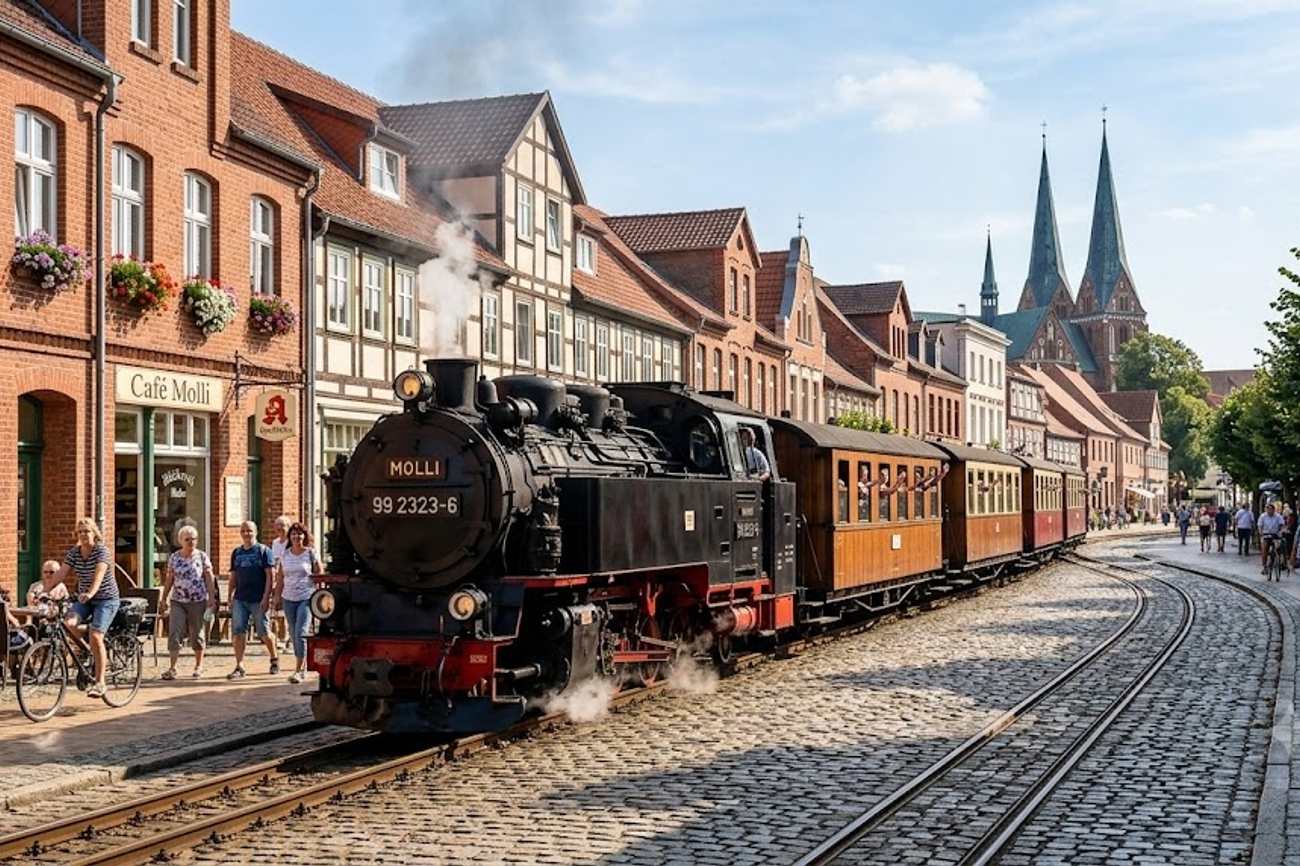
Image generated by AI
Travel Trend Analysis: The Resilience of Heritage Rail in the Baltic Market Date: May 22, 2024 Analyst: Travel Industry Trend Analyst, nomadlawyer.org Focus: Narrow-gauge heritage rail and regional tourism shifts in Mecklenburg-Vorpommern
While standard rail transit across Germany has seen a shift toward high-speed connectivity, heritage rail operators like the Molli railway have maintained a consistent operational footprint since 1886, proving that "slow travel" is no longer a niche preference but a primary driver for regional tourism. The persistence of the 900-millimetre track gauge in a world of standardized high-speed rail signals a broader market movement toward experiential transit, where the journey itself functions as the destination.
The Heritage Rail Economy in Numbers
The Molli railway, formally known as the Mecklenburgische Bäderbahn, operates a specialized 15-kilometre corridor connecting Bad Doberan, Heiligendamm, and Kühlungsborn. From a data perspective, the railway's operational model relies on a seasonal frequency shift that mirrors the broader Baltic tourism cycle. During the summer peak, the service operates on an hourly cadence, with departures spanning from 8:35 am to 6:45 pm. This frequency drops to a biennial (every two hours) schedule during the winter months, reflecting a sharp contraction in regional passenger demand during the off-season.
The pricing architecture of the Molli railway reveals a tiered zone system that separates it from standard German transit. With short-distance tickets at €7, two-zone tickets at €9, and three-zone tickets at €13, the railway positions itself as a premium heritage experience. A critical data point for the modern traveler is the exclusion of the Deutschlandticket; because the Molli is classified as a historic railway service, the national €49 monthly pass is not valid. This creates a fragmented ticketing environment where travelers must transition from national subsidies to private heritage pricing.
The railway's integration with local hospitality is evidenced by the "Restaurant Gleis 2" at Kühlungsborn Ost and the museum café at Kühlungsborn West. These are not merely amenities but are strategic extensions of the brand, converting a 50-minute transit window into a full-day economic spend for the visitor.
Comparative Context: Heritage Rail vs. Modern Transit
To understand the Molli railway's position, one must compare it to the broader trends in European rail. According to data from the International Union of Railways (UIC), there is a growing divergence between "utility rail" (commuter/high-speed) and "experience rail" (heritage/steam). While utility rail focuses on reducing travel time, heritage rail focuses on increasing "dwell time"—the amount of time a tourist spends in a specific locale.
The Molli railway's route is a prime example of this. By traversing the center of Bad Doberan, the railway integrates industrial heritage into an urban environment, a contrast to modern rail which is typically sequestered behind sound barriers and fences.
Baltic Coast Transit Comparison: Molli vs. Regional Standards
| Metric | Molli Railway (Heritage) | Standard Regional Rail (DB) |
|---|---|---|
| Track Gauge | 900mm (Narrow Gauge) | 1,435mm (Standard Gauge) |
| Primary Driver | Experiential/Tourism | Efficiency/Commute |
| Ticket Integration | Independent (No Deutschlandticket) | Integrated (Deutschlandticket Valid) |
| Summer Frequency | Hourly | Variable (often 30-60 min) |
| Winter Frequency | Every 2 Hours | Consistent/Scheduled |
| Avg. Journey Time | 50 Minutes (15km) | High-speed/Direct |
This data indicates that the Molli railway operates as a "closed-loop" tourism ecosystem. It does not compete with Deutsche Bahn for speed; it competes for the traveler's leisure time. This aligns with wider reports from Statista regarding the rise of "Slow Tourism" in Western Europe, where travelers are increasingly willing to pay a premium for outdated technology (steam engines) if it provides a sensory experience.
What This Means for Travelers
The data suggests that visiting the Mecklenburg-Vorpommern region requires a different booking strategy than a typical German city break. Because the Molli railway is a high-demand heritage asset with specific seasonal constraints, the following actionable advice applies:
- Budget for Independent Transit: Do not rely on the Deutschlandticket for this leg of your journey. Budget an additional €13 per person for a full three-zone experience.
- Time Your Visit for "Cab Experiences": For those seeking high-engagement travel, the railway offers cab rides for passengers aged 10 and above. Because these require advance registration and are limited to specific capacities, booking 4-6 weeks in advance is recommended.
- Leverage the "Open Ticket" Policy: The railway allows passengers to exit at stops (such as Heiligendamm for its white villas) and resume their journey later in the day using the same ticket. This maximizes the value of the €13 three-zone fare.
- Plan Around the "Experience Weekends": To avoid the heaviest summer crowds while still accessing technical tours and locomotive-shed visits, target the shoulder months of May, June, September, and October.
Forward Projection: The Future of Steam in a Green Economy
The trajectory of the Molli railway is inextricably linked to the broader European trend of "Industrial Preservation." As the World Tourism Organization (UNWTO) emphasizes sustainable and culturally authentic travel, heritage railways are transitioning from "museums on tracks" to essential components of regional identity.
We expect to see a further integration of "Rail-and-Stay" packages. The existence of the Railway Museum at Kühlungsborn West—offering free admission—serves as a loss-leader to attract visitors who then spend money at the Restaurant Gleis 2 or on premium cab experiences. As the Baltic coast continues to attract "cultural travelers," the Molli railway will likely move toward more digital booking integrations to replace the current reliance on station-based ticket purchasing at Kühlungsborn West, Ost, and Bad Doberan.
The long-term survival of the 900mm gauge depends on its ability to remain an "attraction" rather than a "utility." As long as the contrast between the steam locomotive and the modern urban streets of Bad Doberan remains striking, the railway will maintain its market share in the experiential travel sector.
FAQ: Molli Railway Trends 2024
Can I use my Deutschlandticket on the Molli railway? No. The Molli is classified as a historic railway service, meaning the national €49 ticket is not accepted. You must purchase a separate ticket ranging from €7 to €13 depending on the zones traveled.
When is the best time to visit for the fewest crowds? Target the "Experience Weekends" in May, June, September, or October. These months offer specialized technical tours and locomotive-shed visits without the peak summer congestion.
Is the Molli railway suitable for families? Yes. The service offers child discounts and family tickets. Additionally, the Railway Museum at Kühlungsborn West provides free admission, making it a low-cost educational add-on for families.
How do I book the steam locomotive cab experience? Cab rides are available for passengers aged 10 and older. These require advance registration through the railway's official transport service channels; they are not available for walk-in purchase.
The Molli railway proves that in the modern travel economy, the most valuable luxury is often a return to the slow, tactile rhythms of the 19th century.
#MecklenburgVorpommernTourism #HeritageRailData #MolliRailway #BalticCoastTravel2024 #SlowTravelEurope #SteamRailEconomy
Related Travel Guides
- Argentina Aligns With Chile And More As Solar Train Transforms Sustainable Travel In The Andes
- Italy Train Travel Warning For Tourists As Unvalidated Paper Tickets Risk Costly Fines
- Uzbekistan Expands High Speed Rail Network to Nukus by March 2027 Slashing Travel Time to Seven Hours Across Karakalpakstan
Disclaimer
This article is for informational and educational purposes only. It does not constitute legal, financial, or professional advice. While we strive to provide accurate and up-to-date information, travel policies, regulations, and conditions change rapidly. Always verify information with official sources before making travel decisions. Nomad Lawyer makes no representations about the accuracy, reliability, completeness, or suitability of the information provided. Readers should consult qualified professionals for advice specific to their circumstances. The views expressed in this article are those of the author and do not necessarily reflect the views of Nomad Lawyer.
Raushan Kumar
Founder & Lead Developer
Full-stack developer with 11+ years of experience and a passionate traveller. Raushan built Nomad Lawyer from the ground up with a vision to create the best travel and law experience on the web.
Learn more about our team →