
Jordan and UAE Launch Landmark Aqaba Railway Project to Unlock a New Era of Economic Growth and Regional Development
Jordan and UAE Launch Landmark Aqaba Railway Project to Unlock a New Era of Economic Growth and Regional Development

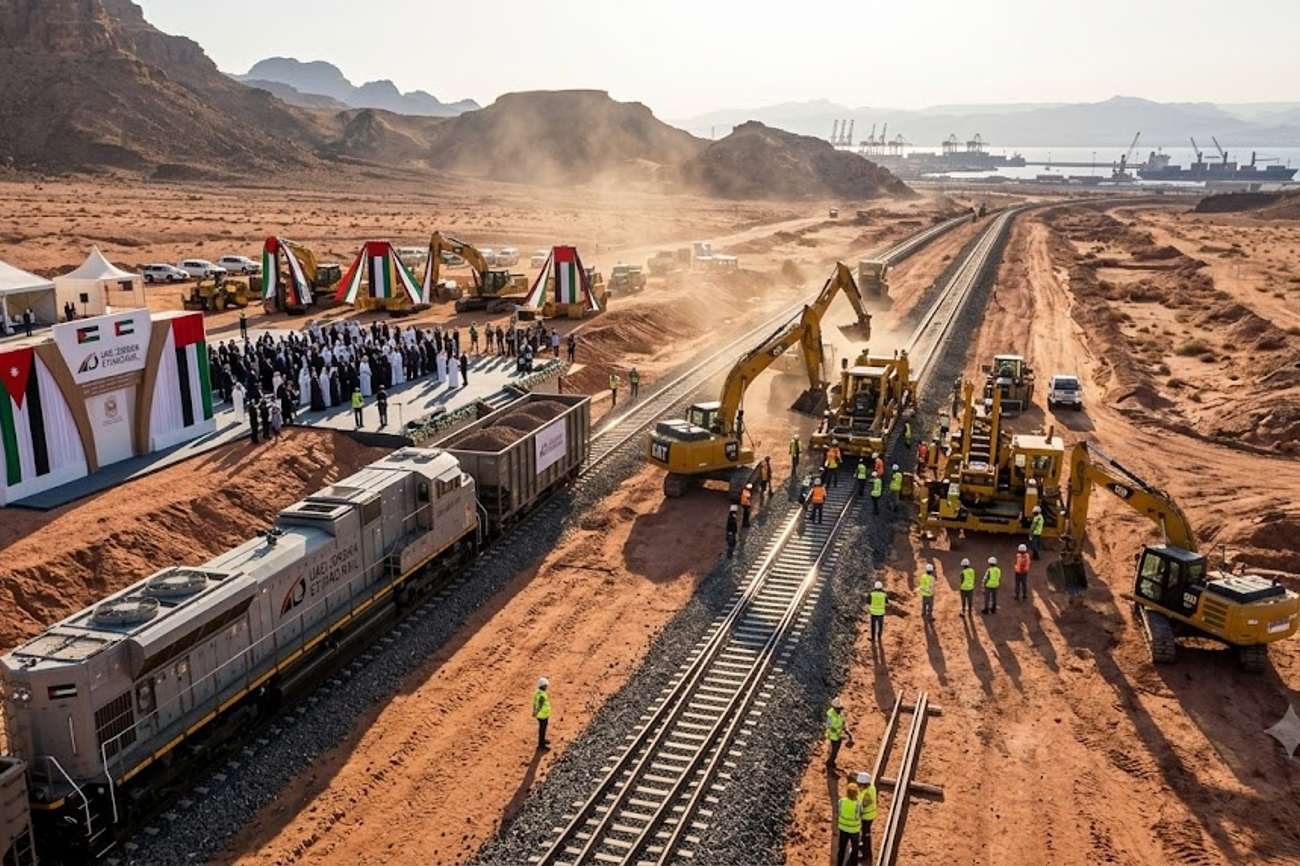
Image generated by AI
[Aqaba, October 5, 2026] — Jordan and the United Arab Emirates have officially launched a $2.5 billion railway project designed to link the Port of Aqaba with the nation's primary southern mining hubs. The ground-breaking ceremony, held Monday, was attended by King Abdullah II of Jordan and Abu Dhabi Crown Prince Sheikh Khaled bin Mohamed bin Zayed Al Nahyan, marking the start of a massive infrastructure overhaul for the region's mineral export sector.
The Aqaba–Al Shidiya–Maan Railway Project will establish a 403-kilometre freight network specifically engineered to transport phosphate and potash. This joint Jordanian-Emirati venture aims to modernize the transit of these critical commodities from production sites in Al Shidiya and Ghor Al Safi to Jordan's sole maritime gateway at the Aqaba Special Economic Zone.
The Catalyst for Infrastructure Overhaul
The project is driven by the need to decouple Jordan's mineral exports from a heavy reliance on road freight and outdated rail systems. Currently, potash from the Ghor Al Safi region near the southern Dead Sea is moved to the coast via trucks, while phosphate logistics have suffered from aging infrastructure. By creating a high-capacity, dedicated corridor, the two nations intend to slash operational overheads and increase the global competitiveness of Jordanian minerals.
The project is being executed via the Jordan-UAE Railway Company, a partnership combining public and private investment from both nations.
Project Scope and Technical Specifications
The construction involves significant engineering challenges due to the varied terrain of southern Jordan. The network is not a simple track layout but a complex system including dozens of bridges and several tunnels to maintain efficient freight gradients.
Aqaba–Al Shidiya–Maan Railway Technical Data
| Component | Specification |
|---|---|
| Total Investment | US$2.5 Billion |
| Total Network Length | 403 Kilometres |
| Primary Freight Cargo | Phosphate and Potash |
| Annual Freight Capacity | ~16 Million Tonnes |
| Infrastructure | 55 Bridges / 6 Tunnels |
| Construction Timeline | 5 Years (Est. Completion 2031) |
| Job Creation | ~5,000 Positions |
| Annual Cost Savings | ~US$40 Million |
Who Is Affected
While this is a freight-only initiative, the economic ripples will be felt across several sectors and regions:
- Mining Operators: Facilities in Al Shidiya (phosphate) and Ghor Al Safi (potash) will see a transition from road-heavy logistics to rail.
- Port Authorities: The Port of Aqaba will require upgraded handling capabilities to manage a projected 16 million tonnes of annual cargo.
- Regional Hubs: Maan is positioned to become a critical inland logistics center for cargo reception, storage, and distribution.
- Labor Market: Approximately 5,000 new jobs are expected to be generated in southern Jordan during the construction and operational phases.
What This Means for Travelers
This is not a passenger railway. Travelers should not expect new commuter or tourist rail services between Aqaba and Maan as a result of this announcement.
However, for the professional nomad or business traveler, this project signals a massive influx of capital into southern Jordan. The five-year construction window will likely increase demand for corporate housing, short-term rentals, and business hotels in Aqaba and Maan as engineering firms and consultants from the UAE and Jordan flood the region. If you are booking travel to southern Jordan for business, expect increased congestion around construction zones and a surge in infrastructure-related commercial activity through 2031.
For official travel advisories and entry requirements into Jordan, travelers should consult the Ministry of Tourism and Antiquities.
Path to 2031: Implementation Timeline
The ground-breaking on October 5 marks the transition from the agreement signed in July to active implementation. The project is divided into two primary segments: 360 kilometres dedicated to the phosphate and potash corridors, and a 43-kilometre link connecting Al Shidiya to Maan.
The five-year timetable suggests a target operational date around 2031, though no guaranteed opening date has been set. The Jordanian government has hinted at longer-term ambitions to extend these distribution connections to wider regional markets, though those plans remain separate from the current $2.5 billion scope.
FAQ: Jordan-UAE Railway 2026
Can tourists use the new railway to travel to the Dead Sea or Maan? No. This is a dedicated freight railway for the transport of minerals (phosphate and potash). There are no provisions for passenger services in the current project scope.
How will this affect road traffic in southern Jordan? The project aims to reduce the volume of heavy mineral transport trucks on public roads, which should theoretically decrease road wear and improve safety for general motorists.
When will the railway be fully operational? The construction period is estimated at five years, placing the projected completion around 2031, provided the project adheres to the announced timetable.
Who is funding the $2.5 billion investment? The project is funded through the Jordan-UAE Railway Company, which represents a partnership of public and private investment interests from both Jordan and the United Arab Emirates.
A massive bet on minerals and maritime efficiency.
#JordanRail2026 #AqabaPort #UAEInvestment #JordanMining #FreightInfrastructure #MaanLogistics
Related Travel Guides
- Switzerland GoldenPass Express 2026: Ticket Prices, Luxury Travel Benefits and Railway Disruption Alert
- Netherlands Railway Travel Bookings May Open Later Than Eurostar Tickets Ahead of December Timetable
- UK Rail Travel Set for a Bold New Chapter as Great British Railways Moves to Unlock Fairer Ticket Booking in 2027
Disclaimer
This article is for informational and educational purposes only. It does not constitute legal, financial, or professional advice. While we strive to provide accurate and up-to-date information, travel policies, regulations, and conditions change rapidly. Always verify information with official sources before making travel decisions. Nomad Lawyer makes no representations about the accuracy, reliability, completeness, or suitability of the information provided. Readers should consult qualified professionals for advice specific to their circumstances. The views expressed in this article are those of the author and do not necessarily reflect the views of Nomad Lawyer.
Kunal K Choudhary
Co-Founder & Contributor
A passionate traveller and tech enthusiast. Kunal contributes to the vision and growth of Nomad Lawyer, bringing fresh perspectives and driving the community forward.
Learn more about our team →