
Virgin Trains Set to Challenge Eurostar’s 30-Year Dominance with Bold New High-Speed Rail Links Across Europe by 2030
Virgin Trains Set to Challenge Eurostar’s 30-Year Dominance with Bold New High-Speed Rail Links Across Europe by 2030

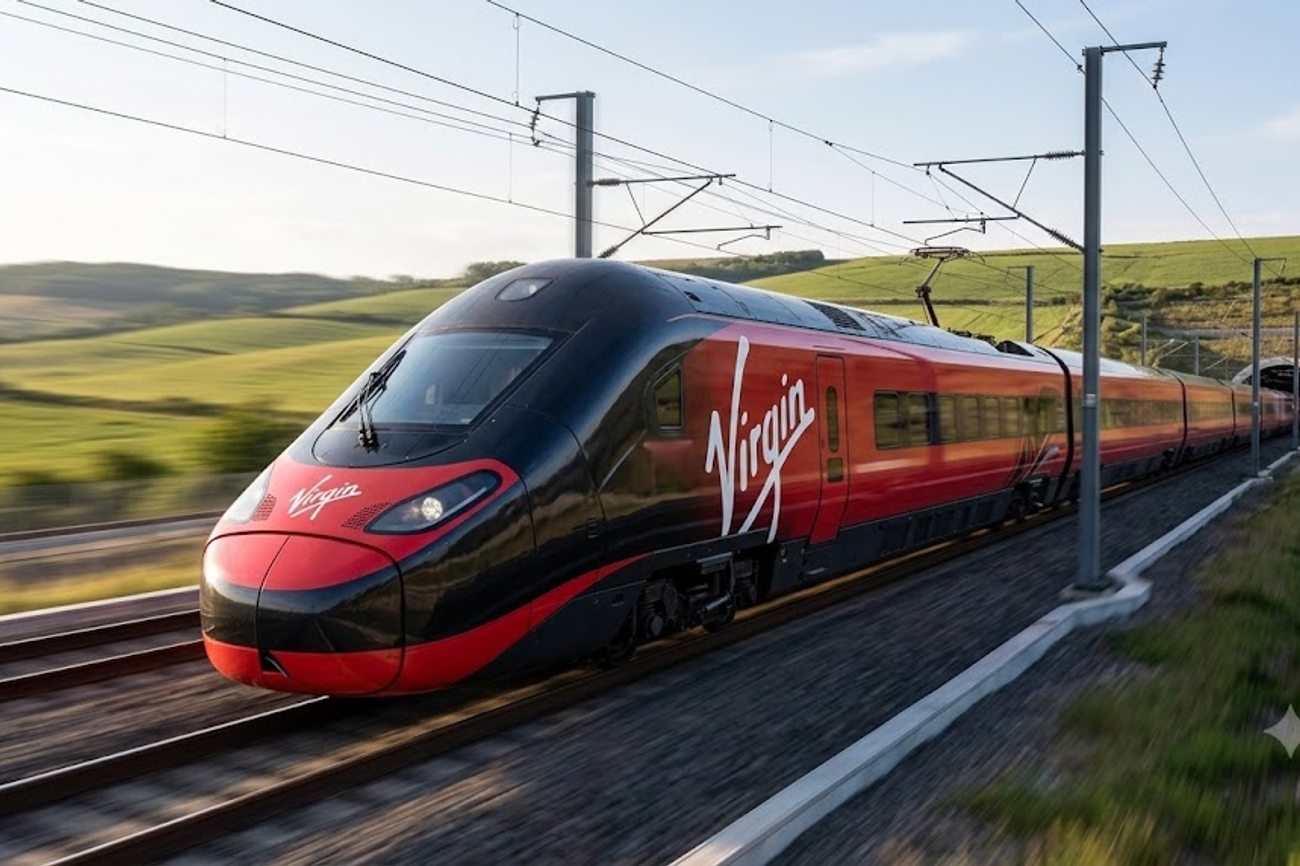
Image generated by AI
7.5 million additional annual seats are projected to enter the cross-Channel rail market by October 2030, as Virgin Trains moves to dismantle the long-standing monopoly held by Eurostar. This massive injection of capacity follows a landmark regulatory decision by the Office of Rail and Road (ORR), which on August 17, 2026, announced the pre-approval of a framework track access agreement between VTE OPCO Limited and HS1 Limited.
The End of the Eurostar Monopoly
For decades, the high-speed rail corridor linking the United Kingdom to mainland Europe has functioned as a closed shop. The recent ORR decision, finalized on August 13, 2026, fundamentally alters this dynamic by granting Virgin Trains the legal pathway to operate on the HS1 network. This is not merely a corporate expansion but a regulatory shift toward a liberalized rail market, mirroring the deregulation seen in European aviation decades ago.
The agreement secures a framework for operations from October 1, 2030, through December 31, 2040. By utilizing London St Pancras International as the primary hub, Virgin aims to establish a high-frequency bridge to three of Europe's most critical economic centers: Paris, Brussels, and Amsterdam. While the Office of Rail and Road (ORR) has provided the framework, the transition from regulatory approval to commercial reality still requires final operational permissions and complex infrastructure synchronization.
Fleet Specifications and Infrastructure Logistics
The operational backbone of this venture rests on a partnership with French manufacturer Alstom, specifically the deployment of 12 Avelia Stream trainsets. These aircraft-grade rail units are designed for multi-jurisdictional travel, meaning they must integrate disparate signaling and electrical systems across the UK, France, Belgium, and the Netherlands.
A critical logistical hurdle in cross-Channel travel is maintenance. Virgin has already secured a strategic advantage via an ORR decision on October 30, 2025, granting them access to the Temple Mills International depot in East London. Because this facility is currently operated by Eurostar, the move represents a rare instance of mandated infrastructure sharing, ensuring Virgin has the necessary facilities to maintain a fleet capable of 300 km/h (186 mph) speeds.
Virgin International Rail: Operational Blueprint
| Feature | Specification |
|---|---|
| Primary Operator | VTE OPCO Limited (Virgin Trains) |
| Commercial Launch Date | October 1, 2030 |
| Primary UK Hub | London St Pancras International |
| European Destinations | Paris, Brussels, Amsterdam |
| Daily Service Volume | Up to 20 return services |
| Agreement Duration | Oct 2030 – Dec 2040 |
| Rolling Stock | 12 Alstom Avelia Stream trainsets |
| Maximum Velocity | 300 km/h (186 mph) |
| Annual Seat Capacity | ~7.5 million (projected) |
| Private Investment | ~£700 million |
| Employment Target | Up to 1,000 jobs |
Expert Analysis: The Economics of Rail Competition
The entry of Virgin Trains into the cross-Channel market is a classic study in market disruption. For the traveler, the direct consequence of adding 7.5 million seats is a likely downward pressure on ticket pricing. When capacity increases significantly without a corresponding surge in demand, operators are forced to compete on price and service quality to fill seats.
However, the real battle will be fought over "slot" timing. With up to 20 daily return services, Virgin will target the high-yield business corridors. For the nomad lawyer or corporate traveler, this means more flexible departure windows and potentially lower fares for last-minute bookings—a chronic pain point in the current Eurostar model.
From a geopolitical and environmental perspective, this expansion aligns with the broader European push to replace short-haul flights with rail. By connecting London to the European Union's administrative heart in Brussels and the commercial hubs of Paris and Amsterdam, Virgin is betting on a permanent shift in traveler behavior. The financing structure—a consortium of Virgin Group (50%), Azzurra Capital (40%), and Equitix (10%)—indicates that this is viewed as a long-term infrastructure play rather than a short-term speculative venture. The £700 million investment signals a high confidence level in the sustainability of high-speed rail as the primary mode of transit for the "Golden Triangle" of Northern Europe.
Key Takeaways
- Market Liberalization: The ORR's approval ends the Eurostar monopoly, introducing a second major operator to the London-Paris-Brussels-Amsterdam routes.
- Massive Capacity Boost: The project aims to add 7.5 million annual seats, which will likely increase availability and lower prices during peak seasonal windows.
- Technological Standard: The use of 12 Alstom Avelia Stream trains ensures speeds of 300 km/h, maintaining parity with existing high-speed European standards.
- Strategic Hubs: London St Pancras remains the epicenter, with the Temple Mills depot providing the necessary technical support for the fleet.
- Investment Scale: A £700 million private investment vehicle involving Equitix and Azzurra Capital underscores the project's financial scale.
FAQ: Cross-Channel Rail 2030
When can I book tickets for Virgin Trains to Paris or Amsterdam? Commercial services are slated to begin on October 1, 2030. Ticket sales and specific scheduling will be announced closer to the launch date once final operational permissions are secured.
Will Virgin Trains be cheaper than Eurostar? While official pricing has not been released, the addition of 7.5 million annual seats typically creates price competition, which often results in lower fares for passengers.
Which cities will be served by the new Virgin network? The approved framework covers direct return services between London St Pancras International and three primary destinations: Paris, Brussels, and Amsterdam.
What trains will Virgin use for these routes? Virgin plans to deploy 12 Avelia Stream trainsets manufactured by Alstom, capable of reaching speeds of 300 km/h (186 mph).
The era of the single-operator tunnel is ending; the race for the European corridor has officially begun.
#VirginTrains #EurostarCompetition #HS1 #AlstomAvelia #LondonToParis #EuropeanRail2030
Related Travel Guides
- Jordan and UAE Launch Landmark Aqaba Railway Project to Unlock a New Era of Economic Growth and Regional Development
- Switzerland GoldenPass Express 2026: Ticket Prices, Luxury Travel Benefits and Railway Disruption Alert
- Netherlands Railway Travel Bookings May Open Later Than Eurostar Tickets Ahead of December Timetable
Disclaimer
This article is for informational and educational purposes only. It does not constitute legal, financial, or professional advice. While we strive to provide accurate and up-to-date information, travel policies, regulations, and conditions change rapidly. Always verify information with official sources before making travel decisions. Nomad Lawyer makes no representations about the accuracy, reliability, completeness, or suitability of the information provided. Readers should consult qualified professionals for advice specific to their circumstances. The views expressed in this article are those of the author and do not necessarily reflect the views of Nomad Lawyer.
Preeti Gunjan
Contributor & Community Manager
A passionate traveller and community builder. Preeti helps grow the Nomad Lawyer community, fostering engagement and bringing the reader experience to life.
Learn more about our team →