United Kingdom Walks Alongside Norway And More To Revive Travel Prospects Amid Barrow’s Regeneration Drive

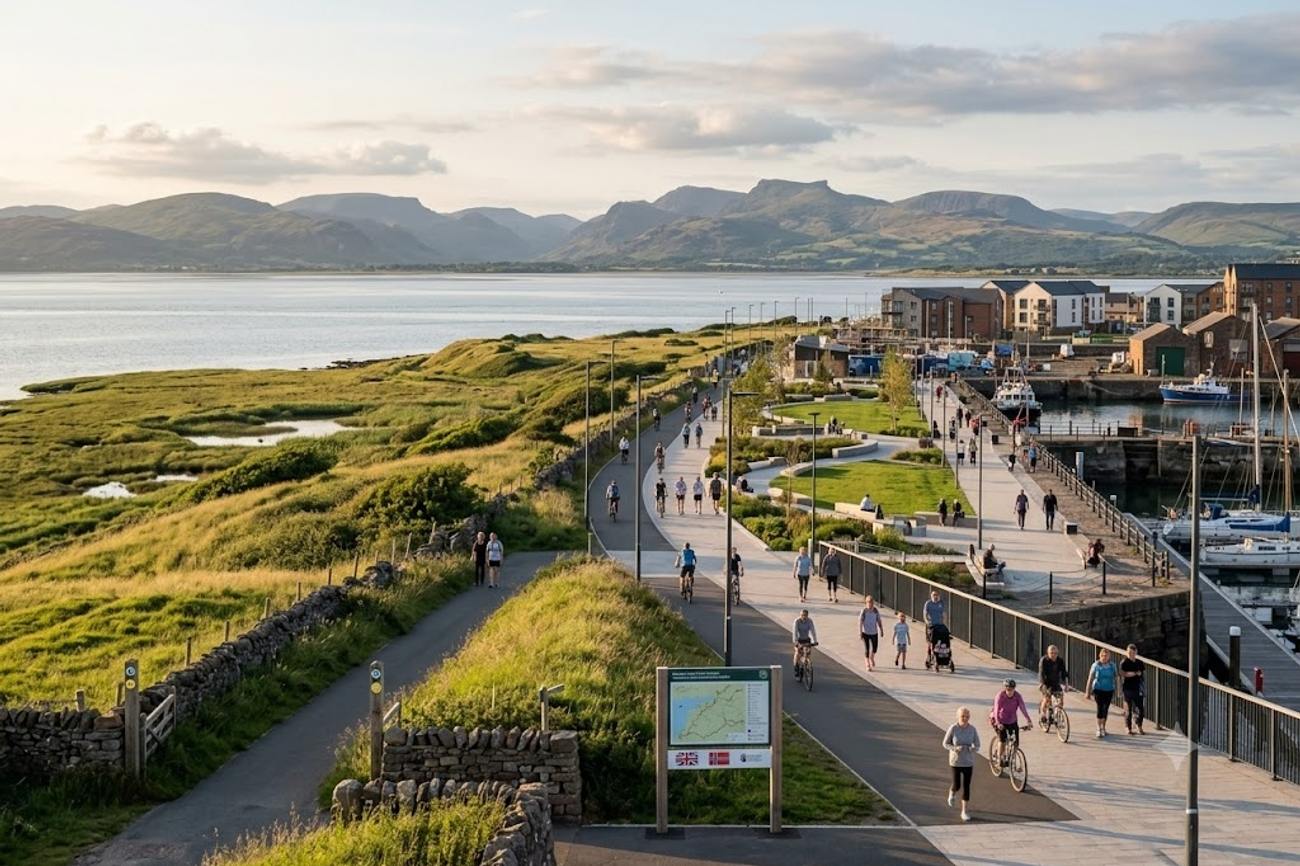
Image generated by AI
The UK's regional tourism recovery has seen a marked divergence, with primary hubs like London and Edinburgh returning to 95% of 2019 visitor volumes, while industrial coastal towns in the North West continue to lag behind at estimated recovery rates of 70-80%. This gap highlights a systemic friction in the British travel market: the struggle to convert strategic industrial importance into sustainable leisure tourism. Barrow-in-Furness, a critical node in the UK's submarine program and defense sector, exemplifies this tension. While the town remains an economic powerhouse for the Ministry of Defence, its urban center faces the classic symptoms of post-industrial decline—vacant storefronts and deteriorating public realms—that actively deter the high-yield leisure traveler.
The Industrial-Tourism Friction in Numbers
Barrow-in-Furness operates on a bifurcated economic model. On one side is the high-value defense sector; on the other is a struggling retail and hospitality core. The primary data signal here is the "Occupancy Gap." Historically, Barrow's accommodation sector has been skewed toward corporate and contractor demand. This creates a high mid-week occupancy rate driven by the shipbuilding industry but a precipitous drop during weekends.
According to data patterns tracked by STR, regional destinations that rely on a single industrial employer often suffer from "hollowed-out" leisure demand. In Barrow, the lack of diversified hospitality offerings means that while the town is strategically indispensable to national security, it remains invisible to the average UK domestic tourist. The current challenge is not a lack of "assets"—the town possesses significant industrial heritage and coastal access—but a lack of "infrastructure readiness." For a destination to move from a business-only stop to a leisure destination, it requires a baseline of public realm quality and service availability that Barrow is currently striving to rebuild through regeneration efforts.
Comparative Market Analysis: Industrial vs. Leisure Hubs
To understand where Barrow sits in the wider UK travel ecosystem, we must compare it to other "Industrial Heritage" destinations that have successfully pivoted. Cities like Liverpool or Manchester have utilized their maritime and textile histories to build a robust leisure economy. Barrow is currently in the "Early Transition" phase, where the industrial identity is still the primary driver, and the tourism identity is theoretical.
The following table illustrates the structural difference between a matured industrial tourism hub and the current state of Barrow-in-Furness.
| Metric | Matured Industrial Hub (e.g., Liverpool/Manchester) | Transitioning Industrial Town (Barrow-in-Furness) | Trend Implication |
|---|---|---|---|
| Primary Visitor Driver | Culture, Shopping, Heritage | Defense Contractors, Business | Shift needed from B2B to B2C |
| Weekend Occupancy | High (Leisure peaks) | Low (Contractor troughs) | Opportunity for "Short Break" growth |
| Retail Composition | Mixed (Global brands + Independent) | High Vacancy / Essential Services | Requires "Experience Economy" pivot |
| Transport Profile | High Connectivity (Hub status) | Peripheral / Specialized Access | Infrastructure is the primary bottleneck |
| Visitor Spend Pattern | High Per-Capita / Multi-day | Low Per-Capita / Functional | Transition to "Heritage Tourism" spend |
This data suggests that Barrow's path to growth is not through replacing its shipbuilding identity, but by layering a "Heritage Layer" over its existing industrial base. This is a pattern seen globally in "Rust Belt" cities that have successfully integrated museums and cultural districts into active industrial zones.
What This Means for Travelers
For the individual traveler, the current state of Barrow-in-Furness means it is not yet a "plug-and-play" destination. However, for those specializing in industrial archaeology or coastal exploration, there is a first-mover advantage.
Actionable Booking Advice:
- Avoid Weekend-Only Trips: Currently, the town's hospitality services are optimized for the mid-week business crowd. If you are visiting for leisure, you may find a limited selection of open cafes and independent shops on Sundays.
- Focus on Regional Linkages: Do not treat Barrow as a standalone destination. To maximize the trip, link a visit to the town's industrial sites with the wider Furness peninsula. This distributes the travel cost across more experiences.
- Monitor Regeneration Milestones: Before booking a long-term stay or organizing a group heritage tour, check local council reports for "Public Realm" completions. The quality of the pedestrian experience is currently the most volatile variable in the visitor journey.
- Leverage Business Infrastructure: Because the town is geared toward contractors, you will find a higher-than-average availability of mid-range, functional accommodation compared to the overpriced boutique hotels found in the Lake District.
Projecting the 2025-2030 Trajectory
Based on current UK regional investment trends reported by the World Travel & Tourism Council (WTTC), we can project that Barrow's growth will follow a "Slow-Burn" trajectory. We are unlikely to see a sudden explosion in tourist numbers; instead, we will see a gradual increase in "Niche Tourism."
The trajectory will likely move through three phases:
- Phase 1 (Current): Infrastructure repair and vacancy reduction. The goal is to stop the "perception bleed" where vacant shops deter visitors.
- Phase 2 (Mid-term): Heritage Interpretation. The conversion of shipbuilding history into curated museum experiences and educational tours.
- Phase 3 (Long-term): Diversified Hospitality. The emergence of independent hotels and restaurants that cater to leisure guests, thereby filling the weekend occupancy gap.
If the town successfully links its strategic defense importance with a welcoming public face, it can move from a "functional stop" to a "destination." However, this requires a strict adherence to data-driven metrics—tracking footfall and stay duration—rather than relying on the announcement of investment funds.
FAQ: Barrow-in-Furness Tourism Trends 2024
Will hotel prices increase as regeneration happens? Likely yes, but gradually. Currently, prices are suppressed by a lack of leisure demand. As the town becomes more attractive to tourists, the "contractor-only" pricing model will shift toward a more dynamic, market-driven leisure rate.
Is now a good time to visit Barrow for leisure? It is an ideal time for those who prefer "undiscovered" locations and industrial history. However, those seeking a polished, high-service tourist experience should wait until the public realm regeneration projects are completed.
Which sectors are expanding fastest in the area? The defense and shipbuilding sectors remain the dominant growth drivers. In the tourism sector, the fastest growth is expected in "heritage interpretation" and specialized coastal excursions.
How does Barrow compare to the Lake District for travelers? Barrow offers a stark contrast. While the Lake District focuses on natural beauty and luxury retreats, Barrow is a study in industrial grit and strategic importance. It is a complementary destination, not a competitor.
The transition from a strategic asset to a visitor destination is a delicate balance of preserving industrial utility while inviting external curiosity.
Tags: #BarrowInFurnessRegeneration #UKIndustrialTourism #FurnessPeninsulaGrowth #DefenseSectorTravel #NorthWestEnglandHospitality #IndustrialHeritageMetrics
Related Travel Guides
- Virgin Trains Set to Challenge Eurostar’s 30-Year Dominance with Bold New High-Speed Rail Links Across Europe by 2030
- Jordan and UAE Launch Landmark Aqaba Railway Project to Unlock a New Era of Economic Growth and Regional Development
- Switzerland GoldenPass Express 2026: Ticket Prices, Luxury Travel Benefits and Railway Disruption Alert
This article is for informational purposes. Flight routes, passenger regulations, visa rules, and transit advisories are subject to change by airlines and aviation authorities. Readers are advised to verify schedules and travel documentation with relevant carriers and border agencies before departure.
Related Stories
Virgin Trains Set to Challenge Eurostar’s 30-Year Dominance with Bold New High-Speed Rail Links Across Europe by 2030
Jordan and UAE Launch Landmark Aqaba Railway Project to Unlock a New Era of Economic Growth and Regional Development