
Indiana's Franklin County Enters Tourism Recovery Phase After Metamora Flooding
Franklin County, Indiana is launching a coordinated tourism recovery effort in Metamora, Laurel, Brookville, and Cedar Grove after floodwaters from the Whitewater River system damaged roads and heritage assets.

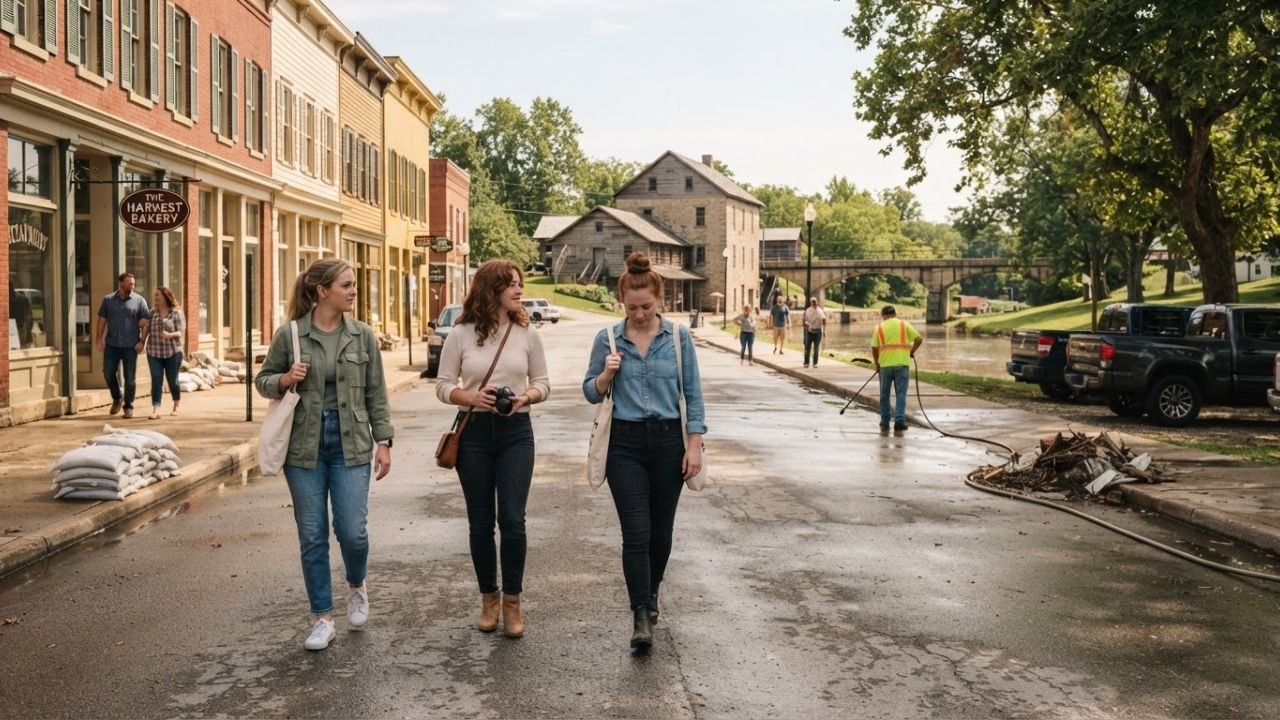
Image generated by AI
Historic Metamora and surrounding canal towns in Franklin County, Indiana, are launching a coordinated tourism revival plan following severe floods along the Whitewater River system. As regional authorities clear debris and restore local roads, preservationists are rallying to safeguard the county's historic mill sites, canal locks, and small businesses.
Managing Regional Infrastructure Cleanup and Travel Safety
The historic water levels along the Whitewater River system have caused significant travel challenges in Franklin County, Indiana, leading to temporary road closures and localized damage to heritage assets. Following severe storms and heavy rainfall across the state, municipal emergency teams are currently executing cleanup and damage assessments in affected communities, including Metamora, Laurel, Brookville, and Cedar Grove. The Indiana severe weather event resulted in at least five confirmed fatalities statewide, though authorities have confirmed that no deaths have been linked specifically to the Franklin County flooding.
The Whitewater River system, a critical waterway in Franklin County, experienced rapid water level increases during the peak of the storms. Local emergency management agencies have been working alongside state conservation departments to monitor structural integrity along key points of the river. Although cleanup operations have already begun, authorities continue to caution travelers to expect localized detours near the river banks. For travelers, the immediate disruption involves ground transportation rather than aviation connectivity. Because Franklin County is primarily a road-access destination, visitor transit depends on local highways and community roads. Authorities continue to monitor local weather patterns and river gauges, advising motorists to avoid flooded roads and respect temporary barriers while regional crews inspect municipal bridges, culverts, and road beds for structural safety.
Restoring Metamora's Historic Canal Corridor
Metamora serves as one of Indiana's most significant heritage destinations, drawing visitors with its preserved 19th-century architecture and unique transportation history. The village is home to the Metamora Grist Mill, a water-powered facility operating since the 1840s that demonstrates traditional corn-grinding techniques. Additionally, the village features the Duck Creek Aqueduct, recognized as the only functioning wooden covered bridge aqueduct in the United States, which carries the Whitewater Canal over Duck Creek.
The Whitewater Valley Railroad, which operates historic steam and diesel trains, provides a vital transportation link that brings thousands of visitors into the heart of Metamora. The Grist Mill itself represents one of the few surviving water-powered mills of its era in the Midwest, grinding cornmeal using the original stones. The town's merchants, who operate out of historic wooden storefronts and log cabins, rely on these weekend crowds to sustain their operations throughout the year. The recent flooding has highlighted the vulnerability of these heritage assets, which depend heavily on seasonal tourism and visitor foot traffic. The recovery process in Metamora requires coordinated efforts to dry out historic structures, inspect foundations, and clear mud from walking paths. For the local community, restoring these assets is vital to reviving the regional economy, as local shops, antique dealers, and restaurants rely on weekend travelers who ride the Whitewater Valley Railroad from Connersville to explore the village.
Analyzing the Impact on Local Road Connectivity
Because Franklin County lacks major commercial airports, travel to the region is dominated by road trips along the scenic Whitewater Canal corridor. The flooding has affected key routes connecting local communities, making road infrastructure a primary focus for recovery teams. Reopening regional access routes is critical, as seasonal travelers plan visits based on road safety and clear navigation instructions.
Specifically, road travel along Highway 52 and other county roads has faced challenges from mudslides and standing water. The local tourism board is developing a digital mapping tool that provides real-time route inspections and detours. This ensures that road-trippers from nearby cities like Cincinnati and Indianapolis can safely navigate the county's covered bridges and historic towns without facing hazardous conditions. Local tourism businesses are facing economic pressure due to reduced visitor numbers, which often persist even after floodwaters recede. To restore visitor confidence, tourism departments are working to provide real-time updates on road accessibility and shop openings. By coordinating with regional transit departments, local chambers of commerce aim to ensure that travelers can plan trips safely without encountering unexpected detours or closed routes.
Rebuilding Traveler Confidence and Supporting the Local Economy
The recovery journey for Franklin County extends beyond physical cleanup; it requires a concerted effort to support locally owned businesses and preserve the community's unique cultural character. Travelers can play a significant role in this revival by returning to the region once authorities declare the roads safe. By visiting reopened shops, dining at local restaurants, and booking lodging within the county, tourists contribute directly to the economic recovery of these historic canal towns.
Additionally, this flood crisis highlights the need for long-term resilience planning in rural heritage destinations. Protecting historic structures near waterways requires ongoing investment in flood mitigation, river bank stabilization, and emergency preparedness. By developing adaptable tourism models, Franklin County can better protect its cultural assets from future weather events, ensuring that its historic legacy remains accessible to future generations. The local historical society is advocating for state conservation grants to fund permanent protective barriers around the Duck Creek Aqueduct. By upgrading the town's stormwater drainage systems and reinforcing historic foundations, Metamora can protect its vulnerable merchant district from future weather anomalies, showing that heritage preservation can adapt to modern environmental shifts.
Visitor Guide: Favorable Seasons, Etiquette, and Dining in Franklin County
Exploring Metamora and the surrounding Whitewater Valley requires a blend of outdoor preparation and respect for the historic environment. By following local protocols and seasonal planning, travelers can enjoy a safe and rewarding experience.
The best off-peak window to visit Franklin County is during the autumn months of September and October. This season offers comfortable temperatures, vibrant fall foliage along the canal, and a lower probability of severe storms compared to the spring and summer. Additionally, the village hosts its famous "Canal Days" Autumn Festival during the first weekend of October, which brings local craft vendors and historical demonstrations to the merchant district.
For dining, visitors can experience local comfort food at the Martindale House, which operates in one of the town's oldest buildings, dating back to 1838. Another local favorite is The Blue Umbrella, a casual bistro known for traditional breakfasts in a welcoming atmosphere. For quick bites, look for local shops offering homemade fudge and ice cream along the canal walk.
When exploring the historic district, travelers must follow local etiquette. Many of the historic buildings are privately owned or house active businesses; visitors should respect property lines and stay on marked walking trails. While visiting the Metamora Grist Mill, which operates Wednesday through Sunday from April to mid-December, support the site by purchasing freshly ground cornmeal. Finally, before driving to the area, check for road updates through the Indiana Department of Transportation (INDOT) and download offline maps, as cellular service can be inconsistent along rural routes.
Long-Term Outlook: Strengthening Rural and Heritage Tourism Resilience
The future of tourism in Franklin County depends on building a resilient visitor economy that can withstand extreme weather challenges. While the flooding represents a temporary setback, it provides an opportunity to modernize local infrastructure while preserving the region's historic character.
Ultimately, protecting Metamora's unique attractions—from its historic canal locks to its wooden aqueduct—requires close cooperation between local authorities, preservation societies, and travelers. By focusing on sustainable tourism practices and climate resilience, Franklin County can strengthen its destination appeal, demonstrating that historic preservation and modern travel safety can be successfully integrated.
Related Travel Guides
Disclaimer
This article is for informational and educational purposes only. It does not constitute legal, financial, or professional advice. While we strive to provide accurate and up-to-date information, travel policies, regulations, and conditions change rapidly. Always verify information with official sources before making travel decisions. Nomad Lawyer makes no representations about the accuracy, reliability, completeness, or suitability of the information provided. Readers should consult qualified professionals for advice specific to their circumstances. The views expressed in this article are those of the author and do not necessarily reflect the views of Nomad Lawyer.
Raushan Kumar
Founder & Lead Developer
Full-stack developer with 11+ years of experience and a passionate traveller. Raushan built Nomad Lawyer from the ground up with a vision to create the best travel and law experience on the web.
Learn more about our team →