Macao Targets 41 Million Visitors in 2026 as European Travel Rebound and Greater Bay Area Gateways Power Global Inbound Revival

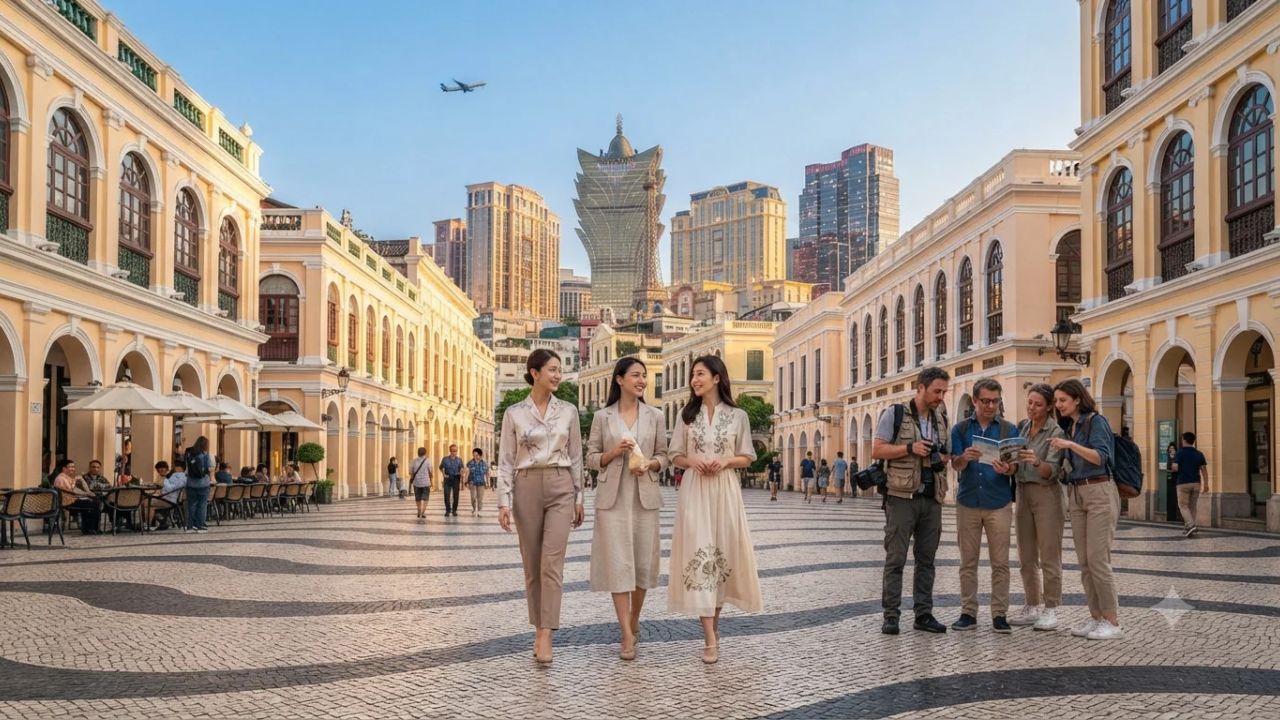
Macao has established a formal target to welcome at least 41 million visitors in 2026, accelerating an ambitious campaign to diversify its inbound travel economy away from historical reliance on mainland Chinese day-trippers and re-establish the Special Administrative Region as a world center of tourism and leisure. Following a milestone 2025 in which 40 million total arrivals and 2.75 million overseas visitors entered the territory, official data from the Macao Government Tourism Office (MGTO) confirms that European visitor arrivals surged by more than 32 percent during the first nine months of 2026. Backed by China’s expanding 30-day visa-free transit policies, preferential partnerships with European travel associations, and integrated transit links across the Guangdong-Hong Kong-Macao Greater Bay Area, the destination is executing a structural transition toward high-yield, long-haul international tourism under its comprehensive ‘1+4’ economic diversification blueprint.
The aggressive pursuit of long-haul overseas visitors reflects a calculated economic imperative. While gross visitor arrivals have approached pre-pandemic records, international overseas travel into Macao remained 10.1 percent below 2019 levels at the end of 2025, constrained by reduced direct flight capacity at Macao International Airport and slower rebounds across key Asian feeder markets such as Japan and South Korea. By combining targeted marketing blitzes at major European travel expos with integrated multi-modal transit networks linking Hong Kong International Airport directly to Macao’s maritime and land terminals, tourism authorities are positioning the territory as the premier cultural and gastronomic gateway to southern China.
========================================================================================
MACAO INBOUND TOURISM MACRO PERFORMANCE SCORECARD (2019–2026 TARGETS)
========================================================================================
Performance Indicator                Baseline (2019)  Milestone (2025) Target / YTD (2026)
----------------------------------------------------------------------------------------
Total National Visitor Arrivals      39.4 Million     40.0 Million     41.0+ Million (Target)
Total Overseas (Non-Greater China)   3,065,000        2,755,000        3,000,000 (Target)
Overseas Recovery vs. 2019 Benchmark Baseline (100%)  -10.1% Deficit   Projected Full Parity
Jan–Sep 2026 International Arrivals  -                1.89 Million     1.95 Million (+3.0% YoY)
Jan–Sep 2026 European Inbound Growth -                -                +32.0%+ YoY Surge
Macao International Airport Traffic  Baseline (100%)  -25.0% vs. 2019  ~20.0% Below 2019 Peak
Strategic Economic Framework         Gaming-Centric   Transition Phase '1+4' Diversification Model
Key Overseas Partner Designation     -                -                APAVT Preferred Destination
========================================================================================
Official Sources: Macao Government Tourism Office (MGTO) & Statistics and Census Service (DSEC).
========================================================================================
Macro Performance and Targets: Moving from Volume to International Yield
Macao’s tourism trajectory since its post-pandemic reopening in January 2023 demonstrates rapid volumetric recovery coupled with an intentional strategic shift. In 2025, the territory surpassed its previous annual records by welcoming 40 million visitors, driven predominantly by regional travelers from mainland China, Hong Kong, and Taiwan. However, the volume-heavy influx highlighted an enduring structural challenge: regional visitors often travel on short day-trips, generating concentrated retail spend but contributing relatively fewer hotel room nights.
To build long-term economic resilience, MGTO established an overarching target of at least 41 million arrivals for 2026, accompanied by a dedicated sub-target of three million international overseas visitors (excluding mainland China, Hong Kong, and Taiwan). This target builds upon the 2.75 million overseas visitors recorded in 2025, which represented a 13.7 percent increase over 2024.
========================================================================================
MACRO ARRIVALS TRAJECTORY & STRATEGIC PLANNING TARGETS
========================================================================================
Annual Cycle         Total Inbound Arrivals  Overseas Component Share Strategic Focus
----------------------------------------------------------------------------------------
2019 (Pre-Pandemic)  39,406,181 Visitors     3,065,000 (7.8%)         Pre-pandemic international peak
2023 (Reopening)     28,213,003 Visitors     1,459,566 (5.2%)         Post-zero-COVID restart
2024 (Rebuilding)    34,120,000 Visitors     2,423,000 (7.1%)         Charter & regional air restoration
2025 (Milestone)     40,000,000 Visitors     2,755,000 (6.9%)         Mass domestic & regional recovery
2026 (Official Target)41,000,000+ Visitors   3,000,000 (7.3%+)        European & long-haul expansion
========================================================================================
The emphasis on overseas travelers stems from their superior economic yield. International long-haul visitors stay an average of 2.8 to 3.4 nights in Macao, compared to just 1.2 nights for visitors from neighboring Guangdong province. Overseas guests patronize upscale dining rooms, purchase tickets to international theatrical residencies, attend business exhibitions, and book multi-day cultural tours, spreading expenditure evenly across the local economy.
The Source Market Matrix: Dissecting the 2019 vs. 2025 Inbound Dataset
A detailed examination of comparative arrival statistics between 2019 and 2025 reveals that the international recovery has progressed at an uneven pace across key geographic regions. Total overseas arrivals contracted from 3,065,000 in 2019 to 2,755,000 in 2025, representing a net deficit of 10.1 percent.
========================================================================================
INTERNATIONAL SOURCE MARKET BREAKDOWN: 2019 VS. 2025 COMPARATIVE DATASET
========================================================================================
Source Market        2019 Arrivals     2025 Arrivals     Absolute Variance Percentage Change
----------------------------------------------------------------------------------------
South Korea          743,000           548,000           -195,000          -26.2%
Japan                296,000           159,000           -137,000          -46.3%
The Americas (Total) 315,000           265,000           -50,000           -15.9%
Europe (Total)       278,000           243,000           -35,000           -12.6%
Malaysia             206,000           189,000           -17,000           -8.3%
India                127,000           114,000           -13,000           -10.2%
Oceania              100,000           89,000            -11,000           -11.0%
----------------------------------------------------------------------------------------
Selected European Source Markets:
United Kingdom       59,000            42,000            -17,000           -28.8%
France               37,000            28,000            -9,000            -24.3%
Germany              30,000            24,000            -6,000            -20.0%
Portugal             16,000            14,000            -2,000            -12.5%
----------------------------------------------------------------------------------------
Total Overseas Total 3,065,000         2,755,000         -310,000          -10.1%
========================================================================================
Data Source: Macao Government Tourism Office (MGTO) Statistical Bulletin.
========================================================================================
Explaining the Contractions in East Asia and Long-Haul Markets
The most pronounced volume contractions occurred in Northeast Asia:
- Japan (-46.3%): Japanese arrivals dropped from 296,000 to 159,000. This steep decline was driven primarily by historic currency depreciation: the Japanese yen’s weakness against the US dollar (and by extension the Macanese Pataca and Hong Kong Dollar) significantly increased the cost of foreign travel for Japanese households, dampening outbound long-haul bookings.
- South Korea (-26.2%): While South Korea remained Macao’s single largest non-Chinese source market with 548,000 visitors in 2025, arrivals remained nearly 200,000 below the 2019 high of 743,000. Intensive competition from short-haul destinations in Vietnam, Japan, and Thailand diverted price-sensitive Korean vacationers.
- The Americas (-15.9%) and Europe (-12.6%): Transpacific and Eurasian long-haul markets experienced headwinds from high international aviation fares, extended flight routings resulting from Russian airspace restrictions for Western carriers, and reduced corporate travel budgets.
Among Western European markets, the United Kingdom recorded a 28.8 percent decline, France dropped 24.3 percent, and Germany decreased 20.0 percent. Portugal exhibited greater resilience, declining by only 12.5 percent, anchored by strong historic, legal, and linguistic affiliations.
The European Resurgence: A 32% Surge in the First Nine Months of 2026
While full-year 2025 metrics reflected lingering structural deficits, data for the first nine months of 2026 (January through September) confirmed a sharp positive reversal, led by European travelers.
========================================================================================
FIRST NINE MONTHS 2026 PERFORMANCE TRAJECTORY (JANUARY–SEPTEMBER)
========================================================================================
Performance Metric                   Recorded Indicator                Year-on-Year Growth
----------------------------------------------------------------------------------------
Total International Overseas Entrants1.95 Million Travelers            +3.0% Expansion YoY
European Geographic Segment          Significant Upward Acceleration   +32.0%+ Expansion YoY
Primary Growth Catalysts             Direct Flight Codeshares,         BTL / FITUR Promotions,
                                     China 30-Day Visa Exemptions      and Multi-City GBA Packages
Strategic Implication                Closes the Pre-Pandemic Gap       Tracking Toward 3.0M Target
========================================================================================
Between January and September 2026, total international visitor arrivals into Macao reached 1.95 million, representing a 3 percent year-on-year increase. Notably, the European market outpaced all other geographic sectors, posting year-on-year growth exceeding 32 percent.
This surge in European demand provides compelling evidence that MGTO’s pivot toward international travel trade partnerships is delivering measurable returns. European travelers have responded enthusiastically to combined travel itineraries that showcase Macao’s UNESCO World Heritage architecture, Portuguese colonial history, and cutting-edge integrated resorts.
Trade Diplomacy and Brand Expansion Across European Capitals
To achieve its international visitation goals, MGTO executed an aggressive marketing presence across Europe’s premier travel exhibitions throughout 2026, engaging directly with tour operators, wholesalers, and media networks.
========================================================================================
MACAO GOVERNMENT TOURISM OFFICE (MGTO) EUROPEAN TRADE ENGAGEMENT (2026)
========================================================================================
Exhibition / Forum   Host City & Country   Strategic Objective & Operational Focus
----------------------------------------------------------------------------------------
FITUR                Madrid, Spain         Targeting Spanish & Ibero-American tour operators;
                                           promoting heritage, cultural routes, and gastronomy.
BTL Travel Market    Lisbon, Portugal      Leveraging historic ties; activating APAVT Preferred
                                           Destination status; Portuguese trade networking.
ITB Berlin           Berlin, Germany       Engaging Central European outbound travel planners;
                                           spotlighting luxury eco-tourism and MICE facilities.
IFTM Top Resa        Paris, France         Positioning Macao as a luxury cultural add-on for
                                           French travelers touring East and Southeast Asia.
World Travel Market  London, United KingdomDebut at 487.5-sqm China Pavilion; promoting multi-city
(WTM London)                               ‘Nihao! China’ itineraries with national tourist office.
========================================================================================
High-Visibility Debut at World Travel Market London
A major milestone occurred from 3 to 5 November 2026 at World Travel Market (WTM) London, one of the global travel industry’s most influential gatherings. Macao made its official debut within the expanded China Pavilion, organized by the China National Tourist Office London under the Ministry of Culture and Tourism's overarching global campaign: Nihao! China.
Covering 487.5 square meters, the China Pavilion showcased Macao alongside leading Chinese provinces and municipalities, including Beijing, Shanghai, Jiangsu, Zhejiang, and Guangdong. MGTO hosted dedicated trade presentations highlighting the territory’s East-meets-West cultural assets, presenting multi-destination travel itineraries that pair Macao’s historic heart with mainland cultural centers.
The Portugal Connection: APAVT Preferred Destination 2026
Macao’s European trade diplomacy is anchored by its unique four-century relationship with Portugal. In 2026, the Portuguese Association of Travel and Tourism Agencies (APAVT) designated Macao as its Preferred Destination 2026.
This recognition granted Macao extensive promotional priority across Portugal’s travel distribution network. Portuguese travel agencies launched dedicated packaging highlighting Macao’s living Portuguese heritage:
- The iconic wave-patterned Portuguese cobblestone pavements (calçada portuguesa) lining Senado Square.
- The preservation of historic colonial churches, municipal fortresses, and administrative buildings within the UNESCO Historic Centre.
- Authentic Macanese cuisine—recognized by UNESCO as one of the world’s oldest fusion gastronomic traditions, blending Portuguese culinary techniques with ingredients from Goa, Malacca, Mozambique, and southern China.
- The active use of Portuguese as an official administrative and judicial language.
Travel Facilitation and Multi-Destination Itineraries: China's 30-Day Visa-Free Policy
A powerful catalyst accelerating European arrivals into Macao is the progressive liberalization of entry policies enacted by the central government in Beijing. Under China’s expanded visa-free framework, citizens from a growing roster of European nations—including France, Germany, Italy, Spain, the Netherlands, Switzerland, Ireland, Austria, Belgium, Luxembourg, and Portugal—can enter mainland China visa-free for stays of up to 30 days for tourism, business, or family visits.
========================================================================================
VISA FACILITATION & GREATER BAY AREA (GBA) TRANSIT SYNERGIES
========================================================================================
Policy Mechanism                     Operational Scope                 Strategic Impact on Macao
----------------------------------------------------------------------------------------
China 30-Day Visa-Free Exemption     Covers eligible European citizens Multi-destination regional routing
                                     entering mainland for 30 days     linking Guangzhou/Shenzhen with Macao
Macao SAR Independent Visa Regime    Visa-free access for 80+ nations  Allows frictionless transit between
                                     (EU, UK, US, Canada, Australia)   mainland China and Macao borders
Hong Kong 90-Day Visa-Free Exemption Visa-free for Western passports   Enables circular Pearl River Delta tours
                                                                       connecting HKG Airport to Macao
HZMB Cross-Border Bus Transit        24/7 highway link over 55km bridgeTravel time reduced to 40 minutes
                                     connecting HK, Zhuhai, and Macao  from airport directly to Cotai resorts
Direct Bonded Ferry (TurboJET/Cotai) Airport-to-Macao ferry transit    Bypasses Hong Kong customs/immigration;
                                     from SkyPier at HKG Airport       checked luggage transferred directly
========================================================================================
This 30-day visa exemption has transformed how international tour operators package East Asian travel. European tourists are no longer required to navigate bureaucratic visa application centers or pay costly processing fees to explore China’s southern provinces.
Consequently, MGTO and mainland municipal tourism bureaus have co-developed circular Greater Bay Area itineraries:
- The Classical Southern Circuit: Arriving in Hong Kong, taking the high-speed ferry or bridge shuttle to Macao for three days of cultural and culinary exploration, and crossing the land border at Gongbei/Hengqin into Zhuhai and Guangzhou before flying home.
- The Maritime Heritage Route: Exploring the maritime Silk Road heritage connecting Guangzhou’s ancient docks, Shenzhen’s tech innovation districts, and Macao’s historic churches and lighthouses.
The Aviation Bottleneck: Overcoming Direct Flight Deficits via Greater Bay Gateways
Despite rising international demand, direct aviation connectivity remains Macao’s most significant operational constraint. Passenger traffic at Macao International Airport (MFM) continues to track approximately 20 percent below 2019 levels.
The airport’s runway infrastructure and terminal capacity primarily accommodate narrowbody aircraft serving mainland Chinese provincial capitals, Taiwan, and regional Southeast Asian hubs (Bangkok, Manila, Kuala Lumpur, Singapore, Hanoi, Da Nang). Direct long-haul intercontinental flights from Europe, North America, or Australasia do not operate into MFM due to runway length limitations and commercial fleet allocations.
========================================================================================
GREATER BAY AREA INTERNATIONAL AVIATION GATEWAYS FOR MACAO
========================================================================================
Aviation Hub Gateway Distance to Macao Transit Mode & Border Clearance Operational Profile
----------------------------------------------------------------------------------------
Macao International  Within Territory  Direct taxi / Light Rapid Transit Regional narrowbody hub;
(MFM)                                  (LRT); immediate entry clearance  primarily serving China/SE Asia
Hong Kong Int'l      Approx. 40 km     Direct SkyPier Bonded Ferry or    Primary global intercontinental
(HKG)                Across Sea        HZMB Bonded Shuttle Coach         gateway; 120+ global airlines
Shenzhen Bao'an      Approx. 60 km     Direct cross-boundary ferry from  Growing domestic & Asian hub;
(SZX)                Across Estuary    Fuyong Ferry Terminal to Taipa    limited European long-haul routes
Guangzhou Baiyun     Approx. 130 km    Intercity high-speed rail via     Major southern China hub; extensive
(CAN)                Inland North      Guangzhou South to Zhuhai border  African & Middle Eastern links
========================================================================================
Leveraging Hong Kong International Airport as Macao’s Primary Global Gateway
To bypass its local runway constraints, Macao relies heavily on Hong Kong International Airport (HKG) as its de facto intercontinental aviation hub. Positioned directly across the Pearl River estuary, HKG offers direct nonstop connectivity to virtually every major capital across Europe, North America, Oceania, and Asia.
International travelers reaching Macao via HKG benefit from highly integrated multimodal transit infrastructure:
- The SkyPier Terminal Direct Ferry: Arriving international passengers at HKG can transfer directly to bonded high-speed catamarans (operated by TurboJET and Cotai Water Jet) at the airport's SkyPier without passing through Hong Kong immigration or collecting checked luggage. Baggage is tagged directly from European departure airports to Macao's Taipa or Outer Harbour ferry terminals.
- The Hong Kong-Zhuhai-Macao Bridge (HZMB) Macao Link: The 55-kilometer sea-crossing bridge provides 24-hour bonded bus shuttles connecting HKG directly to the Macao Port checkpoint. Dedicated airport transfer coaches allow travelers to clear passport control in Macao in under 45 minutes from airport curbside.
In addition, the regional aviation ecosystem is supplemented by ferry connections from Shenzhen Bao'an International Airport (SZX) and high-speed rail links from Guangzhou Baiyun International Airport (CAN), creating a resilient multimodal network that ensures destination accessibility despite local airport limitations.
Beyond the Casino Floor: The ‘1+4’ Economic Diversification and Heritage Blueprint
A central tenet of Macao’s international tourism marketing is shifting global consumer perception away from gaming and casinos. While the Cotai Strip’s integrated resorts generate substantial fiscal revenue, government policy under Chief Executive Ho Iat Seng has mandated that casino concessionaires invest tens of billions of patacas into non-gaming amenities.
This policy is anchored by the ‘1+4’ Appropriate Diversification Development Strategy:
- ‘1’: Consolidating and enriching Macao’s core tourism and leisure sector, emphasizing quality, heritage, and entertainment over mass gaming.
- ‘4’: Accelerating four emerging strategic industries:
- Modern Financial Services.
- High-Tech Research and Digital Innovation.
- Traditional Chinese Medicine (TCM) and Big Health.
- Meetings, Incentives, Conferences, and Exhibitions (MICE), alongside sports and cultural tourism.
========================================================================================
MACAO ‘1+4’ STRATEGIC DIVERSIFICATION ARCHITECTURE
========================================================================================
Strategic Pillar     Core Economic Domain              Key Tourism & Hospitality Assets
----------------------------------------------------------------------------------------
Core Pillar: '1'     Integrated Leisure & Hospitality  Luxury resort hotels, Michelin dining, Broadway-style
                                                       entertainment, family attractions, luxury retail.
Emerging Sector 1    MICE & Business Events            World-class venues: Cotai Expo, Galaxy International
                                                       Convention Center (GICC), Venetian Macao Arena.
Emerging Sector 2    Cultural & Heritage Tourism       UNESCO Historic Centre of Macao (30+ sites),
                                                       Museum of Macao, Taipa Houses, A-Ma Temple.
Emerging Sector 3    Gastronomy & Culinary Arts        UNESCO Creative City of Gastronomy designation,
                                                       centuries-old Macanese-Portuguese culinary fusion.
Emerging Sector 4    Health, Wellness & Traditional MedState-of-the-art wellness clinics, medical retreats,
                                                       Traditional Chinese Medicine parks in Hengqin.
========================================================================================
Promoting the Four Geographic Quadrants
To disperse tourist spending into historic residential neighborhoods, MGTO rolled out its spatial dispersion campaign: ‘Go North, Down South, Move West, Navigate East’:
- Go North: Encouraging visitors to explore northern districts, visiting the historic Border Gate (Portas do Cerco), traditional local markets, and authentic neighborhood eateries.
- Down South: Guiding travelers to the natural beaches, lush hiking trails, and quaint village atmosphere of Coloane Island.
- Move West: Exploring the vibrant Inner Harbour district, maritime heritage museums, and traditional waterfront trading docks.
- Navigate East: Experiencing modern cultural infrastructure on the reclaimed eastern coastline, including the Macao Cultural Centre, Macao Science Center, and coastal promenades.
MICE Industry Expansion
The meetings and conventions sector represents an essential vehicle for attracting affluent international professionals. Macao boasts over 240,000 square meters of state-of-the-art exhibition space, anchored by the Cotai Expo at the Venetian and the newly opened Galaxy International Convention Center (GICC), which features a 16,000-seat multi-purpose arena. By hosting international medical congresses, financial technology summits, and global travel forums, the territory generates steady weekday hotel occupancy and attracts corporate travelers who frequently return as leisure tourists.
Practical Travel Intelligence for International Visitors to Macao
For international travelers planning an itinerary to Macao, practical knowledge regarding immigration, transportation, and regional currency ensures an effortless journey.
========================================================================================
PRACTICAL TRAVEL GUIDELINES FOR INTERNATIONAL TRAVELERS TO MACAO
========================================================================================
Planning Domain            Official Regulation / Parameter   Operational Traveler Guidance
----------------------------------------------------------------------------------------
Immigration & Entry Visas  Visa-free access for 80+ nations; Passports must be valid for 90 days beyond stay;
                           stays range from 30 to 90 days    entry slip issued at border (no passport stamp).
----------------------------------------------------------------------------------------
Currency & Payment Systems Official currency is Macanese     HKD accepted 1:1 across all hotels & shops;
                           Pataca (MOP); pegged to HKD       credit cards, Alipay & WeChat Pay ubiquitous.
----------------------------------------------------------------------------------------
Arrival via Hong Kong (HKG)Bonded ferry from HKG SkyPier;    No Hong Kong immigration clearance required;
                           or 24/7 HZMB cross-border coach   checked luggage transferred directly to ferry.
----------------------------------------------------------------------------------------
Local Urban Transit        Macao Light Rapid Transit (LRT);  LRT connects Taipa Ferry, MFM Airport & Cotai;
                           free integrated resort shuttles   free electric casino coaches open to public.
----------------------------------------------------------------------------------------
Optimal Travel Season      Autumn & Winter (Oct to Feb);     Mild temperatures (18–25°C), low humidity,
                           clear skies and minimal rainfall  ideal for walking tours and outdoor heritage.
========================================================================================
Navigating Border Clearances and Transit Slips
Macao maintains an independent customs and immigration border from mainland China under the ‘One Country, Two Systems’ principle. Citizens of more than 80 countries—including all European Union member states, the United Kingdom, the United States, Canada, Australia, New Zealand, Japan, and South Korea—can enter Macao visa-free for tourism stays ranging from 30 to 90 days.
Upon clearing immigration at Macao International Airport, the ferry terminals, or the HZMB port, visitors receive a computer-generated Arrival Card slip indicating their permitted duration of stay. This paper slip must be kept inside the passport until departure, as hotels and financial institutions require it for registration.
Currency, Payments, and Local Mobility
The official currency of Macao is the Macanese Pataca (MOP), which is pegged to the Hong Kong Dollar at a rate of approximately 1 HKD to 1.03 MOP. In practice, the Hong Kong Dollar is accepted universally across all hotels, restaurants, taxis, and retail stores at a 1:1 parity (though change may be given in MOP). Major credit cards (Visa, Mastercard, UnionPay) and mobile payment apps are widely accepted.
Within the territory, local transportation is exceptionally convenient. The Macao Light Rapid Transit (LRT) Taipa Line connects Macao International Airport, the Taipa Ferry Terminal, the Lotus Border checkpoint, and the entire Cotai resort strip. In addition, major integrated resorts operate fleets of free, air-conditioned electric shuttle buses linking the ferry terminals, the border gate, and downtown Macao, providing complimentary transit for tourists.
Why This Matters (Information Gain): Strategic Blueprint for Destination Evolution
Macao’s 2026 international tourism push provides valuable strategic lessons for the global travel industry:
========================================================================================
STRATEGIC TAKEAWAYS: LESSONS FROM MACAO’S TOURISM TRANSFORMATION
========================================================================================
Conventional Destination Model       Modernized Macao Strategic Blueprint
----------------------------------------------------------------------------------------
Relies heavily on domestic day-trips.Actively courts high-spending, long-stay international guests.
Monolithic gaming focus.             Diversifies into MICE, UNESCO heritage, and gastronomy.
Constrained by local airport limits. Integrates multi-modal transit via Greater Bay Area mega-hubs.
Isolates marketing from neighbors.   Co-promotes multi-city itineraries under national branding.
Passive cultural heritage.          Actively leverages Sino-Portuguese history for trade diplomacy.
========================================================================================
First, Macao demonstrates that achieving true tourism sustainability requires moving beyond gross headcounts. While welcoming 40 million visitors is a testament to strong consumer demand, relying almost entirely on regional day-trippers creates urban congestion without maximizing foreign exchange receipts. By setting a dedicated target of three million international overseas travelers, Macao is prioritizing length of stay, average room rates, and broad economic impact.
Second, the territory provides a masterclass in overcoming infrastructure limitations through regional cooperation. Rather than waiting years for expensive airport runway reclamations, Macao leveraged the world-class aviation capacity of Hong Kong International Airport, transforming a potential bottleneck into a competitive advantage via direct bonded ferries and the Hong Kong-Zhuhai-Macao Bridge.
Finally, by capitalizing on its unique Sino-Portuguese cultural fabric and aligning with China’s progressive visa-free transit policies, Macao has redefined its international brand identity. As the destination advances toward its 41 million arrival milestone in 2026, it stands not merely as an Asian entertainment capital, but as a dynamic cultural bridge connecting Europe with the economic powerhouses of southern China.
Related Travel Guides
- Abu Dhabi Expands Marine Tourism with New Waterfront and Luxury Yacht Charter Guides Across Eight Marinas
- Cyprus Leaders Agree to Open Two New Crossing Points Along the Green Line in Historic UN-Mediated Accord
- France and European Source Markets Drive Tunisia Tourism Receipts to $2.38 Billion as Long-Haul Corridors Expand in 2026
- US and Canada Drive South Africa Overseas Air Travel as September 2026 Arrivals Reveal Critical Gateway Hub Dynamics
This article is for informational purposes. Flight routes, passenger regulations, visa rules, and transit advisories are subject to change by airlines and aviation authorities. Readers are advised to verify schedules and travel documentation with relevant carriers and border agencies before departure.
Related Stories

Puerto Rico Showcases Cultural Heritage and Eco-Tourism as 75th Miss Universe Celebrations Open Across the Island
US and Canada Drive South Africa Overseas Air Travel as September 2026 Arrivals Reveal Critical Gateway Hub Dynamics