
Aviation Updates: Frankfurt Airport Deploys Massive Football Entertainment Zones to Pacify Stranded Passengers Amid Severe European Travel Chaos
As incredibly severe terminal gridlock chokes European aviation, Frankfurt Airport aggressively rolls out live football screenings to physically manage massive crowds trapped by travel chaos.

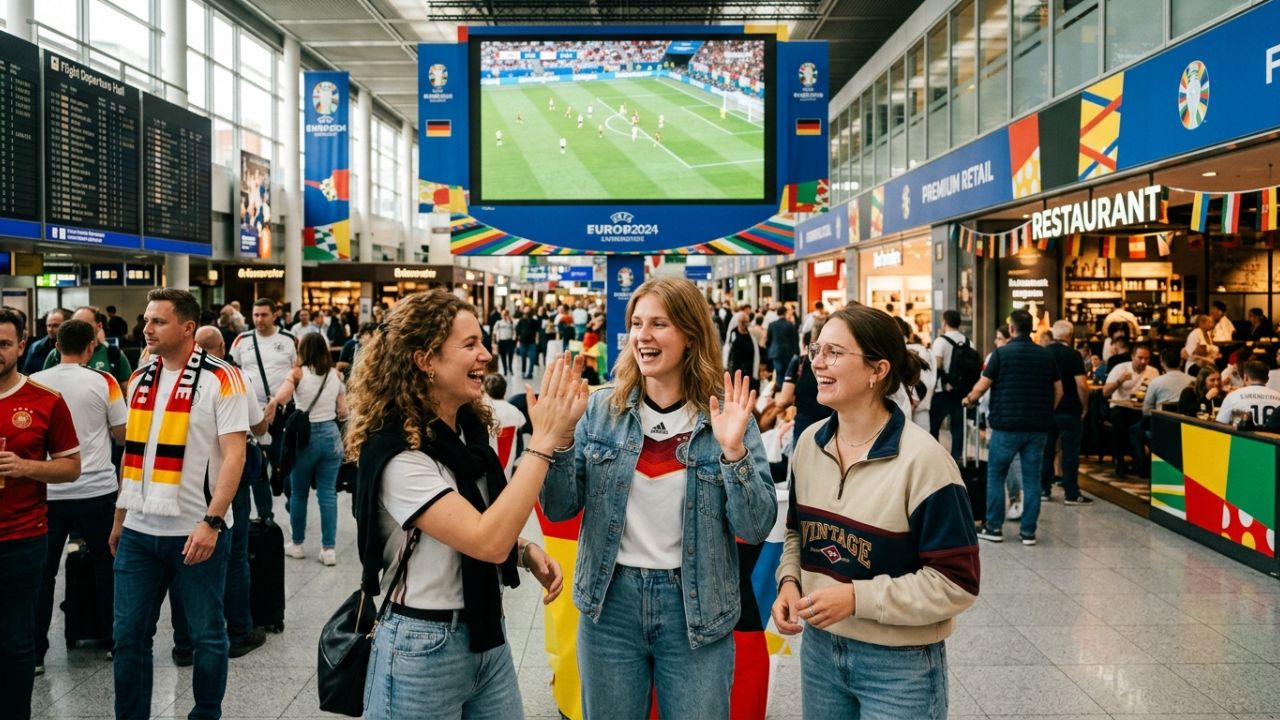
Image generated by AI
Aviation Updates: Frankfurt Airport Deploys Massive Football Entertainment Zones to Pacify Stranded Passengers Amid Severe European Travel Chaos
As incredibly severe terminal gridlock and massive legacy airline network failures completely suffocate primary aviation gateways across the continent, Frankfurt Airport is aggressively deploying massive, terminal-wide football entertainment zones in a desperate bid to psychologically pacify exhausted passengers currently battling devastating European travel chaos.
While incredibly exhausted domestic and international passengers desperately navigate an incredibly brutal peak travel season defined by rolling flight cancellations and severe, localized airport disruptions, a massive, highly strategic corporate intervention is actively reshaping passenger flow in Germany. According to the absolute latest breaking airline news and official corporate disclosures from Fraport AG, Frankfurt Airport has violently transformed its transit environment into a heavily curated sporting arena. Desperate to ensure that severe, highly compressed terminal congestion did not completely destroy the psychological stability of massive crowds trapped by operational gridlock, the airport operator has explicitly timed a massive retail and entertainment overhaul with the global football tournament currently unfolding across North America. At the time of reporting, real-time aviation analysts confirmed that these massive interactive zones and live match screenings are acting as critical pressure-release valves, heavily forcing thousands of highly vulnerable, stranded passengers to redirect their anger over travel chaos into participatory engagement.
This highly critical infrastructure pivot explicitly exposes the European aviation network not just as a vital global transit feed, but as a heavily congested, deeply fragile capacity zone where traditional waiting areas are completely insufficient to handle modern disruption volumes. By violently overwhelming traditional seating areas and airline lounges, systemic demand is directly driving massive regional gridlock. Because massive mega-hubs like Frankfurt frequently suffer from severe tarmac congestion leading to massive, unannounced communication breakdowns, this sudden, heavily funded shift toward "experience-driven" architecture serves as an absolute survival tactic. Utilizing global sporting events as a psychological buffer explicitly demonstrates how rapidly airport operators must adapt to prevent total terminal meltdowns when the tightly scheduled global movement network linking Germany to the world inevitably falters during the peak summer rush.
Aviation Updates: The Strategic Deployment of Fan Zones
This massive, highly structural shift in terminal management perfectly illustrates the intense, incredibly fragile nature of modern European mobility and the necessity of crowd control.
According to highly detailed, official aviation updates, the massive transformation of Frankfurt Airport is not simply a festive marketing campaign; it is a heavily coordinated structural response designed to safely hold massive volumes of passengers delayed by European airport disruptions. Across the airport’s sprawling shopping and dining concourses, a unified campaign design now physically alters the flow of foot traffic. Retailers and service providers have aggressively aligned products, décor, and staff uniforms with the national teams participating in the North American tournament. By visually enforcing a shared global identity, Fraport is deliberately attempting to mitigate the intense frustration generated by rolling flight cancellations. When passengers are forced to endure agonizing, multi-hour delays, surrounding them with limited-time themed dining and retail promotions physically distracts them from the brutal reality of their collapsed itineraries.
Section-Wise Breakdown: Navigating the Paralyzed Transit Zones
The sudden, massive evolution of these critical terminal modifications actively impacts several incredibly distinct, highly sensitive operational dynamics spanning multiple massive passenger demographics.
The B Non-Schengen Live Broadcast Hubs
At the absolute core of this massive operational pivot is the severe congestion strangling international departure halls. To prevent massive crowds from violently swarming customer service desks during unannounced delays, Frankfurt Airport has strategically converted two primary restaurants located deep within the B non-Schengen food court into massive live viewing zones. Because this specific sector handles heavily delayed, long-haul international traffic, providing uninterrupted broadcasts of the North American tournament instantly neutralizes the paralyzing boredom of transit. Passengers originally trapped in intense travel chaos are now physically rooted to these dining zones, watching live or replayed matches instead of actively protesting their delayed departures.
The Terminal 3 Central Marketplace Anchor
Simultaneously protecting the broader terminal network, a massive bar located squarely within the central marketplace of Terminal 3 has been designated as a primary screening anchor. Terminal 3 operates as a highly critical pressure point for inter-European and global connections. By integrating high-definition broadcasting directly into the core dining architecture, Fraport transforms routine, agonizing waiting time into a shared, highly distractive sporting moment. This ensures that even as massive volumes of tourists completely saturate the European schedule, the resulting terminal gridlock remains highly manageable for security teams.
The Interactive Retail Engagement Gauntlet
Beyond passive viewing areas, the airport’s retail division has aggressively introduced interactive installations designed to physically exhaust and occupy passengers. Travelers enduring massive airport disruptions can now participate in virtual football experiences, including simulated gameplay and skill-based challenges strategically positioned in high-traffic corridors. The centerpiece is a highly popular goal-scoring activity wall where participants test their accuracy. By actively rewarding successful players with vouchers redeemable at airport stores, Frankfurt Airport masterfully monetizes the very delays that initially caused the travel chaos, turning stranded families and delayed solo travelers into captive, high-spending retail participants.
Entertainment Operations and Verified Deployment Matrix
To fully understand the exact structural parameters of this massive infrastructure modification and how airports are desperately attempting to navigate complex crowd control constraints, the following matrix explicitly details the specific entertainment deployments officially recorded by Fraport AG.
Confirmed Frankfurt Airport Football Activation Matrix
| Entertainment Zone | Location Details | Primary Function |
|---|---|---|
| Live Match Screenings | B Non-Schengen Food Court (Two Restaurants) | Uninterrupted Broadcasts for Stranded Passengers |
| Central Viewing Hub | Terminal 3 Central Marketplace Bar | High-Capacity Match Viewing Area |
| Interactive Installations | Throughout Retail Concourses | Goal-Scoring Activity Wall & Virtual Gameplay |
Data explicitly reflects the massive, highly structural entertainment deployment currently allowing Frankfurt Airport to physically manage and pacify crowds delayed by European hub congestion.
Passenger Impact: The Psychological and Financial Reality
For the highly demanding travelers actively engaged in this massive European mobility crisis, traditional, highly anticipated transit is currently viewed as an endurance test against failing schedules.
The immediate consequence of this massive tactical shift is measured in the profound psychological shift experienced by incredibly exhausted passengers. Travelers originally paralyzed by the terrifying threat of missing international connections due to severe airport disruptions are now successfully distracted. By utilizing this massive industrial entertainment apparatus, Frankfurt Airport completely bypasses the severe threat of terminal riots or massive crowd crushes that could instantly cripple security operations. However, this massive upgrade to terminal entertainment also heavily guarantees that ground operations can subtly extract massive financial yields from a captive audience. The artificial holding patterns created by these sudden flight cancellations mean that securing a meal or a drink while watching the match is no longer just a luxury; it is the only viable way to survive a multi-hour delay before a traveler can finally board their aircraft.
Industry Analysis: The Economics of Tactical Distraction
Aviation structural analysts strictly point out that this massive, multi-national operational shift perfectly illustrates the extreme, highly vital importance of heavily optimized retail architecture during periods of intense network failure.
Economic data explicitly indicates that massive airport operators are absolutely desperate to secure rapid financial returns from passengers stuck in transit. The aggressive deployment of these football zones proves that modern aviation fundamentally requires continuous, heavy investment in "experiential retail" to outpace the reputational damage of rising delays. As travelers aggressively prioritize escaping travel chaos, legacy hubs that fail to manage the psychological state of their stranded crowds will rapidly face devastating operational breakdowns. According to senior leadership within Frankfurt’s retail division, global sporting events provide a powerful, highly lucrative platform for managing delayed crowds. This sensational trend beautifully proves that airports must aggressively deploy high-engagement distractions to successfully survive the physical and operational realities of a highly volatile, heavily delayed European market.
Conclusion: A Highly Managed Transit Future
The massively evolving infrastructure dynamics directly defining the integration of high-volume demand into the Frankfurt Airport network violently reflect a much broader, highly critical structural transformation currently dominating how commercial aviation is physically managed in 2026.
Rather than violently forcing massive international traffic to wait in silent, agonizing frustration during a failing legacy schedule, Frankfurt is actively giving the industry a template to reclaim its crowd control safety. As international travel continues to evolve into a highly delayed reality, hubs actively navigating the incredibly busy sector must absolutely remain highly vigilant. To actively survive potential travel chaos this season, passengers must aggressively monitor all breaking aviation updates, verify their flight status directly, and perfectly understand that escaping modern airport disruptions and devastating flight cancellations fundamentally requires extreme financial preparation, as airports increasingly rely on paid retail and entertainment experiences to warehouse their delayed passengers.
Key Takeaways
- Massive Tactical Distraction: Frankfurt Airport (Fraport AG) has aggressively transformed its terminals into massive football entertainment zones during the North American tournament.
- Mitigating Gridlock Hazards: The live screening areas and interactive games act as critical psychological buffers for thousands of passengers stranded by severe European travel chaos.
- Strategic Deployment: Key viewing hubs have been established in the B non-Schengen food court and Terminal 3’s central marketplace to hold delayed long-haul traffic.
- Interactive Monetization: Goal-scoring walls and virtual gameplay reward delayed passengers with retail vouchers, highly successfully monetizing the downtime caused by airport disruptions.
- Global Industry Benchmark: The successful deployment of this themed retail strategy proves that modern mega-hubs must aggressively invest in "experiential transit" to prevent operational meltdowns during periods of massive flight cancellations.
Related Travel Guides
Massive UAE Visa Bombshell: Strict New 30-Day Escape Window Announced
Travel Chaos Cripples Spain as Iberia and Ryanair Suffer 1,079 Delays
Global Flight Cancellation and Compensation Guide 2026
Disclaimer: This article is strictly for informational purposes only. Massive airport retail deployments, highly localized entertainment schedules, and complex terminal flow constraints change rapidly based on operational demand and real-time transit congestion. Always carefully verify your specific itinerary and aggressively monitor real-time hub conditions directly via your respective operator's platform before attempting to secure travel.
Disclaimer
This article is for informational and educational purposes only. It does not constitute legal, financial, or professional advice. While we strive to provide accurate and up-to-date information, travel policies, regulations, and conditions change rapidly. Always verify information with official sources before making travel decisions. Nomad Lawyer makes no representations about the accuracy, reliability, completeness, or suitability of the information provided. Readers should consult qualified professionals for advice specific to their circumstances. The views expressed in this article are those of the author and do not necessarily reflect the views of Nomad Lawyer.
Preeti Gunjan
Contributor & Community Manager
A passionate traveller and community builder. Preeti helps grow the Nomad Lawyer community, fostering engagement and bringing the reader experience to life.
Learn more about our team →