France Leads European Source Markets as Tunisia Tourism Reaches 9 Million Arrivals and $2.38 Billion Revenue in 2026

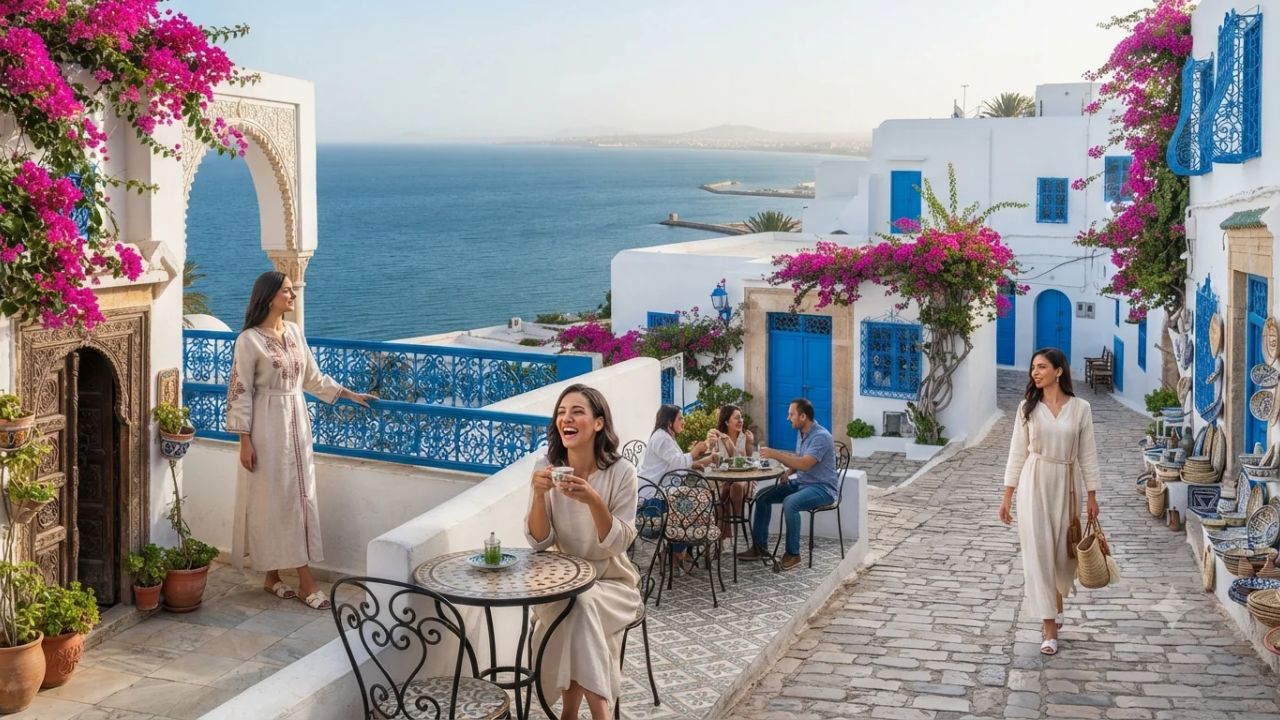
Tunisia has welcomed more than 9 million international tourists in the first ten months of 2026, generating 7.152 billion Tunisian dinars ($2.38 billion) in receipts and establishing France as its undisputed European source market leader. This robust financial performance reflects a 3.4% year-over-year increase in revenues and a substantial 25.1% expansion over pre-pandemic 2019 benchmarks. Following a historic milestone in 2025 where total visitors crossed 11 million for the first time on record, the North African nation is proving that its hospitality renewal extends far beyond standard seasonal beach retreats. Driven by extensive European airlift, steady overland traffic from neighboring Maghreb nations, ambitious hotel rehabilitation programs, and sustainable heritage investments, Tunisia is positioning itself as a diversified, year-round Mediterranean cultural hub.
The transformation of Tunisia’s travel economy in 2026 highlights a deliberate strategic pivot orchestrated by the Ministry of Tourism and the Tunisian National Tourist Office (ONTT). Under the leadership of Minister Sofiene Tekaya, national authorities have prioritized hotel regularizations, rigorous quality audits, and infrastructure modernization over unchecked volume alone. By capturing high-yield European holidaymakers while preserving core regional flows from Algeria and Libya, Tunisia has created a balanced, multi-tiered tourism ecosystem. Central to this success is the French inbound market, which has outpaced all continental peers to deliver consistent autumn hotel occupancies, elevated spending figures, and deep cultural engagement across coastal and inland regions.
The 2026 Milestone: Ten Months of Unprecedented Financial Inflows
The financial metrics released for the first ten months of 2026 confirm that Tunisia’s hospitality sector has transitioned from post-pandemic recovery into structured capital expansion. Total foreign currency receipts reached 7.152 billion Tunisian dinars ($2.38 billion), providing critical foreign exchange stability to the national economy and supporting tens of thousands of direct and indirect hospitality jobs. When measured against the corresponding period in 2024, revenues climbed 3.4%, while outstripping the landmark 2019 season by 25.1%.
This monetary growth is particularly notable because it has outpaced gross arrival volume percentages, signaling a higher spend per visitor across key resort hubs. European holidaymakers have played a disproportionate role in driving these receipts, contributing roughly 65% of total foreign exchange revenues despite representing a smaller total headcount than regional land arrivals. Longer average lengths of stay, increased uptake of thalassotherapy wellness packages, Sahara desert expeditions, and independent culinary and archaeological excursions have contributed to higher daily spending profiles.
The arrival count exceeding 9 million travelers through October demonstrates remarkable resilience in the face of fluctuating European economic conditions, elevated aviation fuel prices, and broader geopolitical shifts across the Middle East and Mediterranean basin. By maintaining competitive package pricing alongside upscale boutique guest house developments, Tunisia has captured cost-conscious European families, retired cultural travelers, and young adventurous digital nomads seeking Mediterranean warmth during off-peak autumn months.
TUNISIA TOURISM MACRO INDICATORS: 2019 vs 2025 vs 2026
| Metric | 2019 (Full Year) | 2025 (Full Year) | 2026 (10-Month Actual) |
|---|---|---|---|
| Total Inbound Visitors | 9.43 Million | 11.02 Million | 9.04 Million (Oct) |
| Tourism Receipts (Tunisian Dinars) | 5.71 Billion TND | 6.92 Billion TND | 7.152 Billion TND |
| Tourism Receipts (USD Equivalent) | $1.98 Billion | $2.26 Billion | $2.38 Billion |
| Revenue Growth vs. 2019 Baseline | Baseline | +21.2% | +25.1% |
| European Receipts Share (%) | ~58% | ~62% | ~65% |
| Reopened & Regularized Properties | N/A | 11 Properties | 45 Properties Total |
| Formal Quality Audits Conducted | ~2,200 Audits | ~3,800 Audits | 5,475 Audits |
Why France Outpaces All Other European Markets
France has solidified its ranking as Tunisia’s most important European inbound market, generating an estimated 1.2 million visits in 2026 and maintaining booking momentum well into late November. This position is supported by deep historical, cultural, and linguistic ties, backed by an extensive commercial aviation network connecting secondary French cities directly to Tunisian coastal airports. French holidaymakers do not treat Tunisia merely as an occasional holiday spot; for many, it functions as an accessible, second-home destination reachable within two to three hours of flight time.
A primary catalyst for the French surge is aviation density. Flag carriers and low-cost airlines—including Air France, Transavia France, Nouvelair, and national carrier Tunisair—operate high-frequency connections linking Paris-Charles de Gaulle and Paris-Orly to Tunis-Carthage, Monastir Habib Bourguiba, Djerba-Zarzis, and Tozeur-Nefta. Regional French departures from Lyon-Saint Exupéry, Marseille Provence, Nice Côte d'Azur, Toulouse-Blagnac, Nantes Atlantique, and Bordeaux provide direct access for provincial travelers avoiding capital airport congestion. This direct point-to-point network allows French travelers to organize weekend breaks, week-long seaside vacations, or extended winter stays with minimal transit friction.
FRENCH INBOUND FLIGHT CONNECTIONS TO TUNISIAN HUBS
| French Origin Airport | Tunisian Destination Hubs | Dominant Airlines | Weekly Frequencies |
|---|---|---|---|
| Paris-Orly / CDG | Tunis, Djerba, Monastir | AF, TO, TU, BJ | 85+ Direct Flights |
| Lyon-Saint Exupéry | Tunis, Djerba, Monastir | Transavia, TU, BJ | 24 Direct Flights |
| Marseille Provence | Tunis, Djerba, Monastir | Tunisair, BJ | 28 Direct Flights |
| Nice Côte d'Azur | Tunis, Djerba, Monastir | Tunisair, Nouvelair | 18 Direct Flights |
| Nantes Atlantique | Djerba, Tunis, Monastir | Transavia, BJ | 12 Direct Flights |
| Toulouse-Blagnac | Tunis, Djerba | Tunisair, Nouvelair | 10 Direct Flights |
| Strasbourg / Lille | Djerba, Enfidha, Tunis | Nouvelair, TU | 8 Direct Flights |
Beyond standard leisure packages, the French market is fortified by the vibrant Tunisian diaspora residing across France (Tunisiens Résidant à l’Étranger - TRE). This demographic brings multi-generational families to Tunisia during summer school breaks, religious festivals, and autumn harvests. Diaspora spending diffuses directly into local economies through home construction, domestic car rentals, regional restaurants, and municipal retail markets, bypassing closed all-inclusive resort circuits.
Linguistic accessibility also provides a decisive advantage. The widespread fluency in French across Tunisian service personnel, hoteliers, tour operators, and public transport networks eliminates cultural hesitation for French retirees and families. When combined with favorable currency exchange rates—where one euro trades near 3.3 to 3.4 Tunisian dinars—French travelers enjoy unmatched purchasing power for four- and five-star accommodations, gourmet Mediterranean dining, and private guided archaeological tours.
Maghreb Overland Traffic: The Backbone of Volume Stability
While European source markets deliver the lion's share of foreign currency receipts, neighboring Algeria and Libya provide the volume backbone that keeps Tunisian hospitality establishments operational year-round. Together, cross-border travelers from these two Maghreb neighbors represent more than half of all total arrivals entering the country, forming a stabilizing demographic that cushions Tunisia from seasonal European downturns.
Algeria stands as Tunisia’s single largest source of tourist arrivals by gross volume, accounting for an estimated 3.1 million to 3.5 million cross-border entries in 2026. Benefiting from mutual visa-free entry agreements and shared overland highway corridors, Algerian vacationers travel in private vehicles and intercity buses through northern and central border checkpoints including Tabarka, Ghardimaou, Bouchebka, and Hazoua.
For Algerian families, Tunisian coastal resorts in Tabarka, Hammamet, Sousse, and Monastir represent familiar, hospitable, and cost-effective holiday escapes. The shared linguistic, religious, and culinary traditions make Tunisia an intuitive choice. Algerian visitor flows peak during July and August, but late spring and autumn witness sustained traffic driven by shopping trips, extended weekend getaways, and private medical consultations.
REGIONAL OVERLAND & SHORT-HAUL SOURCE MARKET DYNAMICS
| Entity / Facility | Delays | Cancellations | Details |
|---|---|---|---|
| Country of Origin | Est. 2026 Arrivals | Dominant Mode | Key Destination Focus |
| Algeria | 3.1M - 3.5 Million | Overland Road / Car | Tabarka, Hammamet, Sousse, Tunis |
| Libya | 1.4M - 2.1 Million | Overland / Air | Djerba, Zarzis, Sfax, Tunis Private |
| Germany | 560,000 Visitors | Charter & Scheduled | Djerba, Hammamet, Archaeological |
| United Kingdom | 410,000+ Visitors | Low-Cost Scheduled | Enfidha, Hammamet, Sousse, Port |
| Italy | 380,000 Visitors | Air & Ferry Routes | Tunis, Carthage, Hammamet, Djerba |
| Poland | 260,000 Visitors | Charter Flights | Enfidha, Djerba, Monastir All-Inc |
| Russia | 210,000 Visitors | Direct Charters | Monastir, Enfidha, Djerba Resorts |
Libya represents Tunisia’s second largest source of regional traffic, contributing between 1.4 million and 2.1 million arrivals. Operating through southern border crossings at Ras Jdir and Dehiba, alongside high-frequency flights into Tunis-Carthage, Sfax-Thyna, and Djerba-Zarzis, Libyan visitors combine recreational tourism with essential medical care and commercial business. Tunisia’s private healthcare clinics in Tunis, Sfax, and Sousse are regarded as the regional standard for advanced surgical procedures, ophthalmology, cardiology, and fertility treatments.
Libyan patients frequently travel accompanied by family members, renting furnished residential apartments for several weeks at a time. In the south, the island of Djerba and coastal Zarzis serve as prime leisure destinations for Libyan holidaymakers seeking family-friendly beach resorts and retail goods. This combination of medical, commercial, and holiday demand ensures that Libyan arrivals remain steady regardless of broader European vacation schedules.
Broad European Diversification: Germany, the UK, Italy, and Poland
Although France captures the top spot on the European continent, Tunisia has achieved balanced geographical diversification across Western, Southern, and Central Europe. Diversifying source markets has been an explicit objective of the Ministry of Tourism to avoid dangerous over-reliance on a single economic bloc.
Germany maintains its status as a foundational pillar of Tunisia’s organized travel sector, delivering roughly 560,000 visitors in 2026. German holidaymakers have historically demonstrated strong loyalty to the island of Djerba and the Cap Bon peninsula, valuing reliable resort infrastructure, certified wellness centers, and organized desert trekking tours. German travelers also display elevated interest in cultural conservation, participating in heritage circuits supported by technical cooperation programs run by the German development agency GIZ, which focuses on sustainable eco-lodges and agricultural tourism across northwestern Tunisia.
The United Kingdom has emerged as one of the fastest-growing European source markets in 2026, recording over 410,000 arrivals and outpacing its post-2015 recovery trajectories. British travelers lead all inbound European markets in average expenditure per arrival. The restoration and expansion of scheduled flight operations by easyJet, Jet2, and TUI into Enfidha-Hammamet and Tunis-Carthage have made seaside breaks in Port El Kantaoui, Yasmine Hammamet, and Sousse exceptionally attractive for UK holidaymakers seeking affordable alternatives to the Western Mediterranean.
Italy contributes approximately 380,000 visitors, aided by direct geographical proximity. In addition to daily flights between Rome-Fiumicino, Milan-Malpensa, and Tunis, maritime passenger ferry routes operated by Grandi Navi Veloci (GNV) and Grimaldi Lines link Genoa, Civitavecchia, and Palermo directly to the port of La Goulette. Italian travelers gravitate toward historical, architectural, and gastronomic itineraries. The shared Roman heritage at Carthage, Dougga, and the Amphitheatre of El Jem serves as a powerful cultural magnet, complemented by weekend culinary tours exploring the Italian culinary heritage of the La Goulette quarter.
Poland heads the Central European contingent with more than 260,000 visitors in 2026, driven by aggressive charter operations coordinated by major European tour operators. Polish tourists exhibit high demand for four-star beachfront all-inclusive resorts along the eastern coast from Mahdia to Nabeul, providing critical hotel bed occupancy during the mid-season shoulder months of May, June, September, and October.
EUROPEAN SOURCE MARKET PERFORMANCE COMPARISON (2026)
| Entity / Facility | Delays | Cancellations | Details |
|---|---|---|---|
| Source Market | Est. 2026 Arrivals | Growth Trajectory | Dominant Spending Patterns |
| France | ~1,200,000 | +8.2% Year-over-Year | Diaspora, boutique hotels, culture |
| Germany | ~560,000 | +4.1% Year-over-Year | Long-stay wellness, desert circuits |
| United Kingdom | ~410,000 | +14.6% Year-over-Year | High package spend, seaside resorts |
| Italy | ~380,000 | +6.3% Year-over-Year | Heritage, Roman ruins, gastronomy |
| Poland | ~260,000 | +11.8% Year-over-Year | All-inclusive beach packages |
| Belgium/Lux. | ~185,000 | +5.0% Year-over-Year | Coastal relaxation, golf retreats |
| Switzerland | ~125,000 | +7.4% Year-over-Year | Sahara trekking, high-end wellness |
The Eastern Rebound and Long-Haul Horizons: Russia, China, and Beyond
Tunisia’s international outreach in 2026 has witnessed the revival of key eastern charter markets and targeted entries into long-haul Asian outbound hubs. The Russian market, which played an enormous role in filling coastal hotel capacity between 2016 and 2019, staged an 83% year-over-year rebound during the 2026 summer and autumn seasons. Weekly direct charter flights between Moscow, Saint Petersburg, and Tunisian gateways expanded from 6 to 13 services weekly, with tourism authorities targeting an annual Russian intake approaching 600,000 visitors over the medium term.
Direct charter flights have also been restored from Minsk, Belarus, providing non-EU Eastern European travelers with direct Mediterranean beach access. These tourists show strong preferences for large-scale resort complexes in Monastir, Sousse, and Djerba, bolstering occupancy rates for properties equipped with extensive family entertainment infrastructure.
Simultaneously, the Tunisian National Tourist Office has deepened promotional efforts across long-haul Asian markets, most notably China and Japan. Capitalizing on visa-exemption policies for Chinese tourist delegations, tour operators have curated specialized cultural, historical, and geological itineraries. Asian visitors rarely participate in conventional sun-and-sea resort vacations; instead, their itineraries focus on UNESCO World Heritage locations, troglodyte settlements in Matmata, the salt flats of Chott el Djerid, and cinematic filming locations associated with the Star Wars franchise in Tozeur and Tataouine. Although arrival numbers remain modest compared to European volumes, these long-haul visitors register the highest per-diem spending in local craft markets and cultural institutions.
Hospitality Governance and Structural Reforms Under Minister Sofiene Tekaya
The record revenue and passenger totals recorded in 2026 are the direct outcome of an aggressive campaign of domestic regulatory reform, infrastructure rehabilitation, and quality oversight launched by the Ministry of Tourism. Under Tourism Minister Sofiene Tekaya, the government abandoned passive promotion in favor of direct intervention in hotel operations and service delivery standards.
A persistent vulnerability of the Tunisian hospitality sector had been the presence of shuttered, indebted, or substandard hotel properties that degraded resort zones and dampened local employment. In 2026, the Ministry resolved legal, banking, and administrative bottlenecks for 28 distressed hotel properties, facilitating the formal reopening and modernization of 17 commercial resorts across key governorates. These regularizations have added thousands of modern guest rooms to national inventory ahead of projected peak demand in 2027.
HOSPITALITY GOVERNANCE & QUALITY AUDIT INITIATIVES (2026)
| Entity / Route | Metrics | Operational Status |
|---|---|---|
| Reform Category | 2026 Volume | Strategic Objective |
| Formal Health & Safety Audits | 5,475 Audits | Across 3,000 hospitality establishments |
| Distressed Properties Regularized | 28 Hotels | Unlocking banking and ownership gridlock |
| Shuttered Resorts Reopened | 17 Properties | Restoring productive bed capacity |
| Approved Private Tourism Investment | 1.206 Billion TND | +18% growth in resort modernizations |
| Heritage Modernization (Tounes W.) | 14 Sites | EU-backed sustainable cultural upgrades |
Quality enforcement has been codified through rigorous inspection campaigns. Throughout 2026, specialized joint teams conducted 5,475 comprehensive inspections across 3,000 hotels, tourist restaurants, transport operators, and leisure facilities. Establishments failing to comply with hygiene, fire safety, air conditioning maintenance, or guest service protocols faced administrative fines, mandatory capacity reductions, or temporary licensing suspensions until deficiencies were corrected. This rigorous oversight has reassured international tour operators that Tunisian accommodations are adhering to strict European standards.
Private sector confidence has responded positively to these regulatory interventions. Approved capital investments in tourism ventures totaled 1.206 billion Tunisian dinars ($402 million) through the third quarter of 2026, representing an 18% increase compared to 2025. This capital is being deployed into hotel room renovations, water desalination facilities, solar energy arrays, and upscale rural boutique accommodations known as maisons d'hôtes.
Preparations are also underway for the inaugural Tunisia Destination Forum & Marketplace 2027, scheduled for January 27–28, 2027, at the prestigious Cité de la Culture in Tunis. This flagship B2B travel trade summit is designed to convene more than 500 international tour operators, hotel investors, airline executives, and travel tech innovators. The event will showcase newly accredited eco-tourism circuits, promote investment opportunities in neglected regions, and solidify Tunisia’s status as it prepares to assume the title of Arab Tourism Capital 2027.
Diversifying Beyond Beach Resorts: Cultural, Heritage, and Desert Tourism
To sustain financial growth and mitigate seasonal vulnerabilities, Tunisia has accelerated the diversification of its tourism offerings away from traditional coastal all-inclusive enclaves. Supported by international partnerships, including the European Union-funded Tounes Wijhetouna ("Tunisia, Our Destination") program managed in part by Expertise France, the country is revitalizing its rich archaeological and craft heritage.
Central to this initiative is the Patrimoine 3000 project, which has financed the modernization and visitor-experience upgrades of fourteen major cultural sites across the country. Ancient Roman cities such as Dougga (Thugga)—widely considered the best-preserved Roman small town in North Africa—Bulla Regia with its subterranean villas, and the monumental Amphitheatre of El Jem have introduced digital interpretive displays, restored on-site museum galleries, and improved pedestrian access.
KEY REGIONAL HUBS & TOURISM ATTRACTIONS IN TUNISIA
| Entity / Route | Metrics | Operational Status |
|---|---|---|
| Destination Hub | Target Visitor Profile | Signature Attractions & Experiences |
| Tunis & Carthage | Cultural, Business, MICE | Medina of Tunis, Bardo Museum, Carthage |
| Sidi Bou Said | Day-trippers, Luxury Boutique | Blue-and-white clifftop architecture, art |
| Hammamet & Nabeul | Families, Sun Seekers, Wellness | Yasmine marina, sandy beaches, pottery |
| Sousse & Monastir | British, Polish, German Resorts | Medina of Sousse, Ribat, Port El Kantaoui |
| Djerba & Zarzis | French, German, Domestic Leisure | Djerbahood street art, El Ghriba, beaches |
| Tozeur & Nefta | Desert Explorers, Cinema Fans | Mountain oases, Star Wars sets, Chott |
| Tabarka & Aïn Drah. | Eco-tourists, Algerians, Hikers | Coral reefs, oak forests, mountain hiking |
| El Jem & Kairouan | Day-excursion Cultural Travelers | Roman Colosseum, Great Mosque of Uqba |
In the south, the oasis cities of Tozeur and Nefta serve as launching points for Sahara desert expeditions. Visitors can traverse the sweeping dunes of the Grand Erg Oriental, visit palm groves sustained by centuries-old irrigation channels, and experience luxury tented desert encampments. Desert tourism has proven invaluable in extending the travel season throughout the cooler winter months from November through March, when coastal beach resorts experience reduced demand.
On the island of Djerba, cultural preservation coexists with contemporary creative expression. The village of Erriadh hosts Djerbahood, an open-air street art museum where murals painted by international artists adorn whitewashed walls of traditional houch architecture. Djerba also remains home to the historic El Ghriba Synagogue, which hosts an annual pilgrimage drawing Jewish travelers from France, Israel, and across the globe, highlighting Tunisia’s historic role as a symbol of intercultural coexistence.
In the northwest, the forested mountains of Tabarka and Aïn Drahim offer a stark contrast to Mediterranean sands. Characterized by dense cork oak forests, dramatic coastal cliffs, and freshwater streams, this region attracts hikers, birdwatchers, and scuba divers exploring vibrant offshore coral reefs. Cross-border Algerian travelers frequent this mountainous belt during summer for its cool microclimate, while domestic travelers visit during winter months when light snow occasionally blankets the higher peaks.
Traveler Logistics: Navigating Tunisia in 2026–2027
For international travelers planning visits to Tunisia, understanding the practical operational, financial, and logistical framework ensures a smooth and rewarding journey.
Visas and Border Formalities
Citizens of the European Union, the United Kingdom, the United States, Canada, Australia, and numerous other nations enjoy visa-free entry into Tunisia for tourism stays of up to 90 days. Passports must have a minimum validity of three to six months beyond the planned date of departure. Border authorities issue a white entry stamp upon arrival; travelers must retain their passport stamps for inspection upon exit. Those arriving on organized package tours booked through accredited travel agencies may occasionally enter under relaxed group identity documentation, though independent travelers require a standard valid biometric passport.
Currency Regulations and Financial Operations
The national currency is the Tunisian Dinar (TND). The dinar is a closed, non-convertible currency, meaning it cannot be imported or exported outside national borders. Travelers can convert foreign currencies (Euros, US Dollars, British Pounds) at airport exchange booths, commercial bank branches, or hotel reception desks. All currency exchange transactions must be accompanied by an official receipt (bordereau de change). Retaining these receipts is essential, as travelers must present them to convert unspent Tunisian dinars back into foreign currency prior to departing the country.
International credit and debit cards (Visa and Mastercard) are widely accepted at major four- and five-star hotels, car rental agencies, and upscale dining establishments in Tunis, Hammamet, and Djerba. However, cash remains the dominant payment method in traditional medinas, small family-run restaurants, taxis, and rural market towns. Automated Teller Machines (ATMs) are readily available across all major cities and tourist zones, though daily foreign withdrawal limits may apply.
PRACTICAL LOGISTICS & TRAVEL CHECKLIST FOR TUNISIA
| Category / Entity | Details / Impact |
|---|---|
| Category | Practical Guidance & Regulations |
| Visa Policy | Visa-free up to 90 days for EU, UK, US, Canada, Australia |
| Local Currency | Tunisian Dinar (TND); non-convertible; exchange receipts mandatory |
| Credit Card Acceptance | Accepted in major resorts and hotels; cash needed for medinas and taxis |
| Primary Languages | Arabic (official), Tunisian Derja, French (widely spoken), English rising |
| Best Time for Culture | October to April: mild temperatures ideal for Roman ruins and Sahara |
| Best Time for Beaches | June to September: warm sea temperatures, vibrant coastal resort life |
| Domestic Transit | Louage shared vans, SNCFT intercity trains, TGM rail, domestic flights |
Domestic Transportation Options
Tunisia possesses a well-developed public and private transport network connecting coastal centers to inland attractions:
- Louage (Shared Intercity Minibuses): The louage system represents the most efficient, cost-effective, and authentic way to travel between Tunisian cities. Operating from dedicated stations (stations de louage), these eight-passenger vans depart immediately once all seats are filled. Vehicles bearing a red stripe operate long-distance routes between governorates, blue stripes serve suburban transit, and yellow stripes operate within rural zones. Fares are government-regulated, transparent, and paid at ticket booths inside the stations.
- SNCFT National Railways: The national railway network (Société Nationale des Chemins de Fer Tunisiens) connects Tunis southwards through Sousse, El Jem, and Sfax, with branch lines extending inland to Gafsa and coastal Gabès. First-class and Confort class carriages offer affordable air-conditioned travel, particularly scenic between Tunis and the coastal Sahel.
- TGM Suburban Train: Operating in greater Tunis, the iconic TGM line links the capital’s central marine station to the northern coastal suburbs of La Goulette, Carthage ruins, and the picturesque cliffside village of Sidi Bou Said.
- Car Rental and Road Infrastructure: Major international car hire brands operate out of Tunis-Carthage, Enfidha, Monastir, and Djerba airports. The main toll highway network (Autoroute A1, A3, and A4) links Tunis to Bizerte in the north, Béja in the west, and south through Sousse, Sfax, and Gabès. Roads are generally well-paved, though driving requires heightened vigilance in dense urban centers.
- Domestic Aviation: Domestic flights operated by Tunisair Express connect Tunis-Carthage to Djerba-Zarzis, Tozeur-Nefta, and Sfax-Thyna, saving travelers up to eight hours of driving when heading to the deep south.
Cultural Etiquette and Health Guidelines
Tunisia is one of the most socially progressive and welcoming nations in the Arab world, with a long tradition of hospitality toward foreign guests. In resort areas and hotel beaches, standard European swimwear and casual clothing are completely normal. When visiting traditional medinas, sacred religious sites (such as the Great Mosque of Kairouan or Zitouna Mosque in Tunis), or rural agricultural communities, respectful attire covering shoulders and knees is recommended for all travelers.
Tap water in major cities is treated and safe for brushing teeth, but drinking bottled mineral water (eau minérale plate or gazeuse) is recommended to avoid minor digestive upsets. Tunisia requires no mandatory vaccinations for entry from Europe or North America, though standard travel immunizations (Hepatitis A, Tetanus) are advised. Comprehensive travel and medical evacuation insurance is strongly recommended for all international travelers.
Frequently Asked Questions (FAQ)
What is driving Tunisia's tourism revenue surge in 2026?
The 25.1% revenue growth over 2019 levels to $2.38 billion is driven by higher-spending European visitors, longer average stays, strong demand for wellness and thalassotherapy, regularized four- and five-star hotel capacity, and steady cross-border traffic from Algeria and Libya.
Why is France the top European source market for Tunisia?
France leads European arrivals due to unmatched flight connectivity from multiple French cities, deep historical and linguistic familiarity, competitive purchasing power against the Tunisian dinar, and a large Tunisian diaspora residing in France who travel frequently with their families.
How many tourists has Tunisia received in 2026?
Through the first ten months of 2026, Tunisia officially recorded over 9 million international tourist arrivals, building on the record 11 million visitors received during the full 2025 calendar year.
Is Tunisia safe for independent international travelers?
Yes, Tunisia is widely recognized as a safe and hospitable destination for solo travelers, couples, and families. Major tourist corridors, archaeological monuments, and highways feature visible security checkpoints and dedicated tourist police patrols.
What are the top destinations to visit beyond beach resorts?
Prime cultural destinations include the Roman amphitheater of El Jem, the UNESCO-listed Medina of Tunis, the cliffside village of Sidi Bou Said, the Roman ruins of Dougga, the mountain oases and desert dunes of Tozeur, and the artistic community of Djerbahood on Djerba island.
Can tourists exchange Tunisian Dinars outside of Tunisia?
No. The Tunisian Dinar is a closed currency and cannot be purchased or exchanged outside the country. Travelers must convert funds upon arrival and keep exchange receipts to convert unspent dinars back into foreign currency before flying home.
Related Travel Guides
This article is for informational purposes. Flight routes, passenger regulations, visa rules, and transit advisories are subject to change by airlines and aviation authorities. Readers are advised to verify schedules and travel documentation with relevant carriers and border agencies before departure.
Related Stories
Tunisia Welcomes Nine Million Visitors as Tourism Receipts Reach 7.15 Billion Dinars: Mediterranean Expansion and 2030 Strategic Roadmap
Germany Achieves Record 389.8 Million Overnight Stays as International Visitors Fuel 100% of September Tourism Growth