Germany Travel Industry Projects Major 2027 Expansion as Inbound Receipts Reach €26 Billion Driven by European and US Demand

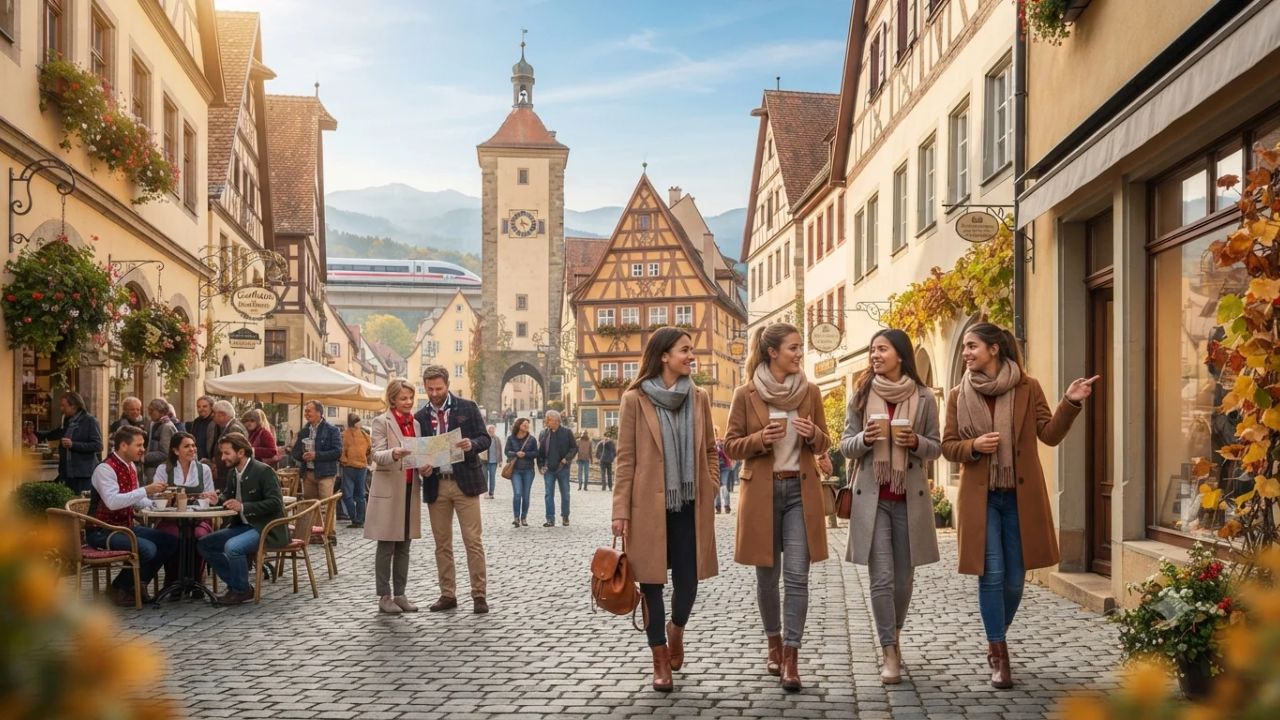
Germany’s inbound tourism sector has demonstrated resilient, high-yield expansion through the autumn of 2026, generating 26.0 billion euros in international travel receipts through August and laying the groundwork for accelerated industry growth heading into 2027. Official data aggregated by the Federal Statistical Office (Destatis) confirms that Germany welcomed 25.5 million international arrivals and recorded 57.0 million overnight stays across the first eight months of 2026, marking annual increases of 2.0 percent and 1.0 percent over the previous year. Anchored by the Netherlands as the dominant source market, persistent transatlantic strength from the United States, deep regional mobility across the DACH corridor, and rapid value gains from emerging markets like India, Germany’s visitor economy is successfully converting rising traveler spend into substantial macroeconomic momentum.
The financial trajectory of German inbound tourism highlights a defining structural shift: foreign traveler spending is expanding at nearly double the rate of physical arrival numbers. The 3.6 percent nominal increase in travel receipts—rising from 25.1 billion euros in 2025 to 26.0 billion euros in the first eight months of 2026—illustrates an expanding premium yield across hospitality, regional rail transport, and cultural entertainment. Entering the fourth quarter (Q4), which historically accounts for roughly 19.4 million inbound visits driven by trade fairs, autumn foliage tourism, and world-renowned Christmas markets, econometric models suggest that Germany will surpass 38 million annual international arrivals in 2027, lifting direct tourism Gross Value Added (GVA) beyond 144 billion euros.
========================================================================================
GERMANY INBOUND TOURISM & MACROECONOMIC PERFORMANCE SCORECARD
========================================================================================
Metric Dimension                  Recorded Baseline (2026)          Strategic Context
----------------------------------------------------------------------------------------
International Guest Arrivals      25.5 Million (Jan–Aug 2026)       +2.0% Year-on-Year Growth
International Overnight Stays     57.0 Million (Jan–Aug 2026)       +1.0% Year-on-Year Growth
Foreign Travel Receipts           €26.0 Billion (Jan–Aug 2026)      +3.6% Nominal Spend Growth
Prior-Year Comparison Receipts    €25.1 Billion (Jan–Aug 2025)      Spending outpacing arrivals
H1 2026 Overnight Stays           36.4 Million Overnights           Outperforming EU averages
Full-Year 2025 Benchmark Arrivals 37.2 Million International Guests Foundation of current growth
Full-Year 2025 Overnight Stays    83.6 Million Overnights           Establishments with 10+ beds
Historic Q4 Visitation Baseline   19.4 Million Inbound Visits       Conventions & Christmas markets
Leading Source Market (Volume)    The Netherlands (11.7M Nights '25)Cross-border rail & road feeder
Leading Long-Haul Market (Spend)  United States (6.9M Nights '25)   High spend & river cruise surge
Primary DACH Source Partners      Switzerland & Austria             11.1M combined overnights in '25
Top Destination Federal State     Bavaria (~25% of Inbound Volume)  20.6M nights; post-Oktoberfest
National Bed Occupancy Rate       37.8% (All Establishments)        Substantial non-inflationary headroom
Hotel Room Occupancy Rate         >60.4% (Properties with 25+ Beds) Resilient urban hotel performance
Average Length of Stay            2.2 Nights per Inbound Guest      Reflects short breaks & business
Direct Tourism Gross Value Added  Projected >€144 Billion (2027)    ~3.7% of Total German GDP
========================================================================================
Source: Federal Statistical Office of Germany (Destatis) & GNTO Economic Briefings (2026).
========================================================================================
The 2026 Macroeconomic Baseline: Receipts Expanding Faster Than Arrivals
To evaluate Germany’s tourism trajectory heading into 2027, the current performance must be viewed against the broader macroeconomic stabilization of the post-pandemic cycle. In 2025, Germany recorded 37.2 million international arrivals and 83.6 million overnight stays across commercial lodging establishments with ten or more beds.
The momentum established during 2025 continued into 2026:
- First Half of 2026: Germany logged 36.4 million international overnight stays, maintaining a growth trajectory that outpaced European averages.
- Eight-Month Cumulative Volume (Jan–Aug 2026): Inbound arrivals reached 25.5 million (+2.0 percent year-on-year), while international overnight stays climbed to 57.0 million (+1.0 percent year-on-year).
- Inbound Financial Inflow: Foreign travelers injected 26.0 billion euros into the German economy through August 2026, up from 25.1 billion euros during the same period in 2025.
========================================================================================
GERMAN INBOUND TOURISM VOLUME VS. VALUE COMPARISON (2025 VS. 2026)
========================================================================================
Performance Indicator             Jan–Aug 2025           Jan–Aug 2026           Delta (%)
----------------------------------------------------------------------------------------
International Arrivals            25.0 Million           25.5 Million           +2.0%
International Overnight Stays     56.4 Million           57.0 Million           +1.0%
Foreign Travel Receipts           €25.1 Billion          €26.0 Billion          +3.6%
Average Spending per Arrival      €1,004                 €1,020                 +1.6%
Average Receipts per Night        €445.0                 €456.1                 +2.5%
========================================================================================
This divergence between arrival volume (+2.0 percent) and nominal expenditure (+3.6 percent) reflects qualitative shifts in traveler behavior. Inbound visitors are engaging in higher-value activities: choosing premium regional accommodations, dining at high-end gastronomic establishments, taking multi-day scenic rail journeys across the Deutsche Bahn network, and participating in boutique river cruises along the Rhine, Main, and Danube.
Source Market Hierarchy: Profiling the Nations Driving German Tourism
The inbound traveler demographics dominating the autumn 2026 landscape reflect a balanced mix of short-haul European neighbors, a resilient North American market, and rapidly emerging Asian travel cohorts.
========================================================================================
TOP INTERNATIONAL SOURCE MARKETS SHAPING GERMANY’S TOURISM ECONOMY
========================================================================================
Rank    Source Nation    2025 Overnights    Key Characteristics & Autumn 2026 Drivers
----------------------------------------------------------------------------------------
1       Netherlands      11.7 Million       Dominant border market; rail & road short breaks
2       United States    6.9 Million        Top long-haul source; high daily spend, river cruises
3       Switzerland      6.7 Million        High-spending DACH partner; Alpine & urban transit
4       United Kingdom   4.7 Million        Weekend city breaks; Berlin cultural & nightlife draw
5       Austria          4.4 Million        Southern cross-border mobility; Bavarian culture & retail
6       India (Emerging) 604,000 (8M '26)   Fast-growing Asian market (+3.1%); family & culture tours
========================================================================================
Source: Destatis Inbound Tourism Monitoring & German National Tourist Board (2026).
========================================================================================
1. The Netherlands: The Unrivaled Inbound Anchor
The Dutch market remains the primary source of inbound tourism volume for Germany. Dutch travelers generated 11.7 million overnight stays and 5.2 million arrivals in 2025, maintaining their first-place position throughout 2026.
This sustained demand is facilitated by direct geographical proximity and robust cross-border transportation networks:
- Direct Rail Corridors: High-frequency ICE international train links connect Amsterdam, Utrecht, and Arnhem directly to Düsseldorf, Cologne, and Frankfurt.
- Regional Preferences: Dutch travelers concentrate heavily in the neighboring federal states of North Rhine-Westphalia and Lower Saxony, taking advantage of autumn school holidays for self-drive city breaks, cycling tours, and outdoor recreation in the Eifel and Harz regions.
2. The United States: Transatlantic Power and Premium Expenditure
The United States represents Germany’s second-largest source market overall and its largest long-haul origin. In 2025, American visitors accounted for 6.9 million overnight stays and 3.1 million arrivals. During autumn 2026, American travelers continued to arrive in substantial numbers, supported by a strong US dollar against the euro and robust transatlantic flight schedules operating into Frankfurt (FRA) and Munich (MUC).
American visitors play a key role in driving German tourism revenue:
- Extended Stays and High Daily Budgets: US travelers average higher discretionary budgets than continental short-haul visitors, spending extensively on four- and five-star hotels, guided cultural tours, and historic site admissions.
- River Cruise Demand: Autumn marks the peak season for luxury river cruising. US passengers dominate luxury vessel bookings along the Romantic Rhine, the Moselle wine valley, and the Upper Danube, supporting regional hospitality economies in historic towns like Heidelberg, Koblenz, and Regensburg.
3. Switzerland and Austria: The Integrated DACH Travel Corridor
Travel within the German-speaking DACH region (Germany, Austria, Switzerland) functions almost like a domestic travel market due to shared language, integrated regional rail passes, and open borders:
- Switzerland (6.7 Million Overnights in 2025): Swiss travelers represent some of the highest-yielding visitors in Europe, taking frequent short breaks across the border to shop, attend theater and classical concerts, and explore the Black Forest and Lake Constance (Bodensee).
- Austria (4.4 Million Overnights in 2025): Austrian travel flows smoothly into southern Germany, with visitors focusing on cultural festivals, university exchanges, and business congresses in Bavaria and Baden-Württemberg.
4. The United Kingdom: Urban Recovery and Cultural Weekend Travel
Following minor fluctuations in British overseas travel in 2025, the UK market stabilized during 2026, consistently contributing approximately 4.7 million overnight stays annually.
British travelers demonstrate a distinct urban focus:
- City Break Hubs: Major metropolitan areas are the primary beneficiaries of UK travel, with Berlin serving as the focal point. Berlin recorded 12.1 million total international overnights in 2025, with British travelers ranking among the top international guest cohorts drawn to the capital's art galleries, electronic music venues, and historic landmarks.
- Corporate and Event Travel: British business delegations also maintained strong attendance at major autumn trade fairs in Munich (Expo Real), Frankfurt (Frankfurt Book Fair), and Düsseldorf (Medica).
5. Emerging Growth Engine: India
While neighboring European countries deliver sheer visitor volume, Asian source markets are generating the highest proportional growth rates. Indian overnight stays in Germany rose by 3.1 percent between January and August 2026, reaching 604,000 nights.
The German National Tourist Office (GNTO / DZT) has actively cultivated this market, rolling out targeted marketing campaigns across major Indian metropolitan areas centered on four distinct pillars:
- Urban Exploration and Modern Cities: Promoting Berlin, Hamburg, and Munich as walkable, family-friendly destinations.
- Living Culture and Castles: Highlighting iconic Bavarian palaces, such as Neuschwanstein, and UNESCO heritage sites across Saxony and Thuringia.
- Culinary Diversity: Promoting Germany's expanding vegan, vegetarian, and international dining options, which cater directly to dietary preferences among Indian travelers.
- Nature and Scenic Landscapes: Encouraging multi-generational family journeys through the Bavarian Alps and the Black Forest.
This targeted marketing coincided with a significant increase in outbound leisure spending among Indian travelers. Industry research indicates that average annual Indian overseas holiday budgets expanded from $4,536 to $5,154, creating a high-spending customer base that seeks longer stays and premium regional travel experiences.
========================================================================================
INDIAN TRAVEL EXPANSION PROFILE IN GERMANY
========================================================================================
Metric                            Performance Level               Strategic Importance
----------------------------------------------------------------------------------------
Jan–Aug 2026 Overnight Volume     604,000 Stays (+3.1% YoY)       Fastest-growing Asian demographic
Average Planned Holiday Budget    Rising from $4,536 to $5,154    High-yield outbound expenditure
GNTO Focus Themes                 Culture, Cities, Cuisine, NatureTailored marketing campaigns
Average Length of Stay            3.4 Nights                      Significantly higher than EU average
Preferred Travel Seasons          May–June & October (Diwali)     Fills shoulder-season hotel inventory
========================================================================================
Regional Distribution: How Inbound Travel Spreads Across the Federal States
International arrivals in Germany are concentrated in key economic and scenic regions, though travel patterns vary substantially by state:
========================================================================================
FEDERAL STATE DISTRIBUTION OF INTERNATIONAL VISITOR OVERNIGHTS
========================================================================================
Federal State         Share of Inbound Market     Key Regional Drivers & Seasonal Highlights
----------------------------------------------------------------------------------------
Bavaria               ~25% of National Total      Alpine tourism, Neuschwanstein, Munich trade fairs
Berlin                ~15% of National Total      Diplomacy, nightlife, museums, tech conferences
Baden-Württemberg     ~12% of National Total      Black Forest, Lake Constance, Swiss border retail
North Rhine-Westphalia~14% of National Total      Dutch road/rail breaks, trade fairs (Cologne/Düsseldorf)
Hesse                 ~9% of National Total       Frankfurt international hub, financial conventions
Saxony & Others       ~25% of National Total      Dresden baroque heritage, Leipzig music, Harz nature
========================================================================================
Bavaria: The Undisputed Tourism Powerhouse
Bavaria captures roughly one out of every four international arrivals in Germany, having recorded 20.6 million foreign overnight stays in 2025. Following the conclusion of the Oktoberfest in early October, the state shifted smoothly into the autumn congress season and alpine foliage tourism. Munich's hotels maintained strong occupancy, while the surrounding Alpine regions (Garmisch-Partenkirchen, Berchtesgaden) attracted hikers and road-trippers from Switzerland, Austria, and the United States.
Berlin: Creative Hub and Conference Center
Berlin retains second place in international visitor volume. The city’s unique combination of 20th-century historical sites, world-class museum complexes on Museum Island, and vibrant creative culture makes it the primary German destination for British, American, and Italian visitors. During October 2026, major international technology summits and cultural exhibitions maintained solid hotel occupancy across Mitte and Charlottenburg.
Baden-Württemberg and the South-West
Benefiting from immediate border connections with Switzerland and France, Baden-Württemberg experienced heavy cross-border traffic. The Black Forest (Schwarzwald) welcomed outdoor enthusiasts and wellness travelers, while the university town of Heidelberg and the spa destination of Baden-Baden registered high numbers of American and Asian travelers.
Supply-Side Resilience: Capacity Headroom Without Inflationary Pressures
A key competitive advantage of the German tourism model is its capacity to absorb visitor growth without generating the severe supply shortages or local price inflation that have impacted other popular European destinations.
========================================================================================
GERMAN HOSPITALITY CAPACITY & LODGING EFFICIENCY SCORECARD
========================================================================================
Lodging Metric                    Recorded Baseline (2026)        Operational Meaning
----------------------------------------------------------------------------------------
Hotel Room Occupancy (25+ Beds)   >60.4%                          Strong commercial profitability
National Bed-Place Occupancy      37.8% (All Establishments)      Substantial headroom for 2027
Average Length of Stay            2.2 Nights                      Dominated by weekend city breaks
Establishment Threshold           Ten or More Guest Beds          Destatis statutory reporting base
Regional Pricing Stability        Moderate ADR growth (+2.8%)     Absorbs volume without price shocks
Labor Market Stabilization        Expanding vocational programs   Service quality standards maintained
========================================================================================
While hotel room occupancy for commercial properties with 25 or more rooms remained strong at over 60.4 percent, the overall national bed-place occupancy across all accommodation facilities stood at 37.8 percent.
This metric provides two valuable insights:
- Room for Growth: Germany possesses substantial physical capacity to accommodate projected visitor increases in 2027 without needing to construct speculative new infrastructure.
- Price Stability: Because lodging capacity is distributed across thousands of well-maintained regional hotels, guesthouses (Gasthöfe), and holiday apartments rather than concentrated entirely in a few overtaxed coastal resorts, average daily rates (ADR) have grown at a manageable pace (+2.8 percent), preserving Germany's reputation as a high-value destination.
The average intended length of stay for international guests hovered at 2.2 nights through October 2026. While short-haul European travelers taking weekend city breaks keep the national average near two nights, long-haul travelers from the US and India offset this with extended itineraries averaging four to seven nights.
Econometric Projections: Why 2026 Metrics Signal a Landmark 2027
The quantitative indicators gathered through the autumn of 2026 serve as dependable leading signals for 2027. Four key factors support an optimistic macroeconomic forecast for the coming year:
========================================================================================
2027 GERMAN TOURISM GROWTH DRIVERS & FORECAST TARGETS
========================================================================================
Growth Driver                     Econometric Baseline            2027 Projected Outcome
----------------------------------------------------------------------------------------
Monthly Arrival Trajectory        ~3.0 Million Arrivals / Month   Annual total surpassing 38.0M
Compounding Growth Rate           +2.0% Arrival Base in 2026      Accelerating to +3.5% in 2027
Direct Gross Value Added (GVA)    €144 Billion (3.7% of GDP '24)  Projected to exceed €152 Billion
Long-Haul Spend Acceleration      US and Indian market expansion  Total receipts exceeding €42 Billion
Q4 Campaign Conversion            Autumn marketing investments    High bookings in Q2/Q3 2027
Excess Accommodation Headroom     37.8% national bed occupancy    Suppresses overtourism friction
========================================================================================
1. Advanced Booking Momentum and Econometric Modeling
Econometric projections published by Trading Economics indicate that Germany’s international tourist arrivals will maintain a baseline pace of roughly 3.0 million visitors per month throughout 2027. This establishes a baseline of approximately 36 million arrivals, with summer peak travel and the fourth-quarter holiday season expected to lift the annual total beyond 38.0 million international arrivals—surpassing the 2025 performance.
2. High-Yield Spending Growth Outpacing Headcounts
The fact that international travel receipts grew by 3.6 percent in 2026 while arrivals expanded by 2.0 percent confirms that Germany is attracting travelers with higher disposable incomes. The combination of sustained American travel, deep DACH cross-border mobility, and rising holiday budgets from emerging markets like India indicates that direct tourism gross value added will surpass the 144 billion euro benchmark (which represented 3.7 percent of Germany’s total economic output in 2024), generating stable fiscal revenues across municipal and state governments.
3. Long Sales Cycles from Targeted Autumn Campaigns
International marketing initiatives undertaken by the German National Tourist Board in the fourth quarter of 2026 operate on extended planning cycles. High-profile campaigns promoting historic towns, romantic road itineraries, and regional culinary traditions in key outbound markets (such as the US, UK, and India) will drive booking conversions that materialize during the peak spring and summer travel periods of 2027.
========================================================================================
COMPARATIVE ANALYSIS: GERMAN TOURISM MODEL VS. SOUTHERN EUROPEAN RESORTS
========================================================================================
Dimension                 The German Tourism Model          Southern European Sun-and-Beach
----------------------------------------------------------------------------------------
Seasonality Spread        Balanced 12-month distribution    Extreme summer peaks (July–August)
Geographical Footprint    Dispersed across 16 federal statesConcentrated in coastal strips & islands
Core Attraction Base      Culture, business expos, heritage Beach leisure, nightlife, resorts
Transportation Backbone   High-speed ICE electric rail      Charter flights and rental cars
Overtourism Pressure      Low to moderate in isolated hubs  Severe in Venice, Barcelona, Mallorca
Capacity Headroom         37.8% bed occupancy (plenty space)Exhausted peak capacity, water strains
Macroeconomic Yield       High-spending corporate & cultural Mid-spending mass-market package tours
========================================================================================
Frequently Asked Questions
How many international visitors arrived in Germany during the first eight months of 2026?
Germany welcomed 25.5 million international arrivals and recorded 57.0 million overnight stays between January and August 2026, representing increases of 2.0 percent and 1.0 percent compared to the same period in 2025.
What was the economic impact of foreign travel receipts in Germany through August 2026?
International visitors generated 26.0 billion euros in travel receipts in the first eight months of 2026, marking a 3.6 percent nominal increase over the 25.1 billion euros recorded during the same period in 2025.
Which country is Germany's largest inbound tourism source market?
The Netherlands is Germany's largest source market, contributing 11.7 million overnight stays and 5.2 million arrivals in 2025, and maintaining its top ranking throughout 2026 due to direct cross-border rail and road connections.
How did the United States market perform in Germany in 2026?
The United States maintained its position as Germany’s second-largest source market overall and its largest long-haul market, generating high-yield spending on luxury lodging, cultural tours, and autumn river cruises along the Rhine and Danube.
Why is the DACH region important for German tourism?
The DACH region (Germany, Austria, Switzerland) functions as an integrated regional travel market. In 2025, Switzerland and Austria generated 6.7 million and 4.4 million overnight stays, respectively, with visitor flows concentrated in Bavaria and Baden-Württemberg.
Which German federal state attracts the highest number of international tourists?
Bavaria is Germany's most-visited state, capturing approximately 25 percent of all international arrivals and recording 20.6 million foreign overnight stays in 2025, supported by Alpine landscapes, historic palaces, and Munich's trade fairs.
What is the average length of stay for international tourists in Germany?
The average intended length of stay for international visitors was 2.2 nights in autumn 2026, reflecting the high proportion of short-haul European weekend breaks and corporate trips.
How rapidly is the Indian travel market growing in Germany?
Indian overnight stays expanded by 3.1 percent between January and August 2026, reaching 604,000 nights. The growth is supported by GNTO promotional campaigns focused on culture, cities, cuisine, and nature, alongside rising average Indian overseas holiday budgets ($5,154).
What is Germany's national hotel bed occupancy rate, and why is it significant?
The national bed-place occupancy rate stood at 37.8 percent across all accommodation facilities in 2026. This indicates significant available capacity to accommodate projected 2027 tourism growth without causing local supply shortages or price inflation.
What are the tourism forecasts for Germany in 2027?
Econometric models project international arrivals to maintain a monthly baseline of 3 million, with annual totals expected to exceed 38 million in 2027. Direct tourism gross value added is projected to surpass 144 billion euros, accounting for more than 3.7 percent of GDP.
Strategic Takeaways: The Foundations of Sustainable Tourism Growth
Germany’s performance through autumn 2026 demonstrates how a mature destination can achieve steady economic expansion through balanced management:
========================================================================================
STRATEGIC LESSONS IN DESTINATION RESILIENCE
========================================================================================
Mass Tourism Vulnerability                The German High-Yield Model
----------------------------------------------------------------------------------------
Chases raw visitor arrival volume.        Prioritizes travel receipts & macroeconomic spend.
Relies on seasonal summer spikes.         Balances year-round corporate, cultural & holiday demand.
Suffers coastal infrastructure strain.    Distributes visitors across 16 federal states via rail.
Faces price spikes and bed shortages.     Maintains capacity headroom (37.8% bed occupancy).
Dependence on single source markets.      Balances European neighbors, the US, and emerging Asia.
========================================================================================
First, Germany demonstrates the advantage of prioritizing traveler yield over volume. By generating a 3.6 percent increase in travel receipts on a 2.0 percent rise in arrivals, the destination is capturing higher economic value per visitor without placing undue strain on local communities.
Second, the geographic dispersion of visitors across all 16 federal states—connected by high-speed electric rail—shields Germany from the severe overtourism pressures seen in many Mediterranean coastal areas.
Finally, the balanced mix of reliable European short-haul partners, high-spending transatlantic travelers from the United States, and fast-growing cohorts from India creates a resilient demand base. As the global travel sector heads toward 2027, Germany’s tourism industry is well positioned to deliver sustained economic value while offering visitors world-class cultural, urban, and natural experiences.
Related Travel Guides
- Chongqing Secures Ninth Place in China Inbound Tourism Spending as International Receipts Hit $2.48 Billion Amid 68% Visitor Surge
- Quark Expeditions Completes Historic Snow Hill Helicopter Landing as 137 Guests Witness Over 4,000 Emperor Penguin Pairs in Antarctica
- Tunisia Tourism Receipts Reach $2.38 Billion as Over Nine Million Visitors Drive 2027 Parliamentary Budget Strategy
- Macao Targets 41 Million Visitors in 2026 as European Travel Rebound and Greater Bay Area Gateways Power Global Inbound Revival
This article is for informational purposes. Flight routes, passenger regulations, visa rules, and transit advisories are subject to change by airlines and aviation authorities. Readers are advised to verify schedules and travel documentation with relevant carriers and border agencies before departure.
Related Stories
Germany Achieves Record Tourism Momentum as International Overnight Stays Jump 4.8% in September 2026
Croatia Tourism Faces Value-for-Money Pressure as Daily Adriatic Spend Reaches €162 Amid 2027 Strategic Planning Shift