Germany Achieves Record 389.8 Million Overnight Stays as International Visitors Fuel 100% of September Tourism Growth

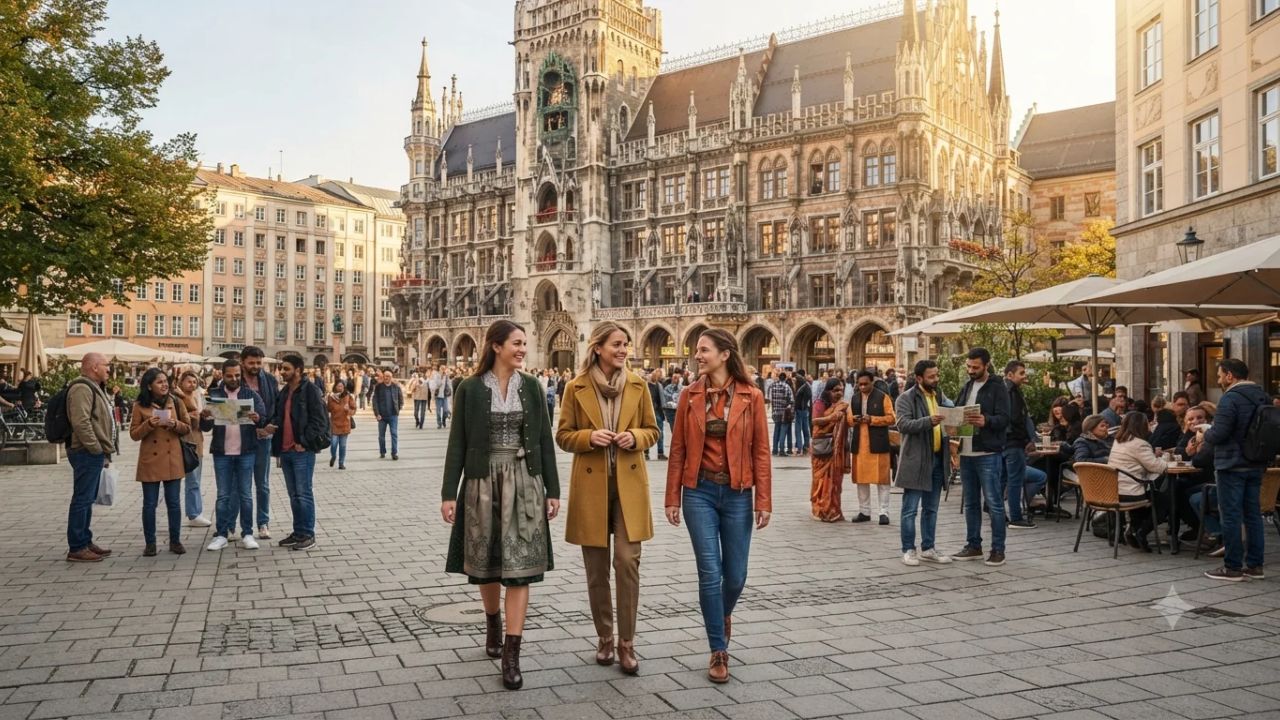
Germany’s accommodation sector has achieved an unprecedented historic milestone, registering 389.8 million overnight stays across the first nine months of 2026 to surpass the previous all-time benchmark established in 2025. Official data released by the Federal Statistical Office (Destatis) reveals a striking structural shift in the nation’s visitor economy: while domestic demand plateaued during early autumn, foreign visitors surged by 4.8 percent in September to generate 8.1 million overnight stays, single-handedly accounting for 100 percent of the country’s net monthly tourism expansion. Driven by double-digit summer momentum from the Netherlands and Brazil alongside robust cross-border arrivals from France, Poland, Switzerland, and India, Germany's lodging sector is now within reach of securing its third consecutive full-year record as the travel industry enters the fourth-quarter holiday and convention season.
The preliminary nine-month figures demonstrate the growing economic importance of international travelers to the Federal Republic. Between January and September 2026, commercial accommodation establishments—encompassing hotels, traditional inns, boarding houses, vacation rentals, and campsites with at least ten beds or pitches—added 2.2 million overnight stays compared to the corresponding period in 2025. Beneath this headline gain of 0.6 percent lies a marked divergence: domestic overnight stays by German residents edged up by just 0.4 percent to 324.7 million, while international overnight stays expanded nearly four times as fast, climbing 1.5 percent to reach 65.0 million. This international acceleration peaked dramatically in September, demonstrating how foreign demand has become the primary catalyst for national tourism growth.
========================================================================================
GERMANY NINE-MONTH HOSPITALITY & OVERNIGHT STAY SCORECARD (2026)
========================================================================================
Performance Dimension             Recorded Volume (2026)            Year-on-Year Dynamics
----------------------------------------------------------------------------------------
Total 9-Month Overnight Stays     389.8 Million Overnights          +0.6% (+2.2M Stays vs 2025)
Prior 9-Month Record (2025)       387.6 Million Overnights          Previous historic benchmark
Domestic Overnight Stays (9M)     324.7 Million Stays (~83% Share)  +0.4% Modest baseline growth
International Overnight Stays (9M)65.0 Million Stays (~17% Share)   +1.5% Outpacing domestic rate
September Total Overnight Stays   48.9 Million Overnights           +0.8% Total monthly increase
September Domestic Stays          40.8 Million Stays (~83.4% Share) 0.0% Stagnant / Flat YoY
September International Stays     8.1 Million Stays (~16.6% Share)  +4.8% Late-season foreign surge
Net Growth Driver (September)     International Visitors            Accounted for 100% of net growth
July Long-Haul Standout           Brazil (+16.0% YoY Growth)        Fastest-growing intercontinental
July European Border Standout     Netherlands (+11.6% YoY Growth)   Leading volume driver
Key Cross-Border Partners (July)  France (+3.6%) & Poland (+3.6%)   Central European strength
Asian Growth Market (July)        India (+3.6% YoY Growth)          High-yield outbound expansion
Alpine Partner Market (July)      Switzerland (+2.9% YoY Growth)    Stable high-spending neighbor
H1 Continental Comparison (EU)    EU Overnight Growth: +1.7%        Germany H1 Growth: +0.5%
Target for 3rd Full-Year Record   107.6 Million Stays in Q4         Needed to beat 2025 (497.4M)
========================================================================================
Source: Federal Statistical Office of Germany (Destatis, Wiesbaden, November 2026).
========================================================================================
The Nine-Month Landmark: Deconstructing the 389.8 Million Record
The achievement of 389.8 million overnight stays between January and September 2026 confirms that Germany’s tourism infrastructure continues to operate at peak historical capacity. By exceeding the previous nine-month record of 387.6 million stays set in 2025, the country has added 2.2 million additional guest nights across its lodging network.
However, an analysis of the underlying data reveals significant contrasts between market segments:
========================================================================================
DOMESTIC VS. INTERNATIONAL PERFORMANCE DIVERGENCE (JAN–SEP 2026)
========================================================================================
Traveler Segment        Overnight Volume    Market Share (%)    Year-on-Year Growth Rate
----------------------------------------------------------------------------------------
Domestic (German)       324.7 Million       83.3%               +0.4%
International (Foreign) 65.0 Million        16.7%               +1.5%
Total National Volume   389.8 Million       100.0%              +0.6%
========================================================================================
Source: Destatis Inbound Tourism Monitoring (November 2026).
========================================================================================
While German residents continue to form the foundation of the accommodation industry—accounting for more than eight out of every ten overnight stays—domestic consumption has shown signs of plateauing. Factors such as general consumer price sensitivity, broader economic restructuring, and outbound holiday preferences among German residents kept domestic stay growth to a modest 0.4 percent.
In contrast, international inbound travel grew at nearly four times the domestic pace (+1.5 percent), generating 65.0 million stays. This influx proved essential in maintaining overall industry expansion, providing hotels, rural guesthouses, and municipal cultural venues with a steady stream of foreign expenditure.
September Dynamics: How International Travel Delivered 100% of National Growth
The defining operational story of the 2026 travel calendar occurred in September. Historically a shoulder transition month between summer family vacations and autumn trade fairs, September 2026 developed into a major showcase of international travel demand.
During September, total overnight stays across Germany reached 48.9 million, an overall gain of 0.8 percent compared to September 2025:
========================================================================================
SEPTEMBER 2026 OVERNIGHT STAY GROWTH CONTRIBUTION
========================================================================================
Visitor Category        September 2026 Stays    YoY Percentage Shift    Net Absolute Change
----------------------------------------------------------------------------------------
German Domestic Guests  40.8 Million            0.0% (Completely Flat)  ±0 Stays
International Guests    8.1 Million             +4.8% Expansion         +370,000 Stays
Total Accommodation     48.9 Million            +0.8% Net Expansion     +370,000 Stays
========================================================================================
Mathematical Impact: International travelers generated 100.0% of Germany's net growth in September.
========================================================================================
A closer examination of the numbers highlights an extraordinary mathematical reality:
- Domestic Demand Stagnated: German domestic travelers registered exactly 40.8 million overnight stays in September—a figure unchanged (0.0 percent growth) from September 2025.
- International Demand Surged: Foreign visitors generated 8.1 million overnight stays, representing a sharp 4.8 percent year-on-year increase.
- The Sole Growth Engine: Because domestic demand remained flat, foreign visitors were responsible for 100 percent of Germany’s net tourism growth during the entire month.
In addition, September’s 4.8 percent jump in foreign stays significantly exceeded the 1.0 percent cumulative foreign growth rate recorded through August. This late-season surge indicates that international travelers actively extended their European itineraries into the pleasant late-summer and early-autumn shoulder season.
========================================================================================
SUMMER INBOUND ACCELERATION TRAJECTORY (JUNE–SEPTEMBER 2026)
========================================================================================
Month             Foreign Overnight Stays     Year-on-Year Growth     Operational Highlight
----------------------------------------------------------------------------------------
June 2026         ~8.5 Million                +1.3%                   Early summer baseline
July 2026         ~10.1 Million               +3.2%                   Peak mid-summer acceleration
August 2026       9.9 Million                 +1.3%                   High summer holiday volume
September 2026    8.1 Million                 +4.8%                   Post-summer shoulder boom
========================================================================================
Cumulative Jan–Aug: 57.0 Million Stays (+1.0%) | Cumulative Jan–Sep: 65.0 Million Stays (+1.5%)
========================================================================================
The Source Market Engine: The Netherlands, Brazil, and Strategic Cross-Border Feeder Networks
The late-season surge was built upon strong momentum developed across key international source markets throughout the summer. While detailed country-level figures for September are scheduled for final release in late November, data from July 2026 illustrates the diverse geographic drivers powering inbound travel to Germany.
========================================================================================
KEY INBOUND SOURCE MARKETS DRIVING SUMMER MOMENTUM (JULY 2026 BENCHMARK)
========================================================================================
Source Nation     Market Classification    July YoY Growth     Key Travel Driver & Geographic Impact
----------------------------------------------------------------------------------------
Brazil            Long-Haul Intercontinental+16.0%             Leading long-haul growth; cultural tours
Netherlands       Bordering European       +11.6%             Uncontested volume leader; road/rail trips
France            Bordering European       +3.6%              Cross-border culture, wine & nature breaks
Poland            Bordering European       +3.6%              Central European business & leisure stays
India             Long-Haul Intercontinental+3.6%              High-spending family & city itineraries
Switzerland       Bordering European       +2.9%              High-yield Alpine & southern border spend
========================================================================================
Source: Destatis Market Segment Analytics & GNTO Research (2026).
========================================================================================
1. Brazil: The Intercontinental Growth Standout
Recording an impressive 16.0 percent year-on-year surge in overnight stays in July, Brazil emerged as Germany’s fastest-growing highlighted long-haul market. The expansion was propelled by expanded airline seat capacity on direct flight corridors connecting São Paulo (GRU) and Rio de Janeiro (GIG) to Frankfurt (FRA) and Munich (MUC). Brazilian travelers demonstrated strong demand for multi-city cultural itineraries, combining historic architectural touring in Bavaria and Saxony with urban explorations of Berlin and Hamburg.
2. The Netherlands: The Unrivaled Inbound Pillar
As Germany’s primary foreign source market, the Netherlands delivered outstanding performance, surging by 11.6 percent year-on-year in July. Supported by high-speed ICE railway links connecting Amsterdam and Utrecht to western Germany, Dutch travelers took advantage of summer holiday periods to explore neighboring states. North Rhine-Westphalia, Lower Saxony, and Rhineland-Palatinate experienced heavy Dutch visitation across outdoor camping parks, hiking trails in the Eifel, and family cycling routes along the Rhine and Moselle rivers.
3. Central and Western European Neighbors
Bordering European nations provided steady, high-volume demand:
- France (+3.6%): French travelers focused on southwestern Germany, with significant cross-border flows into the Black Forest (Schwarzwald), Baden-Baden wellness spas, and Heidelberg cultural routes.
- Poland (+3.6%): Matching France’s growth rate, Polish travelers reinforced eastern corridors, contributing strong business and leisure stays across Berlin, Dresden, and Leipzig.
- Switzerland (+2.9%): Swiss visitors remained essential high-spending partners, taking frequent short-break trips across the southern border into Bavaria and Lake Constance (Bodensee).
4. India: Sustained Long-Haul Momentum
The Indian market recorded a solid 3.6 percent year-on-year increase in July, continuing the strong trajectory that generated 604,000 overnight stays across the first eight months of 2026. Supported by targeted marketing campaigns from the German National Tourist Office (GNTO) highlighting castles, urban sightseeing, family-friendly activities, and vegetarian culinary diversity, Indian travelers increasingly favored longer, immersive regional stays.
Structural Analysis: Germany’s Domestic Footprint vs. Broader European Union Trends
While establishing a new national record represents a significant accomplishment for Germany’s hospitality industry, a broader continental comparison highlights important structural differences between Germany and other European Union member states.
During the first half of 2026, total overnight stays across the entire European Union increased by 1.7 percent compared to the same period in 2025. In contrast, Germany recorded overall hospitality growth of 0.5 percent during the same six-month window.
========================================================================================
STRUCTURAL COMPARISON: GERMANY VS. EUROPEAN UNION AVERAGE (H1 2026)
========================================================================================
Metric Dimension                  Germany (H1 2026)                 European Union (H1 2026)
----------------------------------------------------------------------------------------
Total Overnight Growth Rate       +0.5% Year-on-Year Growth         +1.7% Year-on-Year Growth
Domestic Overnight Growth Rate    +0.3% Moderate Domestic Expansion +0.9% Domestic Expansion
Foreign Overnight Growth Rate     +1.4% Steady Foreign Inflow       +2.5% Strong Continental Growth
Domestic Market Share             ~81.5% of Total Stays             ~51.1% of Total Stays
Foreign Market Share              18.5% of Total Stays              48.9% of Total Stays
Exposure to Inbound Global Travel Low (Protected by Home Market)    High (Driven by Inbound Tourism)
========================================================================================
Source: Eurostat Comparative Tourism Datasets & Destatis Compilation (2026).
========================================================================================
This growth differential is directly linked to how heavily destinations rely on international versus domestic travelers:
- The European Union Profile: Across the EU as a whole, foreign visitors account for almost half (48.9 percent) of all commercial accommodation nights. In holiday destinations such as Spain, Greece, Portugal, and Croatia, international travelers represent 60 to 85 percent of total lodging nights, allowing those economies to benefit directly from global post-pandemic travel demand.
- The German Domestic Anchor: In Germany, domestic travelers represent more than four-fifths (83 percent) of total demand, leaving international travelers with an approximate 17 percent share.
In both Germany and the broader European Union, international tourism grew significantly faster than domestic travel. However, because Germany’s massive domestic base expanded at a modest 0.4 percent rate, the headline national growth figure appeared subdued compared to nations with larger foreign visitor shares.
This domestic reliance serves as a double-edged sword: while it insulates Germany from abrupt international crises or geopolitical travel disruptions, it means national tourism growth is closely tied to domestic consumer sentiment.
The Mathematical Threshold: The Race for a Third Consecutive Annual Record
Germany’s strong nine-month performance positions the country to potentially achieve its third consecutive full-year tourism record.
========================================================================================
GERMANY FULL-YEAR OVERNIGHT STAY HISTORICAL TRAJECTORY
========================================================================================
Calendar Year           Total Annual Overnights           Historical Significance
----------------------------------------------------------------------------------------
2019                    495.6 Million Overnights          Pre-pandemic historical record
2024                    496.0 Million Overnights          First post-pandemic record high
2025                    497.4 Million Overnights          All-time national record (+0.3% YoY)
Jan–Sep 2026 (Actual)   389.8 Million Overnights          New all-time 9-month record (+0.6%)
Target to Beat 2025     107.6 Million Overnights in Q4    Required to set third consecutive record
========================================================================================
To break the 2025 all-time record of 497.4 million overnight stays, registered lodging establishments must achieve 107.6 million overnight stays during the fourth quarter (October through December).
While this 107.6 million figure represents an empirical target rather than an official forecast, historical seasonal patterns suggest it is well within reach:
- Trade Fair and Exhibition Season: October and November represent the peak annual period for major international trade fairs and corporate congresses in Frankfurt, Munich, Düsseldorf, Hanover, and Cologne, filling urban business hotels.
- The Advent Christmas Market Season: Beginning in late November and running through Christmas Eve, Germany’s historic Christmas markets (Weihnachtsmärkte) in Nuremberg, Dresden, Munich, Cologne, and Rothenburg ob der Tauber attract millions of overnight visitors from the UK, the US, Austria, Switzerland, and Italy.
- Alpine Early-Winter Sports: December brings the opening of winter sports seasons in the Bavarian Alps (Zugspitze, Garmisch-Partenkirchen, Oberstdorf), drawing domestic and cross-border ski enthusiasts.
If international arrivals maintain their September momentum (+4.8 percent) through the fourth quarter, foreign demand will comfortably provide the necessary margin to secure an all-time annual record.
Regional Footprint and Lodging Capacity: Headroom Without Strain
A major operational strength of the German hospitality sector is its geographical balance. Unlike southern European destinations where tourism is heavily concentrated along fragile coastlines, Germany’s accommodation capacity is distributed across 16 federal states.
========================================================================================
REGIONAL DISTRIBUTION & LODGING CAPACITY DYNAMICS
========================================================================================
Federal Region          Primary Demand Drivers            Capacity & Operational Character
----------------------------------------------------------------------------------------
Bavaria                 Alpine leisure, Munich congresses Large bed capacity; strong summer & winter
North Rhine-Westphalia  Dutch cross-border, industrial    High urban hotel density; trade fairs
Baden-Württemberg       Black Forest, Swiss border retail Balanced outdoor leisure & corporate travel
Berlin                  Culture, diplomacy, tech expos    High international share (~40% foreign)
Hesse                   Frankfurt international hub       Dominant business & aviation transit hub
Saxony & Thuringia      Cultural heritage, historic towns Strong autumn & Christmas market appeal
========================================================================================
With national bed-place occupancy standing at 37.8 percent across all registered accommodation establishments, Germany has substantial capacity to absorb expanding international visitor numbers without generating the acute overtourism friction or lodging shortages seen in Mediterranean resort areas. This capacity headroom ensures that room rates remain competitive, providing travelers with solid value for money while supporting sustainable, year-round industry growth.
Comprehensive Frequently Asked Questions
What new tourism record did Germany set between January and September 2026?
Germany achieved an all-time nine-month record of 389.8 million overnight stays in registered accommodation establishments, surpassing the previous record of 387.6 million set during the same period in 2025 by 0.6 percent (an additional 2.2 million nights).
How did international tourist growth compare to domestic traveler growth in 2026?
Over the first nine months of 2026, overnight stays by international visitors increased by 1.5 percent to reach 65.0 million, while domestic stays by German residents rose by just 0.4 percent to 324.7 million.
Why was September 2026 particularly significant for German tourism?
In September 2026, international travelers accounted for 100 percent of Germany's net tourism growth. Domestic stays were completely flat (0.0 percent growth at 40.8 million), while foreign stays surged by 4.8 percent to 8.1 million.
Which countries drove Germany's inbound tourism growth during the summer?
Key growth drivers included Brazil (+16.0% YoY in July), the Netherlands (+11.6%), France (+3.6%), Poland (+3.6%), India (+3.6%), and Switzerland (+2.9%).
Why is the Netherlands so important to the German tourism industry?
The Netherlands is Germany's largest foreign source market, generating massive road and rail-based travel volume into neighboring western and northern states, including North Rhine-Westphalia, Lower Saxony, and Rhineland-Palatinate.
How did Germany's tourism growth compare to the broader European Union average?
During the first half of 2026, total EU overnight stays grew by 1.7 percent, while Germany grew by 0.5 percent. This difference occurred because foreign travelers represent 48.9 percent of all stays across the EU, but only 18.5 percent in Germany, where slower domestic growth moderated headline numbers.
What accommodations are included in the official Destatis statistics?
Destatis includes all registered commercial accommodation establishments with at least ten guest beds or camping pitches, including hotels, guesthouses, boarding houses, holiday home complexes, and commercial campsites. Private rentals with fewer than ten beds are excluded.
What is required for Germany to achieve a third consecutive annual record in 2026?
To beat the 2025 all-time full-year record of 497.4 million overnight stays, Germany's lodging sector needs to generate approximately 107.6 million overnight stays during the fourth quarter (October through December).
What factors drive German tourism demand during the fourth quarter?
Fourth-quarter demand is driven by major international trade fairs and corporate congresses in October and November, followed by the world-famous Christmas market season and early winter sports in December.
Does Germany suffer from the severe overtourism seen in Mediterranean destinations?
No. Germany's accommodation capacity is distributed across 16 federal states and maintains an average bed-place occupancy rate of 37.8 percent, allowing the country to absorb international visitor growth smoothly without severe supply bottlenecks.
Strategic Takeaways: The Maturation of Germany’s Inbound Hospitality Model
The record-setting performance of Germany’s accommodation industry through September 2026 provides important insights into the changing dynamics of European travel:
========================================================================================
STRATEGIC LESSONS IN NATIONAL TOURISM MATURATION
========================================================================================
Conventional Tourism Assumptions          The German Structural Reality
----------------------------------------------------------------------------------------
Expects domestic demand to lead expansion.International inbound delivers 100% of marginal growth.
Relies on single summer peak period.      Expands shoulder-season momentum through September.
Focuses only on traditional European ties.Balances neighboring partners with high-growth Brazil & India.
Assumes large domestic base ensures growth.Domestic stagnation requires foreign market acceleration.
Equates records with overtourism strains. Dispersed federal infrastructure absorbs growth smoothly.
========================================================================================
First, Germany demonstrates that even in a heavily domestic-dominated travel economy, international visitors are essential for generating net growth. As domestic consumer spending moderated, foreign travelers stepped in to drive 100 percent of September’s national expansion.
Second, the diversification of source markets—combining high-volume European neighbors like the Netherlands and France with fast-expanding intercontinental markets like Brazil and India—provides resilience against localized economic downturns.
Finally, as the hospitality industry heads toward the fourth-quarter holiday season, Germany’s balanced regional infrastructure and available lodging capacity position the country to challenge for its third consecutive annual tourism record, reinforcing its reputation as a dependable, year-round European travel destination.
Related Travel Guides
- Croatia Tourism Faces Value-for-Money Pressure as Daily Adriatic Spend Reaches €162 Amid 2027 Strategic Planning Shift
- German Airports Deploy Real-Time Baggage Tracking as New EU Passenger Rights Mandate Standardized Claim Forms and Rerouting by 2027
- Germany Travel Industry Projects Major 2027 Expansion as Inbound Receipts Reach €26 Billion Driven by European and US Demand
- Chongqing Secures Ninth Place in China Inbound Tourism Spending as International Receipts Hit $2.48 Billion Amid 68% Visitor Surge
This article is for informational purposes. Flight routes, passenger regulations, visa rules, and transit advisories are subject to change by airlines and aviation authorities. Readers are advised to verify schedules and travel documentation with relevant carriers and border agencies before departure.
Related Stories
Germany Travel Industry Projects Major 2027 Expansion as Inbound Receipts Reach €26 Billion Driven by European and US Demand
Germany Achieves Record Tourism Momentum as International Overnight Stays Jump 4.8% in September 2026