Tunisia Welcomes Nine Million Visitors as Tourism Receipts Reach 7.15 Billion Dinars: Mediterranean Expansion and 2030 Strategic Roadmap

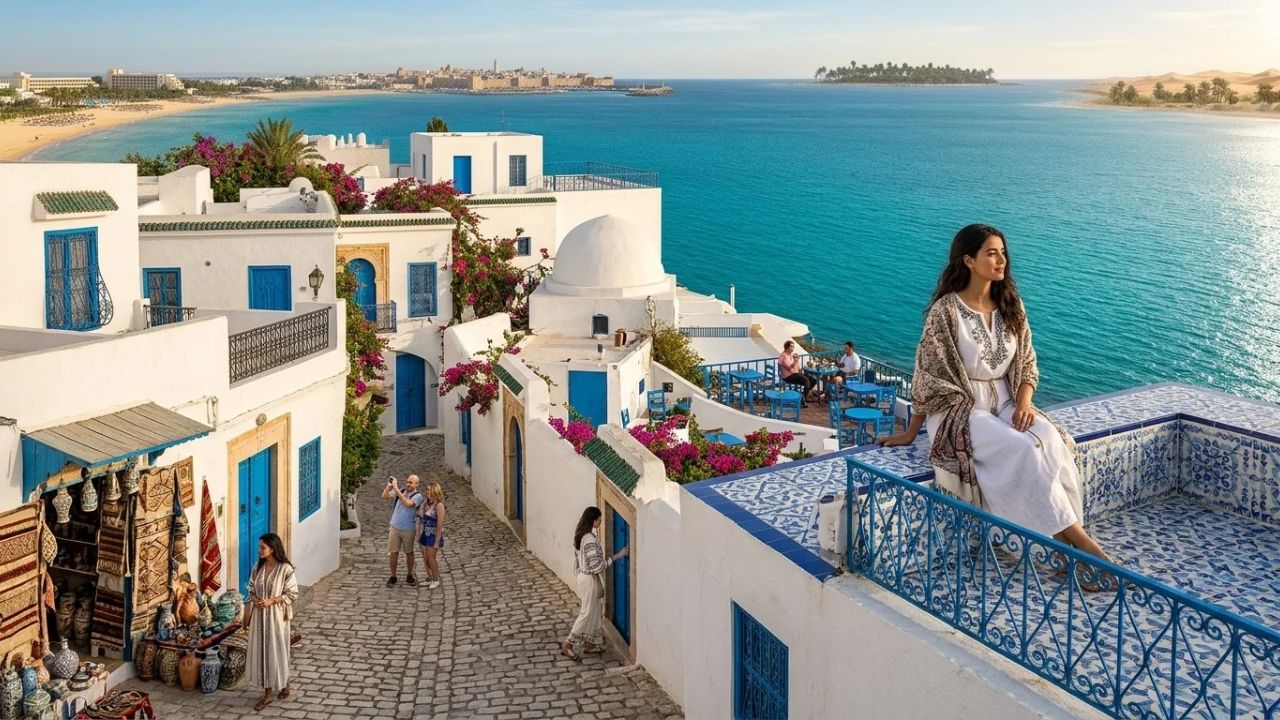
Tunisia’s tourism economy has accelerated its post-pandemic expansion, recording approximately nine million non-resident arrivals and 7.152 billion Tunisian dinars (approximately US$2.38 billion) in tourism receipts during the first ten months of 2026. Presented by Tourism Minister Sofiane Tekaya during parliamentary budget deliberations, the official data marks a 3.4 percent revenue increase over 2025 and a striking 25.1 percent surge compared to pre-pandemic 2019 levels, propelled by resilient European leisure demand, dynamic domestic hotel occupancy, and an ambitious national blueprint targeting 26 million annual visitors by 2030.
The strong performance across the January-to-October operating period highlights the North African nation's growing appeal as a competitive alternative to established northern Mediterranean resorts. By pairing expansive Mediterranean coastlines with UNESCO-inscribed Roman antiquity, fortified medieval medinas, and southern Saharan expeditions, Tunisia has broadened its appeal across diverse traveler segments. The financial indicators demonstrate that visitor expenditures are expanding at a faster pace than physical arrivals, reinforcing the Ministry of Tourism’s policy shift from pure volume metrics toward higher per-capita economic yield.
While the nine million figure encompasses total non-resident border entries—including cross-border transit and business travelers alongside leisure holidaymakers—the hospitality sector has demonstrated broad-based operational health. Over two million domestic residents supported local hotels during the period, accounting for more than a third of total room occupancy. Supported by strategic hotel reopenings, upgraded regulatory classifications, and digital promotion campaigns offering off-peak discounts of up to 50 percent, Tunisia is constructing a resilient, year-round tourism framework.
========================================================================================
TUNISIA TOURISM PERFORMANCE SCORECARD (JANUARY–OCTOBER 2026)
========================================================================================
Performance Indicator                Recorded Official Metric          Comparative Growth Rate
----------------------------------------------------------------------------------------
Total Non-Resident Arrivals          Approximately 9.0 Million         Sustained Upward Momentum
Total Tourism Receipts (Gross)       7.152 Billion Tunisian Dinars     +3.4% vs Jan–Oct 2025
US Dollar Equivalent Receipts        Approximately US$2.38 Billion     Record Foreign Exchange Inflow
Long-Term Pre-Pandemic Comparison    Exceeds 2019 Baseline             +25.1% vs Jan–Oct 2019
Domestic Hotel Guest Volume          Over 2.0 Million Residents        35.7% of Total Hotel Occupancy
National 2030 Arrival Target         26.0 Million Annual Visitors      National Strategic Master Plan
Closed Hotel Rehabilitation          28 Reopened; 11 Pending           Targeted Debt & Management Relief
========================================================================================
Data Sources: Ministry of Tourism and Handicrafts & National Institute of Statistics (INS).
========================================================================================
Macroeconomic Significance: National Satellite Accounts and GDP Contributions
Tourism represents one of Tunisia’s most vital sources of hard foreign currency, employment generation, and regional capital development. Data compiled by the National Institute of Statistics (Institut National de la Statistique - INS) through its Tourism Satellite Accounts reveals that the sector's economic footprint extends far beyond direct accommodation billings.
========================================================================================
ECONOMIC VALUE CREATION: TUNISIA TOURISM SATELLITE ACCOUNTS
========================================================================================
Economic Indicator                   National Valuation                Share of National Aggregate
----------------------------------------------------------------------------------------
Direct Tourism Gross Domestic Product8.935 Billion Tunisian Dinars     5.2% of Total National GDP
Direct Tourism Gross Value Added     8.663 Billion Tunisian Dinars     5.4% of Total National GVA
Total Tourism Consumption (Combined) 17.472 Billion Tunisian Dinars    Comprehensive Sector Spend
International Visitor Consumption    12.771 Billion Tunisian Dinars    73.1% of Total Consumption
Domestic Resident Consumption        4.701 Billion Tunisian Dinars     26.9% of Total Consumption
========================================================================================
Source: National Institute of Statistics (INS) Official Economic Satellite Analysis.
========================================================================================
In 2025, direct tourism gross domestic product reached approximately 8.935 billion dinars, representing 5.2 percent of national GDP. Direct gross value added generated by tourism activities totaled 8.663 billion dinars, or 5.4 percent of national gross value added. When factoring in indirect supply-chain linkages—including food production, commercial transport, artisanal leather and ceramics manufacturing, and construction—the sector underpins roughly 12 to 14 percent of total national employment.
Total internal tourism consumption reached 17.472 billion dinars. International visitor expenditure generated 12.771 billion dinars, or 73.1 percent of the total, providing foreign exchange reserves essential for stabilizing the national balance of payments and servicing import requirements. Domestic resident travelers contributed 4.701 billion dinars (26.9 percent), proving that internal consumer demand provides an indispensable financial floor for regional hospitality operators during shoulder and winter periods.
Source Market Dynamics: European Primacy and High-Growth Inbound Corridors
The geographic distribution of visitor spending reveals that traditional European source markets remain the primary engine of Tunisia’s tourism economy, while newer long-haul markets show rapid percentage gains.
========================================================================================
INTERNATIONAL SOURCE MARKET REVENUE CONTRIBUTIONS (ANNUAL BENCHMARKS)
========================================================================================
Source Market / Origin Region        Revenue Share / Tally             Operational Characteristics
----------------------------------------------------------------------------------------
European Union & United Kingdom      64.8% of Total Tourism Revenue    Core market for sun, sea, & culture;
                                                                       strong package holiday volume.
----------------------------------------------------------------------------------------
France                               #1 European Revenue Source        Deep cultural & diaspora connections;
                                                                       high individual and group travel.
----------------------------------------------------------------------------------------
Germany                              #2 Key European Contributor       High-spending resort clientele;
                                                                       focus on Djerba, golf, and wellness.
----------------------------------------------------------------------------------------
Poland & Central Europe              Rapidly Expanding European SegmentHigh-volume summer charter flights
                                                                       filling seaside resorts in Hammamet.
----------------------------------------------------------------------------------------
Italy & United Kingdom               Top-Tier European Generators      Sustained city breaks, archaeological
                                                                       trips, and winter sunshine holidays.
----------------------------------------------------------------------------------------
Russian Federation                   +83.0% Year-on-Year Revenue GrowthExceptional financial rebound;
                                                                       growing demand for all-inclusive stays.
----------------------------------------------------------------------------------------
People's Republic of China           Exceeded 40 Million TND Receipts  High-yield cultural & heritage travel;
                                                                       focus on Carthage, El Jem, and Sahara.
----------------------------------------------------------------------------------------
Japan                                Exceeded 40 Million TND Receipts  High-value educational tourism;
                                                                       gastronomy, handicrafts, and desert tours.
========================================================================================
In 2025, European travelers generated 64.8 percent of all international tourism receipts. France maintained its position as the leading inbound revenue market, supported by strong bilateral flight connectivity, shared linguistic ties, and a large French-Tunisian diaspora community. Germany followed as the second-largest European market, characterized by longer average lengths of stay and significant spending on thalassotherapy wellness retreats and golf holidays in Djerba and Monastir.
Poland established itself as a major powerhouse in Central Europe, with charter flight operators funneling thousands of package tourists into Hammamet, Sousse, and Mahdia. The United Kingdom and Italy demonstrated sustained vitality, with British travelers increasingly booking Tunisia as an affordable alternative to Spain and Greece for autumn and winter sun breaks.
Beyond Western Europe, the Russian outbound travel market recorded a notable financial revival, with tourism receipts jumping by more than 83 percent year-on-year. In East Asia, both China and Japan surpassed 40 million dinars in direct tourism spending. Although East Asian arrivals represent smaller overall passenger tallies, these travelers exhibit higher per-diem spending, prioritizing boutique historic hotels, guided archaeological tours of Carthage and Dougga, and specialized photographic excursions into the southern dunes.
The Domestic Backbone: Internal Travel Patterns and Off-Season Discount Programs
While international arrivals capture headlines, Tunisia’s domestic travel market provides structural stability to the hospitality ecosystem. During the first ten months of 2026, more than two million Tunisian residents checked into licensed domestic hotels, representing 35.7 percent of total hotel clientele.
========================================================================================
DOMESTIC TOURISM PROFILE & PROMOTIONAL STIMULUS
========================================================================================
Domestic Indicator                   Statistical Performance Metric    Economic Implication
----------------------------------------------------------------------------------------
Domestic Hotel Guests (10M 2026)     Over 2.0 Million Residents        Maintains base room occupancy levels
Share of Total Hotel Clientele       35.7% of All Registered Guests    Prevents off-season resort closures
Domestic Spending Contribution       4.701 Billion Tunisian Dinars     Circulates capital into regional areas
Promotional Digital Discounts        Up to 50% Early-Booking ReductionsIncentivizes advance domestic planning
Targeted Travel Periods              Shoulder Months & School Breaks   Smooths seasonal revenue troughs
========================================================================================
To optimize hotel occupancy outside the peak July-August European summer rush, the Ministry of Tourism partnered with the Tunisian Hotel Federation (Fédération Tunisienne de l'Hôtellerie - FTH) and national travel agencies to launch targeted digital marketing campaigns. These initiatives encourage local families and young professionals to book vacations in advance through verified digital reservation portals, offering early-booking discounts reaching up to 50 percent off standard room tariffs.
This policy has successfully mitigated the dramatic seasonal swings that historically plagued coastal properties. Domestic vacationers travel actively during autumn school breaks, religious holidays, and spring weekends, patronizing regional restaurants, craft souks, and transport providers during months when European charter volumes taper off.
Regional Tourism Hubs: From Mediterranean Coastlines to Saharan Oases
Tunisia’s primary competitive advantage in Mediterranean travel is the geographic compactness of its diverse landscapes. Within a three- to four-hour drive, visitors can transition from azure Mediterranean beaches and olive groves to ancient Roman amphitheaters and sweeping Saharan sand seas.
========================================================================================
TUNISIA SIGNATURE DESTINATIONS & VISITOR CORRIDORS
========================================================================================
Destination Hub      Geographic Setting        Core Attractions & Visitor Experiences
----------------------------------------------------------------------------------------
Hammamet             Cap Bon Peninsula         Sandy beaches, Jasmine Hammamet marina,
                     (Northern Coast)          historic 15th-century sea-facing medina.
----------------------------------------------------------------------------------------
Djerba Island        Gulf of Gabès             Traditional Houmt Souk alleys, Djerbahood street
                     (Southern Coast)          art village, historic El Ghriba synagogue, spas.
----------------------------------------------------------------------------------------
Sousse               Central Sahel Coastline   UNESCO-listed medieval medina, 8th-century Ribat,
                                               Port El Kantaoui luxury marina and golf links.
----------------------------------------------------------------------------------------
Sidi Bou Said        Cliffs of Carthage        White-and-blue Andalusian cliffside villas,
                     (Gulf of Tunis)           Café des Délices, panoramic Mediterranean views.
----------------------------------------------------------------------------------------
Tozeur & Grand Sud   Southwestern Desert       Massive date palm oases, Chott el Djerid salt
                     (Sahara Border)           flats, Star Wars film sets, red rock gorges.
========================================================================================
Hammamet: The Flagship Coastal Resort
Situated on the Cap Bon peninsula roughly 60 kilometres southeast of Tunis, Hammamet remains the epicenter of the nation's resort sector. Known for its wide stretches of fine sand and citrus orchards, the city features two distinct tourism zones: the historic center surrounding its 15th-century walled fortress (Kasbah) and the modern planned resort district of Yasmine Hammamet. The destination offers diverse lodging options ranging from expansive family-oriented all-inclusive resorts to intimate boutique guest houses (dar), making it a cornerstone for European tour operator allocations.
Djerba: Island of Cultural Pluralism and Wellness
Connected to the southern mainland by an ancient Roman causeway and regular roll-on/roll-off ferries, the island of Djerba provides a unique cultural atmosphere. Characterized by whitewashed domed architecture (menzels), sandy coves, and dense palm groves, Djerba is an established center for thalassotherapy—treatments utilizing heated seawater and marine minerals. Beyond wellness, the island boasts rich religious and artistic heritage, home to the centuries-old El Ghriba synagogue, one of the oldest Jewish places of worship in Africa, and the open-air urban art museum of Djerbahood in the village of Erriadh.
Sousse: UNESCO Heritage and Modern Marina Living
As the economic capital of the central Sahel region, Sousse blends urban vibrancy with ancient history. Its fortified medieval medina, recognized as a UNESCO World Heritage Site, features defensive ramparts, covered souks, and the imposing 8th-century Ribat fortress, which historically protected the coastline against naval raids. Just north of the city center lies Port El Kantaoui, a purpose-built tourism enclave featuring a 340-berth marina, championship 36-hole golf courses, and waterfront seafood dining.
Sidi Bou Said: Cliffside Andalusian Elegance
Perched atop steep limestone cliffs overlooking the Gulf of Tunis, the village of Sidi Bou Said is celebrated for its distinctive blue-and-white architectural harmony. Codified by French artist Baron Rodolphe d'Erlanger in the 1920s, all buildings feature brilliant whitewashed walls, ornate wrought-iron window grilles, and arched wooden doors painted in cobalt blue. Visitors navigate steep cobblestone streets, sip mint tea infused with pine nuts at Café des Délices, and explore nearby archaeological ruins at ancient Carthage.
Tozeur and the Grand Sud: Saharan Oases and Cinematic Landscapes
Tozeur serves as the western gateway to the Tunisian Sahara, surrounded by an oasis containing hundreds of thousands of date palms irrigated by natural artesian springs. The city is renowned for its traditional brickwork architecture, where intricate geometric patterns are crafted from pale kiln-baked clay. Tozeur serves as the launchpad for expeditions across the vast Chott el Djerid salt flats, dramatic canyon gorges at Chebika and Tamerza, and the preserved desert film sets of Mos Espa, constructed for the Star Wars cinematic saga.
Hospitality Restructuring: Hotel Reopenings and Quality Reclassification
Despite record revenue metrics, Tunisia’s hospitality sector continues to navigate historical structural headwinds inherited from past economic crises and the severe operational halts of the 2020–2022 pandemic.
========================================================================================
HOTEL ASSET REHABILITATION INITIATIVE (2026 MINISTRY AUDIT)
========================================================================================
Operational Status                   Property Count                    Intervention Strategy
----------------------------------------------------------------------------------------
Total Closed Hotel Properties        137 Properties Audited            Comprehensive multi-ministry review
Properties Reopened to Date          28 Hotels Operational             Debt restructuring & management transfer
Properties Resuming Operations Soon  11 Hotels in Final Pipeline       Licensing clearance & safety upgrades
Remaining Inactive Properties        98 Hotels Under Review            Legal mediation, liquidation, or sale
Targeted Hotel Classification Review National 5-Star Audit             Enforcing luxury standards & audits
========================================================================================
Data Source: Address by Minister of Tourism Sofiane Tekaya to the Assembly of the Representatives of the People.
========================================================================================
Addressing lawmakers during parliamentary debates on the 2027 state budget, Tourism Minister Sofiane Tekaya disclosed that 137 licensed hotels had been officially closed across the republic due to accumulated bank debt, management disputes, ownership litigation, and lingering post-pandemic liquidity shortfalls.
Through coordinated interventions involving the Ministry of Tourism, the Central Bank of Tunisia, and commercial lending institutions, the government established specialized task forces to resolve balance-sheet insolvencies. To date, 28 shuttered hotels have resolved their legal and financial impasses and resumed commercial operations, while another 11 properties are scheduled to reopen in early 2027.
Simultaneously, the ministry initiated a thorough overhaul of national hotel classification standards. Minister Tekaya announced strict regulatory audits targeting five-star establishments to ensure that properties charging luxury tariffs provide facilities, culinary hygiene, and service standards commensurate with international luxury hospitality. Establishments that fail to satisfy revised criteria face downgrading to four-star status, protecting Tunisia’s national brand reputation among discerning international travelers.
The 2030 Master Plan: Scaling to 26 Million Visitors and Diversifying the Product
The Tunisian government has codified an ambitious long-term framework: the National Tourism Strategy 2030, which establishes a target of welcoming 26 million annual visitors by the end of the decade.
========================================================================================
TUNISIA TOURISM 2030 STRATEGIC TARGETS & TRANSFORMATION PILLARS
========================================================================================
Strategic Pillar                     Targeted Policy Execution         Intended Economic Outcome
----------------------------------------------------------------------------------------
Visitor Scale Expansion              Scale from 9M to 26M by 2030      Triple international visitor arrivals
Product Diversification              Promote eco, cultural, & wellness Reduce dependence on summer beach breaks
Infrastructure Modernization         Renovate historical medina quartersAttract higher-spending cultural tourists
Aviation Connectivity                Expand low-cost flights to EnfidhaLower air travel costs from secondary EU
Digital Transformation               National e-ticketing and booking  Streamline museum and park admissions
Sustainable Resource Management      Solar microgrids in desert resortsMinimize water and energy footprints
========================================================================================
Achieving this target requires fundamental structural changes. The strategy is designed around five transformation pillars:
- Decoupling from Seasonal Beach Tourism: Currently, over 70 percent of international arrivals occur between June and September, concentrated along coastal resort strips. The 2030 plan channels capital into eco-lodges in the northern cork oak forests of Tabarka, thermal spa infrastructure in Korbous, and adventure trekking routes across the Dahar mountain range in the south, converting Tunisia into a 12-month travel destination.
- Archaeological Asset Valorization: Tunisia possesses some of the best-preserved classical antiquity monuments in the world, including the colossal Roman amphitheater of El Jem (second in size only to Rome’s Colosseum) and the intact Roman town of Dougga. The strategy funds digital interpretive centers, on-site museums, and high-end boutique lodgings near heritage sites to encourage overnight cultural stays.
- Air Liberalization and Low-Cost Connectivity: National civil aviation authorities are actively negotiating expanded Open Skies frameworks with the European Union. By expanding routes operated by European low-cost carriers (such as Transavia, easyJet, and Wizz Air) into secondary gateways like Enfidha-Hammamet, Monastir Habib Bourguiba, and Djerba-Zarzis, Tunisia aims to capture independent travelers who bypass traditional packaged holiday arrangements.
- Digital Transition and Quality Benchmarking: Implementing universal digital ticketing systems across all national monuments, digitizing hotel inspection regimens, and offering state-backed training programs for hospitality personnel to upgrade front-line guest services.
Practical Travel Planning Intelligence for Visiting Tunisia
For international holidaymakers, independent travelers, and tour planners organizing journeys to Tunisia, smooth trip execution requires attention to administrative rules, local currencies, and transit logistics.
========================================================================================
PRACTICAL DESTINATION CHECKLIST FOR TUNISIAN EXPEDITIONS
========================================================================================
Operational Area     Requirements & Protocols                  Traveler Guidance
----------------------------------------------------------------------------------------
Entry Documentation  Valid passport (3+ months validity);     Citizens of US, UK, EU, and Canada
                     biometric passports recommended.          enjoy visa-free entry up to 90 days.
----------------------------------------------------------------------------------------
Currency Regulations Closed currency: Tunisian Dinar (TND);    Cannot import/export TND; exchange
                     strict exchange slip retention rules.     at airport/banks; keep receipts to reconvert.
----------------------------------------------------------------------------------------
Intercity Mobility   SNCFT modern rail; shared louage taxis;   Louages provide fast, inexpensive links;
                     domestic air links via Tunisair Express.  trains connect Tunis, Sousse, and Sfax.
----------------------------------------------------------------------------------------
Health & Climate     No compulsory travel vaccinations;        Mediterranean summers are hot (30°C–35°C);
                     carry comprehensive travel insurance.     spring and autumn ideal for Sahara tours.
----------------------------------------------------------------------------------------
Cultural Etiquette   Modest attire recommended in religious andCover shoulders and knees in mosques;
                     traditional rural village districts.      beachwear standard at coastal resorts.
========================================================================================
Navigating the Currency System
The Tunisian Dinar is a non-convertible closed currency. International visitors cannot purchase dinars outside Tunisia and are prohibited by law from exporting dinars upon departure.
Travelers should withdraw dinars from automated teller machines (ATMs) or exchange major foreign currencies (Euros, US Dollars, British Pounds) at licensed exchange counters at international airports, hotels, and bank branches. It is essential to retain all official currency exchange receipts, as customs officers at international departure terminals require these documents to reconvert unspent dinars back into foreign currency before passing through border control.
Domestic Intercity Transportation
Connecting between northern heritage sites and southern desert landscapes is straightforward:
- SNCFT National Railways: The Société Nationale des Chemins de Fer Tunisiens operates comfortable, air-conditioned passenger trains linking Tunis with Sousse, El Jem, and Sfax along the central coastal spine.
- The Louage Minibus Network: For destinations not served by rail, shared eight-passenger white minibuses known as louages operate from central regional stations (gares de louage). Louages have no fixed timetables, departing as soon as all seats are occupied, offering rapid, remarkably affordable transport between every town in the country.
- Domestic Aviation: Tunisair Express operates scheduled domestic air routes connecting Tunis-Carthage Airport (TUN) with Djerba-Zarzis International Airport (DJE) and Tozeur-Nefta International Airport (TOE), eliminating long overland drives for travelers with constrained schedules.
Why This Matters (Information Gain): Tunisia’s Ascendance in Mediterranean Tourism
Tunisia’s surge to nine million visitors and 7.15 billion dinars in revenue marks a pivotal shift in the broader geopolitical economy of Mediterranean tourism. For over a decade following the political transitions of 2011 and subsequent security challenges, the North African nation struggled to recapture its historic market share, often resorting to aggressive price discounting that eroded hospitality margins.
The official 2026 data confirms that this defensive cycle has broken. Tunisia has transitioned from an emergency recovery phase into a structured, value-driven expansion phase. Several structural realities define this breakthrough:
========================================================================================
STRATEGIC TAKEAWAYS: THE TRANSFORMATION OF TUNISIAN TOURISM
========================================================================================
Structural Dimension                 Historic Market Pattern           2026 Emerging Reality
----------------------------------------------------------------------------------------
Pricing & Value Proposition          Deep discounting to fill beds;    3.4% revenue expansion; receipts
                                     low-margin mass market packages.  outpacing arrival growth rates.
----------------------------------------------------------------------------------------
Product Breadth                      Single-dimension sun & beach;     Active diversification into Sahara,
                                     seasonal summer vulnerability.    UNESCO Roman ruins, and wellness spas.
----------------------------------------------------------------------------------------
Domestic Market Integration          Overlooked domestic clientele;    Domestic residents represent 35.7%
                                     heavy reliance on foreign charters of registered hotel guests.
----------------------------------------------------------------------------------------
Asset Modernization                  Derelict closed properties;       Systematic reopening of 28 hotels
                                     unmonitored star ratings.         and rigorous 5-star quality audits.
========================================================================================
In a European travel market constrained by persistent cost-of-living pressures and escalating inflation across southern European resorts in Spain, Italy, and Greece, Tunisia offers an attractive price-to-quality ratio. Travelers can enjoy high-grade Mediterranean beach holidays, world-class golf links, and thalassotherapy wellness packages at price points significantly below northern Mediterranean competitors.
By pairing competitive affordability with proactive structural reforms—reopening shuttered hotels, enforcing stringent quality standards, and executing an ambitious 26-million-visitor roadmap for 2030—Tunisia is redefining its national identity. As the 2027 budget cycle takes shape, the North African nation stands poised to expand its leadership across the Mediterranean basin, welcoming the world to a landscape where ancient history and contemporary hospitality exist in enduring harmony.
Related Travel Guides
- Vietjet Clinches Global Honours for Investor Relations and Corporate Finance Strategy at World Business Outlook Awards 2026 Amid 41% Revenue Surge
- Zurich Secures Second Place Globally as Safest City for International Tourists in 2027: Leads Worldwide Rankings in Public Transit Safety and Urban Connectivity
- Saudi Arabia, UAE, Qatar, and Egypt Defy Tourism Crisis Claims: Official UN Tourism and Ministry Data Reveal Resilient Travel Growth in 2026
- Botswana Expands Luxury Safari Tourism with Kanana Nyana: Exclusive Eight-Guest Eco-Camp Opens in the Okavango Delta
This article is for informational purposes. Flight routes, passenger regulations, visa rules, and transit advisories are subject to change by airlines and aviation authorities. Readers are advised to verify schedules and travel documentation with relevant carriers and border agencies before departure.
Related Stories
France and European Source Markets Drive Tunisia Tourism Receipts to $2.38 Billion as Long-Haul Corridors Expand in 2026
Tunisia Accelerates Tourism Pivot to Asia and High-Yield UNESCO Heritage Circuits Following Record 2026 Revenue