
Eurowings Flight Diverts Twice as The Phantom Suitcase Turned a 2-Hour Flight into a 6-Hour Odyssey
Eurowings Flight Diverts Twice as The Phantom Suitcase Turned a 2-Hour Flight into a 6-Hour Odyssey

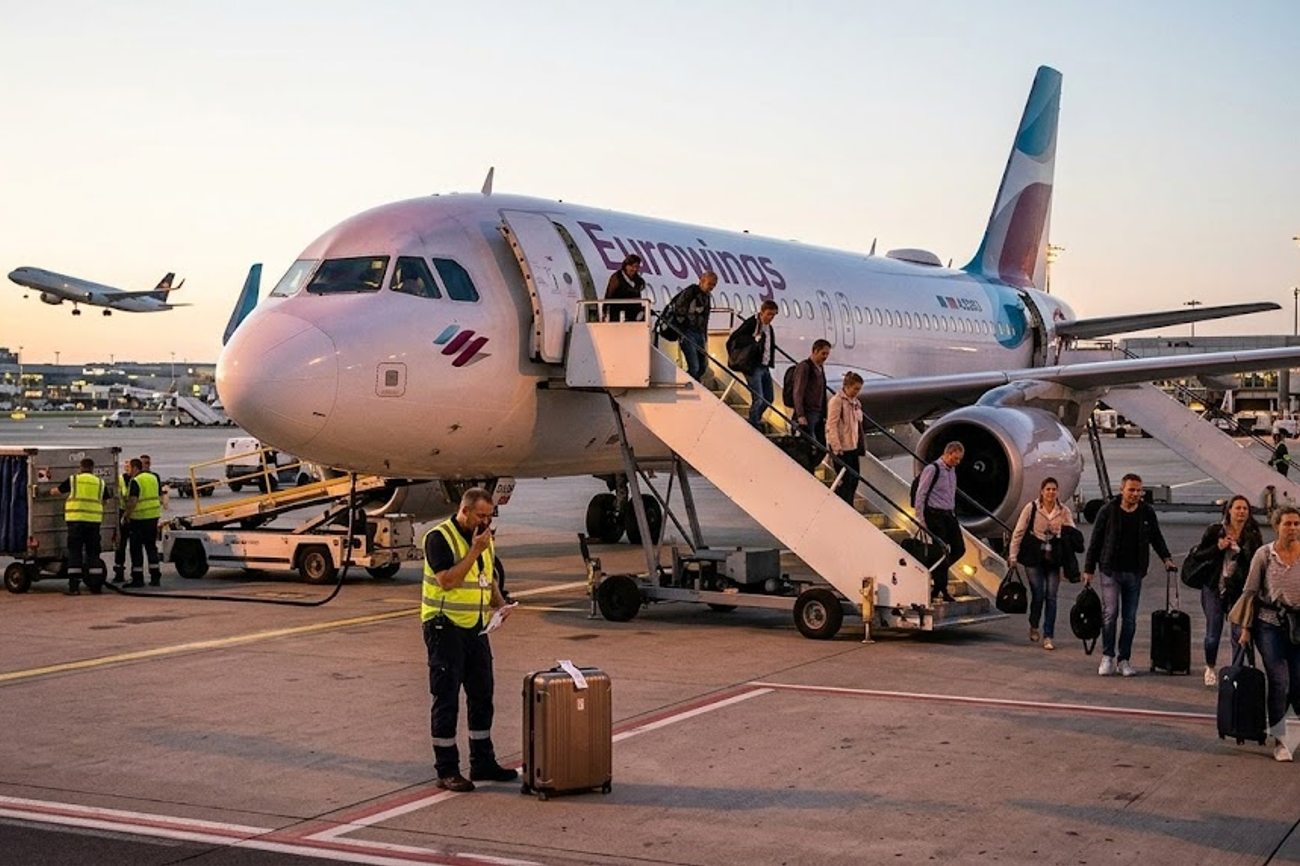
Image generated by AI
A single incorrectly loaded suitcase can legally transform a standard two-hour flight into a six-hour ordeal involving multiple international diversions. In a recent operational failure, a Eurowings flight traveling from Germany to France was forced to divert twice—first to Toulouse and then back to Germany—simply because one "phantom" bag was found on board without a matching passenger record.
The High Stakes of Baggage Reconciliation
While most travelers view a misplaced bag as a personal inconvenience, aviation authorities view an unidentified suitcase as a critical security breach. The recent disruption involving Eurowings underscores the rigid nature of baggage reconciliation rules. These regulations dictate that every single piece of checked luggage must be digitally linked to a boarded passenger. If a bag is discovered on the aircraft that does not belong to anyone in the cabin, the aircraft is effectively carrying an unverified object, which triggers immediate security protocols.
In this specific instance, the flight departed from Germany headed for Toulouse–Blagnac Airport (TLS) in France. However, once the mismatch was identified, the aircraft could not simply ignore the error. To maintain safety standards, the airline had to divert to Toulouse to address the baggage irregularity. This process involves identifying the owner, verifying the security screening status of the item, and removing the luggage if it cannot be accounted for.
The situation escalated when the aircraft, having dealt with the bag in France, could not immediately resume its original schedule or return home. This led to a second diversion to Cologne Bonn Airport (CGN) in Germany. The cause for this second detour was not a security flaw, but rather the rigid operational constraints of European aviation, such as airport curfews and noise regulations that prevent aircraft from landing or taking off during specific night windows.
What Makes the Toulouse-Cologne Corridor Unique
The geography of this incident highlights the intersection of two distinct aviation hubs. Toulouse–Blagnac Airport (TLS) is not just a regional gateway; it is the heart of the European aerospace industry, serving as the primary hub for Airbus. The precision expected at this airport is immense, making the arrival of a "phantom bag" diversion particularly noteworthy.
Conversely, Cologne Bonn Airport (CGN) serves as a massive logistical nerve center for Germany and a primary base for Eurowings. The shift from the aerospace-centric environment of Toulouse back to the operational hub of Cologne illustrates how a minor ground-handling error in Germany can ripple across borders, affecting airspace in France and returning to cause further congestion in Germany.
For those traveling through these regions, understanding the Official France Tourism guidelines or checking Germany's travel portals can provide context on the regional infrastructure, but the operational side is governed by the strict standards of the International Air Transport Association (IATA). These standards are designed to ensure that no unidentified item ever enters a pressurized cabin or cargo hold without a verified human link.
Visitor Insider Tips
When flying between major European hubs like Cologne and Toulouse, the efficiency of your journey often depends on your ability to navigate the "invisible" rules of the airport.
Timing the Hubs If you are basing yourself in Cologne, utilize the Cologne Bonn Airport (CGN) rail links early. The airport is a primary base for low-cost carriers, and security lines can spike unpredictably. Arrive at least three hours before international departures to avoid the stress of the "last-minute rush" that often leads to the very ground-handling errors seen in the Eurowings incident.
Toulouse Local Knowledge When landing at Toulouse–Blagnac (TLS), avoid the expensive airport taxis if you are traveling light. The airport tramway is a highly efficient way to reach the city center. Once in Toulouse, steer clear of the primary tourist plazas for dining; instead, head to the narrow streets of the Capitole district for authentic cassoulet, the region's signature slow-cooked bean stew.
Baggage Hacks To minimize the risk of your bag becoming a "phantom" or being mishandled, use a combination of a digital AirTag and a physical, brightly colored luggage strap. While the airline uses barcode tracking and digital records, having your own independent tracking allows you to notify ground staff immediately if your bag has been routed to the wrong aircraft, potentially preventing a diversion.
Transport Etiquette In Germany, punctuality is a cultural pillar. If you are using regional trains to reach the airport, be at the platform five minutes early. In France, the pace is slightly more relaxed, but official documentation is prized; always keep a digital copy of your passport and boarding pass accessible offline.
Cultural and Environmental Context
The diversion of a commercial aircraft for a single suitcase is an environmental paradox. To ensure the absolute safety of the passengers, the airline burned thousands of extra kilograms of fuel and increased carbon emissions by flying the same route multiple times. This highlights the tension between the "Zero Risk" security mandate of aviation and the growing pressure on airlines to reduce their environmental footprint.
Furthermore, the second diversion to Cologne Bonn Airport (CGN) was driven by noise regulations and night-flight curfews. These laws are a direct result of community activism in European cities, where residents have fought for "quiet hours" to protect the quality of life in urban areas surrounding airports. When a flight is diverted, it often clashes with these local ordinances, forcing the aircraft to fly even further to an airport with more flexible operating hours.
This interplay shows that a flight is not just a journey from point A to point B, but a complex negotiation between international security laws, local environmental protections, and the logistical limitations of ground-handling crews. The "phantom bag" is a reminder that the human element—a single worker loading the wrong suitcase—still holds immense power over the highly automated world of modern flight.
FAQ: Visiting France and Germany 2026
What is the best time to visit Toulouse and Cologne? Late spring (May to June) and early autumn (September to October) offer the mildest weather and fewer crowds. This avoids the intense summer heat of Southern France and the grey winters of the Rhineland.
Do I need a visa for travel between Germany and France? Since both are members of the Schengen Area, there are generally no border controls between them. Citizens of the US, Canada, and UK can typically travel for tourism for up to 90 days without a visa.
How do I get from Cologne Airport to the city center? The S-Bahn (suburban train) is the fastest and most reliable method, taking you directly into the heart of Cologne in about 15-20 minutes.
Is it safe for solo travelers in these regions? Yes, both Germany and France are generally very safe for solo travelers. Standard urban precautions apply, especially in crowded areas like the Cologne Cathedral or Toulouse city center, to avoid pickpockets.
One misplaced bag is a logistical nightmare; a well-planned journey is a local's secret.
#ToulouseTravel2026 #CologneBonnAirport #EurowingsExperience #FranceGermanyTrip #AviationSafetyEurope
Related Travel Guides
Disclaimer
This article is for informational and educational purposes only. It does not constitute legal, financial, or professional advice. While we strive to provide accurate and up-to-date information, travel policies, regulations, and conditions change rapidly. Always verify information with official sources before making travel decisions. Nomad Lawyer makes no representations about the accuracy, reliability, completeness, or suitability of the information provided. Readers should consult qualified professionals for advice specific to their circumstances. The views expressed in this article are those of the author and do not necessarily reflect the views of Nomad Lawyer.
Kunal K Choudhary
Co-Founder & Contributor
A passionate traveller and tech enthusiast. Kunal contributes to the vision and growth of Nomad Lawyer, bringing fresh perspectives and driving the community forward.
Learn more about our team →