
Etihad Plans 71 Abu Dhabi Departures: March 28 Recovery Milestone
Etihad Airways plans 71 departures from Abu Dhabi on March 28, 2026, marking a major recovery milestone after regional airspace disruptions in February. The gradual capacity restoration signals renewed focus on the carrier's hub strategy and connectivity across Europe, Asia, and North America.

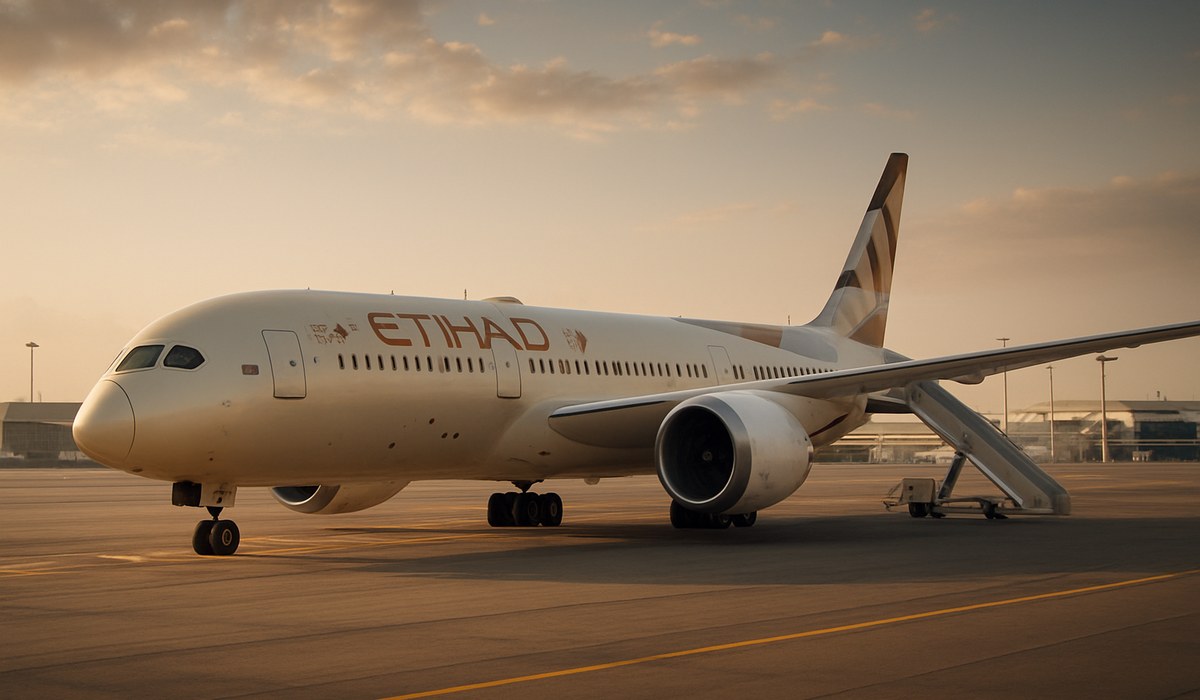
Image generated by AI
Etihad Airways is executing a structured recovery plan with 71 scheduled departures from Abu Dhabi International Airport (AUH) on March 28, 2026. This operational surge represents a critical rebuild phase following severe regional airspace closures that disrupted thousands of flights across Middle Eastern hubs in late February. The airline's phased approach demonstrates how quickly Gulf carriers are restoring connectivity after weeks of unprecedented disruption.
Regional Airspace Crisis Triggered Flight Network Collapse
Middle Eastern airspace shutdowns in late February 2026 created one of the most severe operational crises for Gulf aviation in recent memory. Abu Dhabi, Dubai, and Doha experienced simultaneous capacity constraints that forced carriers to ground fleets and implement emergency protocols. Etihad Airways temporarily suspended regular scheduled operations while managing stranded passengers and repositioning aircraft across its network.
The initial disruption period saw thousands of flight cancellations across the region. According to IATA reporting, regional carriers faced unprecedented challenges coordinating around airspace restrictions. The crisis forced Etihad to pivot toward essential repatriation flights and cargo operations while maintaining minimal passenger services. Safety protocols required comprehensive airspace reassessment before any phased restart could begin. Recovery timelines remained uncertain during the first week of March, with operational planners implementing day-to-day adjustments based on evolving regulatory clearances.
Etihad's Phased Restart: From Emergency Mode to Scheduled Operations
Etihad Airways resumed limited scheduled departures from Abu Dhabi starting March 6, 2026, subject to rigorous safety assessments and airspace compliance verification. The carrier implemented a structured escalation process, increasing daily departure counts as regulatory conditions permitted. March 28's planned 71 departures represent the airline's most ambitious single-day departure schedule since the crisis began.
The progression from emergency operations to regular service demonstrates operational discipline. Etihad's fleet management teams coordinated aircraft positioning while ensuring crew rest compliance and maintenance requirements. Network planners prioritized routes generating strong passenger demand and transfer traffic. The March 28 schedule reflects confidence that sustained airspace stability has been achieved, though flexibility remains built into daily operations. Airline operations controllers maintain contingency protocols for any unexpected restrictions. The 71-departure plan positions Etihad to serve accumulated passenger demand while respecting operational capacity limitations during the recovery phase.
Abu Dhabi Hub Strategy: Reconnecting Global Networks
Abu Dhabi International Airport (AUH) functions as Etihad's strategic hub connecting Europe, Asia, Africa, and North America through a carefully engineered transfer network. The airline's long-term business model depends on maximizing connecting traffic through its home base. Pre-disruption operations saw Etihad managing approximately 300 daily passenger flights across its global network with a fleet exceeding 120 aircraft.
The 2025 financial year validated Etihad's hub strategy with record profitability and double-digit capacity growth. The carrier launched multiple new destinations while expanding frequencies on established long-haul routes. Additional aircraft deliveries from Airbus and Boeing were scheduled throughout 2026, supporting expansion into underserved markets. Restoring Abu Dhabi departure capacity to 71 flights on a single day directly supports Etihad's growth objectives. Industry analysts view rapid recovery at AUH as essential validation of Abu Dhabi's resilience as a Gulf connectivity hub. The March 28 schedule demonstrates management's ability to restore operations quickly without compromising safety or service standards.
Route Priorities: Long-Haul Corridors and Regional Connectivity
While Etihad has not disclosed the complete routing breakdown for March 28's 71 departures, network strategies emphasize established high-demand corridors and strategic new markets. Flagship long-haul services to London Heathrow (LHR), Paris Charles de Gaulle (CDG), and New York JFK typically operate multiple daily frequencies under normal conditions. These European and North American gateways generate premium cabin revenue and consistent transfer traffic volumes.
Regional connectivity to major Indian and Pakistani cities supports robust visiting friends and relatives (VFR) demand, driving robust load factors. Southeast Asian destinations including Bangkok, Singapore, and Manila remain network priorities given strong corporate travel and cargo demand. Newer 2026 routes into the eastern United States and select Levantine markets are expected to be phased into schedules as aircraft availability and regulatory approvals allow. The March 28 departure plan likely blends high-priority trunk routes with carefully selected regional services. Etihad's capacity allocation strategy during recovery emphasizes markets with strong revenue fundamentals and transfer traffic potential. Cargo operations across long-haul routes supplement passenger revenue during the recovery phase.
Traveler Impact: Seat Availability and Routing Improvements
Early March 2026 witnessed severe seat availability constraints, with travelers reporting limited rebooking options and complex multi-stop routings. Passenger forums documented extended wait times for flight change requests and inconsistent communication regarding rerouting plans. The gradual capacity restoration changes this dynamic substantially for departing passengers and connecting transfer customers.
March 28's expanded departure schedule unlocks additional seat inventory across Etihad's network, reducing booking friction for advance-purchase and last-minute travelers. Passengers with flexible travel dates gain better access to preferred flight times and direct routing options. Corporate and leisure travelers connecting through Abu Dhabi benefit from increased departure frequencies to final destinations. Ground handling capacity at AUH improves correspondingly, reducing check-in queue times and baggage processing delays. The carrier's customer service teams reported declining rebooking request backlogs as daily capacity approached pre-crisis levels. For long-haul connections, the expanded schedule reduces minimum connection time violations and improves onward flight reliability.
| Metric | Pre-Crisis (Feb 2025) | Crisis Peak (Feb 21-28, 2026) | Recovery Milestone (Mar 28, 2026) |
|---|---|---|---|
| Daily Departures from AUH | ~95-110 | Emergency/Limited ops | 71 (phased target) |
| Long-Haul Routes Active | 45+ | 8-12 essential routes | 30+ (expanding) |
| Weekly Passenger Volume | ~185,000 | ~25,000 | ~130,000 (projected) |
| Fleet Utilization Rate | 92-95% | 35-40% | 65-70% (ramping) |
| Aircraft on Ground (AOG) | 2-3 units | 15+ units | 4-6 units |
| Crew Positioning Days | 1-2 | 7-10 | 2-3 |
Traveler Action Checklist: Navigating March 28 Operations
1. Verify flight status 72 hours before departure – Check your booking confirmation against FlightAware real-time data, as March 28 operations remain subject to final confirmation.
2. Arrive at Abu Dhabi Airport 4 hours early – Ground handling remains under heightened capacity management; allow extra buffer time for check-in and security screening.
3. Confirm outbound connection times – If connecting through AUH, verify your minimum connection time meets Etihad's stated requirements; rebook if connections appear tight.
4. Document your booking details – Have confirmation numbers, routing information, and seat assignments accessible digitally; airline systems may experience data retrieval delays during the recovery phase.
5. Contact the airline 48 hours before travel – Reach out to Etihad customer service to confirm your flight remains scheduled; direct communication prevents last-minute surprises.
6. Review passenger rights protections – Understand entitlements regarding delays, cancellations, and rerouting under DOT regulations and Etihad's published policies.
7. Check baggage allowance specifics – Confirm baggage policies match your ticket type; recovery-phase operations may impose temporary restrictions on excess baggage acceptance.
8. Monitor travel advisories for the UAE – Review FAA and official UAE aviation updates; additional airspace restrictions could affect March 28 schedules.
What This Means for Travelers
The March 28 departure plan signals that normal booking procedures are gradually returning, though capacity remains constrained relative to long-term demand. Passengers should expect somewhat higher fares than historical averages due to reduced available inventory and pent-up demand. Business travelers can anticipate improved business-class seat availability compared to early March conditions.
Families with flexible travel dates benefit from expanded departure options across Etihad's network, reducing the need for complex repositioning via other carriers. Connecting passengers routing through Abu Dhabi experience shorter minimum connection times and more reliable onward flight availability. However, the airline continues managing crew scheduling and aircraft maintenance carefully—expect that some published schedules may still face last-minute adjustments.
Travelers with existing bookings should expect their flights to operate as scheduled unless Etihad proactively notifies them of changes. Customer service response times may remain elevated due to the backlog of inquiries accumulated during the disruption period. Travel insurance remains advisable given lingering operational uncertainties, even as conditions stabilize.
FAQ: Etihad Plans Abu Dhabi Recovery
Will etihad plans dhabi departures continue increasing beyond March 28? Yes, Etihad has signaled ongoing capacity increases throughout April and May 2026 as additional aircraft return from maintenance and crew fatigue limits are normalized. The airline expects to approach 90-95% of pre-crisis daily departure volumes by mid-April.
How does the etihad plans dhabi schedule impact passengers with existing bookings? Passengers with confirmed bookings from March 28 onward should see improved flight stability and reduced cancellation risk. Etihad prioritized rebooking stranded passengers onto March 28 and subsequent flights, so many March flights are already at higher load factors.
What routes will etihad prioritize among the 71 march 28 departures? Etihad is emphasizing long-haul trunk routes to London, Paris, New York, and major Asian hubs, alongside regional services to India, Pakistan, and Southeast Asia. Specific route allocation will be finalized approximately one week before March 28.
Can I rebook my existing etihad flight to march 28 or later without penalty? Etihad has implemented flexible rebooking policies through March 31, 2026, allowing most passengers to reschedule without change fees. However, seat availability and fare differences may apply depending on your original ticket class and booking terms.
Related Travel Guides
Disclaimer
This article is for informational and educational purposes only. It does not constitute legal, financial, or professional advice. While we strive to provide accurate and up-to-date information, travel policies, regulations, and conditions change rapidly. Always verify information with official sources before making travel decisions. Nomad Lawyer makes no representations about the accuracy, reliability, completeness, or suitability of the information provided. Readers should consult qualified professionals for advice specific to their circumstances. The views expressed in this article are those of the author and do not necessarily reflect the views of Nomad Lawyer.
Raushan Kumar
Founder & Lead Developer
Full-stack developer with 11+ years of experience and a passionate traveller. Raushan built Nomad Lawyer from the ground up with a vision to create the best travel and law experience on the web.
Learn more about our team →