
Croatia’s Split Port Gets Major Boost With New Passenger Hub Hotel Plan and Waterfront Redevelopment
Croatia’s Split Port Gets Major Boost With New Passenger Hub Hotel Plan and Waterfront Redevelopment

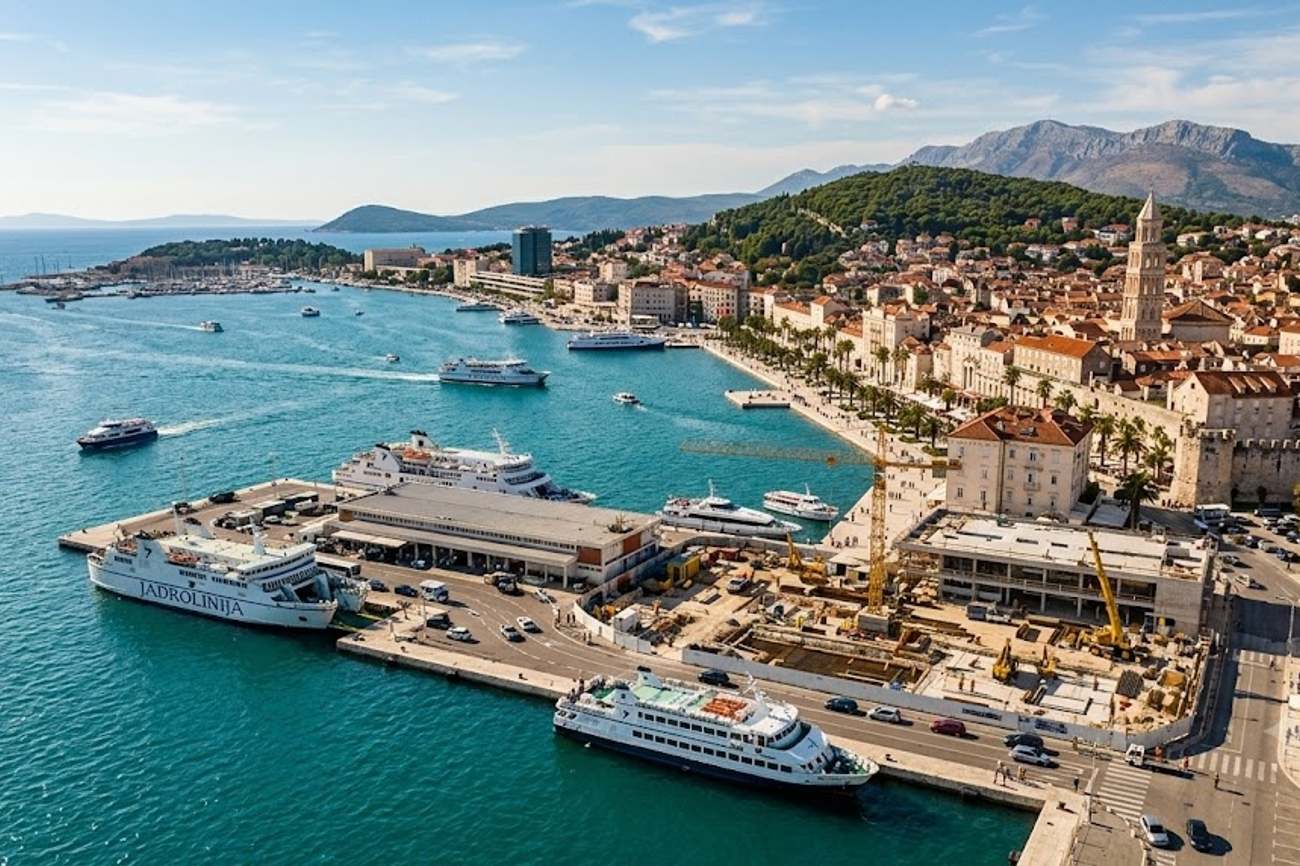
Image generated by AI
€600 million is the estimated valuation of a massive concession project aimed at transforming the Port of Split’s eastern waterfront into a modernized passenger and hospitality hub. This investment signals a strategic pivot for Croatia's second-largest city, moving away from purely functional maritime transit toward a mixed-use "aerotropolis" model applied to a seaport. By repurposing a derelict Dalmatian winery—a site of significant architectural heritage—the Split Port Authority is attempting to resolve a decades-long tension between urban preservation and the logistical pressures of Mediterranean cruise and ferry tourism.
The Regulatory Pivot of the Dalmatian Winery
The catalyst for this redevelopment is the recent acquisition of a location permit, a victory that follows more than two years of administrative deadlock. The site in question is a former winery that stands as a sentinel where the urban core of Split meets the Adriatic. While the building is recognized as a prime example of Croatian modern architecture, years of neglect have left it in a state of severe deterioration.
Because the property falls under the jurisdiction of the Conservation Department of Croatia’s Ministry of Culture, the project cannot follow a standard "demolish and rebuild" trajectory. Instead, the development must adhere to strict conservation mandates. This creates a complex legal and architectural framework where commercial viability must be balanced against the preservation of the building's original character. The permit allows for the conversion of this industrial relic into a facility dedicated to passenger services and hospitality, effectively turning a neglected architectural liability into a strategic asset.
Logistical Expansion and Infrastructure Metrics
The redevelopment is not merely an aesthetic upgrade; it is a response to the systemic congestion that plagues Split during the peak summer months. As a primary gateway for Croatia Tourism, the port manages a volatile mix of cruise ship arrivals, island-hopping ferries, and international maritime traffic.
The project introduces specific infrastructure targets designed to alleviate these bottlenecks:
| Facility Component | Planned Capacity/Detail | Primary Objective |
|---|---|---|
| Hospitality | Approximately 100 hotel rooms | Short-stay lodging for cruise and ferry transit |
| Parking | 2 garages / 500 total spaces | Reduction of stationary traffic and port congestion |
| Retail/Services | Mixed-use commercial zones | Increased passenger spend and amenity access |
| Transport | Enhanced passenger movement areas | Streamlined arrivals/departures for island travel |
The inclusion of 500 parking spaces is particularly critical. Currently, the intersection of the city and the port suffers from intense vehicle saturation during the tourist season. By integrating these garages into the Eastern Coast development vision—as outlined in Split’s General Urban Plan—the city hopes to decouple passenger arrivals from the gridlock of the surrounding urban streets.
Expert Analysis: The Shift Toward Integrated Port-Cities
For the traveler and the investor, the €600 million valuation of this concession reveals a broader shift in how European maritime hubs are being managed. We are seeing a transition from "transit points" to "destination terminals." When a port integrates 100 hotel rooms and extensive retail directly into its infrastructure, it fundamentally changes the economic behavior of the visitor.
For travelers booking routes through Split, the direct consequence will be a reduction in "dead time" between arrival and departure. Currently, passengers often linger in inefficient waiting areas or struggle to find short-term lodging near the docks. The introduction of on-site hospitality means the port becomes a viable staging ground for business travelers and cruise passengers, reducing the reliance on the city's overburdened hotel stock.
From a market perspective, the decision to launch an international tender for the concession suggests that the Split Port Authority is seeking global expertise in "mixed-use" waterfront management. By inviting international operators, Split is attempting to mirror the efficiency of global hubs like Singapore or Dubai, where the boundary between the transport terminal and the luxury mall/hotel is virtually nonexistent. The pricing pressure this creates for nearby independent hotels in Split may be significant, as a port-integrated hotel offers a convenience factor that centrally located hotels cannot match.
Furthermore, the reliance on the International Air Transport Association (IATA) standards for passenger flow—though this is a seaport—is evident in the project's focus on "mobility facilities." The goal is to treat the maritime passenger with the same logistical precision as an airport traveler, minimizing friction from the moment they disembark until they enter the city.
Key Takeaways
- High-Value Investment: A €600 million concession valuation underscores the strategic importance of the eastern waterfront to Croatia's tourism economy.
- Heritage-Driven Design: Strict Ministry of Culture mandates ensure the historic Dalmatian winery is repurposed rather than replaced, blending modern hospitality with architectural preservation.
- Congestion Relief: The addition of 500 parking spaces across two garages aims to solve the chronic seasonal traffic failures surrounding the port.
- Hospitality Integration: The potential for a 100-room hotel transforms the port from a transit zone into a destination, increasing the average spend per visitor.
- International Competition: The upcoming international tender process will likely bring global developers to Split, shifting the local hospitality landscape.
FAQ: Split Port Redevelopment 2024
Will the new port facilities increase travel costs for ferry passengers? There is no indication that passenger taxes or ferry fares will rise due to this project. The investment is focused on hospitality and retail concessions, which are funded by private investors rather than through increased passenger transit fees.
How will the 500 new parking spaces affect city traffic? By providing dedicated parking within the port perimeter, the project aims to reduce the number of vehicles circulating in the city center searching for spots, which should theoretically smooth traffic flow during peak summer months.
Is the historic winery being demolished? No. The building is protected by the Conservation Department of Croatia’s Ministry of Culture. The project is a redevelopment and conversion, meaning the architectural shell will be preserved while the interior is modernized.
When will the new hotel and retail spaces be open? A specific opening date has not been announced. The project has recently secured its location permit and is now moving toward the international tender process to find a developer.
The transformation of the Split waterfront is a high-stakes bet that heritage preservation and aggressive commercial expansion can coexist in one of the Mediterranean's most congested gateways.
Tags: Split Port Authority, Dalmatian Winery Redevelopment, Croatia Maritime Infrastructure, Split Eastern Waterfront 2024, Mediterranean Cruise Logistics
Related Travel Guides
Disclaimer
This article is for informational and educational purposes only. It does not constitute legal, financial, or professional advice. While we strive to provide accurate and up-to-date information, travel policies, regulations, and conditions change rapidly. Always verify information with official sources before making travel decisions. Nomad Lawyer makes no representations about the accuracy, reliability, completeness, or suitability of the information provided. Readers should consult qualified professionals for advice specific to their circumstances. The views expressed in this article are those of the author and do not necessarily reflect the views of Nomad Lawyer.
Kunal K Choudhary
Co-Founder & Contributor
A passionate traveller and tech enthusiast. Kunal contributes to the vision and growth of Nomad Lawyer, bringing fresh perspectives and driving the community forward.
Learn more about our team →