
Connect Travel Expo Expands to Atlanta: AI and Cloud Conferences Reshape Business Travel
Connect Expo Series brings dual AI and Cloud conferences to Atlanta in 2026, signaling shift in tech event travel as secondary cities compete for MICE spending.

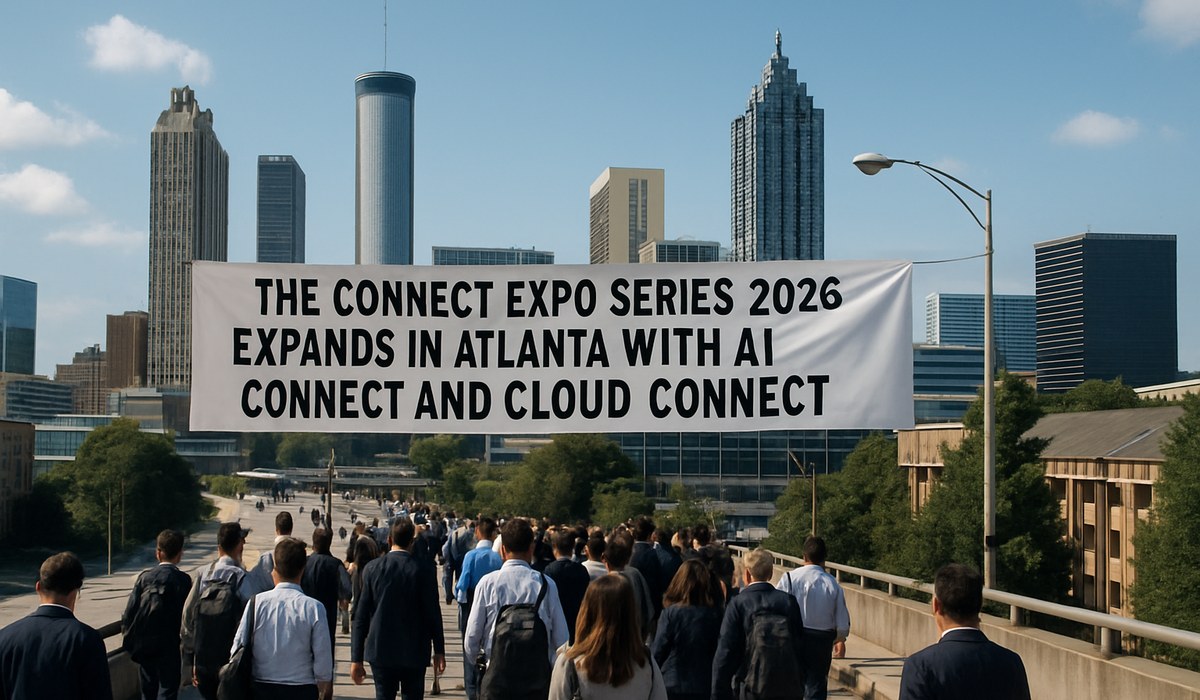
Image generated by AI
Quick Summary • The Connect Expo Series is launching dual conferences—AI Connect and Cloud Connect—in Atlanta during 2026, marking a strategic expansion beyond traditional tech hubs • Atlanta's selection reflects growing competition among secondary cities for lucrative MICE travel spending as corporate event budgets recover to pre-pandemic levels • WTTC reports business travel spending{:target="_blank" rel="noopener noreferrer"} reached $1.4 trillion globally in 2025, with tech conferences driving disproportionate economic impact • The dual-event format signals evolving business travel patterns where professionals attend back-to-back conferences to maximize trip value and minimize travel frequency
While most cities chase Silicon Valley's shadow, Atlanta is quietly positioning itself as the Southeast's answer to tech innovation—and the Connect Expo Series 2026 is betting big on this transformation. The announcement that both AI Connect and Cloud Connect will simultaneously launch in Georgia's capital represents more than another trade show calendar entry. It signals a fundamental shift in how tech event organizers view business travel destinations and where they believe the next generation of industry leaders will gather.
Why Atlanta Is Winning the Tech Conference Wars in 2026
Atlanta secured the Connect Expo Series through a combination of infrastructure advantages that event planners increasingly prioritize. Hartsfield-Jackson Atlanta International Airport handles more passengers than any other airport globally, with nonstop connections to over 150 domestic destinations and 70 international markets. This connectivity translates to lower average airfares and reduced travel time for attendees flying from secondary markets—a critical factor when corporate travel managers scrutinize every expense line.
According to Skift's analysis of event travel trends{:target="_blank" rel="noopener noreferrer"}, conference organizers are deliberately moving away from traditional tech hubs where hotel rates and venue costs have climbed 40-60% above 2019 levels. Atlanta's convention district offers comparable facilities at roughly 30% lower total attendee costs compared to San Francisco or New York. The Georgia World Congress Center, North America's largest convention campus, provides 1.5 million square feet of contiguous exhibition space—enough to accommodate both AI Connect and Cloud Connect simultaneously while maintaining distinct programming tracks.
The timing aligns with broader patterns in business travel recovery. India's event tourism generating $8.5 billion in economic impact demonstrates how emerging markets are competing aggressively for conference business. Atlanta's positioning as a southeastern hub mirrors strategies employed by Bangalore and Singapore, where cities leverage geographic centrality to attract multi-day events that generate extended hotel stays and ancillary spending.
Tech professionals attending conferences now extend trips by an average of 1.8 nights beyond event dates, according to Global Business Travel Association data. Atlanta's cultural attractions—from the World of Coca-Cola to the sprawling Piedmont Park—provide the leisure components that encourage these extensions. Convention organizers factor this "bleisure" potential into venue selection, knowing that attractive destinations improve attendance rates by 15-20%.
What AI Connect and Cloud Connect Mean for Business Travelers
The dual-conference model represents a calculated response to how tech professionals actually travel. Rather than attending separate events months apart, industry leaders increasingly prefer co-located or consecutive conferences that deliver comprehensive knowledge updates within a single trip. AI Connect and Cloud Connect address the reality that artificial intelligence and cloud infrastructure are no longer separate domains but deeply interconnected disciplines.
Tech event organizers report that attendees spend an average of $3,200-$4,500 per conference when accounting for registration, accommodation, meals, and ground transportation. By co-locating AI and cloud-focused programming, the Connect Expo Series enables professionals to justify extended stays while reducing their organizations' per-event travel costs. A software architect can attend AI Connect sessions on machine learning operations Monday through Wednesday, then transition to Cloud Connect's infrastructure security track Thursday through Friday—all while occupying the same hotel room and using the same rental car.
This efficiency matters as corporate travel budgets face renewed scrutiny despite overall recovery. Travel managers now require employees to demonstrate tangible ROI from conference attendance, including specific learning objectives and networking targets. The Connect Expo Series addresses this by creating structured pathways between related topics. An attendee focused on implementing AI-powered customer service can trace the entire technology stack from cloud infrastructure through machine learning models to production deployment—all within one venue over four days.
The practical implications extend to travel logistics. SriLankan Airlines' AI-powered revenue system exemplifies the technologies conference attendees will encounter in sessions and then immediately experience during their return flights. This real-world reinforcement of conference content enhances perceived value and justifies the travel investment to budget-conscious executives.
The Economic Ripple Effect: How Tech Expos Transform City Tourism
Major technology conferences generate economic impact that extends far beyond convention center walls. Atlanta's tourism bureau estimates that tech-focused events with 5,000+ attendees produce $8-12 million in direct spending when accounting for hotels, restaurants, transportation, and entertainment. The Connect Expo Series, launching simultaneously with two conferences, projects combined attendance exceeding 15,000 professionals—translating to potential economic impact approaching $25 million during the event week alone.
Hotels surrounding the Georgia World Congress Center have already begun adjusting inventory management strategies for 2026. The Omni Atlanta Hotel at CNN Center reports corporate block bookings extending 18 months ahead of the Connect Expo Series dates, with negotiated rates 20-25% above typical spring occupancy periods. This premium pricing reflects constrained supply during major conventions, when Atlanta's 95,000+ hotel rooms can achieve near-capacity utilization in downtown districts.
Restaurant owners benefit disproportionately from tech conferences, which attract professionals with higher-than-average meal budgets and willingness to explore local dining scenes. Atlanta's reputation for innovative Southern cuisine and diverse food halls like Ponce City Market positions the city to capture discretionary spending that might otherwise remain inside hotel restaurants. Event organizers increasingly incorporate curated dining experiences and food tours into conference programming, recognizing that memorable meals improve overall attendee satisfaction scores.
Ground transportation services experience similar surges. Rideshare drivers, taxi operators, and luxury car services all report that tech conferences generate 2-3 times their typical daily revenue during event weeks. The Connect Expo Series' dual-conference format extends this economic benefit across more days compared to standard three-day trade shows, distributing income to a broader network of transportation providers and service workers.
Convention-driven tourism also supports municipal budgets through hotel occupancy taxes, which fund sports facilities, arts programs, and infrastructure improvements. Atlanta collects an 8% hotel tax plus additional fees that generate approximately $160-180 per room night in public revenue. With 15,000 attendees occupying an estimated 12,000 room nights (accounting for double occupancy and extended stays), the Connect Expo Series could contribute roughly $2 million directly to city coffers—before accounting for sales taxes on meals, entertainment, and retail purchases.
Planning Your Atlanta Tech Conference Trip: What You Need to Know
Business travelers heading to Atlanta for the Connect Expo Series should factor several practical considerations into their planning. Airport security wait times at Hartsfield-Jackson average 23 minutes for standard lanes and 8 minutes for TSA PreCheck during peak morning hours, according to Transportation Security Administration data. Given the airport's size and frequent terminal transfers, arriving 90 minutes before domestic flights remains advisable even for experienced travelers.
Ground transportation from the airport to downtown convention hotels costs $35-45 via rideshare services, $28-32 through traditional taxis, or $2.50 on MARTA rail. The Metropolitan Atlanta Rapid Transit Authority's red and gold lines connect the airport directly to Peachtree Center and CNN Center/Omni stations, placing travelers within walking distance of the Georgia World Congress Center in approximately 20 minutes. For tech professionals carrying multiple devices and equipment, ICAO's new regulations on inflight technology necessitate careful packing to ensure battery packs and demonstration equipment comply with airline policies.
Hotel selection strategy should account for Atlanta's notorious traffic patterns. The Downtown and Castleberry Hill districts offer walking access to convention facilities but limited evening entertainment. Midtown properties require 15-minute rideshares to the Georgia World Congress Center but provide proximity to Piedmont Park, the High Museum of Art, and dense restaurant clusters. Buckhead hotels, popular with corporate travelers, sit 8-10 miles north and require consistent car service or personal vehicles.
Weather in Atlanta during spring months ranges from mild to warm, with average high temperatures in the mid-70s Fahrenheit and occasional severe thunderstorms. Tech conference attendees should pack business casual attire suitable for heavily air-conditioned convention halls alongside rain gear and comfortable walking shoes for exploring between sessions. Atlanta's indoor-outdoor convention spaces often require short walks between buildings, making weather-appropriate outerwear essential despite the primarily indoor programming.
Cellular connectivity inside the Georgia World Congress Center has improved significantly following 5G infrastructure upgrades, but conference organizers typically provide dedicated WiFi networks to handle the bandwidth demands of 15,000+ simultaneous users. Bringing portable chargers remains essential, as power outlets at conferences never match demand. Tech professionals should also download offline maps and key conference documents before entering venues, as network congestion can slow data speeds during peak session times.
FAQ: Connect Expo Series 2026 in Atlanta
When exactly will AI Connect and Cloud Connect take place in Atlanta?
The Connect Expo Series has not yet announced specific dates for the 2026 Atlanta events, though organizers typically schedule major tech conferences during spring or fall months to avoid summer heat and winter holiday conflicts. Registration details will appear on the official event website approximately 8-10 months before the conference dates. Business travelers should monitor announcements closely, as early registration discounts often save $200-400 on full conference passes.
Can I register for both AI Connect and Cloud Connect with a single pass?
The Connect Expo Series has not released final pricing structures, but similar dual-conference formats typically offer three options: AI Connect only, Cloud Connect only, or a combined pass at roughly 60-70% of the separate ticket total. The combined pass approach encourages cross-pollination between audiences while maintaining distinct programming tracks. Early-bird pricing typically extends 6-8 months before event dates, rewarding organizations that commit to attendance during budget planning cycles.
What are the best hotels near the Georgia World Congress Center?
The Omni Atlanta Hotel at CNN Center connects directly to the convention facility via skybridge, eliminating outdoor exposure during inclement weather. The Hilton Atlanta sits across Courtland Street with similar proximity. Budget-conscious travelers find value at the Hampton Inn & Suites Atlanta-Downtown, which offers corporate rates and free breakfast while maintaining walkability to convention venues. All three properties typically establish discounted blocks for major conferences, requiring booking codes distributed through conference registration communications.
Will the conferences offer virtual attendance options?
Most major tech conferences now provide hybrid formats following pandemic-era adaptations, though virtual passes typically cost 30-40% of in-person registration while excluding networking events, exhibition hall access, and meal functions. Virtual attendance makes sense for professionals unable to justify travel costs or time away from offices, but the networking value of in-person attendance remains difficult to replicate digitally. Conference organizers usually announce virtual options 4-6 months before events as they finalize platform partnerships.
How does Atlanta's tech conference scene compare to Silicon Valley events?
Atlanta offers significantly lower total attendance costs while providing comparable content quality and networking opportunities. The city's emerging tech ecosystem—anchored by Georgia Tech research partnerships and a growing venture capital presence—attracts increasingly senior speakers and sponsors. Attendees lose some serendipitous encounters with West Coast tech celebrities but gain access to Southeast market opportunities often overlooked by Silicon Valley-focused events. For professionals serving enterprise clients in financial services, logistics, and telecommunications, Atlanta's industry mix often proves more relevant than coastal tech hub concentrations.
Related Articles:
Disclaimer
This article is for informational and educational purposes only. It does not constitute legal, financial, or professional advice. While we strive to provide accurate and up-to-date information, travel policies, regulations, and conditions change rapidly. Always verify information with official sources before making travel decisions. Nomad Lawyer makes no representations about the accuracy, reliability, completeness, or suitability of the information provided. Readers should consult qualified professionals for advice specific to their circumstances. The views expressed in this article are those of the author and do not necessarily reflect the views of Nomad Lawyer.
Kunal K Choudhary
Co-Founder & Contributor
A passionate traveller and tech enthusiast. Kunal contributes to the vision and growth of Nomad Lawyer, bringing fresh perspectives and driving the community forward.
Learn more about our team →