China and East Asia Digital Transit Shift: Rail and Ferry Data Integration 2026

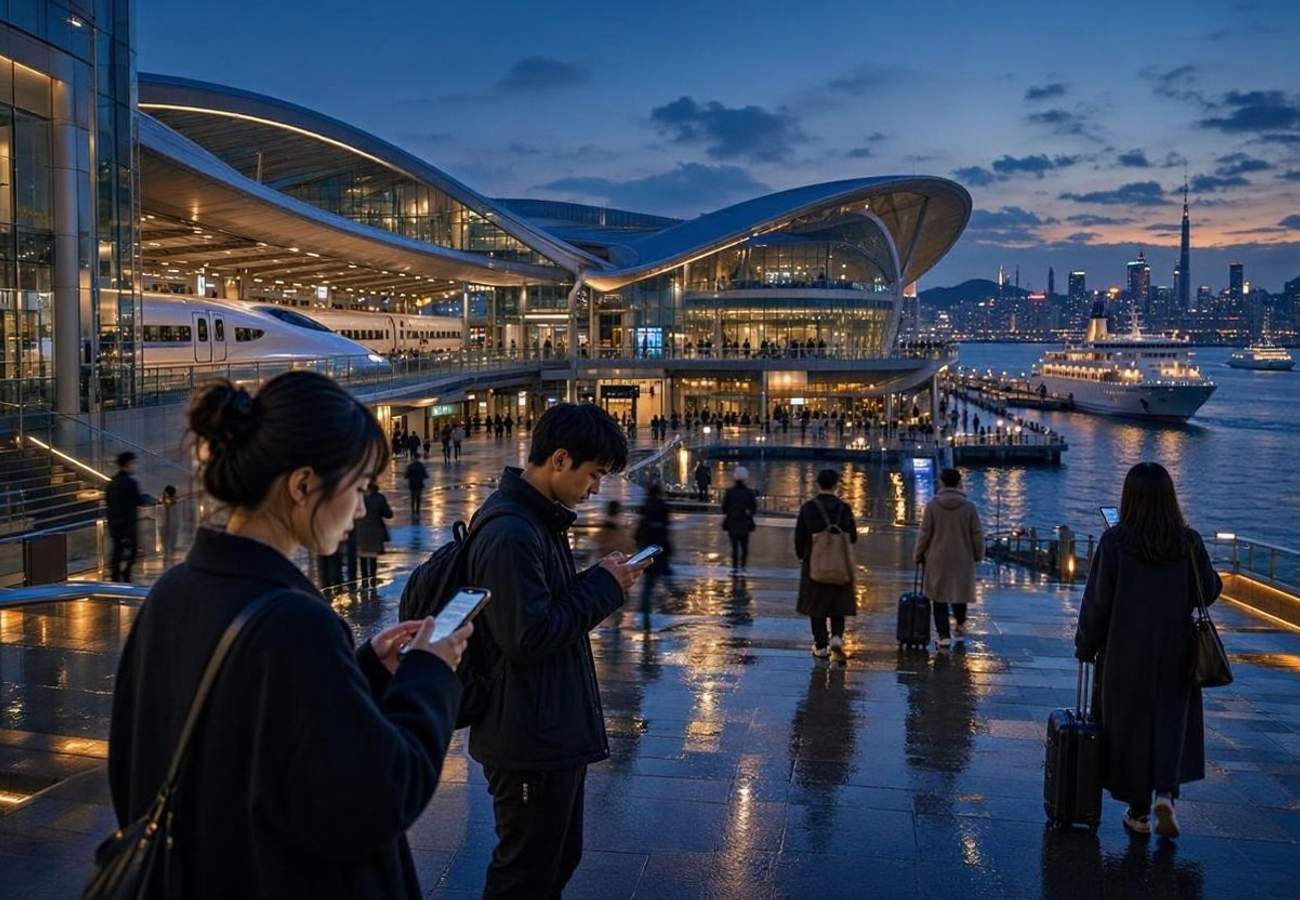
Image generated by AI
During the 40-day Spring Festival period in April 2026, China recorded a staggering 9.41 billion cross-regional movements. At this scale, a single communication failure regarding a train or ferry connection doesn't just delay a few people—it creates a systemic ripple effect across an entire province.
The Digital Pivot in East Asian Transit
While the world often views East Asian travel as a monolith of efficiency, the region is currently undergoing a fragmented but aggressive digital transformation. Instead of a single regional system, China, Japan, South Korea, and Singapore are each building bespoke tools to solve the "last-mile" information gap during disruptions. The goal has shifted from simply announcing a delay to providing actionable data that allows a traveler to pivot their itinerary in real-time.
In China, the focus is on institutional coordination. On 4 February 2026, the Ministry of Transport mandated a cross-agency data exchange involving airports, ports, railways, and ferry operators. This isn't just about an app notification; it is about ensuring that when a mainline train fails, local authorities are already preparing emergency coaches and extending public transport hours for arrivals landing between 23:00 and 07:00.
Regional Approaches to Disruption Management
The way these four markets handle "bad news" differs based on their primary transit challenges. Japan is integrating high-speed rail data directly into visitor-facing tools, while South Korea is tackling the unpredictability of the sea.
Japan: Precision in the Shinkansen Corridor
For those moving between Tokyo, Nagoya, Kyoto, and Osaka, the experience has become more transparent. As of 7 September 2026, JR Central integrated real-time Tokaido Shinkansen data into the Japan Travel by NAVITIME app. With over two million monthly active users across 13 languages, visitors can now receive push notifications for specific train delays. However, this is a targeted solution. National data shows that in fiscal 2025, there were 7,445 national railway disruptions (defined as delays of 30+ minutes or cancellations), and the NAVITIME integration only covers the Tokaido line. For broader safety, travelers still rely on the Japan Tourism Agency's Safety tips app, which supports 15 languages.
South Korea: AI-Driven Maritime Forecasting
South Korea is moving away from reactive weather reports toward predictive modeling. The Korea Maritime Transportation Safety Authority (KOMSA) now uses AI to provide sailing forecasts for 17 major ferry routes up to three days in advance. This is a significant shift for island travelers who previously had to wait for day-of cancellations. The demand is clear: KOMSA reported 1.196 million uses of its next-day forecast in 2025, a 21% increase from the 988,000 uses in 2024. To support foreign residents, the Ministry of the Interior and Safety expanded its Emergency Ready app to 22 languages in June 2026, covering 97% of the preferred languages for the 2.87 million foreign residents in the country.
Singapore: The Gold Standard for Urban Rail
Singapore focuses on the hyper-local. The Land Transport Authority (LTA) launched a centralized real-time status page for all rail lines on 13 December 2025. The system is rigorous: operators must provide an indicative delay duration within 15 minutes of any disruption. For developers and travel apps, the LTA DataMall (version 6.8, April 2026) provides an API that identifies not only the affected stations but also where free public bus boarding or MRT shuttle services are located.
Transit Capability Comparison (As of November 2026)
| Country | Primary Digital Capability | Key Evidence/Metric | Main Limitation |
|---|---|---|---|
| China | Cross-mode operational sharing | 9.41B Spring Festival movements | Lacks a single unified public app |
| Japan | Route-specific push notifications | 2M+ monthly NAVITIME users | Not all rail lines integrated |
| South Korea | AI Maritime Predictive Sailing | 21% growth in forecast usage | Forecast $\neq$ confirmed sailing |
| Singapore | Structured API for rail alerts | 15-minute mandatory update rule | Focus is urban, not maritime |
Visitor Insider Tips
If you are navigating these regions in 2026, generic guides won't help you during a meltdown. Use these local strategies:
- China Rail Hack: Ensure the phone number linked to your Railway 12306 account is active and capable of receiving international SMS. This is the only way to get direct alerts for seat changes or cancellations.
- Japan Transit Logic: Don't assume a Shinkansen delay notification means a replacement is coming. In Japan, a "delay" is a fact, not a promise of a solution. Always have a backup highway bus (Kosoku Bus) option mapped out for the Tokyo-Osaka corridor.
- South Korea Ferry Strategy: Check the KOMSA digital displays at the 24 major ferry terminals. While the AI forecast is helpful, the terminal screens are the final authority on whether a boat is actually leaving the dock.
- Singapore Commuting: If the MRT status page shows a "Major Delay," immediately check the LTA DataMall-linked apps for "Free Bus Boarding" locations. These are often faster than waiting for the shuttle buses to arrive.
Cultural and Environmental Context
The push for data sharing in East Asia is driven by a cultural obsession with punctuality and a geographic necessity for disaster resilience. In Japan and South Korea, where seismic activity and typhoons frequently disrupt transit, "predictive" data is a matter of safety, not just convenience.
However, this digital shift creates a divide. While tech-savvy nomads benefit from APIs and AI forecasts, elderly locals or travelers without high-end smartphones may find themselves stranded as traditional announcement systems are deprioritized in favor of push notifications. Furthermore, the massive volume of travel during festivals like China's Spring Festival puts immense pressure on digital infrastructure, making the "cross-mode" coordination mandated by the Ministry of Transport a necessity to prevent total gridlock in port cities.
FAQ: Visiting East Asia 2026
What is the best way to track train delays in Japan? For the Tokaido Shinkansen, use the Japan Travel by NAVITIME app. For other lines, refer to the specific operator's website or the Japan Tourism Agency's Safety tips app for broader disaster alerts.
Do I need a specific app for ferries in South Korea? While the Emergency Ready app is great for safety, check the KOMSA portal or terminal digital displays for AI-based sailing forecasts on the 17 major routes.
How does Singapore handle MRT disruptions for tourists? The LTA provides a centralized real-time status page. If a delay exceeds 15 minutes, operators are required to provide an estimated duration and alternative transport options via digital signs.
Is the China Railway 12306 app available in English? Yes, but for real-time disruption alerts, the system relies heavily on SMS sent to the registered contact number. Ensure your registration data is 100% accurate.
The difference between a ruined trip and a minor detour is now measured in minutes of data latency.
Related Travel Guides
This article is for informational purposes. Flight routes, passenger regulations, visa rules, and transit advisories are subject to change by airlines and aviation authorities. Readers are advised to verify schedules and travel documentation with relevant carriers and border agencies before departure.
Related Stories

Côte d’Ivoire Digitizes Hotel Licensing to Drive 10 Million Annual Visitors by 2030

Steinecker Unveils Botec F1 and ILTIS Automation Systems at BrauBeviale 2026