
Colombia and Global Flyway Hubs Launch Citizen Science Bird Tracking Expeditions
Conservation biologists in Colombia, Senegal, Finland, and India are leading citizen science bird tracking expeditions to protect global migratory species.

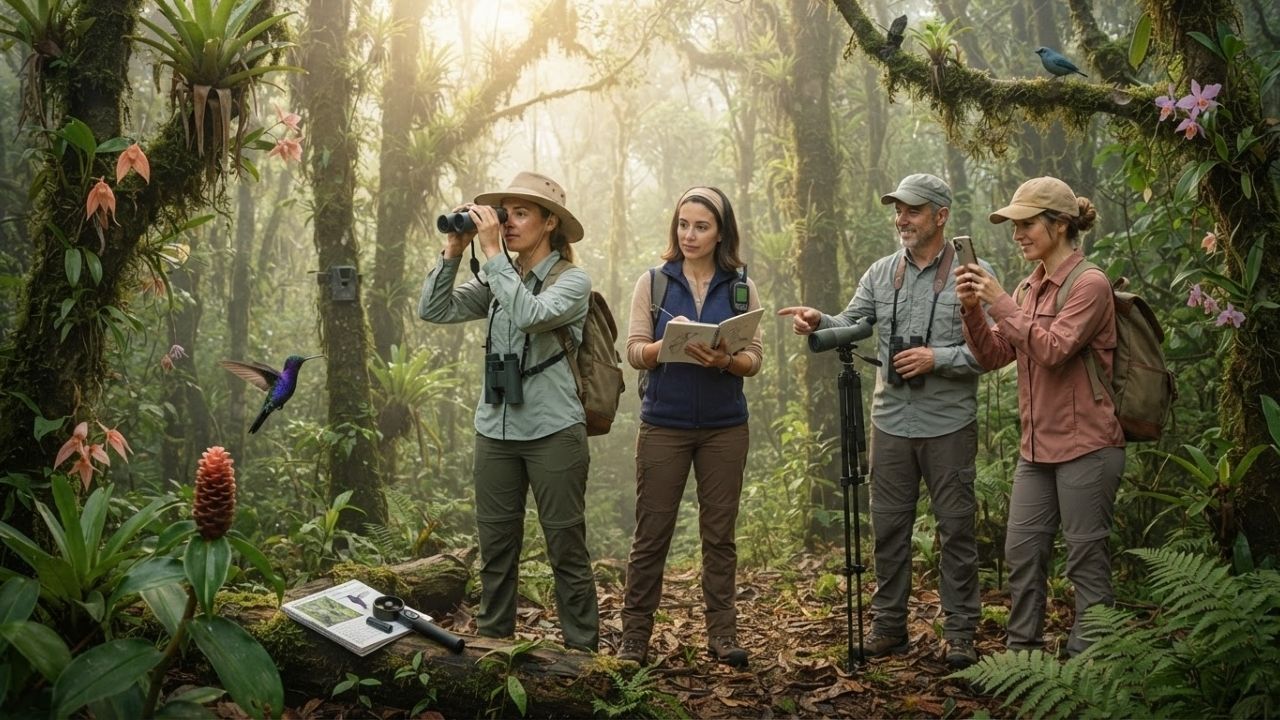
Image generated by AI
Conservation biologists and ecotourism pioneers across Colombia, Senegal, Finland, and India are deploying hands-on citizen science expeditions along the world’s major avian flyways. By replacing passive wildlife viewing with active scientific fieldwork, these international programs provide vital funding to safeguard endangered migratory bird species.
Colombia: Neotropical Terminal and Cloud Forest Habitat Protection
[BOGOTÁ, Colombia] — A groundbreaking model combining high-end ecotourism with field research is expanding along global migratory bird corridors. Colombia, which holds the highest avian biodiversity on Earth with nearly 2,000 documented bird species, has established itself as a primary neotropical wintering terminal for millions of migratory North American songbirds and raptors.
In high-altitude Andean cloud forests and lowland rainforests, expedition travelers work directly alongside Colombian ornithologists and conservation biologists. Participants actively assist in setting mist-nets, fitting leg identification bands on migratory warblers, and mapping micro-habitats for endangered endemic hummingbirds.
Expedition revenue directly funds the purchase of threatened cloud forest reserves by local conservation trusts, preventing agricultural clearing and commercial deforestation. Guidelines issued by Colombia's Ministry of Environment and Sustainable Development highlight how citizen science travel generates sustainable livelihoods for rural communities while expanding protected ecological corridors.
Senegal: Djoudj Sanctuary and Sahelian Wetland Preservation
Just south of the Sahara Desert, Senegal’s Djoudj National Bird Sanctuary serves as an essential wetland oasis for millions of Palearctic migratory birds traveling along the East Atlantic Flyway.
The UNESCO World Heritage site provides critical feeding grounds for massive flocks of Greater Flamingos, white pelicans, and aquatic warblers crossing arid desert landscapes. However, upstream dam construction and regional climate shifts pose ongoing challenges to the sanctuary's hydrological balance.
Participating ecotourists support field naturalists by conducting waterfowl censuses, monitoring water quality metrics, and evaluating wetland vegetation health. Data gathered during these West African field expeditions is uploaded into international conservation databases, informing adaptive management strategies across Sahelian floodplains.
Finland's Arctic Taiga and India's Central Asian Flyway Refuges
The global bird tracking initiative extends across high-latitude Arctic nesting grounds and major Asian transit hubs:
- Finland Arctic Taiga: During the nutrient-rich Arctic summer, travelers join Finnish researchers under the midnight sun to conduct nighttime acoustic monitoring and nest surveys for wader species like the Dunlin. Expedition teams deploy micro-light-level geolocators to track breeding success amidst rapid Arctic warming.
- India Transit Refuges: At Keoladeo National Park in Bharatpur and along the Himalayan foothills, conservationists monitor birds migrating along the Central Asian Flyway. Participants collaborate with local naturalists on waterbird censuses and wetland restoration plots to protect wintering habitats historically frequented by the critically endangered Siberian Crane, guided by directives from India's Ministry of Environment, Forest and Climate Change.
The table below outlines key international flyway hubs, primary ecosystems, target species, and field research activities:
| Flyway Country & Hub | Primary Ecosystem | Target Migratory & Endemic Species | Fieldwork & Citizen Science Tasks | Ecological & Economic Impact |
|---|---|---|---|---|
| Colombia (Neotropical) | Andean Cloud Forests & Rainforests | North American warblers, raptors, hummingbirds | Mist-netting, bird banding, micro-habitat mapping | Funds private cloud forest reserve acquisition |
| Senegal (Sahelian Oasis) | Djoudj National Bird Sanctuary | Greater Flamingos, aquatic warblers, pelicans | Waterfowl censuses, hydrological health audits | Informs UNESCO West African wetland policy |
| Finland (Arctic Breeding) | Northern Taiga & Sub-Arctic Wetlands | Dunlin, elusive waders, nesting waterfowl | Geolocator deployment, acoustic nest surveys | Measures climate impact on Arctic breeding |
| India (Central Asian) | Keoladeo National Park & Himalayas | Siberian Crane, migratory waterfowl, raptors | Waterbird counts, habitat restoration plots | Restores degraded Central Asian Flyway wetlands |
Expert Analysis: Replacing Passive Viewing with Immersive Citizen Science
Wildlife conservation specialists emphasize that involving travelers directly in field research solves a chronic shortage of labor and funding in global conservation biology.
Field researchers urgently require continuous financial support and additional personnel to gather demographic data across remote staging grounds. By transforming wildlife enthusiasts into active field assistants, these specialized expeditions generate vital economic incentives for protecting vulnerable habitats.
Participants do not merely observe wildlife from a distance; they actively handle, band, and track birds alongside professional ornithologists. This hands-on engagement builds environmental stewardship while producing robust empirical datasets that directly influence international biodiversity policy.
Why This Matters for Passengers and Ecotourists
For eco-conscious travelers, citizen science bird tracking expeditions offer a unique opportunity to turn an adventure vacation into a meaningful conservation mission. Instead of watching wildlife from a safari vehicle, participants work alongside field biologists in Colombia's cloud forests or Senegal's Djoudj wetlands, handling wild birds, fitting geolocators, and recording critical population data. Furthermore, expedition fees directly finance the purchase of threatened rainforests and wetlands, ensuring that travelers actively protect the ecosystems they visit.
Frequently Asked Questions
What are citizen science bird tracking expeditions?
Citizen science bird tracking expeditions are specialized ecotourism programs where travelers work alongside professional ornithologists to perform hands-on field research, including mist-netting, bird banding, acoustic monitoring, and habitat mapping along major migratory flyways.
Why is Colombia considered a key terminal for migratory birds?
Colombia holds the highest avian biodiversity in the world, serving as the primary wintering haven for millions of North American migratory songbirds and raptors escaping northern winters.
How do traveler fees support conservation in Colombia, Senegal, Finland, and India?
Expedition fees directly fund the acquisition of endangered cloud forest reserves, support hydrological monitoring in Sahelian wetlands, finance geolocator research in the Arctic, and restore degraded wintering grounds along the Central Asian Flyway.
Related Travel Guides
Colombia Ecotourism and Cloud Forest Birdwatching Guide
Sustainable Wildlife Safaris and Citizen Science Expeditions
10 Best Avian Flyway Destinations for Ecotourists, According to Reddit
Disclaimer
This article is for informational and educational purposes only. It does not constitute legal, financial, or professional advice. While we strive to provide accurate and up-to-date information, travel policies, regulations, and conditions change rapidly. Always verify information with official sources before making travel decisions. Nomad Lawyer makes no representations about the accuracy, reliability, completeness, or suitability of the information provided. Readers should consult qualified professionals for advice specific to their circumstances. The views expressed in this article are those of the author and do not necessarily reflect the views of Nomad Lawyer.
Raushan Kumar
Founder & Lead Developer
Full-stack developer with 11+ years of experience and a passionate traveller. Raushan built Nomad Lawyer from the ground up with a vision to create the best travel and law experience on the web.
Learn more about our team →